When the lid comes off a long braise, the beef should give easily to a fork and the broth should look glossy, not watery. That’s the moment I’m after with Anthony Bourdain’s Beef Stew: tender chunks of chuck, carrots and Yukon Gold potatoes in a deep red-wine sauce. Browning the beef first builds a savory base that you just can’t get by putting everything in the pot at once.
I like that this stew takes its time in the oven while the Dutch oven does most of the work. The dry red wine is simmered down before the beef broth goes in, which gives the sauce a rounded flavor instead of a sharp wine taste. Then the carrots and potatoes join later, so they have enough time to become tender without being in the pot for the entire braise. Spoon it into bowls while the broth is still warm and the potatoes are holding their shape.
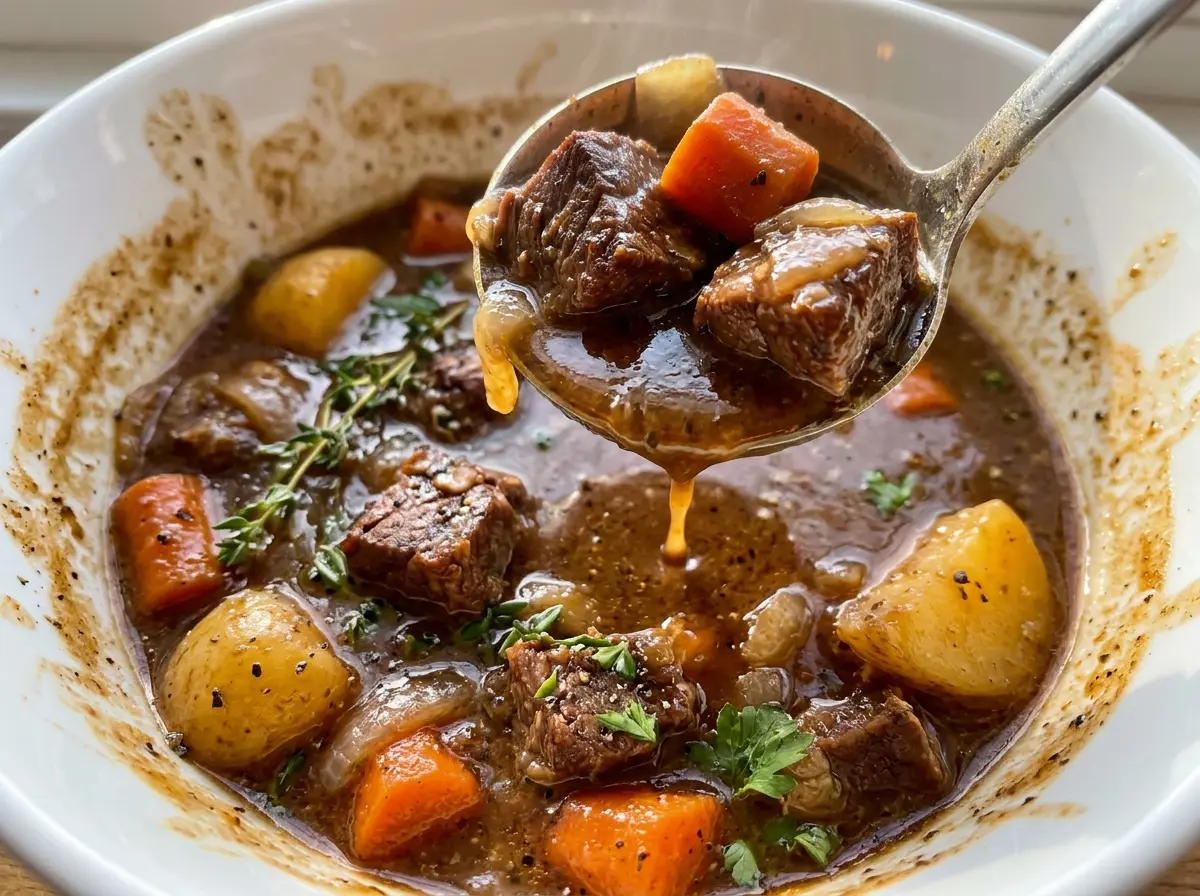
Kitchen Note
Brown the chuck in batches, even if it takes an extra round. If the pieces touch all over the pot, they’ll steam instead of developing the dark crust that gives the finished stew its savory depth.
Save Anthony Bourdain’s Beef Stew for a slow, cozy dinner: tender chuck, red-wine broth, and potatoes that keep their shape.
Why the Carrots and Potatoes Go In After the First Braise
Chuck needs a long, gentle cook to become tender. Carrots and potatoes don’t need that same stretch of time, and leaving them in for the whole braise can turn their edges soft and their centers crumbly. Adding them for the final part of cooking gives the beef time to relax while the vegetables cook through but still hold together.
That timing also helps the stew feel balanced. The potatoes release some starch as they soften, which gives the broth a little body, but they shouldn’t dissolve into it. Cut them into substantial pieces so they can take the heat without breaking apart. The carrots should be tender when pierced, not limp. You’ll get a bowl with distinct pieces of beef and vegetables, all coated in the same rich sauce.
What Chuck, Red Wine, and Yukon Golds Bring to This Stew
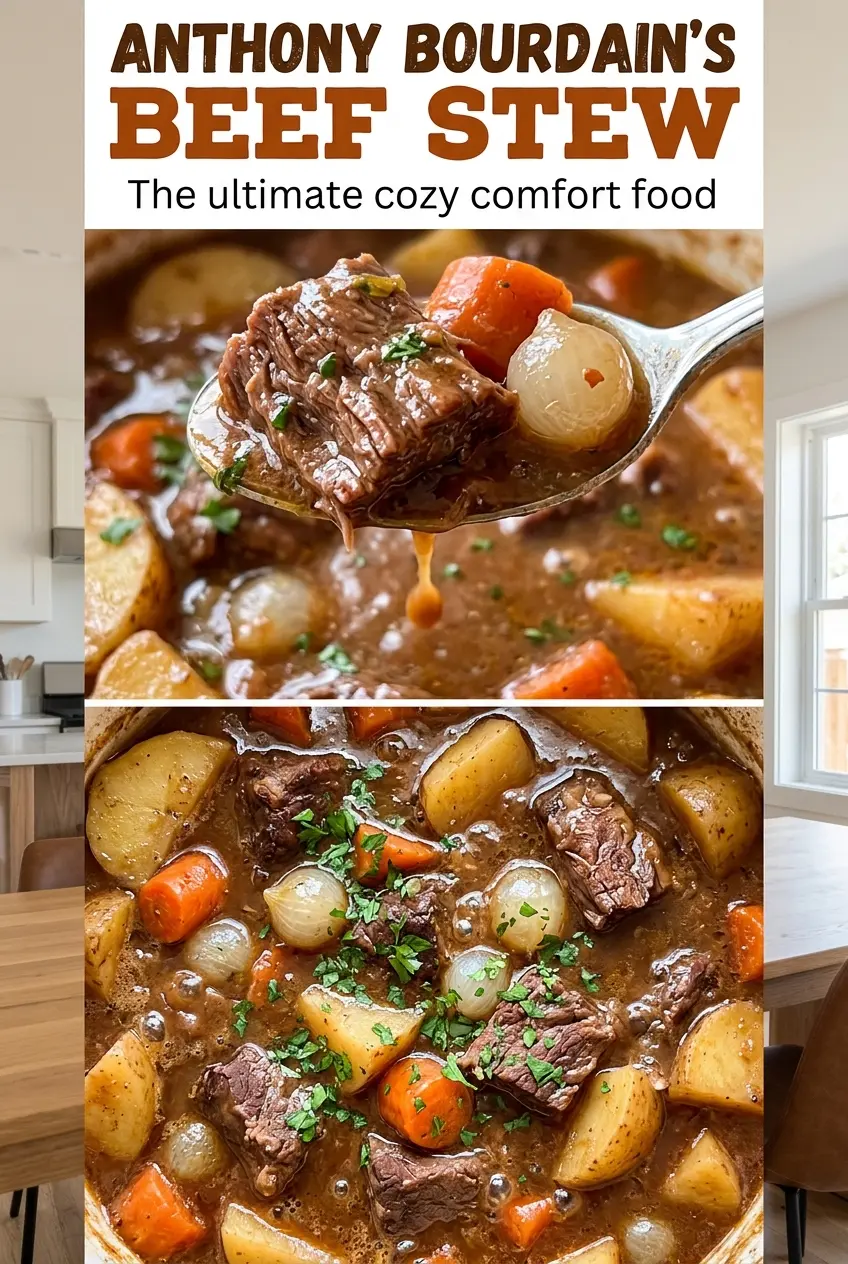
- Beef chuck — Chuck has enough connective tissue to turn silky and tender during a covered oven braise. Choose pieces with some marbling; very lean beef is more likely to taste dry before it becomes tender.
- Dry red wine — The wine brings acidity and depth to the sauce. An expensive bottle isn’t necessary, but choose a dry wine rather than a sweet one so the finished broth stays savory.
- Yukon Gold potatoes — Their creamy texture suits the broth, and they hold together better than floury potatoes. Look for firm potatoes without soft spots; there’s no need to seek out a specialty brand.
- Tomato paste — It adds concentrated savory flavor and helps round out the wine and beef broth. A standard can or tube works; use what you have and measure it rather than adding an extra squeeze.
- All-purpose flour — Flour gives the broth enough body to cling to the beef and vegetables. Regular all-purpose flour is the right choice for the classic version, and a fresh bag isn’t needed as long as yours is stored well and lump-free.
- Fresh thyme and bay leaves — These add a gentle herbal background without taking over the beef. Fresh thyme sprigs are easy to lift out at the end; remember to remove the bay leaves too, since they aren’t meant to be eaten.
Building the Stew in the Dutch Oven, From Crust to Tender Beef
Brown the Beef Without Crowding the Pot
Heat the oven to 325°F, pat the beef dry, and season it with kosher salt and black pepper. Warm the olive oil in a 6-quart Dutch oven over medium-high heat, then brown the beef in batches, turning the pieces so their sides develop color. Each batch takes about 8–10 minutes; look for browned surfaces, not gray, wet-looking meat. Move the beef to a plate as each batch finishes.
Soften the Aromatics and Cook the Flour
Lower the heat to medium and add the diced onion and celery. Stir for 5–6 minutes, until softened, then add the minced garlic and tomato paste and cook for 1 minute. Stir in the flour and cook for another minute so it coats the vegetables. Keep stirring around the bottom and corners of the pot, where the mixture can catch.
Reduce the Wine Before the Covered Braise
Pour in the dry red wine and scrape the browned bits from the bottom of the pot as it simmers. Let the wine reduce by about half, which takes 3–4 minutes. Stir in the beef broth, thyme sprigs, and bay leaves, then return the beef and any plate juices to the pot. Bring the liquid to a simmer, cover, and braise in the oven for 1 1/2 hours.
Add the Vegetables and Finish Until Fork-Tender
Stir in the carrots and potatoes, cover the pot again, and return it to the oven for 45–60 minutes. The beef should yield easily to a fork, and the vegetables should be tender when pierced; start checking at the earlier end of the range. If the beef still feels firm, it needs more braising time. Remove the thyme stems and bay leaves, then let the stew rest for 10 minutes before serving.
Simple Changes for a Gluten-Free or Wine-Free Pot
Use a Gluten-Free Flour Blend
Replace the all-purpose flour with the same amount of a cup-for-cup gluten-free flour blend that includes a thickener. Stir and cook it with the vegetables as you would the regular flour. The sauce may have a slightly different finish, but it will still coat the beef and vegetables.
Make It Without Red Wine
Use beef broth in place of the red wine, adding it to the pot after the flour has cooked and scraping up the browned bits. There’s no need to reduce the broth by half; bring it to a simmer before adding the remaining broth, herbs, and beef. The stew will be less tangy and have a gentler, more straightforward beef flavor.
Leave Out the Flour for a Lighter Broth
Skip the flour and its cooking stage if you prefer a thinner, more broth-forward stew. The sauce won’t cling to the meat in the same way, but the long braise still builds plenty of beef and wine flavor. This changes the texture; it doesn’t make the stew gluten-free unless the other ingredients are also suitable for your needs.
Storage and Reheating
- Refrigerator: Store in an airtight container for 3–4 days. The broth thickens as it chills, and the potatoes may soften a little.
- Freezer: Freeze in airtight containers for up to 2–3 months. The beef freezes well, though the potatoes may become softer or grainier after thawing; thaw overnight in the refrigerator.
- Reheating: Warm gently in a covered pot over medium-low heat, stirring now and then, until the stew reaches 165°F. Avoid a hard boil, which can break up the potatoes and make the beef seem dry.
Questions That Come Up While the Stew Braises
Anthony Bourdains Beef Stew
Ingredients
Equipment
Method
- Heat the oven to 325°F.
- Pat the beef dry and season it with the salt and pepper.
- Heat the oil in a 6-quart Dutch oven over medium-high heat.
- Brown the beef in batches, turning to brown the sides, about 8–10 minutes per batch; transfer it to a plate.
- Reduce the heat to medium and cook the onion and celery, stirring, until softened, 5–6 minutes.
- Add the garlic and tomato paste and cook for 1 minute.
- Stir in the flour and cook for 1 minute.
- Pour in the wine and scrape up the browned bits from the bottom of the pot.
- Simmer until the wine is reduced by about half, 3–4 minutes.
- Stir in the broth, thyme, and bay leaves, then return the beef and any juices to the pot.
- Bring to a simmer, cover, and braise in the oven for 1 1/2 hours.
- Stir in the carrots and potatoes, cover, and return the pot to the oven for 45–60 minutes, until the beef is fork-tender and the vegetables are tender.
- Remove the thyme stems and bay leaves.
- Let the stew rest for 10 minutes before serving.