The beef gives off a deep, savory smell as it browns, and the flour left on the bottom of the pot turns into the beginning of a rich stew base. I build Autumn Beef Stew in that same Dutch oven, so the onion, garlic, tomato paste, and wine pick up every browned bit before the beef goes back in to simmer.
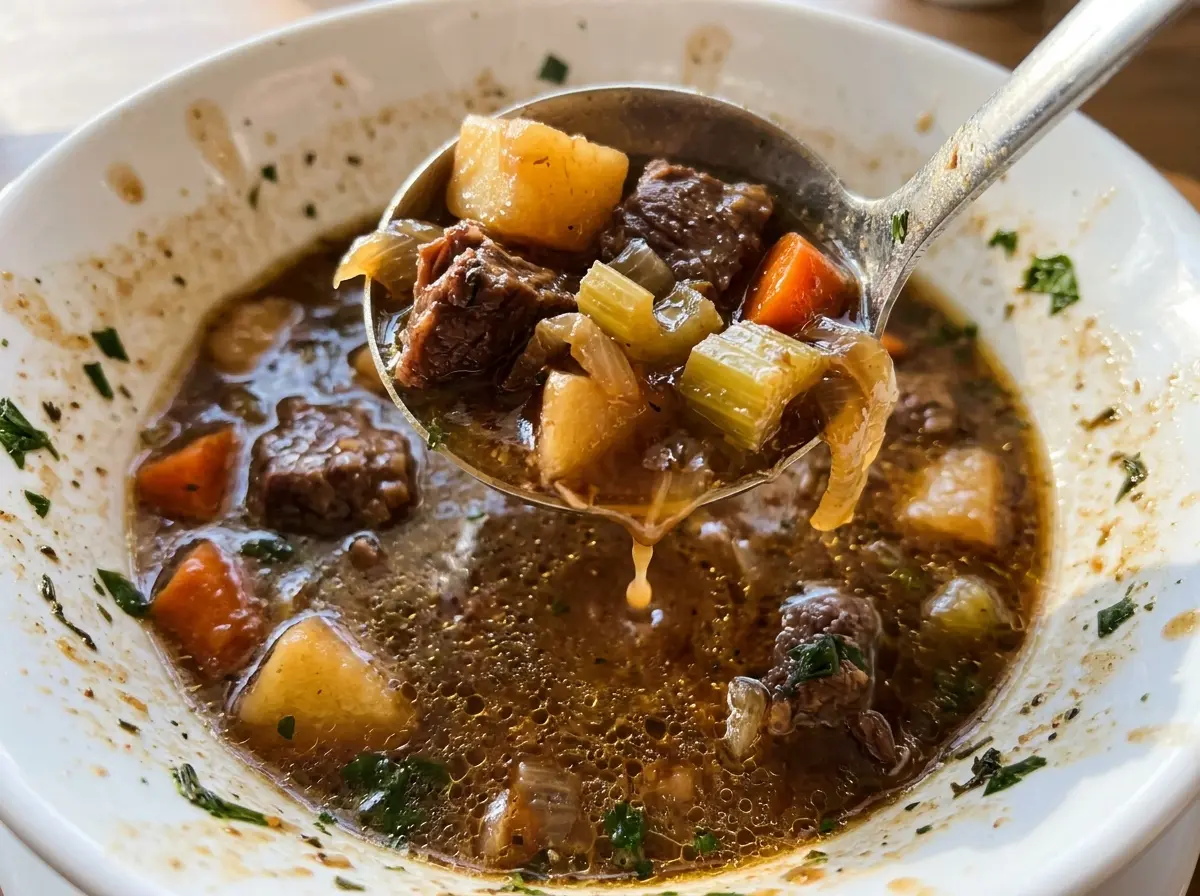
Beef chuck needs time at a gentle simmer to become tender, but the vegetables don’t all need the same amount of time. I add the carrots and potatoes first, then the butternut squash later, so it softens without disappearing into the broth. The finished stew has fork-tender beef and vegetables that still hold their shape, with a broth that’s hearty enough to coat a spoon.
Kitchen Note
Keep the beef cubes close to 1 1/2 inches. Smaller pieces can lose their shape during the long simmer before the chuck has had enough time to turn fork-tender.
Save Autumn Beef Stew for a chilly night when you want tender chuck, potatoes, and butternut squash in one pot.
Why the Butternut Squash Goes in Last
Adding all the vegetables at once seems like the simplest way to finish a stew, but the squash doesn’t hold up as long as the potatoes and carrots. It’s tender and softens readily in the hot broth. Give it the full vegetable cooking time and the pieces can slump apart, thickening the stew in a way you didn’t intend.
Instead, the carrots and potatoes get a head start while the pot stays covered and simmers gently. The squash joins for the final stretch, which gives it time to become tender while keeping recognizable pieces in the bowl. That staggered timing also means you don’t have to fish out vegetables that finished early or try to rescue squash that’s broken down.
Keep the simmer gentle during both stages. A hard boil can knock the edges off the vegetables, and a covered pot holds enough heat to cook them through without rushing them.
The Beef and Pantry Choices That Build This Stew
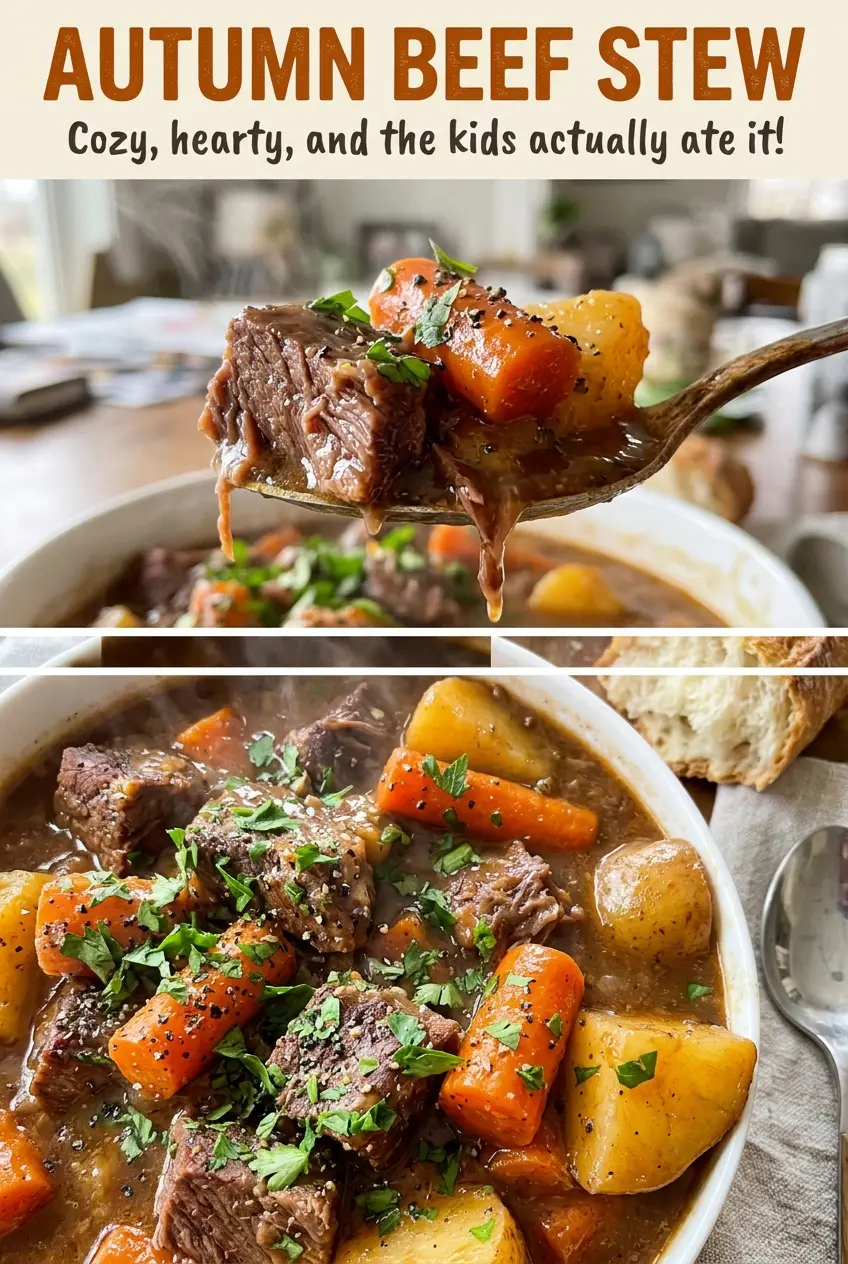
- Beef chuck — Chuck has the connective tissue that softens during a long, slow cook, giving you tender pieces and a fuller-tasting broth. Patting it dry before coating helps the beef brown instead of steaming in its own surface moisture.
- All-purpose flour — The light coating helps the beef brown and gives the broth some body as the stew simmers. Shake off any heavy clumps; an even coating is more useful than a thick layer.
- Dry red wine — Wine loosens the browned bits from the pot and brings a little acidity to balance the beef. Choose a dry wine you’d be happy to drink; there’s no need for an expensive bottle because its flavor mellows during cooking.
- Beef broth — Broth carries the browned beef and aromatics through the braise. A good everyday broth works well here, since the onion, garlic, tomato paste, thyme, and beef build plenty of flavor in the pot.
- Yukon Gold potatoes — Their creamy texture suits stew, and they hold together well when cut into even pieces. Keep the pieces similar in size so they soften at about the same rate.
- Butternut squash — Buy a firm squash and remove the peel and seeds before cutting it. Even pieces cook more predictably than a mix of small and large chunks.
Building the Pot in the Right Order
Coat the Beef Without Leaving Wet Patches
Pat the beef dry, then toss it with the flour, kosher salt, and black pepper in a large bowl until it’s evenly coated. Dry surfaces brown more readily, while damp spots can turn the flour pasty. Separate pieces that stick together so each cube gets a light coating. Set the bowl aside while the Dutch oven heats.
Brown in Batches for a Deep Base
Heat the vegetable oil in a 6-quart Dutch oven over medium-high heat. Brown the beef in batches, turning each piece so several sides develop a deep brown crust, then move each batch to a plate. If the pot is crowded, the beef releases moisture and steams instead of browning; leave room between pieces and let the pot regain heat between batches if needed. Keep the browned bits in the pot.
Soften the Onion and Deglaze
Add the diced onion and cook over medium heat for 5 minutes, stirring occasionally, until softened. Stir in the garlic and tomato paste and cook for 1 minute, just until fragrant. Pour in the red wine and scrape the bottom of the pot to loosen the browned bits, then let it simmer for 2 minutes. The bottom should feel clear when you drag a spoon across it.
Let the Chuck Turn Tender
Stir in the beef broth, dried thyme, and bay leaves, then return the beef and any juices from the plate to the pot. Bring everything to a gentle simmer, cover, and cook over low heat for 1 1/2 to 2 hours, stirring occasionally. Keep the surface at a quiet simmer rather than a rolling boil. The beef is ready for the vegetables when a fork slides into a piece easily.
Finish with the Vegetables
Stir in the carrots and potatoes, cover, and simmer gently for 15 minutes. Add the butternut squash, cover again, and simmer for 15 to 20 minutes, until all the vegetables are tender. Check a potato and a piece of squash with a fork; both should give easily without falling apart. Remove the bay leaves before serving.
Two Useful Ways to Adapt Autumn Beef Stew
Make It Gluten-Free
Replace the all-purpose flour with the same amount of a cup-for-cup gluten-free flour blend, and use gluten-free beef broth. The coating may brown a little differently, but it still helps the beef develop a crust and gives the broth body.
Leave Out the Red Wine
Use 1/2 cup beef broth in place of the wine when deglazing. The stew will have a rounder, less tangy flavor, but you can still scrape up the browned bits and build the base in the same pot.
Storage and Reheating
- Refrigerator: Keep leftovers covered for 3 to 4 days. The potatoes and squash soften a little as they sit in the broth.
- Freezer: Freeze in airtight containers for up to 2 to 3 months. The stew remains flavorful, though the potatoes and squash may be softer after thawing.
- Reheating: Warm gently in a covered pot over low heat, stirring carefully, until the leftovers reach 165°F. Avoid a hard boil, which can break up the vegetables and make the bottom more likely to scorch.
Questions That Come Up While the Stew Simmeres
Autumn Beef Stew
Ingredients
Equipment
Method
- Pat the beef dry, then toss it with the flour, salt, and pepper in a large bowl until evenly coated.
- Heat the oil in a 6-quart Dutch oven over medium-high heat, then brown the beef in batches, turning to brown several sides; transfer each batch to a plate.
- Add the onion to the pot and cook over medium heat for 5 minutes, stirring occasionally, until softened; stir in the garlic and tomato paste and cook for 1 minute.
- Pour in the wine and scrape up the browned bits from the bottom of the pot; simmer for 2 minutes, then stir in the broth, thyme, and bay leaves and return the beef and any accumulated juices to the pot.
- Bring the stew to a gentle simmer, cover, and cook over low heat for 1 1/2 to 2 hours, stirring occasionally, until the beef is fork-tender.
- Stir in the carrots and potatoes, cover, and simmer gently for 15 minutes; add the squash and continue simmering, covered, for 15 to 20 minutes, until all the vegetables are tender.