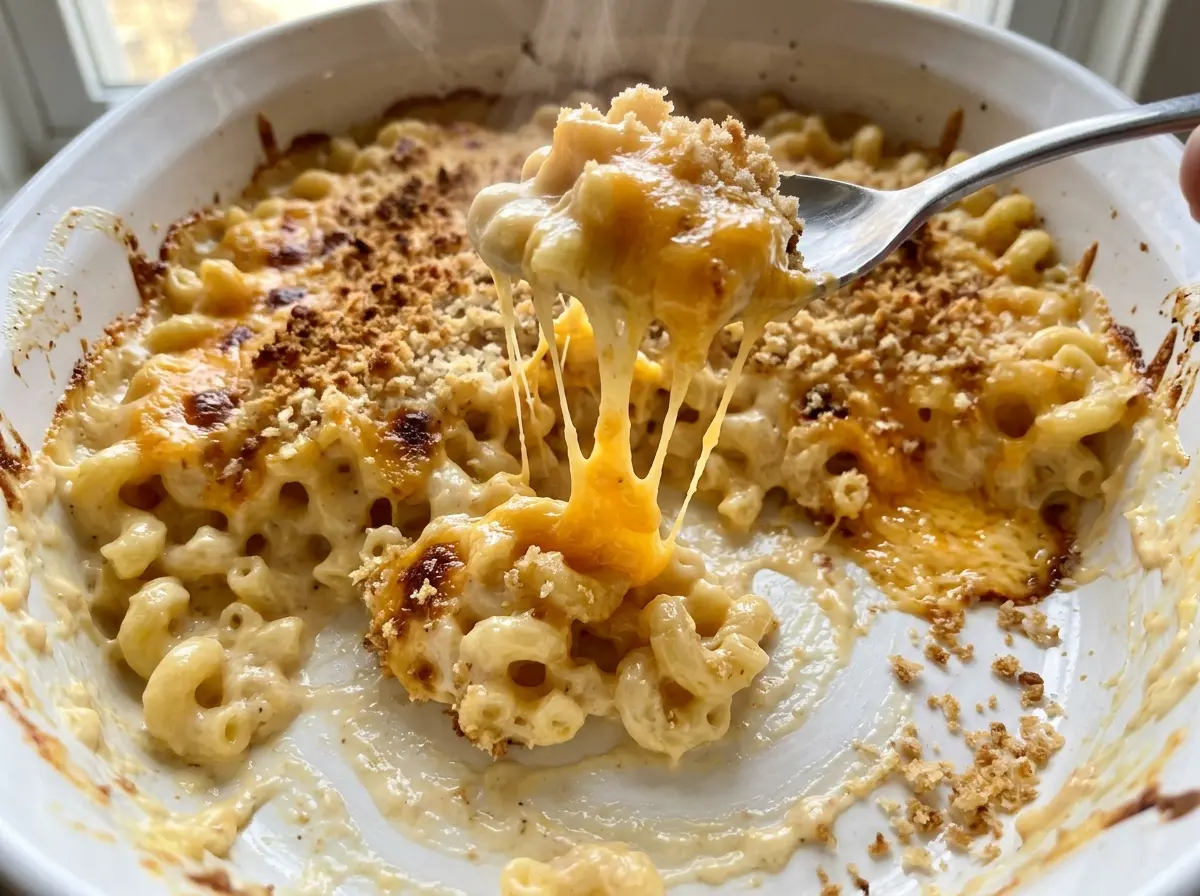
When the panko hits the melted butter, the dry crumbs turn glossy and start to cling together in little flakes. That’s the part I look forward to most, because an even scatter gives this baked mac and cheese a golden top while the edges bubble underneath.
The sauce starts with a simple flour-and-butter roux, then whole milk turns it into a smooth base for sharp cheddar. I take the saucepan off the heat before adding the cheese; it melts into the sauce without needing extra cooking.
Cooking the macaroni just shy of al dente gives it room to finish in the oven without going soft. After a short rest, each scoop has creamy cheese sauce, tender elbows, and a crisp, buttery layer of panko.
Kitchen Note
Toss the panko until the melted butter has coated the crumbs, then scatter them in an even layer. If you leave a thick mound in the middle, the topping browns unevenly.
Save this baked mac and cheese for its sharp cheddar sauce and buttery, golden panko top.
Why the Cheddar Goes In After the Sauce Leaves the Heat
A smooth cheese sauce is easier to get when you treat it as two jobs. First, cook the flour in melted butter so it forms a roux; then whisk in the milk gradually and give it time to thicken. When the sauce coats a spoon, it’s ready for the cheese.
Cheddar doesn’t need a long simmer to melt. Stirring it into a bubbling pan over direct heat can make the sauce grainy or oily, especially if the pan is hot enough to keep cooking the cheese. Taking the saucepan off the burner before you add the cheddar lets the residual heat do the melting while you whisk.
That order also gives you a useful visual check: the milk-and-flour base should be smooth before the cheese goes in. If you add cheese to a sauce with flour lumps, whisking harder won’t reliably smooth it out. Build the base first, then let the cheddar melt into it.
What the Cheddar, Milk, and Panko Each Bring

- Sharp cheddar — Its tangy, full flavor stands up to the pasta and creamy sauce. A block from the dairy case is a good choice; brand matters less than choosing cheddar with a flavor you like. If you want a milder result, use mild cheddar in the same amount, knowing the finished dish will taste less sharp.
- Whole milk — Whole milk gives the sauce body as well as creaminess. Two-percent milk works if that’s what you have, though the sauce will be a little less rich; skim milk is more likely to leave it thin.
- All-purpose flour and butter — Together they form the roux that thickens the milk. Use all-purpose flour here rather than self-rising flour, which can change the seasoning and texture. Whisk the flour into the melted butter until no dry pockets remain before you start adding milk.
- Dry mustard — It adds a gentle savory tang that makes the cheddar taste more pronounced without turning the dish into mustard macaroni. Keep it dry rather than swapping in prepared mustard, which brings extra liquid and a different flavor.
- Elbow macaroni — The curved tubes hold sauce, and their small size makes a scoop easy to serve. A budget box works well; the more useful choice is pasta with a shape that can catch the cheese sauce.
- Panko breadcrumbs — Panko stays light and crisp on top, with larger flakes than standard breadcrumbs. Regular breadcrumbs can stand in at the same amount, but the crust will be finer and less craggy.
How to Get the Pasta, Sauce, and Topping Ready for the Oven
Prepare the Dish and Stop the Pasta Early
Heat the oven to 375°F and grease a 9×13-inch baking dish with butter. Bring the water to a boil in a 6-quart pot, add the pasta salt and macaroni, and cook the elbows according to the package directions. Drain them when they’re just shy of al dente, not fully soft. They’ll finish cooking in the oven with the sauce.
Cook the Roux Before Adding Milk
Melt the butter for the sauce in a 3-quart saucepan over medium heat. Whisk in the flour and keep whisking for 1 minute; the mixture should look smooth, with no loose flour. Add the milk gradually while whisking so it blends evenly into the roux. Pouring it in all at once makes lumps harder to work out.
Thicken the Milk, Then Melt in the Cheddar
Cook the milk mixture for 5–7 minutes, whisking often, until it’s thick enough to coat a spoon. Don’t rush this stage: a thin base makes a looser sauce around the pasta. Take the pan off the heat, then whisk in the dry mustard, remaining salt, pepper, and the sauce portion of the cheddar. Keep whisking until the cheese has melted.
Layer the Cheddar and Buttered Crumbs
Stir the drained macaroni into the cheese sauce and transfer the mixture to the greased baking dish. Sprinkle the remaining cheddar over the surface. Melt the topping butter, toss it with the panko, and scatter the crumbs over the cheese in an even layer.
Bake Until the Edges Bubble
Bake for 20–25 minutes, until you can see bubbling around the edges and the panko is golden brown. The center will be hot and the top crisp when it comes out. Rest the dish for 10 minutes before serving so the sauce can settle around the pasta.
Three Practical Ways to Change Up This Baked Mac and Cheese
Give the Sauce a Pepper Jack Kick
Replace 1 cup of the cheddar used in the sauce with 1 cup shredded pepper jack, keeping the topping cheddar as it is. The sauce will have a mild heat and a little less of cheddar’s familiar tang; skip this swap if you want a kid-mild dish.
Make It Gluten-Free
Use gluten-free elbow pasta, a measure-for-measure gluten-free flour blend in place of the all-purpose flour, and gluten-free panko. Cook the pasta just shy of al dente, checking it as it cooks because gluten-free brands can soften at different rates. The sauce and topping still follow the same method, though the pasta may have a slightly different texture.
Swap the Elbows for Cavatappi
Use the same weight of cavatappi instead of elbow macaroni and cook it according to its package directions, stopping just shy of al dente. Its spirals make the finished casserole a little more substantial, while the sauce still clings to the pasta.
Storage and Reheating
- Refrigerator: Store covered for 3–4 days. The pasta will absorb some sauce, so leftovers won’t be quite as creamy as they were fresh.
- Freezer: Freeze portions in airtight containers for up to 2–3 months. Thaw overnight in the refrigerator for more even reheating; the pasta may be softer after freezing.
- Reheating: Warm covered in a 350°F oven until hot, adding a small splash of milk to loosen the sauce if it looks dry. Uncover for the last few minutes if you want to crisp the panko again; leaving it covered the whole time softens the topping.
Questions That Come Up When Baking Mac and Cheese
Baked Mac and Cheese
Ingredients
Equipment
Method
- Heat the oven to 375°F.
- Grease a 9x13-inch baking dish with 1 teaspoon butter.
- Bring the water to a boil in a 6-quart pot.
- Add 1 tablespoon salt and the macaroni, and cook according to package directions until just shy of al dente.
- Drain the macaroni.
- Melt 4 tablespoons butter in a 3-quart saucepan over medium heat.
- Whisk in the flour and cook, whisking constantly, for 1 minute.
- Gradually whisk in the milk until smooth.
- Cook, whisking often, for 5–7 minutes until thick enough to coat a spoon.
- Remove from the heat and whisk in the dry mustard, remaining 1/2 teaspoon salt, pepper, and 3 cups cheddar until melted.
- Stir the drained macaroni into the cheese sauce.
- Transfer the mixture to the prepared dish.
- Sprinkle with the remaining 1 cup cheddar.
- Melt the remaining 2 tablespoons butter.
- Toss the melted butter with the panko.
- Scatter the crumbs evenly over the macaroni.
- Bake for 20–25 minutes, until the edges are bubbling and the topping is golden brown.
- Rest for 10 minutes before serving.