When the beef comes out of the Dutch oven, dark browned bits cling to the bottom, and the onions start picking them up as they cook. That’s when this stew begins to smell like more than a pot of braised beef. Belgian-style brown ale brings a malty depth, while the covered oven braise gives chuck time to turn tender without keeping you at the stove. I make Beef Carbonnade Stew when I want a hearty dinner that can do most of its work in the oven.
The finish is what makes this version different from a typical beef stew. Mustard-coated bread softens on top of the pot, then gets stirred into the liquid to thicken it. That gives the sauce body without needing a long reduction, and a little red wine vinegar stirred in at the end keeps the rich ale-and-beef flavor from feeling heavy. The beef turns fork-tender in a savory sauce that clings to every piece.
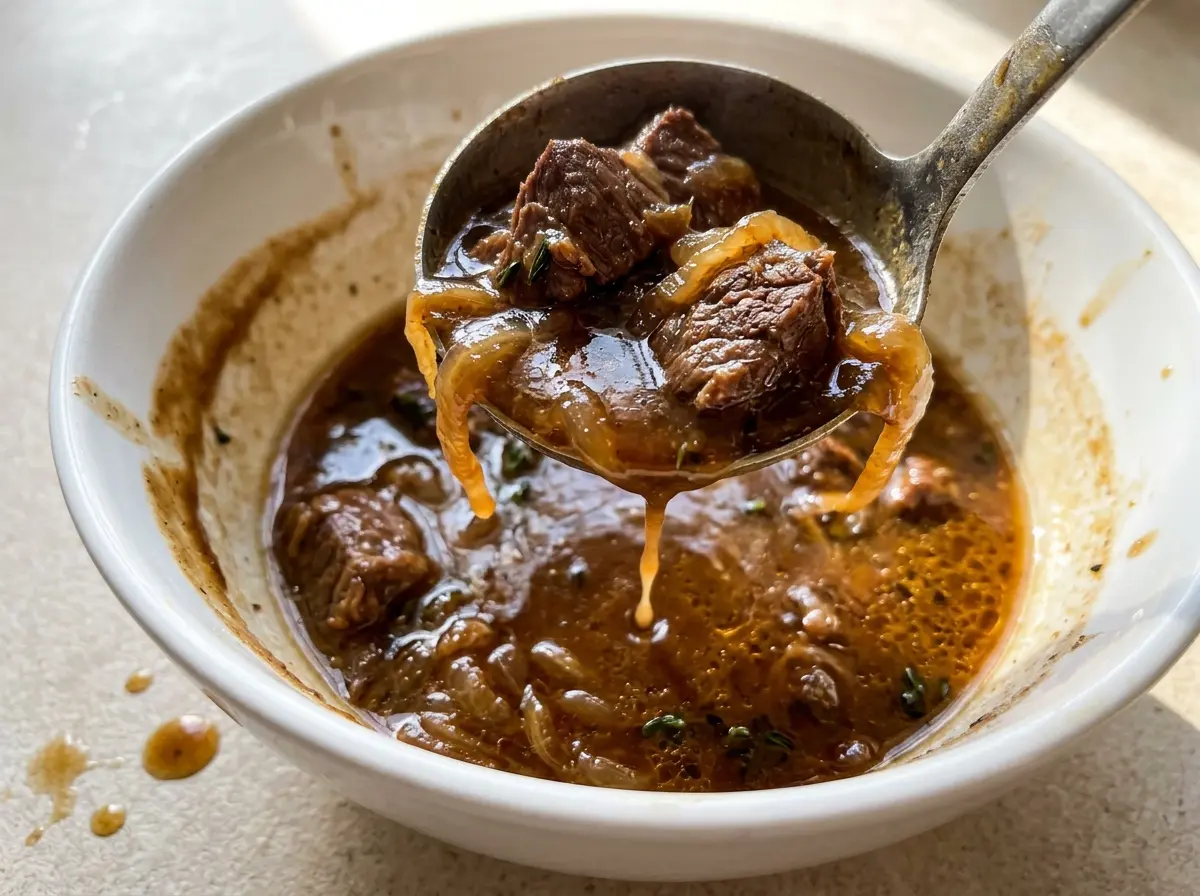
Kitchen Note
I stir in the red wine vinegar only after the bread has thickened the sauce. Its bright tang comes through more clearly at the end, and the 10-minute rest lets that finish settle into the stew.
Save this Beef Carbonnade Stew for a cozy dinner: tender chuck, malty brown ale, and a mustard-bread-thickened sauce.
Why the Sauce Looks Loose Before the Bread Goes In
Carbonnade doesn’t start with a thick, gravy-like sauce. The beer and broth simmer around the onions and beef, but the covered bake keeps most of that liquid in the pot. If you judge the texture before the final step, it can look thinner than you expect. That’s intentional: the sauce still has to pick up body from the bread.
Once the bread softens, stirring it into the liquid thickens the stew without a separate reduction. It also means you don’t need to keep the pot bubbling away after the beef is tender. The finished sauce should coat the meat rather than sit like a clear broth around it. Give the softened bread a thorough stir, then let the vinegar and short rest finish the pot.
What the Ale, Onions, and Bread Bring to Carbonnade

- Beef chuck — Chuck has the marbling and connective tissue that suit a long braise. Cut it into even cubes so they cook at a similar pace; an expensive steak cut isn’t needed here.
- Yellow onions — They soften into the base of the sauce and bring sweetness as they brown. Slice them thinly so they cook down evenly; regular yellow onions are just right.
- Belgian-style brown ale — Its malty character gives the stew its distinctive depth. A moderately priced bottle works well; there’s no need to use a rare or highly hopped beer.
- Hearty country bread — The bread is part of the sauce, not a garnish. A sturdy loaf holds together on top of the stew long enough to soften before you stir it in.
- Dijon mustard and red wine vinegar — Dijon adds a savory tang to the bread, while the vinegar brightens the finished sauce. Use mustard you enjoy eating on its own; its flavor carries through the pot.
- Flour, brown sugar, thyme, and bay leaf — Flour helps the onions contribute body, and brown sugar rounds out the ale’s maltiness. Dried thyme and bay leaf add a quiet herbal note without taking over.
Build the Braise in the Same Pot You Brown the Beef
Brown the Chuck in Batches
Heat the oven to 325°F, pat the beef dry, and season it with 1 teaspoon of the salt and the pepper. Warm the oil in a 5- to 6-quart Dutch oven over medium-high heat. Brown the beef in batches for 3 to 4 minutes per side, moving each batch to a plate as it’s ready. Look for a deep brown crust on the outside; the centers will finish cooking in the oven.
Soften the Onions and Coat Them with Flour
Add the sliced onions and remaining salt to the pot, then cook for 8 to 10 minutes, stirring often. They should soften and take on a light brown color without scorching at the bottom. Sprinkle the flour over the onions and stir for 1 minute, so it coats them evenly. If flour sits in dry clumps, keep stirring until it’s blended through the onions.
Make the Beer Base and Add the Mustard Bread
Pour in the beer gradually while scraping the browned bits from the bottom of the pot. Stir in the broth, brown sugar, thyme, and bay leaf, then bring the liquid to a simmer. Return the beef and any juices from the plate, turning the pieces to coat them. Spread Dijon mustard over the bread slices and set them mustard-side down on top of the stew.
Braise Until Tender, Then Thicken the Sauce
Cover the Dutch oven and bake for 2 1/2 to 3 hours, until the beef is fork-tender. Remove the bay leaf before stirring the softened bread into the stew. Keep stirring until the bread is worked through and the sauce thickens. Stir in the red wine vinegar, then let the pot rest for 10 minutes before serving.
Three Practical Ways to Adapt This Ale-Braised Stew
Make It Gluten-Free
Use a cup-for-cup gluten-free flour in place of the all-purpose flour, a sturdy gluten-free country-style bread, gluten-free beef broth, and gluten-free brown ale. The sauce may have a slightly different texture, but the bread still gives it body.
Use Nonalcoholic Brown Ale
Replace the beer with the same volume of nonalcoholic brown ale. The stew keeps its malty character, though the finished sauce may taste a little less complex than one made with Belgian-style brown ale.
Try Whole-Grain Dijon
Spread the same amount of whole-grain Dijon on the bread for a slightly more textured mustard note. The mustard seeds remain visible in the sauce, while the overall method stays the same.
Storage and Reheating
- Refrigerator: Store covered for 3 to 4 days. The sauce will thicken further as it chills.
- Freezer: Freeze in airtight containers for up to 3 months. The beef freezes well, though the bread-thickened sauce may loosen or change texture slightly when thawed.
- Reheating: Warm gently in a saucepan, stirring now and then, until the stew reaches 165°F. Avoid a hard boil, which can make the beef seem tougher and cause the sauce to catch on the bottom.
Questions That Come Up When Making Beef Carbonnade
Beef Carbonnade Stew
Ingredients
Equipment
Method
- Heat the oven to 325°F.
- Pat the beef dry and season it with 1 teaspoon of the salt and the pepper.
- Heat the oil in a 5- to 6-quart Dutch oven over medium-high heat.
- Brown the beef in batches for 3 to 4 minutes per side, transferring each batch to a plate.
- Add the onions and remaining 1/2 teaspoon salt to the pot and cook for 8 to 10 minutes, stirring often, until softened and lightly browned.
- Sprinkle the flour over the onions and cook, stirring, for 1 minute.
- Gradually pour in the beer, scraping up the browned bits.
- Stir in the broth, brown sugar, thyme, and bay leaf.
- Bring the liquid to a simmer.
- Return the beef and its juices to the pot and stir to coat.
- Spread the mustard over the bread slices.
- Place the bread slices mustard-side down on top of the stew.
- Cover the pot and bake for 2 1/2 to 3 hours, until the beef is fork-tender.
- Remove the bay leaf.
- Stir the softened bread into the stew until the sauce thickens.
- Stir in the vinegar.
- Let the stew rest for 10 minutes before serving.