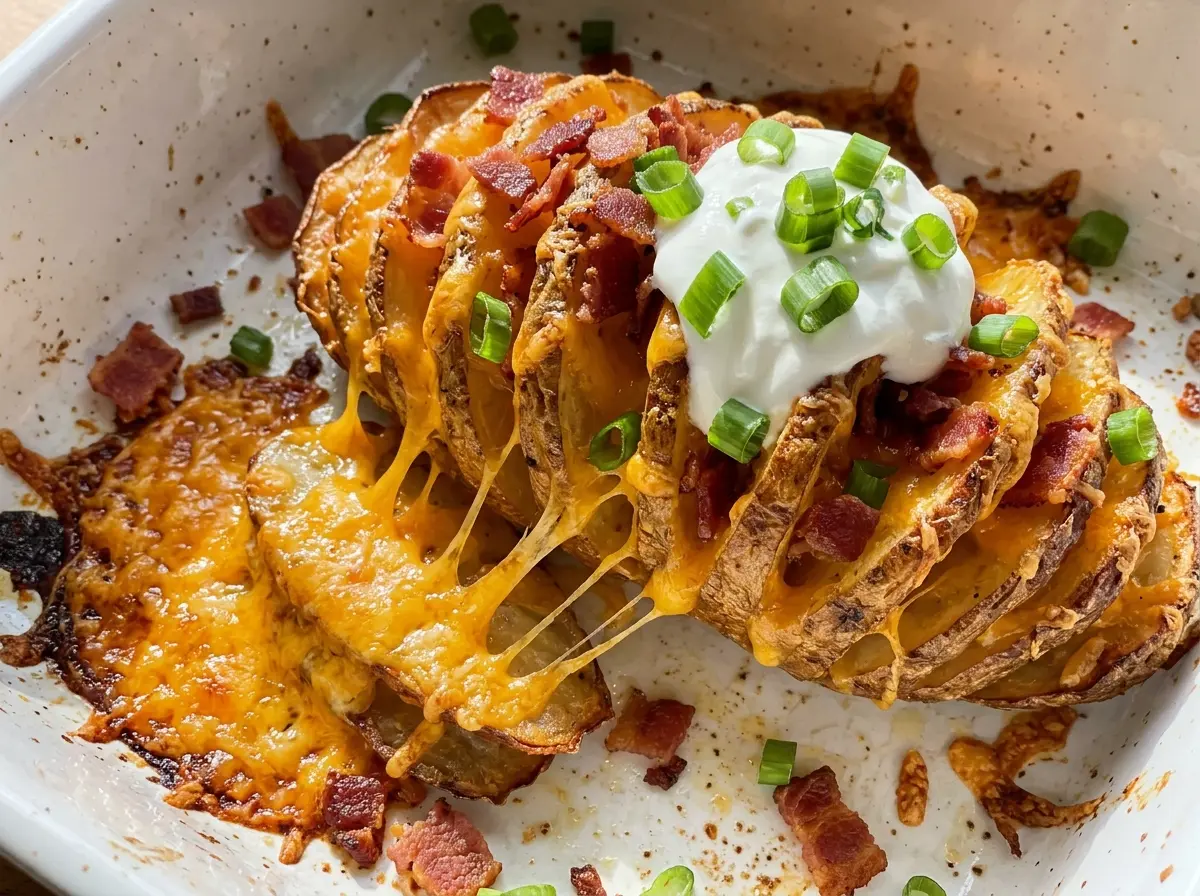
A knife sliding into a russet tells you the middle is tender, but the crosshatched top gives melted butter a path into every bite. For this Bloomin Baked Potato, each large russet bakes cut side up until its skin turns crisp, then gets brushed with butter seasoned with garlic, paprika, and black pepper. Cheddar and cooked bacon go on at the end, just long enough for the cheese to melt.
The cuts need to be deep enough to open as the potato bakes, but the bottom has to stay intact. I like that you can lift one potato onto a plate without its pieces falling apart, then finish it with cool sour cream and green onions. The contrast of crisp skin, soft potato, savory toppings, and a little tang makes this feel like more than a plain baked potato.
Kitchen Note
Watch the cheese, not the clock: it needs just 5 to 8 minutes in the oven to melt. I take the potatoes out once the cheddar is melted, then let them rest for 5 minutes before adding the cool toppings.
Save this Bloomin Baked Potato for its crisp russet skin, buttery crosshatch, and cheesy bacon topping.
Why the Crosshatch Has to Stop Short of the Bottom
A plain baked potato gives you one soft center under a whole skin. The crosshatch changes the top into separate little sections, so the seasoned butter can work down between them instead of sitting only on the surface. That means the garlic, paprika, and pepper reach more of the potato, and the cheese and bacon have more places to settle.
Cutting all the way through would change the structure. The potato could break into pieces when you lift it, and the toppings would have less of a connected surface to sit on. Leave the bottom intact and the potato holds together while the cuts open slightly during baking. Aim for a crosshatch about 1/2 inch deep; shallow marks won’t give the butter much room, while a cut through the base defeats the whole blooming shape. The goal is an opened-up top on a potato that still lifts as one piece.
What Russets, Sharp Cheddar, and Bacon Each Bring

- Russet potatoes — Their starchy centers bake up fluffy, while their sturdy skins hold the crosshatched top together. Choose large potatoes that are close in size so they cook at a similar pace. Scrub off any soil, then dry the skins well; oil clings more evenly to a dry surface.
- Olive oil and kosher salt — Rub the oil over the whole potato so the skin gets an even coating, then salt it before baking. The oil helps the outside bake up crisp rather than dry and papery. Kosher salt is easy to scatter evenly over the rounded surface.
- Butter and the seasonings — Melted butter carries the garlic powder, paprika, and black pepper into the cuts. Garlic powder mixes evenly into the butter, unlike fresh chopped garlic, which can catch and brown in the hot oven. Use a paprika you enjoy; it gives the potatoes color as well as a mild peppery warmth.
- Sharp cheddar — Its stronger flavor stands up to the potato and bacon. Freshly shredding a block usually gives a smoother melt than pre-shredded cheese, which is coated to keep the shreds from clumping. Pre-shredded cheddar still works when convenience matters.
- Bacon, sour cream, and green onions — The bacon brings a salty, smoky bite, while sour cream cools the rich toppings with a little tang. Green onions add a fresh, sharp finish. Cook the bacon before crumbling it over the potatoes; it only has a few minutes in the oven with the cheese.
From Crosshatched Tops to Melted Cheddar
Cut and Season the Potatoes
Heat the oven to 425°F with a rack in the center. Cut a crosshatch into the top of each scrubbed, dried russet, making the cuts about 1/2 inch deep and keeping the bottom intact. Rub olive oil all over each potato, then sprinkle with kosher salt. If a potato starts to split while you cut it, ease up and leave more of the base untouched.
Bake Until the Centers Give Easily
Set the potatoes cut side up on a rimmed baking sheet and bake for 55 to 70 minutes. The skins should look crisp, and a knife should slide easily into the centers. Start checking at the lower end of the time range, since potatoes can vary a little in size. If the knife meets firm resistance, the center needs more time in the oven.
Brush the Seasoned Butter Into the Cuts
Stir the melted butter with the garlic powder, paprika, and black pepper. Brush it over the hot potatoes, working the mixture into the crosshatch rather than just coating the skin around it. The cuts are narrow, so take a moment to spread the butter across each section. If the seasoning settles at the bottom of the bowl, give it another stir as you work.
Melt the Cheddar and Finish the Potatoes
Sprinkle the shredded cheddar and crumbled cooked bacon over the potatoes, then return them to the oven for 5 to 8 minutes, until the cheese is melted. Let the potatoes rest for 5 minutes before serving. Finish with sour cream and thinly sliced green onions. The rest gives the hot potato a moment to settle before you add the cool toppings.
Three Swaps for a Different Bloomin Baked Potato
Bring a Little Heat With Pepper Jack
Swap the sharp cheddar for pepper jack. It melts over the bacon in the same way, with a gentle chile kick that makes the topping livelier; the cheddar’s sharper, classic flavor will be less pronounced.
Make the Potato Dairy-Free
Use plant-based butter in place of the butter, dairy-free cheddar instead of regular cheddar, and unsweetened dairy-free sour cream for the topping. Keep the same quantities. Dairy-free shreds may soften without melting as smoothly as cheddar, so take them out when they’re hot and softened rather than waiting for a stretchy cheese pull.
Give the Butter a Smokier Edge
Replace the regular paprika with smoked paprika in the seasoned butter. The potato keeps its familiar savory character, but the smoky note echoes the bacon more strongly. This is a good choice when you want a bolder finish without changing the crosshatch or baking method.
Storage and Reheating
- Refrigerator: Refrigerate leftovers within 2 hours in an airtight container and use them within 3 to 4 days. The skins soften, especially under the toppings; store sour cream and green onions separately when you can.
- Freezer: Freeze the baked potatoes without sour cream or green onions for up to 2 months for best quality. Wrap each cooled potato tightly, then thaw it overnight in the refrigerator; the center may be a little less fluffy after freezing.
- Reheating: Warm a refrigerated potato in a 350°F oven until the center reaches 165°F, then add fresh sour cream and green onions. Don’t reheat it with the sour cream on top, which can turn warm and loose.
Questions That Come Up Before the Potatoes Go in the Oven
Bloomin Baked Potato
Ingredients
Equipment
Method
- Heat the oven to 425°F.
- Place a rack in the center.
- Cut a crosshatch pattern into the top of each potato, making cuts about 1/2 inch deep and leaving the bottom intact.
- Rub the potatoes all over with olive oil.
- Sprinkle the potatoes with kosher salt.
- Set the potatoes cut side up on a rimmed baking sheet.
- Bake for 55 to 70 minutes, until the skins are crisp and a knife slides easily into the centers.
- Stir the melted butter, garlic powder, paprika, and black pepper together.
- Brush the butter mixture over the potatoes, working it into the cuts.
- Sprinkle the potatoes with cheddar and bacon.
- Bake for 5 to 8 minutes, until the cheese is melted.
- Rest the potatoes for 5 minutes.
- Serve with sour cream and green onions.