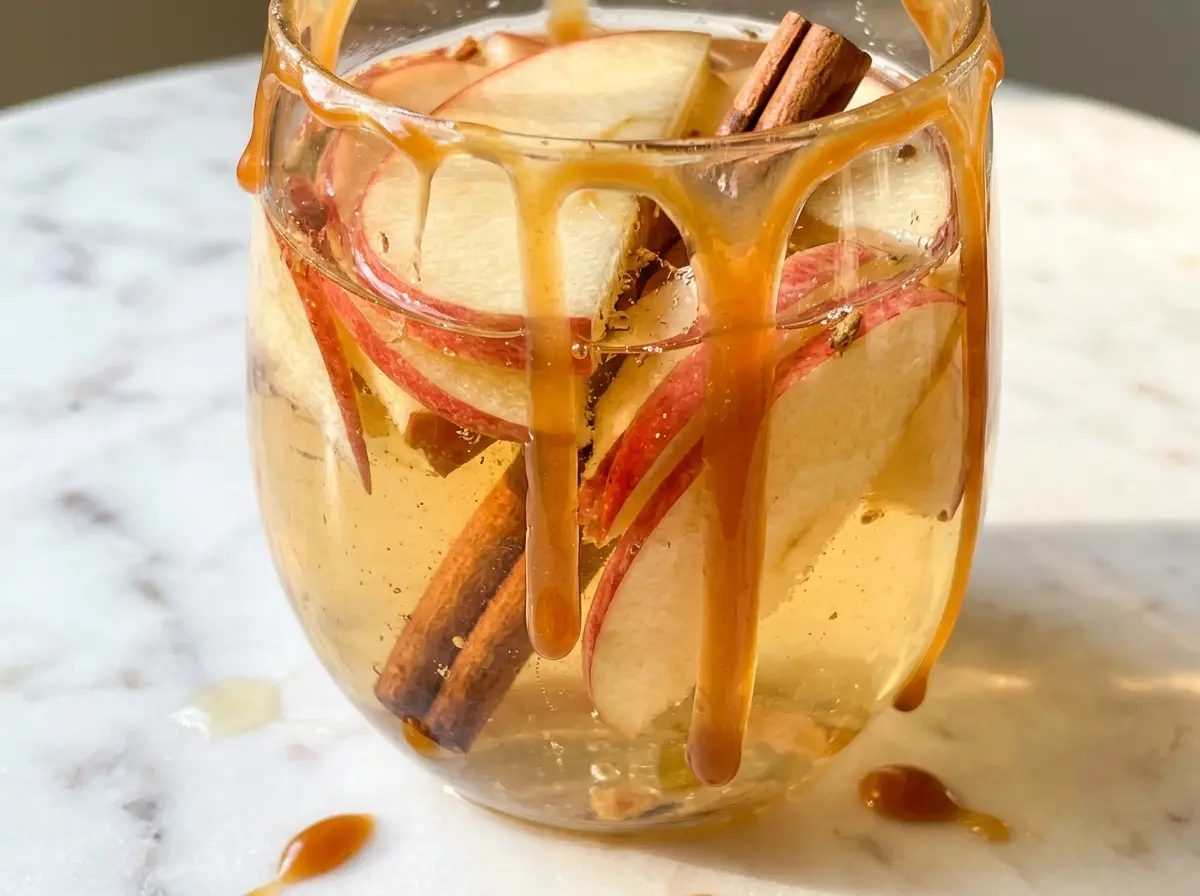
The cider takes the sharp edge off the wine, and the caramel vodka brings a mellow sweetness that smells like a basket of apples as soon as it hits the pitcher. Caramel Apple Sangria lands between a glass of wine and a sparkling apple drink: fruity, lightly sweet, and brightened with lemon.
I like that the apple slices do more than decorate the pitcher. They sit in the cider and wine while everything chills, so each pour carries a little apple aroma. Ginger ale goes in at the end, which gives the finished sangria a fresh sparkle instead of a flat, sugary finish. Serve it cold over ice, with a few slices of apple in each glass.
Kitchen Note
I wait until just before serving to stir in the chilled ginger ale. Add it earlier and the drink loses the lively fizz that makes the first pour so refreshing.
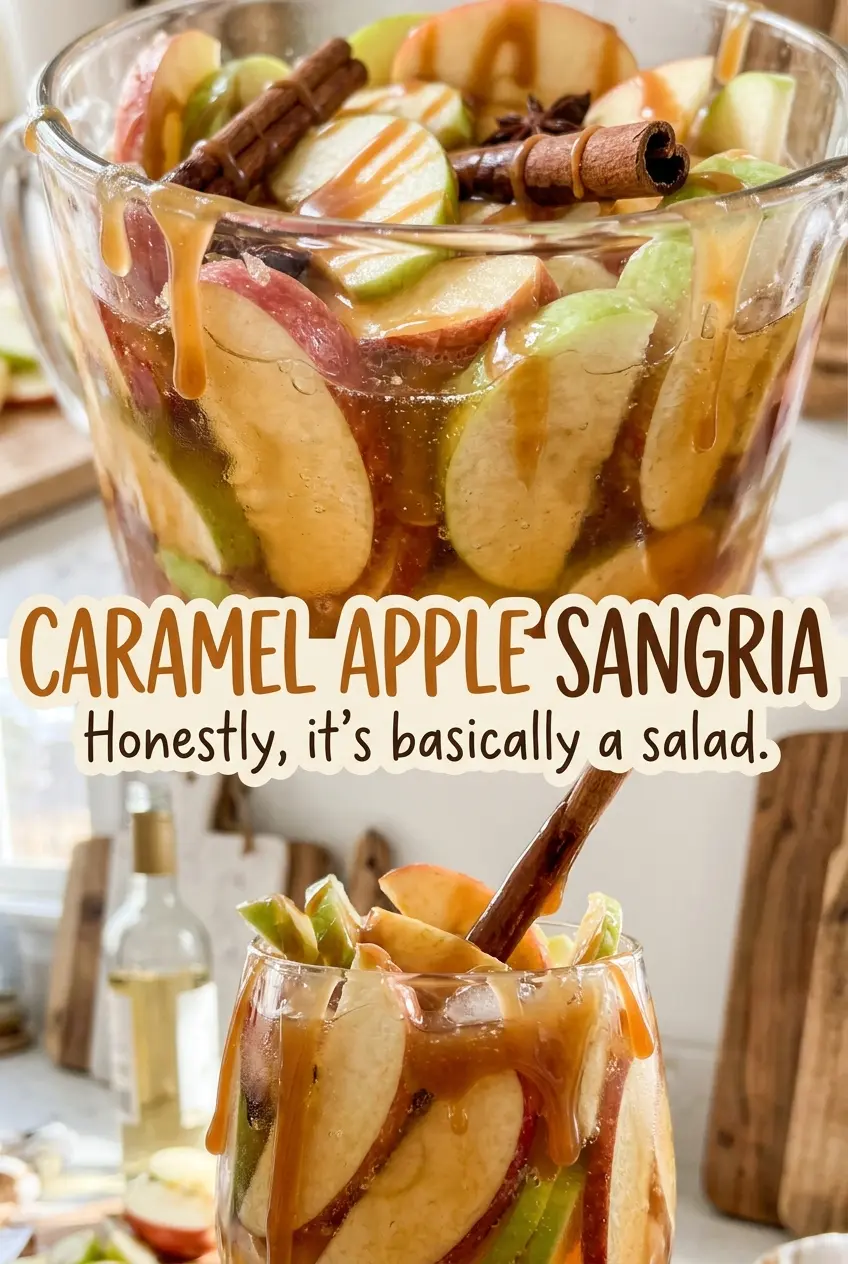
Save this Caramel Apple Sangria for a sparkling pitcher with caramel warmth and crisp apple in every pour.
Why a Dry White Wine Keeps the Caramel From Taking Over
Caramel vodka and apple cider both bring sweetness, and ginger ale adds another sweet note when it goes into the pitcher. The wine needs to provide contrast rather than more of the same. A dry white wine gives the drink a crisp backbone, so the caramel tastes rounded instead of cloying and the lemon still has room to brighten each sip.
That balance is easy to lose if you reach for a sweet or dessert-style white wine. The sangria can still taste pleasant, but the apple and caramel notes become heavier, especially as the drink warms in the glass. I keep the base dry and let the cider and caramel vodka supply the softer, sweeter character. The lemon juice helps tie those flavors together; it doesn’t turn the drink sour, but it keeps the finish from feeling sugary.
Think of the pitcher as three parts working together: a dry wine base, apple and caramel for the rounded center, and lemon plus ginger ale for lift. If one component gets too sweet, there’s no need to add extra flavors to hide it. Start with the dry white wine the recipe is built around and the rest of the ingredients stay in balance.
What the Apples, Citrus, and Bubbles Each Bring
- Dry white wine — Choose a clean, dry bottle you enjoy drinking on its own; an expensive bottle doesn’t buy you much in a mixed pitcher. Since the cider and caramel vodka bring pronounced apple sweetness, skip a white wine that is already sweet.
- Apple cider — Cider gives the mixture a fuller apple taste than wine alone. A fresh-tasting cider works well here, but there is no need to seek out a specialty bottle.
- Caramel-flavored vodka — This is where the distinct caramel note comes from, so plain vodka won’t give the same result. Use the caramel-flavored kind for the intended soft, candy-like apple finish.
- Lemon juice — The citrus cuts through the sweet ingredients and keeps the drink from tasting one-note. Freshly squeezed juice gives a brighter edge; bottled lemon juice works when convenience matters.
- Apples — Use firm apples that hold their shape when thinly sliced. A tart variety makes the pitcher taste a little crisper, while a sweeter apple leans into the caramel-and-cider character.
- Ginger ale — Chilled ginger ale adds gentle bubbles and a mild ginger note. Keep it cold so it doesn’t warm the pitcher as it goes in.
Build the Sangria in the Right Order
Stir Together the Wine Base
In a 3-quart pitcher, stir the dry white wine, apple cider, caramel-flavored vodka, and lemon juice until the mixture looks evenly combined. The pitcher gives you room to add the fruit and stir without splashing. At this stage the base will taste more concentrated than the finished drink because the ginger ale and serving ice haven’t been added. Don’t try to correct the sweetness by adding extra ingredients; the flavors settle together as the apples chill in the liquid.
Let the Apples Chill in the Pitcher
Core the apples and slice them thinly, then add the slices to the pitcher and cover it. Refrigerate the mixture for at least 2 hours and up to 8 hours so the apples have time to mingle with the wine and cider. Thin slices are easy to serve and give the liquid more contact with the fruit. If the apples sit exposed on a cutting board while you finish other tasks, they can brown, so add them to the pitcher after slicing.
Add the Ginger Ale at the Finish
Take the pitcher out when you’re ready to serve and stir in the chilled ginger ale. Stir just enough to distribute it through the base; vigorous mixing knocks out some of the bubbles. Pour the sangria over ice and include a few apple slices in each glass. The finished drink should taste bright and fizzy, with the apple and caramel notes still easy to pick out.
Two Easy Ways to Shift the Apple-and-Caramel Balance
Choose a tart apple for a sharper finish
Use a firm, tart apple, such as Granny Smith, in place of a sweeter apple. Its clean tang contrasts with the caramel vodka and cider, giving each glass a crisper apple bite without changing the drink’s basic character.
Use a sparkling dry white wine for extra fizz
A dry sparkling white wine in place of still dry white wine makes the pitcher more effervescent. Keep the ginger ale chilled and stir it in gently at the end; the result has a livelier sparkle and a slightly less quiet wine character.
Make-Ahead and Serving
- Before serving: The wine, cider, vodka, lemon juice, and apples can chill together for at least 2 hours and up to 8 hours. Add the ginger ale when you’re ready to pour.
- Freezer: Freezing isn’t a good fit for this sangria. The apple slices lose their firm texture when thawed, and the ginger ale won’t retain its bubbles.
- Serving: Pour each glass over ice rather than adding ice to the pitcher. Ice in the pitcher melts into the batch and dilutes the sangria before everyone has a glass.
Questions I Get Asked About Caramel Apple Sangria
Caramel Apple Sangria
Ingredients
Equipment
Method
- In a 3-quart pitcher, stir together the dry white wine, apple cider, caramel-flavored vodka, and lemon juice.
- Add the cored and thinly sliced apples.
- Cover the pitcher and refrigerate for at least 2 hours and up to 8 hours.
- Stir in the chilled ginger ale just before serving.
- Pour over ice.