The beef turns pale and releases a little liquid if it goes into the pot damp or crowded. Patting it dry and browning it in batches gives carne guisada a deeper base before the broth ever goes in. I use a 6-quart Dutch oven so there’s room to brown the cubes, soften the onion, and let the gravy simmer in the same pot.
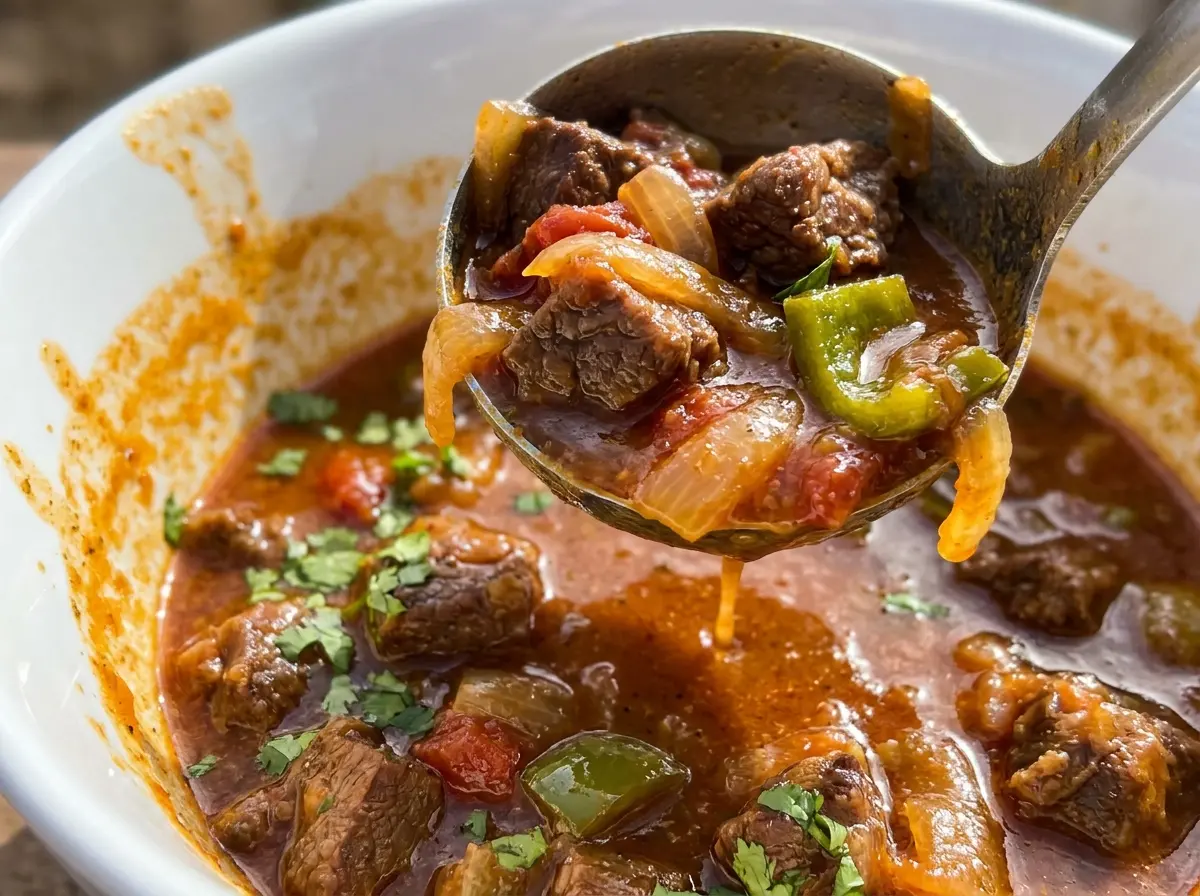
This is a slow, gentle braise, not a quick stew. The flour thickens the beef broth while the chuck takes its time becoming tender, and cumin, chili powder, and oregano season the gravy from the start. Give the beef time to soften; when it’s ready, a fork slides in easily and the gravy clings to each piece. It’s a warm, savory pot of tender beef and thick gravy.
Kitchen Note
Drying the beef well is worth the extra minute. A damp surface steams before it browns, so pat the cubes dry before seasoning and adding them to the hot oil.
Save this carne guisada for a cozy dinner, with fork-tender beef and a thick cumin-scented gravy.
Why Thick Gravy Doesn’t Mean the Beef Is Tender Yet
One confusing moment with carne guisada is that the gravy can look ready before the chuck is. Flour begins thickening the broth as soon as the pot comes together, but the beef needs a longer, gentle simmer to become fork-tender. A glossy, thick sauce is a good sign for the gravy; it isn’t proof that the meat is finished.
If you test a cube and it still feels tight or chewy, keep the pot covered and simmer gently until a fork slips into the beef without much resistance. Don’t turn up the heat to hurry it along. A hard boil can make the meat tighten while the liquid cooks away, leaving you with thick gravy and beef that still needs time. The useful distinction is simple: judge the gravy by how it coats a spoon, and judge the beef by how easily it yields to a fork.
That slow finish is what makes chuck a good fit here. The simmer gives the meat time to soften while the flour gives the broth body, so you don’t have to choose between tender beef and a gravy that feels substantial.
What the Chuck, Flour, and Spices Bring to This Pot
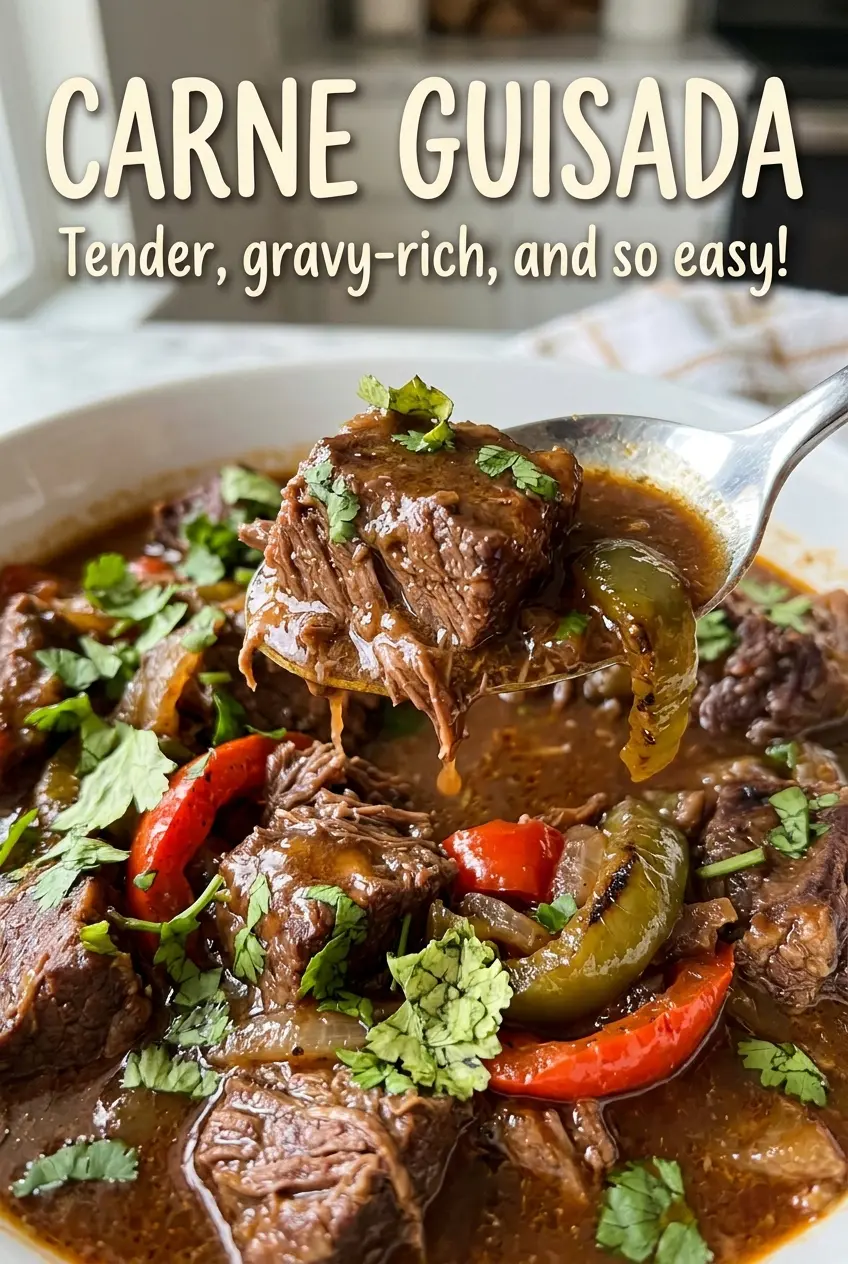
- Beef chuck — Chuck has enough connective tissue and fat to hold up to a long braise and become tender as it cooks. Trim away excess exterior fat, but don’t swap in a very lean cut if you want the same soft, juicy result. A well-trimmed chuck roast is a sensible buy for this kind of cooking; there’s no need to pay extra for a premium steak cut.
- All-purpose flour — The flour thickens the broth into gravy, rather than leaving it thin like a simple soup. Stir it into the onion, tomato paste, and spices so it coats the base before liquid is added. For a gluten-free version, use a 1:1 gluten-free all-purpose flour blend in its place; the gravy’s texture may vary a little by blend.
- Tomato paste and dried spices — Tomato paste gives the gravy concentrated savory depth, while cumin, chili powder, and oregano build its earthy, warm seasoning. A tube or a small can of tomato paste works; what matters is stirring it into the flour and spices so it cooks briefly instead of sitting in a lump. If your dried spices have been open for years, their aroma will be muted.
- Yellow onion and garlic — The onion softens into the gravy’s base, and garlic adds a sharper savory note. A regular yellow onion is just right; there’s no need for a specialty variety. Mince the garlic finely so it distributes through the pot instead of leaving large, harsh bites.
- Beef broth and bay leaf — Beef broth gives the gravy its savory backbone, so water alone won’t bring the same depth. The bay leaf adds a quiet herbal note during the simmer; remove it before serving. Use a broth you like the taste of on its own, since it makes up most of the gravy.
Build the Base, Then Let the Chuck Braise Gently
Brown the Beef in Batches
Season the patted-dry beef with kosher salt and black pepper. Heat the vegetable oil in a 6-quart Dutch oven over medium-high heat, then brown the cubes in batches for 3 to 4 minutes per batch, turning to color several sides. If the pot is packed tight, the beef will steam instead of developing browned surfaces. Transfer each batch to a plate as it’s ready.
Soften the Onion and Wake Up the Garlic
Add the chopped onion to the pot and cook over medium heat for about 5 minutes, stirring occasionally. Look for softened onion rather than deeply browned edges. Stir in the minced garlic and cook for 30 seconds; garlic can turn bitter if it sits over the heat too long. Keep stirring so it doesn’t catch on the bottom.
Coat the Aromatics and Add the Broth
Stir in the flour, tomato paste, cumin, chili powder, and oregano, and cook for 1 minute while stirring constantly. The mixture will look thick and paste-like. Gradually stir in the beef broth, scraping the bottom of the Dutch oven to loosen the browned bits. Add the bay leaf and the browned beef with any juices from the plate, then bring the pot to a boil.
Simmer Until the Beef Yields Easily
Cover the Dutch oven, reduce the heat to low, and simmer gently for 1 1/2 to 2 hours, stirring occasionally. Keep the bubbles quiet rather than letting the pot boil hard. The beef is ready when it’s fork-tender and the gravy is thick. Remove and discard the bay leaf before serving the carne guisada hot.
Two Simple Ways to Adapt the Gravy
Make It Gluten-Free
Replace the all-purpose flour with the same amount of a 1:1 gluten-free all-purpose flour blend. Stir it into the onion, tomato paste, and spices just as you would regular flour. The gravy may finish slightly different depending on the blend, but it still gives the broth body.
Turn Down the Chili Heat
Use 1/2 teaspoon chili powder instead of 1 teaspoon for a gentler gravy. The cumin and oregano still provide warmth and savory depth, but the chile note won’t be as pronounced.
Storage and Reheating
- Refrigerator: Refrigerate leftovers within 2 hours and keep them in a covered container for 3 to 4 days. The gravy will thicken as it chills.
- Freezer: Freeze in an airtight freezer-safe container for up to 3 months for best quality. Thaw overnight in the refrigerator; the gravy may need gentle stirring as it warms.
- Reheating: Warm gently in a covered saucepan, stirring occasionally, until the leftovers reach 165°F. Avoid high heat, which can make the beef tough and cause the thick gravy to stick.
Questions That Come Up While Making Carne Guisada
Carne Guisada
Ingredients
Equipment
Method
- Pat the beef dry.
- Season the beef with the salt and black pepper.
- Heat the oil in a 6-quart Dutch oven over medium-high heat.
- Brown the beef in batches for 3 to 4 minutes per batch, turning to brown several sides.
- Transfer the browned beef to a plate.
- Add the onion to the pot and cook over medium heat for about 5 minutes, stirring occasionally, until softened.
- Add the garlic and cook for 30 seconds.
- Stir in the flour, tomato paste, cumin, chili powder, and oregano.
- Cook for 1 minute, stirring constantly.
- Gradually stir in the broth, scraping up any browned bits.
- Add the bay leaf and beef with any juices.
- Bring to a boil.
- Cover and reduce the heat to low.
- Simmer gently for 1 1/2 to 2 hours, stirring occasionally, until the beef is fork-tender and the gravy is thick.
- Remove and discard the bay leaf.
- Serve the carne guisada hot.