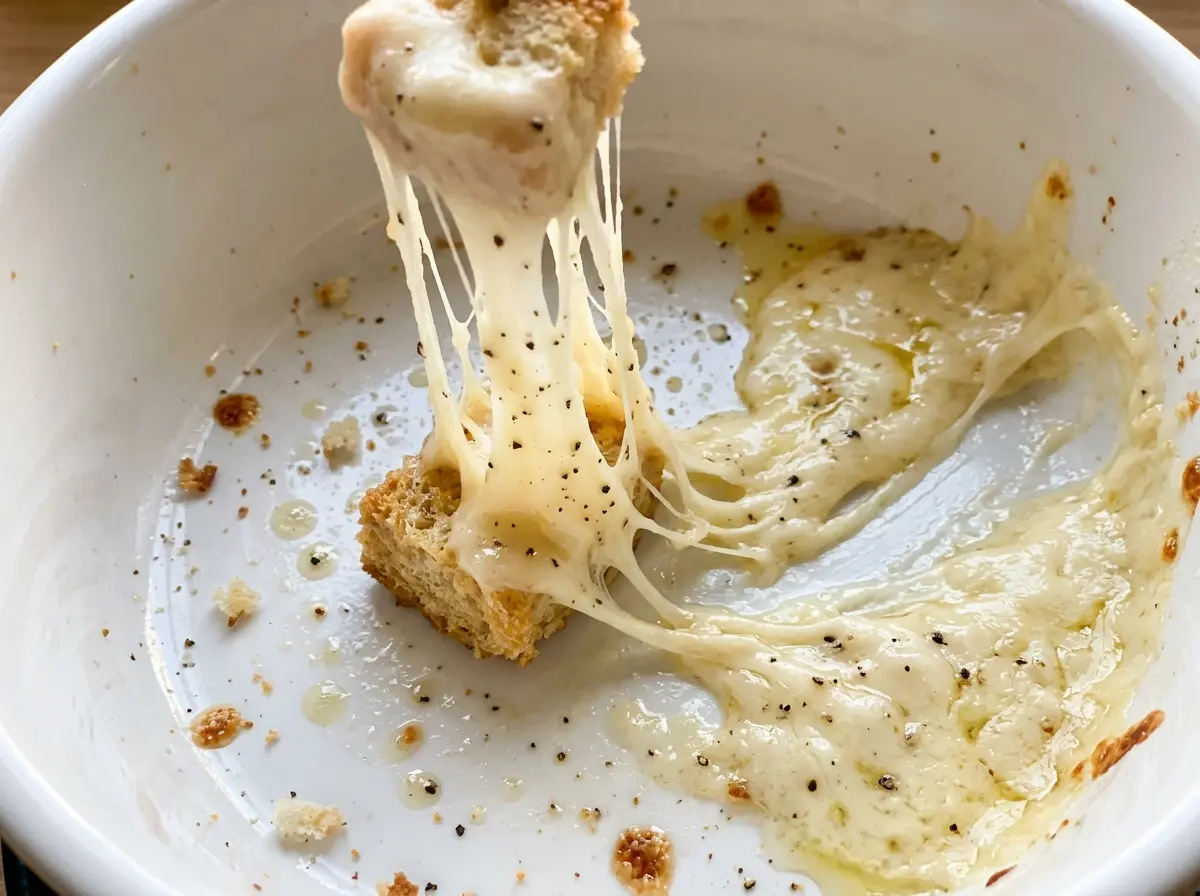
The first thing you notice is how quickly the cheese starts to pull into soft, stretchy ribbons once it hits warm wine. Get the wine too hot, though, and the fondue can turn grainy instead of silky. I keep the heat gentle and add the cheese gradually, which gives this classic cheese fondue time to melt into a smooth, scoopable dip.
Gruyère brings a deep, savory flavor, while Emmental keeps the blend mellow and easy to dip into. A little cornstarch coats the grated cheese before it goes into the pan, and lemon juice brightens the wine as it warms. Those small details help the fondue come together without rushing the cheese.
Set out the crusty bread while the fondue is still warm, and keep the pot over low heat as you eat. Every cube gets a generous coating of cheese, with a hint of nutmeg and kirsch in each bite.
Kitchen Note
Coat the grated cheese evenly with cornstarch before it goes near the pan. I check that there aren’t dry, powdery clumps hiding between the shreds, so the thickener disperses with the cheese instead of forming little lumps.
Save this cheese fondue for a cozy gathering: Gruyère and Emmental melt into a smooth, warm dip for crusty bread.
Why Fondue Turns Grainy When the Wine Boils
Cheese fondue can look like a simple pot of melted cheese, but the temperature of the liquid makes a real difference. If the wine boils, the cheese can seize and separate rather than blend into a smooth sauce. I warm the wine and lemon juice only until the surface steams and small bubbles appear around the edges. That gentle heat is enough to melt the cheese without shocking it.
The cheese also needs a little time to incorporate. Adding a handful at a time and stirring until each addition melts gives the mixture a steady pace; pouring it all in at once can leave you chasing clumps. Keep the heat at medium-low for the wine and stir continuously as the cheese goes in. Once the fondue is smooth, the low flame or gentle return to low heat keeps it fluid for dipping without bringing it to a boil.
Think of this as a gradual emulsion, not a pot you need to rush. When the cheese is fully melted, the fondue should look glossy and flow from the spoon in a thick ribbon. A little patience at the stove is what gives the bread a clingy coating instead of a broken, oily one.
Why Gruyère and Emmental Make a Balanced Fondue

- Gruyère — Its full, savory character gives the fondue its depth. Choose a piece you can grate yourself; coarsely grated cheese melts more evenly than large chunks, and the rind should be removed before grating.
- Emmental — This cheese brings a mild, nutty note that balances Gruyère without taking over. Freshly grated cheese is useful here, too, because the shreds can be coated evenly before they go into the pan.
- Cornstarch — It helps the cheeses combine into a cohesive fondue as they melt. Toss it through the shreds in a bowl first rather than sprinkling it directly into the warm liquid, where it can clump.
- Dry white wine and lemon juice — The wine provides the liquid base, and lemon juice adds a bright edge to the rich cheese. Use a dry white wine; a sweet one would make the fondue taste sweeter than intended.
- Kirsch, nutmeg, and black pepper — Kirsch adds a light fruity aroma, while nutmeg and freshly ground pepper season the finished cheese. Measure and have them ready before you start melting, since the fondue comes together quickly once the cheese is in.
- Crusty bread — A sturdy loaf holds together when you dip it. Cut it into even cubes so each piece is easy to spear and coat without breaking apart in the pot.
Building the Fondue Without Rushing the Melt
Cut the bread into sturdy dippers
Cut the crusty loaf into 1-inch cubes and arrange them on a serving platter. Aim for pieces that are similar in size so they’re easy to handle at the table. Crusty bread gives you a firm outside and a soft center to catch the melted cheese. Set the platter within reach before you move on to the fondue.
Coat the cheese before it hits the pan
Put the coarsely grated Gruyère and Emmental in a medium bowl, add the cornstarch, and toss until the shreds are evenly coated. Separate any handfuls that have stuck together so you don’t add a dense clump to the liquid. This coating is part of the fondue’s smooth texture, so take a moment to distribute it throughout the bowl. Keep the prepared cheese nearby for the next stage.
Warm the wine gently
Rub the inside of a 3-quart saucepan with the cut sides of the halved garlic clove, then discard the garlic. Add the dry white wine and lemon juice, and heat over medium-low until the liquid is steaming with small bubbles around the edges, about 3 minutes. Don’t let it boil; a rolling boil can make the cheese mixture grainy later. If you see vigorous bubbling, lower the heat before you start adding cheese.
Melt, season, and serve warm
Add the cheese a handful at a time, stirring constantly and waiting for each addition to melt before adding the next. The full melting process takes about 5 to 8 minutes, and the finished fondue should look smooth rather than stringy or lumpy. Stir in the kirsch, nutmeg, and black pepper once the cheese has melted. Transfer it to a fondue pot over a low flame, or serve it in the saucepan on a heatproof trivet; return the pan to low heat if the fondue thickens.
Two Simple Ways to Adapt the Dippers and Finish
Use gluten-free crusty bread
For a gluten-free option, replace the wheat loaf with a gluten-free crusty loaf and cut it into the same 1-inch cubes. The fondue itself stays the same; gluten-free bread can be more delicate, so choose a sturdy loaf and handle the cubes gently when arranging them.
Leave out the kirsch for a subtler finish
Skip the kirsch if you want the cheese and gentle spice to stand out more. The fondue will have less of the kirsch’s fruity aroma, while the dry white wine remains in the mixture, so this change does not make the dish alcohol-free.
Storage and Reheating
- Refrigerator: Refrigerate leftover fondue in a covered container and use it within 3 to 4 days. It will firm up as it chills.
- Freezer: Freezing isn’t recommended; the cheese mixture can separate and turn grainy when thawed.
- Reheating: Warm leftovers in a saucepan over low heat, stirring gently as they loosen. Avoid high heat, which can make the cheese separate.
Questions That Come Up Before the First Dip
Cheese Fondue
Ingredients
Equipment
Method
- Cut the bread into 1-inch cubes and arrange them on a serving platter.
- Toss the Gruyère and Emmental with the cornstarch in a medium bowl until the cheese is evenly coated.
- Rub the inside of a 3-quart saucepan with the cut sides of the garlic, then discard the garlic.
- Add the wine and lemon juice and heat over medium-low until steaming with small bubbles around the edges, about 3 minutes, without boiling.
- Add the cheese a handful at a time, stirring constantly until each addition melts before adding more, about 5 to 8 minutes total.
- Stir in the kirsch, nutmeg, and black pepper.
- Transfer the fondue to a fondue pot over a low flame, or serve it from the saucepan on a heatproof trivet and return it to low heat if it thickens.
- Serve with the bread cubes.