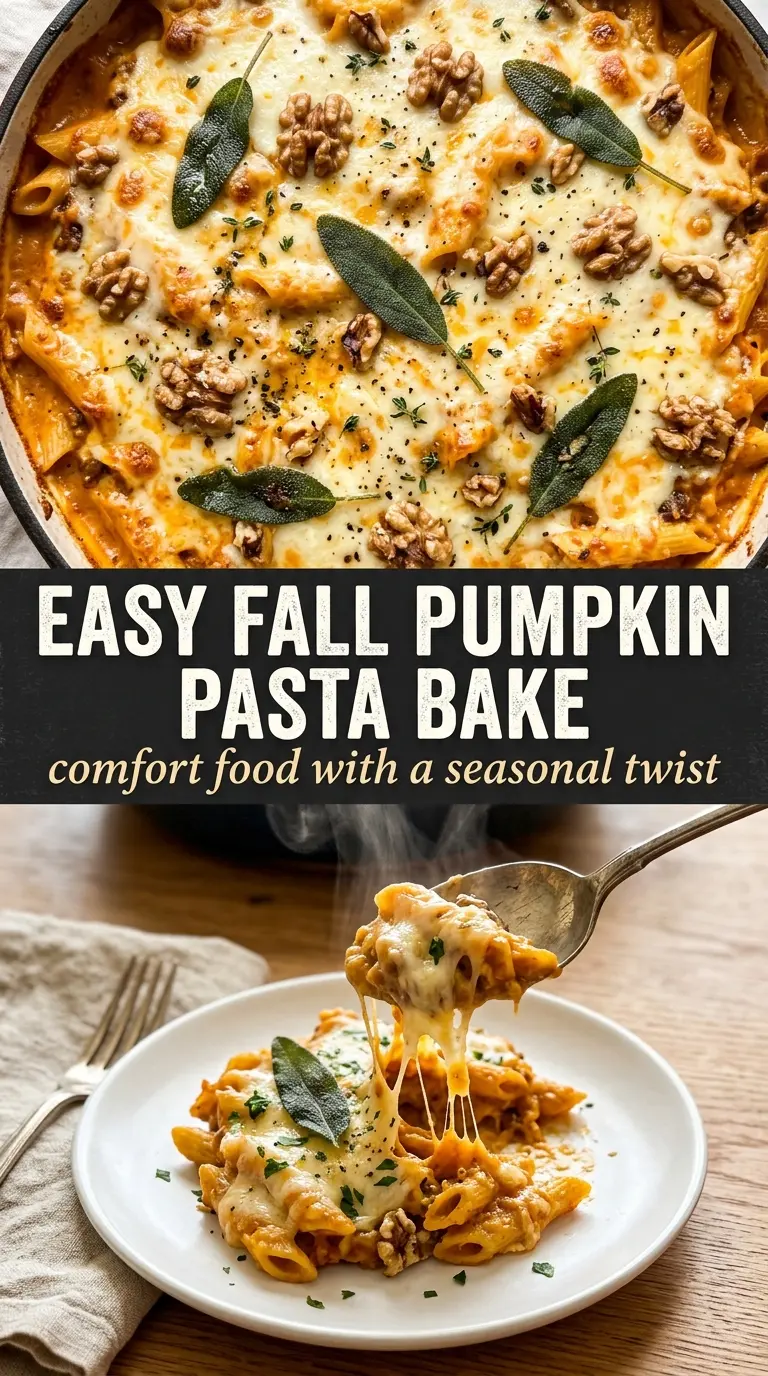
Roasted pumpkin turns into a silky sauce here, then gets tucked around rigatoni and finished with a blanket of melted mozzarella that bubbles into golden edges. The sage keeps it from tasting one-note. It lands somewhere between cozy pasta dinner and something you’d happily bring to the table for guests, with enough texture from the roast and bake to keep every bite interesting.
The part that makes this version work is roasting the pumpkin first instead of simmering it raw. That gives you deeper flavor and a drier, sweeter base, which matters because pumpkin puree can go flat or watery fast. Blending it with parmesan, cream, and broth makes the sauce lush without turning heavy, and frying the sage separately keeps its flavor sharp and fragrant instead of burying it in the bake.
Below you’ll find the small details that matter most: how to keep the sauce smooth, how to keep the pasta from overcooking in the oven, and a few smart swaps if you need to work with what you have on hand.
The pumpkin sauce got so creamy after blending, and the crispy sage on top made it taste like something from a restaurant. I loved that the pasta stayed saucy after baking instead of drying out.
Save this Cheesy Roasted Pumpkin & Sage Pasta Bake for the nights when you want a creamy, cozy dinner with crispy sage on top.
The Trick to Keeping Pumpkin Pasta Bake Rich Instead of Watery
Pumpkin is naturally soft and full of moisture, which is great for soup and risky for baked pasta. If you skip the roast and go straight to sauce, you often end up with something thin that disappears into the noodles. Roasting concentrates the pumpkin and gives the finished bake a deeper, almost nutty sweetness that balances the parmesan and mozzarella.
The other important move is keeping the sauce loose enough to coat the pasta but not so thin that it pools in the dish. The pasta will keep absorbing liquid in the oven, so the sauce should look a little more fluid than you expect before it goes in. That small detail is what keeps the finished bake creamy instead of dry.
What Each Ingredient Is Actually Doing in This Bake
- Pumpkin — Roasting is the key here. It pulls out excess moisture and gives the sauce more body and sweetness than canned puree or steamed pumpkin would.
- Heavy cream — This gives the sauce its silky texture and keeps it from tasting flat. Half-and-half can work in a pinch, but the sauce will be a little lighter and less plush.
- Parmesan — It thickens the sauce and adds salty depth. Grate it fresh if you can, because pre-shredded parmesan often melts less smoothly.
- Mozzarella — This is the stretchy, browned finish that makes the bake feel complete. Low-moisture mozzarella melts best here and gives you those soft, gooey pockets on top.
- Sage — Frying it in oil turns it crisp and fragrant in under a minute. If you add it raw, it gets lost; if you bake it only, it can turn dull and leathery.
- Rigatoni or penne — A tube shape catches the sauce inside and around the edges. Long pasta doesn’t hold the pumpkin sauce as well and tends to clump in a bake like this.
How to Build the Bake So It Stays Creamy After the Oven
Roasting the pumpkin until it actually softens
Spread the cubed pumpkin in a single layer and roast until the edges take on a little color and the centers yield easily with a fork. If the pieces are crowded, they’ll steam instead of roast, and you’ll lose the concentrated flavor that makes the sauce worth building. The pumpkin should taste sweet and full, not watery or raw.
Blending the sauce until it’s smooth, not gluey
Add the roasted pumpkin, garlic, cream, broth, and parmesan to a blender and process until silky. Stop once it looks uniform; overblending won’t help here, and it can make the sauce feel oddly thick and gummy. If it seems too thick to coat pasta, loosen it with a splash of broth before tossing.
Cooking the pasta just shy of done
Pull the pasta when it’s still firmly al dente, because the oven will finish it. If you cook it all the way on the stove, it goes soft in the bake and loses that bite that keeps each forkful interesting. Drain it well so extra water doesn’t thin the sauce.
Finishing with cheese and a hot oven
Toss the pasta with the sauce, transfer it to a baking dish, and cover the top evenly with mozzarella. Bake until the edges are bubbling and the cheese has melted into golden patches. If the top is browning too fast before the center is hot, tent it loosely with foil and let the heat finish the middle.
What to Change When You Need to Work Around the Pantry
Make it dairy-free
Use full-fat coconut cream or an unsweetened oat cream in place of heavy cream, then swap in a good melting dairy-free cheese for the mozzarella. The sauce will still be creamy, but the finish will be a little less stretchy and a little more delicate.
Make it gluten-free
Use your favorite gluten-free pasta, but undercook it by a minute or two so it holds up in the oven. Gluten-free pasta can soften fast once the sauce and heat hit it together, so the slightly firmer boil matters.
Make it vegetarian
Use vegetable broth instead of chicken broth. The cheese and roasted pumpkin already do most of the work, so you won’t lose anything important by making that swap.
Use butternut squash instead of pumpkin
Butternut squash behaves almost the same way and is often easier to find already cut. Roast it the same way and blend it into the sauce just as you would pumpkin; the result will be just a touch sweeter and a little more buttery.
Storage and Reheating
- Refrigerator: Store covered for up to 4 days. The pasta will absorb more sauce as it sits, so it thickens overnight.
- Freezer: It freezes reasonably well, though the sauce can soften a little after thawing. Portion it into airtight containers and thaw in the refrigerator before reheating.
- Reheating: Reheat covered in the oven at 350°F with a splash of broth or cream to loosen the sauce. The most common mistake is blasting it in the microwave until the cheese turns greasy and the pasta dries out at the edges.
Answers to the Questions Worth Asking

Cheesy Roasted Pumpkin & Sage Pasta Bake
Ingredients
Equipment
Method
- Preheat the oven to 400°F. Toss the cubed pumpkin with olive oil, salt, and pepper, then roast on a sheet pan for 20–25 minutes, until tender.
- Reduce the oven to 375°F.
- Cook the pasta in salted boiling water until al dente, then drain.
- Blend the roasted pumpkin, garlic, heavy cream, broth, and parmesan cheese until smooth.
- Fry the sage leaves in a small pan with a bit of olive oil until crisp, about 1 minute, then set aside.
- Toss the cooked pasta with the pumpkin sauce and transfer to a baking dish.
- Top evenly with mozzarella cheese and bake for 15–20 minutes, until bubbly and golden.
- Garnish with the crispy fried sage before serving.