Chicken noodle and wild rice soup lands in that perfect middle ground between hearty and soothing. The broth turns creamy and golden without getting heavy, the wild rice keeps its bite, and the egg noodles soak up just enough of the broth to feel substantial without turning mushy. It’s the kind of soup that tastes like it simmered all afternoon, even though most of the work is just letting the pot do its thing.
What makes this version work is the way the flavors build in layers. The chicken simmers right in the broth with the vegetables and herbs, so the liquid picks up real body before the cream ever goes in. Then a quick roux thickens the soup without dumping a lot of flour straight into the pot, which is how you avoid that chalky, slightly raw taste. The wild rice blend matters here too — it gives you chewy texture and a nutty note that plain white rice just can’t match.
If you’ve ever had chicken noodle soup that felt thin or forgettable, this one fixes that. A couple of small technique choices make a big difference, and the notes below walk you through those details so the soup stays creamy, balanced, and textured all the way through.
The broth got creamy without breaking, and the wild rice stayed pleasantly chewy instead of turning to mush. I used rotisserie chicken and it still tasted like it simmered for hours.
Save this chicken noodle and wild rice soup for the nights when you want a creamy broth, tender chicken, and real chew from the wild rice.
The Reason This Soup Tastes Rich Without Getting Heavy
The mistake with creamy chicken soups is adding too much dairy too early, then boiling it hard until the texture turns grainy or split. This soup avoids that by cooking the chicken and vegetables first, then using a small roux to thicken the broth before the cream goes in. That order matters. You get body from the flour and butter, but the soup still tastes like broth, not paste.
The other detail that changes everything is the wild rice blend. It needs time to soften, and it also holds its shape better than regular rice, so the soup stays interesting after reheating. If you rush it and add the noodles too early, they’ll go soft long before the rice is done. That’s why the noodle timing comes at the end, once the base has already developed flavor.
What Each Ingredient Is Actually Doing in This Bowl
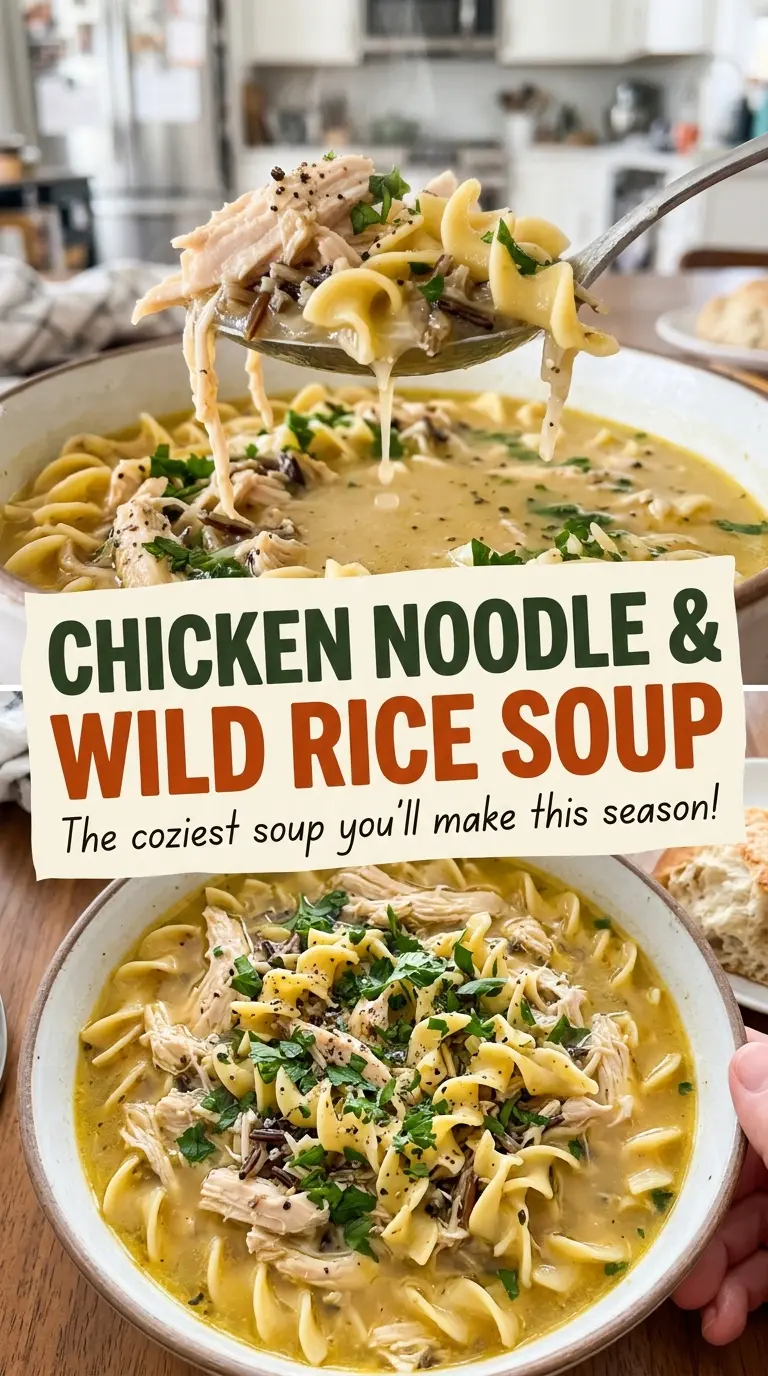
- Chicken breast — It simmers gently in the broth and turns shreddable without a long braise. If you want a richer result, boneless chicken thighs work too and give the soup a little more depth.
- Wild rice blend — This is the ingredient that gives the soup its chew and nutty taste. Plain white rice will cook faster, but it won’t give the same texture or hold up as well in leftovers.
- Carrots, celery, onion, and garlic — They build the base flavor that makes the broth taste like soup instead of seasoned cream. Dice the onion small so it softens into the broth instead of floating in big pieces.
- Butter, flour, and broth — This is the roux-thickened slurry that gives the soup its velvety finish. Whisk the hot broth into the roux gradually so it stays smooth; dumping it in all at once can leave little floury lumps.
- Heavy cream — It softens the broth and gives the soup its rounded finish. Half-and-half will work in a pinch, but the soup will be thinner and a little less luxurious.
- Egg noodles — They absorb flavor quickly and give the soup that classic chicken noodle feel. Add them at the end so they stay springy instead of falling apart in the pot.
Building the Pot in the Right Order
Letting the Broth Do the First Round of Work
Start by simmering the chicken with the wild rice, vegetables, and herbs in the broth until the rice is almost tender and the chicken is cooked through. The broth should stay at a gentle simmer, not a hard boil, or the chicken will tighten up and the vegetables can go stringy at the edges. By the time you remove the chicken, the broth should smell full and savory, not flat. Shred the chicken while it’s still warm so it pulls apart cleanly.
Making the Roux Smooth and Cooks Out the Raw Flour Taste
Melt the butter in a small pan, whisk in the flour, and cook it for 1 to 2 minutes until it looks smooth and smells a little nutty. If it stays pale and pasty, the soup can taste floury later. Whisk in one cup of the hot broth slowly until the mixture is completely smooth, then stir it back into the main pot. That extra step keeps the soup velvety instead of lumpy.
Finishing with Cream and Noodles at the End
Stir in the cream once the base is already hot and thickened, then add the egg noodles. They only need 6 to 8 minutes, and that short window is what keeps them from going bloated and soft. Taste before serving and adjust the salt and pepper at the end, because the broth, cream, and noodles all change how seasoned the soup tastes once they come together.
How to Adapt This Soup for Different Kitchens and Different Cravings
Make It Dairy-Free
Swap the butter for olive oil or a plant-based butter and use full-fat coconut milk or an unsweetened dairy-free cream in place of the heavy cream. The soup will still be creamy, but it will taste a little lighter and may carry a faint coconut note if you use coconut milk.
Use Chicken Thighs for a Deeper Broth
Chicken thighs bring more richness and stay tender even if the soup simmers a little longer than planned. They’re the better choice if you want a more savory result, though they do leave a slightly richer broth than chicken breast.
Skip the Noodles for a Gluten-Free Version
Use a gluten-free flour blend for the roux and replace the egg noodles with extra wild rice or gluten-free pasta added at the end. Gluten-free noodles can soften quickly, so cook them just until tender and serve the soup soon after they go in.
Storage and Reheating
- Refrigerator: Keeps well for 3 to 4 days. The noodles will keep soaking up broth, so expect the soup to thicken a bit as it sits.
- Freezer: It freezes, but the cream and noodles change texture a little. For the best result, freeze before adding the noodles and stir them in fresh when you reheat the soup.
- Reheating: Warm it gently over medium-low heat, stirring often. If it boils hard, the cream can separate and the noodles can turn limp before the center is hot.
Answers to the Questions Worth Asking

Chicken Noodle and Wild Rice Soup
Ingredients
Equipment
Method
- Add chicken breast and chicken broth to a Dutch oven, then stir in wild rice blend, carrots, celery, onion, garlic, dried thyme, and dried parsley. Bring to a simmer and cook for 30 minutes until the wild rice is nearly tender, with steady bubbling visible around the edges.
- Remove the chicken from the pot and shred it, then return the shredded chicken to the Dutch oven. Stir to distribute evenly so the chicken strands are coated in the broth.
- Melt butter in a small pan over medium heat. Whisk in flour and cook for 1-2 minutes until it turns lightly golden and smells nutty.
- Whisk in 1 cup of the hot broth until smooth, with no visible lumps. Stir the roux mixture back into the Dutch oven and simmer briefly to fully combine.
- Stir in heavy cream, then add egg noodles to the pot. Cook for 6-8 minutes until tender, stirring occasionally so noodles don’t stick.
- Season with salt and pepper to taste. Taste and adjust, then turn off the heat once the flavor is balanced and the noodles are fully cooked.