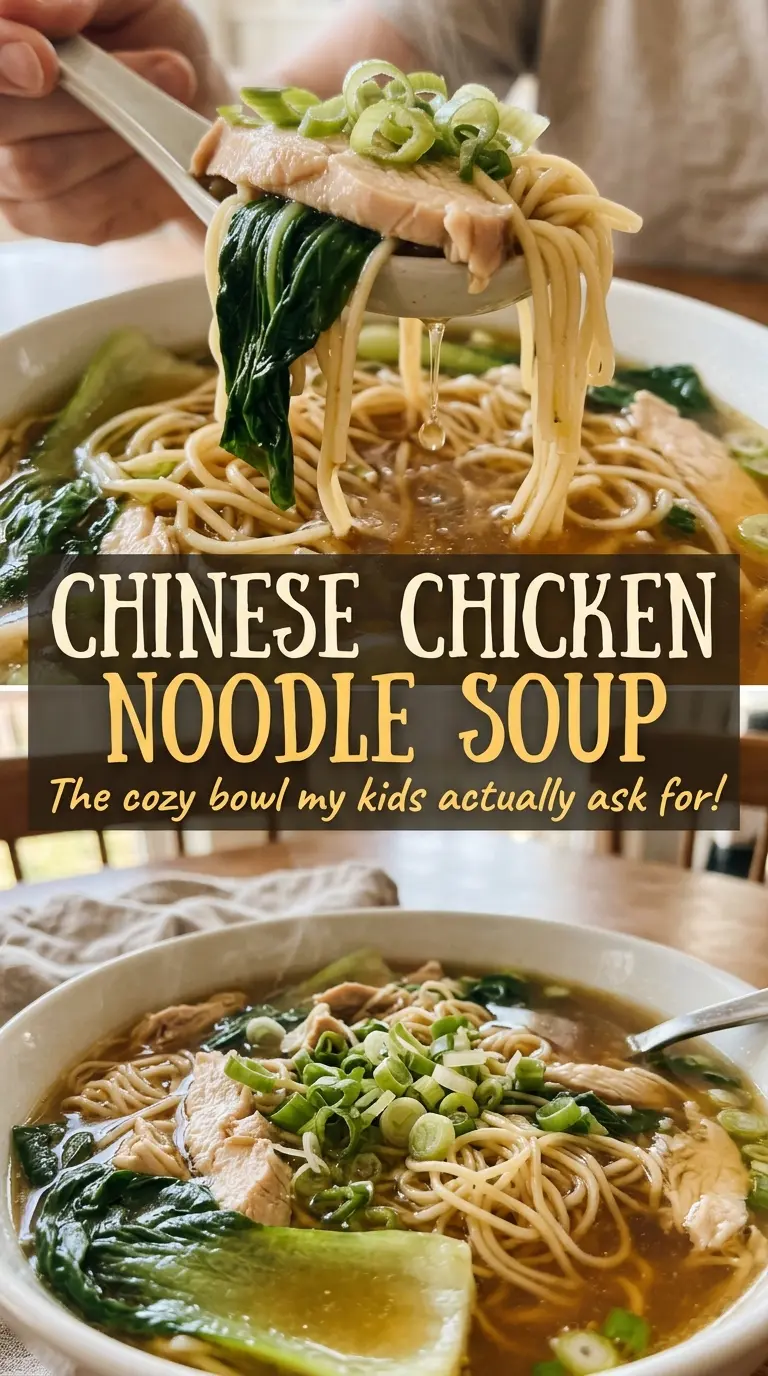
Clear, savory broth with tender chicken, soft noodles, and just enough ginger to wake everything up is what makes Chinese chicken noodle soup the bowl people go back to when they want something light but still deeply satisfying. The broth stays clean and amber instead of cloudy, the noodles hold their shape, and the bok choy adds the kind of green freshness that keeps the soup from feeling heavy.
What makes this version work is the order of the cooking. Garlic and ginger go into the broth early so they can perfume the whole pot without tasting raw, while the noodles are cooked separately so they don’t steal broth or turn mushy in the pot. A little rice vinegar sharpens the chicken broth, white pepper gives the finish that classic gentle heat, and sesame oil goes in near the end so its flavor stays fragrant instead of cooked off.
Below you’ll find the small details that keep the broth clear, the chicken tender, and the noodles in good shape even if you need to hold the soup for a bit before serving.
The broth stayed clear, the chicken was tender, and cooking the noodles separately kept them from getting soggy. I added the chili oil at the table and it brought the whole bowl to life.
Save this Chinese Chicken Noodle Soup for the nights when you want a clear, ginger-scented broth and noodles that stay springy, not bloated.
The Broth Stays Clear When the Noodles Stay Out of the Pot
Most noodle soups turn cloudy or starchy because the noodles simmer directly in the broth. That works for a rustic bowl, but it changes the texture fast and makes leftovers gummy. Cooking the noodles separately keeps the broth clean and lets the soup hold up if you want to serve seconds or save a portion for later.
There’s another small thing here that matters: the chicken goes into broth that’s already seasoned, not plain water. That means the meat absorbs flavor as it cooks instead of tasting like boiled chicken dropped into soup at the end. The bok choy goes in last because it only needs a few minutes to wilt and stay bright.
- Thinly sliced chicken breast — Thin slices cook fast and stay tender in a short simmer. If your pieces are thick, they’ll go stringy before the center is done.
- Shiitake mushrooms — Shiitakes bring a deeper, woodsy note that regular button mushrooms won’t match. If needed, cremini are the closest easy substitute, though the broth will taste a little flatter.
- Rice vinegar — This is the quiet ingredient that keeps the broth from tasting one-note. Add it in small amounts; you want brightness, not sourness.
- White pepper — White pepper gives that classic Chinese-American soup finish without black specks or a roasted flavor. It’s the right spice here because it disappears into the broth instead of announcing itself.
What Each Ingredient Is Actually Doing in This Recipe
- Primary ingredient (the star) — Quality matters most. Choose the best you can find.
- Cooking medium (oil, butter, or broth) — This carries flavors and prevents dryness.
- Seasonings (salt, pepper, spices, herbs) — Layer flavors so nothing overpowers. Build depth gradually.
- Aromatics (garlic, onion, herbs) — Cook with fat to bloom flavors. Become the foundation.
- Supporting ingredients — Complement the main ingredient without overpowering it.
- Sauce or liquid (if applicable) — Brings flavors together. Balance richness with acid.
- Acid (lemon, vinegar, wine, or other) — Brightens and prevents flat-tasting results.
- Final finish (garnish, glaze, or sauce) — Prevents one-dimensional taste and adds visual appeal.
The Simmer That Builds Flavor Without Overcooking the Chicken
Start with the Aromatics
Bring the broth to a steady simmer before the garlic and ginger go in. That heat is enough to pull out their flavor without scorching the garlic or turning the ginger harsh. Let them cook for the full five minutes so the broth takes on a clean, savory perfume instead of tasting like plain stock. If the simmer is too aggressive, the garlic can go bitter, so keep the bubbles gentle.
Season the Broth Before the Chicken Goes In
Stir in the soy sauce, sesame oil, and rice vinegar before the chicken touches the pot. This gives the broth a chance to taste balanced before the meat finishes cooking, and it’s easier to adjust the seasoning at this stage than at the end. The sesame oil should smell nutty and fragrant right away. If the broth tastes thin, add a little more soy sauce first; salt should be the last adjustment.
Poach the Chicken and Mushrooms Together
Add the chicken and shiitakes and keep the soup at a low simmer for 10 to 12 minutes. You want the chicken opaque all the way through and just cooked, not tight and rubbery. If the liquid boils hard, the chicken fibers seize up and the broth can turn murky from all the agitation. Cut a piece open if you’re unsure; it should be white in the center with no translucent spots.
Finish with Greens and Separate Noodles
Cook the noodles in a separate pot, drain them well, and divide them into bowls before ladling in the soup. That keeps the texture springy and stops the noodles from soaking up all the broth. Add the bok choy to the soup only for the last three minutes so it turns tender and glossy without losing its shape. The final pinch of white pepper and the green onion garnish go on at the end, right before serving, when the broth is hottest and most aromatic.
How to Adapt This for Gluten-Free, Spicier, or Brothier Bowls
Gluten-Free Version
Use rice noodles and swap in a gluten-free soy sauce or tamari. The soup keeps the same structure, but the broth may taste a touch rounder and less salty, so taste before serving and adjust with salt or a little more tamari.
More Heat at the Table
Keep the soup itself mild and let chili oil do the heavy lifting at serving time. That gives you a cleaner broth and lets each bowl be as spicy as the person eating it wants, without overpowering the ginger and sesame.
A Brothier, More Sipping-Friendly Bowl
If you want a lighter soup, add another cup of broth and keep the noodles slightly undercooked so they finish in the bowl. The result is more like a noodle soup you can sip from a spoon without losing the balance of chicken and vegetables.
Storage and Reheating
- Refrigerator: Store the broth, chicken, vegetables, and noodles separately for up to 3 days. If the noodles sit in the soup, they’ll keep soaking up liquid and soften fast.
- Freezer: The broth, chicken, and mushrooms freeze well for up to 2 months. Freeze without the noodles and bok choy for the best texture.
- Reheating: Warm the broth gently on the stove until steaming, then add fresh or separately stored noodles at the end. Don’t boil it hard or the chicken will tighten and the vegetables will lose their fresh texture.
Answers to the Questions Worth Asking
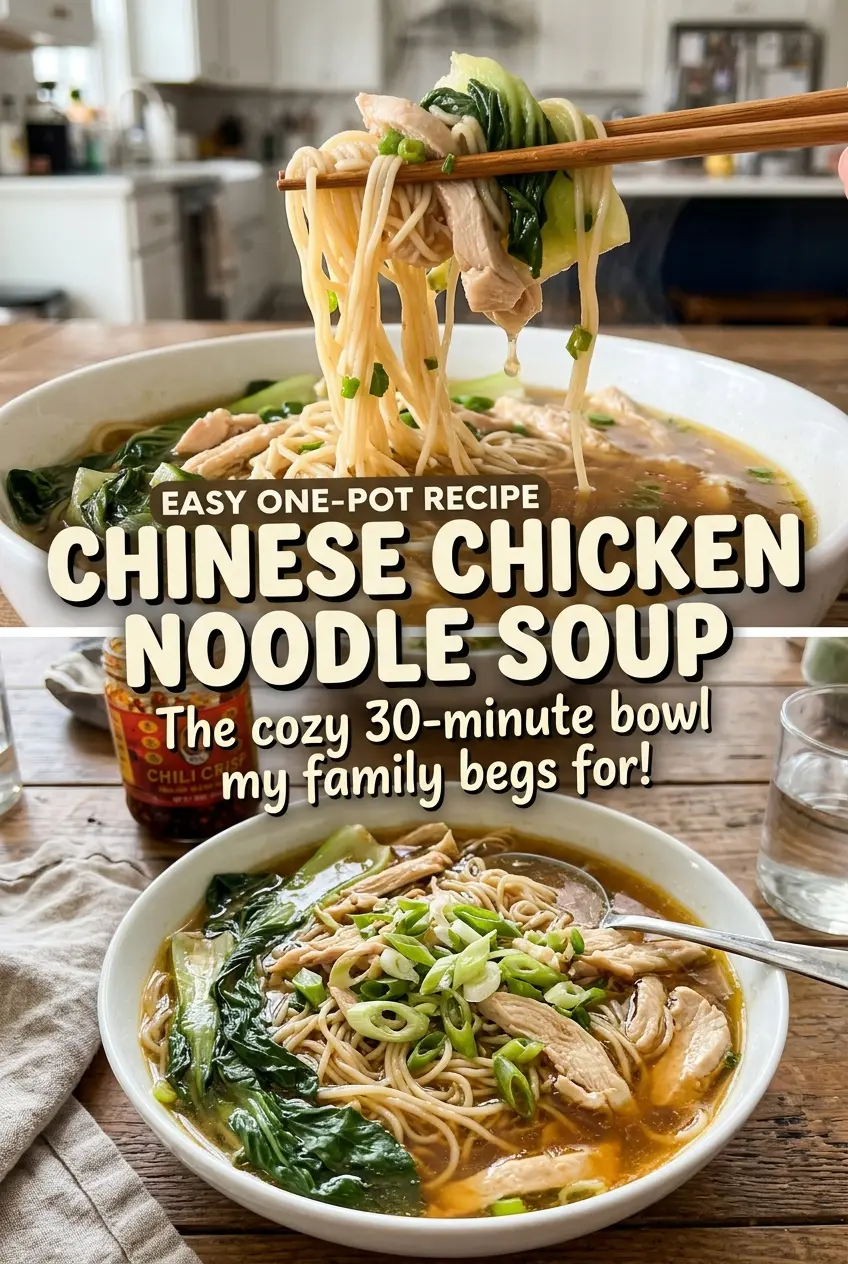
Chinese Chicken Noodle Soup
Ingredients
Equipment
Method
- Bring the chicken broth to a simmer in a large pot, then add the minced garlic and grated ginger and cook for 5 minutes.
- Keep the broth at a gentle simmer while the aromatics infuse, about 5 minutes total, until fragrant.
- Stir in the soy sauce, sesame oil, and rice vinegar, then adjust the seasoning to taste.
- Add the thinly sliced chicken and sliced shiitake mushrooms to the broth, then simmer for 10-12 minutes until the chicken is cooked through and no longer pink.
- Cook the thin Chinese wheat noodles or rice noodles separately according to the package directions, then drain and divide into serving bowls.
- Add the chopped bok choy to the soup and cook for 3 minutes, until wilted and bright green.
- Ladle the hot soup over the noodles and season with white pepper and salt.
- Top each bowl with sliced green onions, cilantro, and a drizzle of chili oil.