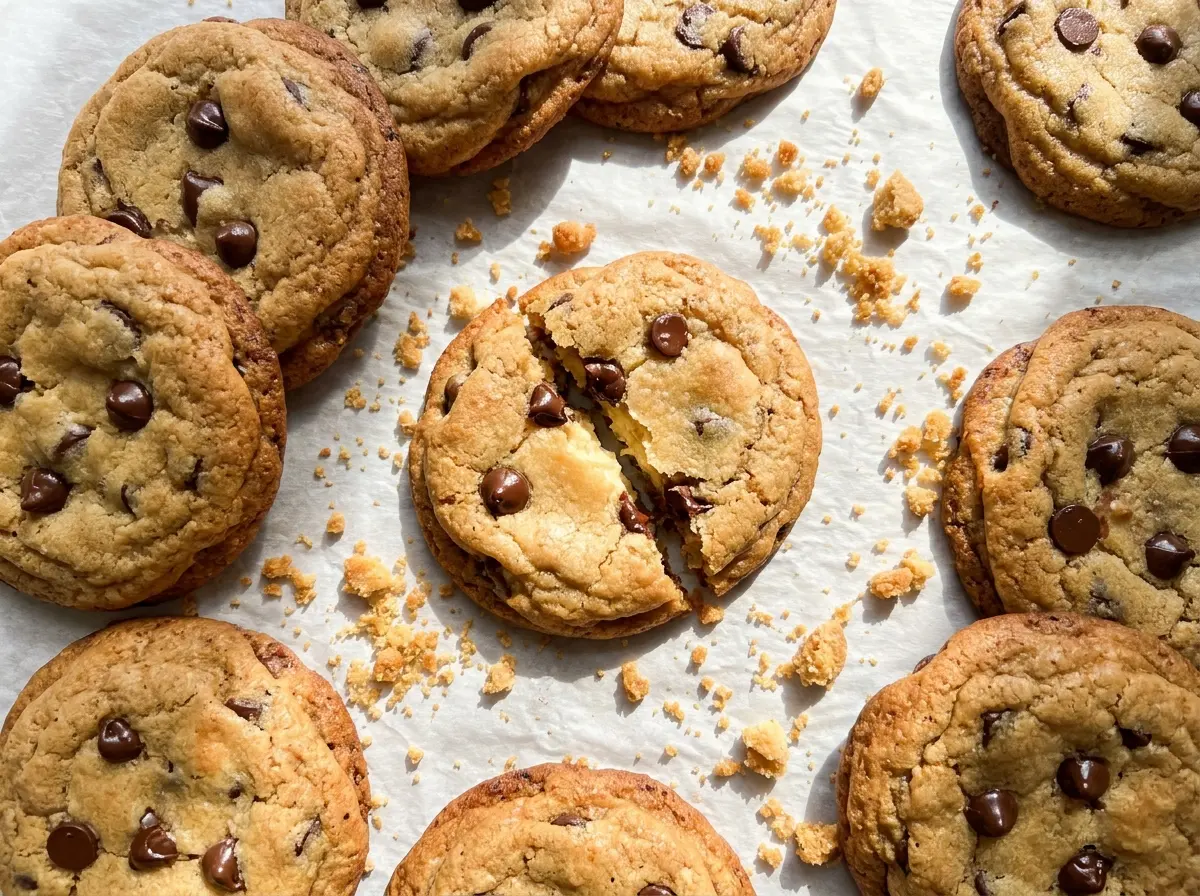
When the butter and cream cheese first come together in the mixer, the dough starts with a silkier feel than a standard chocolate chip cookie dough. That soft base is what I want for Chocolate Chip Cheesecake Cookies: each one bakes up tender, with chocolate in every bite and a center that stays soft after the edges set.
I learned not to rush the mixing or the chill. Beat the softened butter and cream cheese until smooth, then give the covered dough its 30 minutes in the refrigerator; it becomes easier to scoop and less likely to spread too quickly in the oven. The centers should still look a little soft when the cookies come out, because they settle as they cool on the baking sheet. You get a delicate cookie with lightly golden edges and a rich, chocolate-studded middle.
Kitchen Note
Let the butter and cream cheese soften before they go into the bowl. If they’re still cold and firm, they take longer to blend smoothly, and small cream cheese lumps can hide in the dough.
Save these Chocolate Chip Cheesecake Cookies for a batch with tender centers, lightly golden edges, and plenty of semisweet chocolate.
Why These Cookies Get Their Cheesecake Character from the Dough
There’s no separate cheesecake center to fill, chill, or seal inside each cookie. Cream cheese is beaten right into the butter, so its tang and richness are spread through the dough instead. That gives these cookies a different kind of cheesecake character: the whole cookie tastes tender and creamy, while semisweet chocolate keeps each bite from leaning too sweet.
That blended dough also means the texture depends on keeping the mixture even. If butter or cream cheese is still in firm chunks, those pockets won’t disappear just because flour and chocolate are added later. Take the time to scrape down the bowl as you beat the sugars, egg, and vanilla in. A smooth base gives the flour and leaveners a consistent place to mix in, without needing to beat the finished dough for a long time.
It’s a useful distinction if you’re expecting a cookie with a gooey cheesecake filling. These are cookies first: the cream cheese changes the dough itself, and the chocolate chips provide the concentrated bursts of sweetness. The result is soft and cohesive rather than a filled cookie with two separate textures.
What the Cream Cheese, Flour, and Chocolate Each Bring

- Cream cheese — It’s mixed into the dough, not used as a filling, so its texture matters. Use softened cream cheese from a standard package rather than a whipped spread, which is lighter and won’t measure or mix the same way. There isn’t a direct swap that preserves this dough’s balance; leaving it out would make a different cookie.
- All-purpose flour — Spoon it into the measuring cup and level the top rather than scooping directly from the bag. A packed cup adds extra flour and can leave the cookies dry or dense. A straight one-for-one flour substitute isn’t a reliable choice for this particular dough.
- Light brown and granulated sugars — The brown sugar brings moisture and a deeper sweetness, while granulated sugar keeps the dough from relying on brown sugar alone. Pack the brown sugar when measuring it. Changing the proportions shifts both the sweetness and the cookie’s texture, so I keep the balance intact.
- Baking powder and baking soda — They work together with the rest of the dough to give the cookies lift. Check that both are fresh; old leaveners can leave cookies flatter and less tender. Don’t replace one with the other in equal measure.
- Semisweet chocolate chips — A brand you like eating by itself is a good choice, but there’s no need for specialty chocolate here. If you want smaller pockets of chocolate, chop some of the chips before folding them in; that changes the distribution without changing the ingredient.
- Unsalted butter, egg, vanilla, and kosher salt — Use softened butter and a large egg so the dough mixes evenly. Unsalted butter keeps the salt level under control, and vanilla rounds out the chocolate and cream cheese without taking over.
Mixing and Baking the Dough Without Overworking It
Blend the softened butter and cream cheese
Beat the butter and cream cheese in a large bowl with an electric mixer on medium speed until smooth, about 1 minute. Scrape the bowl if either ingredient clings to the sides. You’re looking for a uniform mixture without visible lumps, not a whipped, airy frosting. Starting with softened ingredients helps the two fats come together evenly.
Build the base, then stop mixing when the flour disappears
Add both sugars and beat until fluffy, about 2 minutes, scraping down the bowl as needed. Beat in the egg and vanilla just until combined. In a separate bowl, whisk together the flour, baking powder, baking soda, and salt before adding them to the cream cheese mixture. Mix on low only until no dry flour remains; prolonged mixing at this point can make the cookies tougher.
Fold in the chips and chill the covered dough
Fold in the semisweet chocolate chips so they’re distributed without being crushed by the mixer. Cover the bowl and chill the dough for 30 minutes. It should feel firmer and easier to portion after chilling, rather than loose and sticky. While it chills, heat the oven to 350°F and line two baking sheets with parchment paper.
Bake one sheet at a time and let the cookies settle
Scoop the dough into 2-tablespoon portions and space them about 2 inches apart on the prepared sheets. Bake one sheet at a time for 10 to 12 minutes, until the edges are set and lightly golden while the centers still look soft. If you wait for the centers to look fully firm in the oven, the cookies will keep baking on the hot sheet. Let them cool on the baking sheet for 5 minutes, then transfer them to a wire rack to cool completely.
Two Easy Ways to Change the Bite
Make a smaller, snack-size batch
Scoop portions smaller than the standard 2 tablespoons for petite cookies that are easy to serve alongside coffee or tuck into a lunch container. They’ll bake faster, so use the same edge-and-center cues instead of relying on the full-size cookie timing. You’ll get more cookies with a little less soft middle in each one.
Turn some of the chips into smaller bits
Chop some of the semisweet chips before folding them into the dough, leaving the rest whole. The smaller pieces spread chocolate through more bites, while the whole chips still give you distinct pockets. This keeps the dough’s ingredient balance unchanged but makes the chocolate feel more evenly distributed.
Storage and Reheating
- Refrigerator: Store cooled cookies in an airtight container for up to 4 days. They’ll feel firmer when cold; let one sit at room temperature before eating if you prefer a softer bite.
- Freezer: Freeze fully cooled cookies in an airtight freezer-safe container for up to 2 months. Separate layers so they don’t stick together, then thaw in the refrigerator.
- Reheating: These cookies don’t need reheating; bring chilled cookies toward room temperature for a softer texture. Avoid microwaving a whole batch, since the chocolate can heat unevenly and the cookies can turn overly soft.
Questions That Come Up While Baking These Cookies
Chocolate Chip Cheesecake Cookies
Ingredients
Equipment
Method
- Beat the butter and cream cheese in a large bowl with an electric mixer on medium speed until smooth, about 1 minute.
- Add the brown sugar and granulated sugar and beat until fluffy, about 2 minutes, scraping down the bowl as needed.
- Beat in the egg and vanilla until combined.
- In a separate bowl, whisk together the flour, baking powder, baking soda, and salt.
- Add the dry ingredients to the cream cheese mixture and mix on low just until no dry flour remains.
- Fold in the chocolate chips.
- Cover the bowl and chill the dough for 30 minutes.
- Heat the oven to 350°F.
- Line two baking sheets with parchment paper.
- Scoop the dough into 2-tablespoon portions, spacing them about 2 inches apart on the prepared sheets.
- Bake one sheet at a time for 10 to 12 minutes, until the edges are set and lightly golden while the centers still look soft.
- Let the cookies cool on the baking sheet for 5 minutes.
- Transfer the cookies to a wire rack to cool completely.