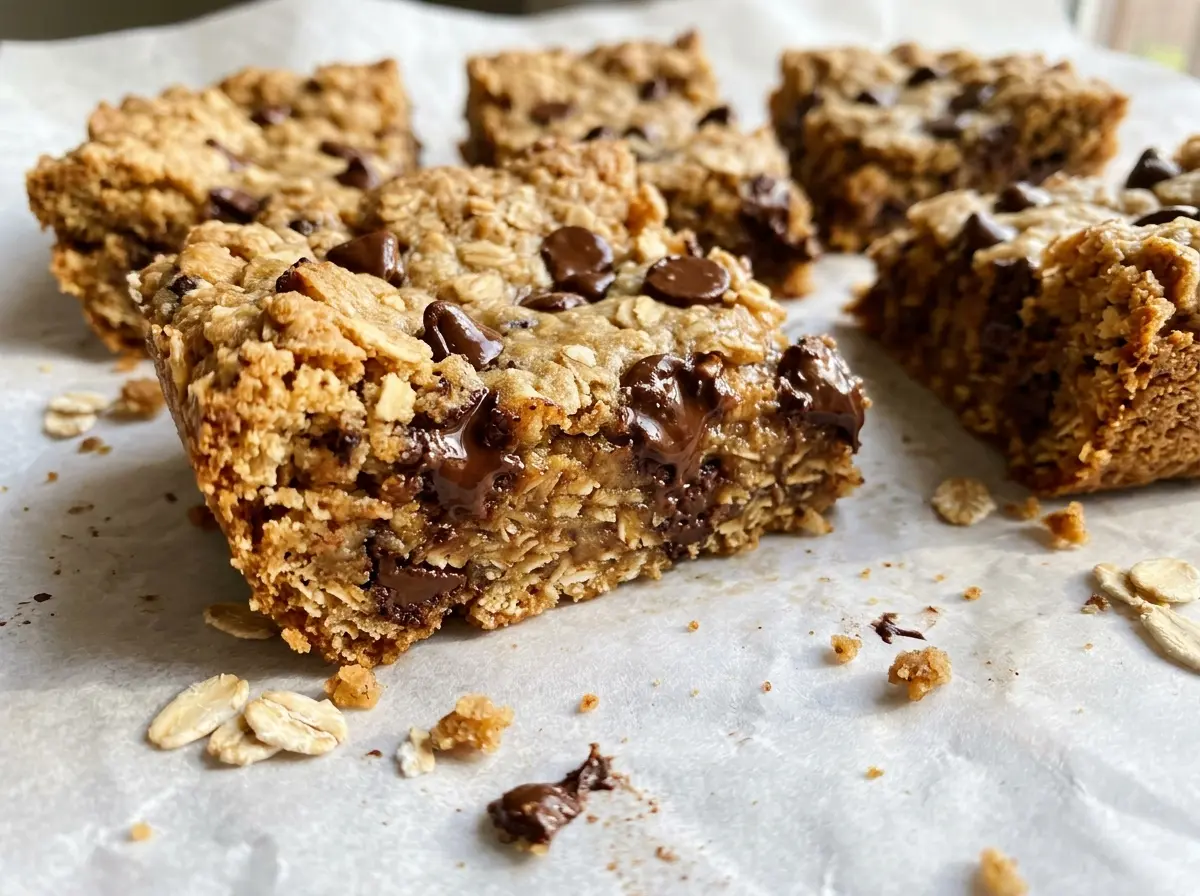
The dough goes into the pan as one thick layer, and that’s where these stop behaving like cookies and start baking like bars. There’s no need to portion out dozens of scoops or keep a second tray waiting. Chocolate Chip Oatmeal Cookie Bars bake together in a 9×13-inch pan, with oats throughout and semisweet chocolate in every bite.
I cream softened butter with both sugars before adding the eggs, which gives the dough a smooth, cohesive start. Then I mix the flour in only until it disappears; a long mixing session after that can make the bars tougher than they need to be. The old-fashioned oats give the finished bars their hearty chew, while the golden top and set center let you know they’re ready for a full cool in the pan. Cut into squares, they’re soft, chocolatey oatmeal cookies with the easy shape of a bar.
Kitchen Note
Let the bars cool completely in the pan before cutting. They’re tender while warm, and waiting gives the middle time to set so the squares hold together instead of smearing.
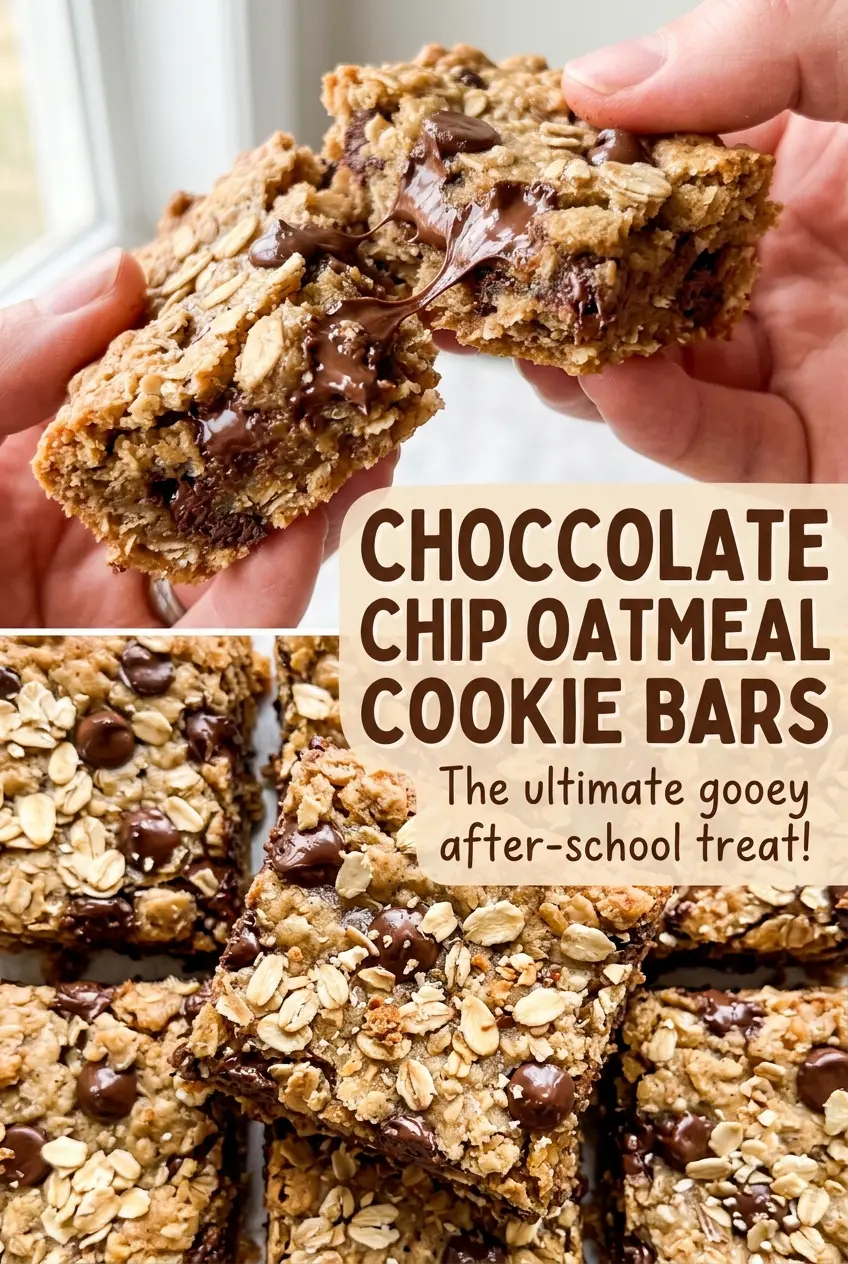
Save these Chocolate Chip Oatmeal Cookie Bars for a chewy, chocolate-studded treat that bakes all at once in one pan.
Why the 9×13-inch pan helps the center and edges bake together
Cookie bars have one advantage over a tray of individual cookies: all the dough bakes in the same pan. That only helps if the layer is even. A thicker patch in the middle takes longer to bake through, while thinner areas around it can turn dry before the center looks set. Spreading the dough evenly gives the whole pan a better chance of finishing at the same time.
The oats make an even layer especially useful. They give the dough more body than a plain cookie dough, so rough mounds won’t melt into a perfectly level surface as they bake. Take a moment to push the dough into the corners and smooth the top. You don’t need to press it hard; just avoid leaving a high ridge on one side and a thin spot on the other.
Use the specified 9×13-inch pan rather than choosing a smaller one and keeping the same baking window. A smaller pan makes a deeper layer, and the center won’t bake at the same rate. Consistent thickness—not a perfectly polished top—is what gives these bars an even, tender bite from edge to center.
Why old-fashioned oats matter more than the chocolate chips
- Old-fashioned rolled oats — These give the bars a distinct oat texture and a pleasant chew. Quick oats absorb moisture differently and make the crumb softer and less defined, so stick with rolled oats for the texture this pan is meant to have.
- Unsalted butter — Butter provides the rich base and creams with the sugars to make a cohesive dough. Use it softened, not melted; melted butter won’t cream the same way. A standard grocery-store butter works well, and unsalted gives you control over the salt in the dough.
- Brown and granulated sugars — Packed light brown sugar adds moisture and a deeper caramel note, while granulated sugar balances the sweetness and helps the edges bake up nicely. The two sugars aren’t interchangeable if you want the same balance of tenderness and structure.
- Eggs and vanilla — Eggs bind the dough and help it set as it bakes. Vanilla rounds out the butter and chocolate; the extract you already keep in the pantry is fine here.
- All-purpose flour, baking soda, and kosher salt — Flour supports the bars, baking soda provides lift, and salt keeps the sweetness from tasting flat. Spoon flour into the measuring cup and level it rather than packing it in; extra flour can leave the bars dense.
- Semisweet chocolate chips — Semisweet chips keep the bars from becoming overly sweet alongside the sugars. Use a brand you enjoy eating on its own; chopped semisweet chocolate also works if you prefer irregular pockets and streaks of chocolate.
From creamed butter to an evenly baked pan
Prepare the pan and oven
Heat the oven to 350°F and grease a 9×13-inch baking pan. Getting the oven heating while you make the dough means the pan can go in as soon as it’s filled. Grease the corners as well as the flat base so the baked edges release more easily. Keep the pan size consistent so the dough layer bakes as expected.
Cream the butter and sugars
Beat the softened butter, packed brown sugar, and granulated sugar with a hand mixer on medium speed until creamy, about 2 minutes. The mixture should look blended rather than like separate streaks of butter and sugar. If the butter is cold, it won’t cream smoothly; if it’s melted, it won’t hold the same structure. Start with properly softened butter for a dough that comes together evenly.
Add the eggs, then the dry ingredients
Beat in the eggs one at a time, then mix in the vanilla. In a separate bowl, whisk the flour, baking soda, and salt before adding them to the butter mixture. Mix just until the flour is incorporated, stopping when no dry pockets remain. Continuing to beat at this point can develop the flour and make the baked bars tougher.
Fold in the oats and chocolate
Stir in the rolled oats and semisweet chocolate chips until they’re distributed through the dough. Scrape the sides of the bowl as you mix so a plain patch of dough doesn’t get left behind. The finished dough will be thick enough to spread rather than pour. Transfer it to the greased pan and spread it into an even layer.
Bake until the center looks set
Bake for 25 to 30 minutes, until the top is golden and the center looks set. Start checking at the shorter end of that range, since ovens can vary. A pale top and a center that still looks unset need more time; don’t rely on the clock alone. Let the pan cool completely before cutting the bars.
Ways to change the chocolate and keep the oatmeal-bar structure
Use dark chocolate for a less-sweet bar
Swap the semisweet chips for the same amount of dark chocolate chips. The result tastes more bittersweet and lets the brown sugar come through more clearly, while keeping the same dough and pan method.
Make a gluten-free batch
Replace the all-purpose flour with the same amount of a cup-for-cup gluten-free baking blend made to replace wheat flour, and choose certified gluten-free rolled oats. The bars may have a slightly more delicate crumb, so let them cool fully before slicing.
Trade the chocolate for raisins
Use raisins in place of the chocolate chips for a fruitier, less chocolate-forward oatmeal bar. They’ll make the bars taste sweeter and more old-fashioned, without changing the pan size or the basic method.
Storage and Reheating
- Refrigerator: Store cooled bars in an airtight container for up to 5 days. They’ll become firmer when chilled.
- Freezer: Freeze the cooled bars in an airtight container, with parchment between layers, for up to 2 months. Thaw at room temperature before serving.
- Reheating: Warm an individual bar in the microwave for about 10 seconds, then add a few seconds if needed. Long heating makes the chocolate overly hot and the bar tough around the edges.
Questions about getting these oatmeal cookie bars right
Chocolate Chip Oatmeal Cookie Bars
Ingredients
Equipment
Method
- Heat the oven to 350°F and grease a 9x13-inch baking pan.
- In a large bowl, beat the softened butter, packed light brown sugar, and granulated sugar with a hand mixer on medium speed until creamy, about 2 minutes.
- Beat in the eggs one at a time, then mix in the vanilla extract.
- In a separate bowl, whisk together the flour, baking soda, and kosher salt, then add to the butter mixture and mix just until combined.
- Stir in the oats and chocolate chips, then spread the dough evenly in the prepared pan.
- Bake for 25 to 30 minutes, until the top is golden and the center looks set.
- Cool completely in the pan before cutting into bars.