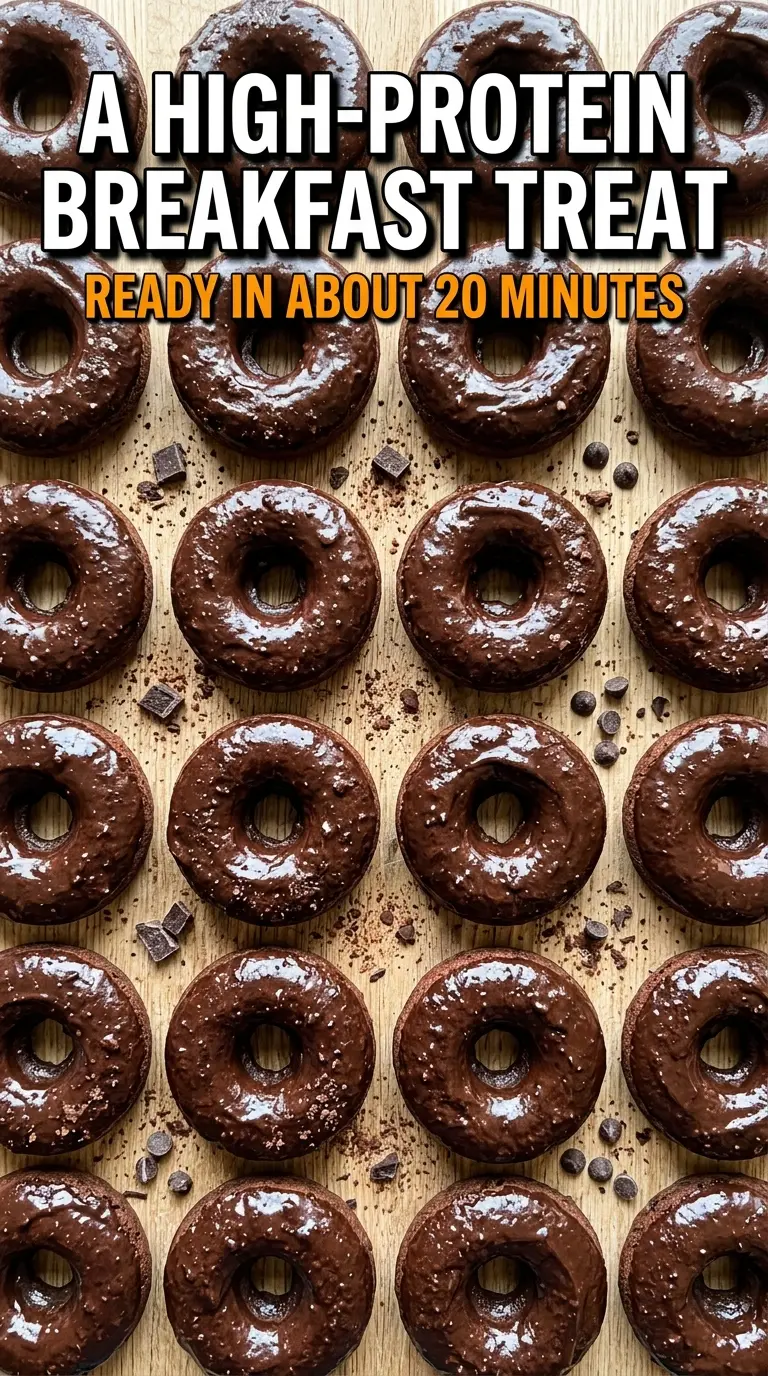
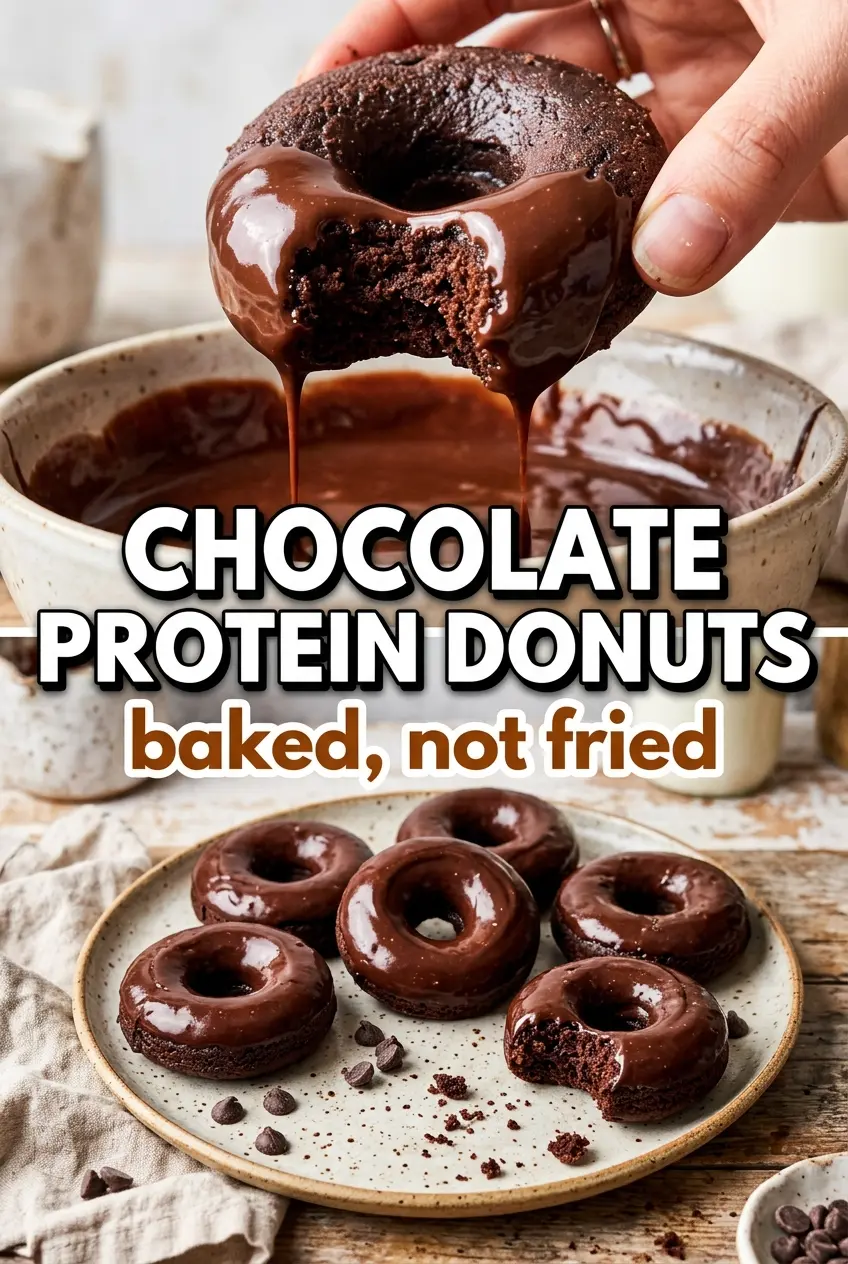
Chocolate protein donuts hit that sweet spot between treat and fuel. They’re baked, not fried, so you get a soft crumb instead of a greasy finish, and the chocolate flavor comes through without tasting like a compromise. The glaze sets into a thin shell on top, which makes each bite feel a little more like a bakery donut than a gym snack.
What makes this version work is the balance between flour, protein powder, and Greek yogurt. Protein powder can dry out fast if it’s left on its own, so the yogurt and eggs carry a lot of weight here by keeping the batter tender and giving the donuts enough structure to rise cleanly. The batter is thick enough to pipe, which matters — spooning it in tends to make uneven donuts that bake up lopsided.
Below, you’ll find the exact texture cues I watch for in the oven, plus a few swaps that keep these donuts working whether you want them sweeter, dairy-free, or a little more dessert-like.
The batter piped into the pan so cleanly, and the donuts came out soft and springy instead of dry. I loved that the chocolate glaze set up in a thin layer without sliding off.
Like these chocolate protein donuts? Save them to Pinterest for a baked, high-protein breakfast that still feels like a treat.
The Hidden Problem With Protein Donuts: Dry Batter and Dense Crumbs
Protein donuts fail for the same reasons protein muffins fail: too much dry mix, not enough moisture, and overbaking by even a minute or two. Chocolate protein powder absorbs liquid differently than flour, so the batter needs to look thicker than a standard cake batter but still soft enough to pipe without fighting the bag. If it’s stiff in the bowl, the donuts usually bake up heavy and a little rubbery.
The other trap is the oven. These are small, and small baked goods carry over quickly. Pull them when the tops spring back and a toothpick comes out clean or with just a few moist crumbs. If you wait for a deep brown top, you’ve already gone too far.
What Each Ingredient Is Doing in These Chocolate Protein Donuts
- All-purpose flour — This gives the donuts their tender, familiar bakery crumb. You can swap in a 1:1 gluten-free baking blend, but the texture may be a touch more delicate. I wouldn’t use almond flour here; it changes the structure too much for the batter to hold cleanly in a donut pan.
- Chocolate protein powder — This is the ingredient that makes them feel more filling, but it’s also the one most likely to dry things out. A whey-based powder usually bakes softer than a very dense plant-based blend. If yours is especially thick, add an extra tablespoon of milk so the batter stays pipeable.
- Greek yogurt — This keeps the donuts moist and gives them a slight tang that works with the chocolate. Full-fat or low-fat both work. If you need a dairy-free option, use a thick dairy-free yogurt that isn’t watery, or the batter can get loose and bake up gummy.
- Honey or maple syrup — Both sweeten the donuts and help with browning. Honey gives a slightly rounder, fuller sweetness; maple keeps the finish a little lighter. Either works, but don’t cut the amount too much or the chocolate flavor starts tasting flat.
- Melted coconut oil — This adds tenderness and a soft bite after baking. Neutral oil works too if you don’t want coconut flavor. Butter can be used, but the donuts will set up a little firmer once cooled.
- Dark chocolate chips — Melted chocolate makes a fast glaze that firms up without getting hard and brittle. A good quality chocolate chip or chopped bar matters here because the glaze is such a small part of the recipe; cheap chips can taste waxy once melted.
The Short Bake That Keeps These Donuts Soft
Mixing the Dry Ingredients First
Whisk the flour, protein powder, baking powder, and salt until the mixture looks uniform and there are no clumps of protein powder hiding in the bowl. Protein powder tends to form little dry pockets that don’t disappear later, and those spots bake up chalky. This step takes less than a minute, but it keeps the texture even.
Bringing the Wet Ingredients Together
Whisk the eggs, Greek yogurt, honey, milk, coconut oil, and vanilla until the mixture looks smooth and glossy. If the coconut oil is too hot, it can make the eggs look slightly curdled; if that happens, let it cool for a minute before moving on. You want the wet mixture fully blended so it coats the dry ingredients evenly.
Folding the Batter Without Overworking It
Pour the wet mixture into the dry ingredients and stir just until no dry streaks remain. The batter should be thick, but not stiff enough to tear when you lift the spoon. Overmixing here makes the donuts tight and bouncy instead of soft.
Piping, Baking, and Glazing
Transfer the batter to a piping bag or a zip-top bag with the corner snipped, then pipe each cavity about three-quarters full. Bake at 350°F for 10 to 12 minutes, and start checking at the 10-minute mark; the tops should spring back lightly and the bottoms should look set, not wet. Let them cool for 5 minutes before dipping the tops in melted chocolate so the glaze clings instead of sliding off.
How to Adapt These Donuts Without Losing the Soft Crumb
Make Them Dairy-Free
Swap the Greek yogurt for a thick dairy-free yogurt and use a dairy-free milk. The donuts will still bake up tender, but they may lose a little of the tang that makes the chocolate flavor pop. Keep the texture thick and spoonable, not pourable, or the donuts spread too much in the pan.
Use a Gluten-Free Flour Blend
A good 1:1 gluten-free baking blend works here in place of the all-purpose flour. The donuts will still hold together, though the crumb can be a touch more delicate and slightly less springy. Don’t use a single-ingredient flour like oat or almond flour as a direct swap.
Turn Them Into a Post-Workout Snack
Use the chocolate glaze sparingly or skip it and dust the tops with a little cocoa powder instead. That keeps the sugar lower while letting the protein powder and Greek yogurt do their job. The donuts still taste rich, just less dessert-like.
Storage and Reheating
- Refrigerator: Store in an airtight container for up to 4 days. The glaze may firm up more in the fridge, but the donuts stay moist if they’re sealed well.
- Freezer: Freeze the unglazed donuts for up to 2 months. Wrap them individually so they don’t stick together, then glaze after thawing for the best finish.
- Reheating: Warm a donut for 10 to 15 seconds in the microwave just until soft. Too much heat makes the protein powder taste dry and the glaze can turn sticky instead of smooth.
Questions I Get Asked About These Chocolate Protein Donuts
Chocolate Protein Donuts
Ingredients
Equipment
Method
- Preheat the oven to 350°F and grease a donut pan with a thin coating so the donuts release easily.
- Whisk together the all-purpose flour, chocolate protein powder, baking powder, and salt until evenly combined and no dry pockets remain.
- Whisk the eggs, plain Greek yogurt, honey or maple syrup, milk, melted coconut oil, and vanilla extract until smooth.
- Pour the wet ingredients into the dry ingredients and stir just until combined, keeping the batter slightly thick.
- Transfer the batter to a piping bag or zip-top bag with the corner snipped and pipe into the donut pan cavities, filling each about three-quarters full.
- Bake at 350°F for 10–12 minutes until a toothpick comes out clean and the tops spring back lightly.
- Let the donuts cool for 5 minutes in the pan so they set enough to dip without breaking.
- Dip the tops in melted dark chocolate chips and let set until the glaze firms up before serving.