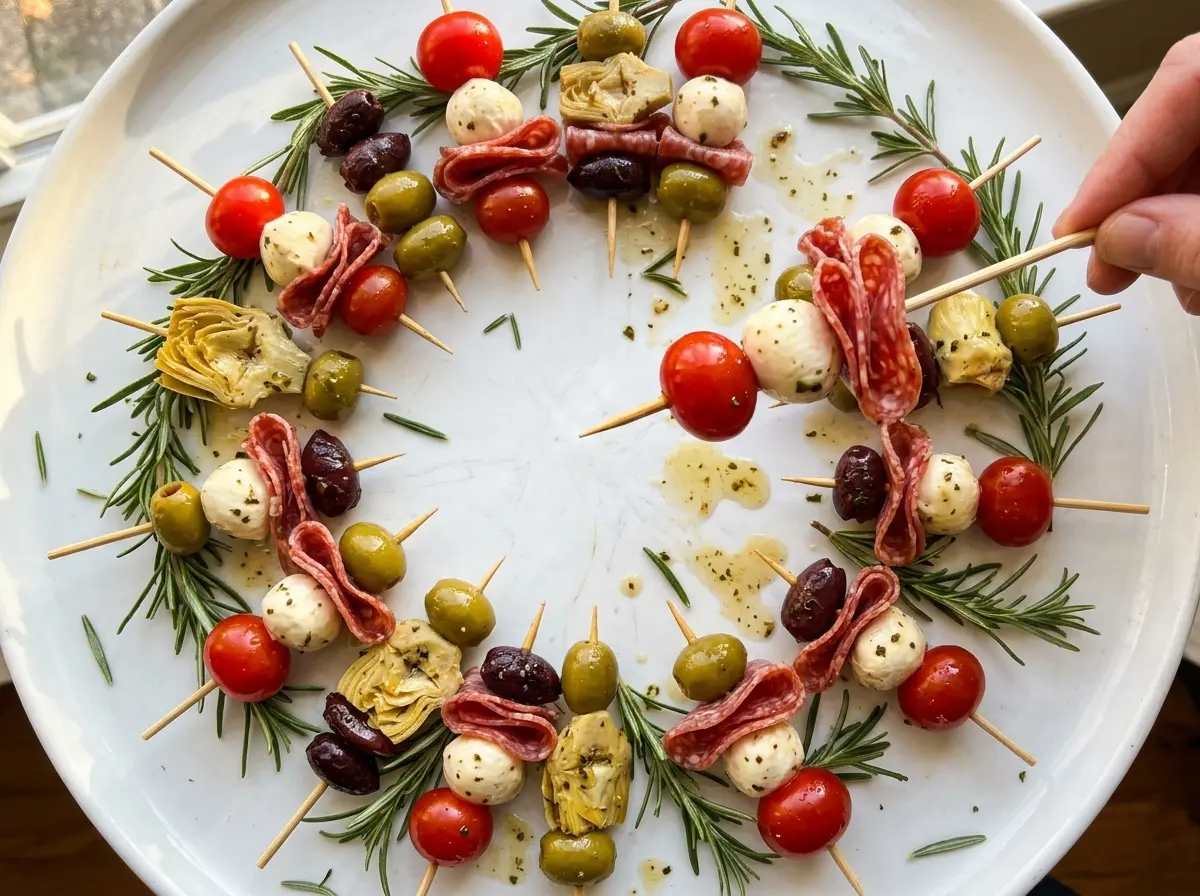
A wet pepper strip can leave a slick on the platter, and a pile of antipasto can hide the rosemary before anyone has taken a bite. I arrange this Christmas Antipasto Wreath so the green base stays visible and each ingredient has its own little patch of color. It’s a festive, no-cook centerpiece, but it’s also easy to serve: guests can reach for a tomato, a mozzarella ball, or a folded piece of salami without picking through a crowded mound.
The rosemary does more than frame the food. Overlapping sprigs make a leafy base that gives the toppings a clear shape, while the open center keeps the wreath from looking like a full platter of scattered snacks. I keep the ingredients in alternating clusters, which lets the red peppers, tomatoes, olives, and mozzarella stand out against the green. The result is bright and savory, with the tangy artichokes and olives balancing the mild mozzarella and Genoa salami.
Kitchen Note
Fold each thin slice of Genoa salami into quarters before arranging it. The compact folds make the salami easy to pick up and keep its cluster from spreading over the rosemary.
Save this Christmas Antipasto Wreath for a festive spread of rosemary, bright peppers, olives, and folded Genoa salami.
How to Keep an Antipasto Wreath From Looking Like a Snack Pile
A wreath needs a little visual breathing room. When the ingredients are spread across the entire platter, the rosemary disappears and the arrangement reads as a regular antipasto tray. Keeping the center open and letting the rosemary show between clusters gives the food a distinct ring shape. It also makes the platter look intentional without adding extra garnish.
Think in small neighborhoods of color rather than one continuous layer. Tomatoes and roasted red peppers bring the brightest reds; mozzarella adds pale, rounded shapes; olives and artichokes add darker, earthy tones. Alternating those clusters creates contrast around the circle, so one section doesn’t become a solid block of a single ingredient. The rosemary should remain visible around and between the toppings, not just at the outer edge.
There’s no need to make every cluster identical. A few pieces in one area and a fuller patch in another still look natural, as long as the colors are distributed around the ring. Leave enough room to see the open center, too. That negative space is what makes this read as a wreath rather than a platter with a hole in the middle.
What Each Antipasto Ingredient Brings to the Wreath

- Fresh rosemary — The sturdy sprigs form the wreath’s green outline, so fresh bunches matter more here than they would as a chopped seasoning. Choose sprigs with flexible, fragrant needles; dried rosemary won’t make a leafy base. Rinse it and dry it thoroughly before arranging.
- Cherry tomatoes — Their juicy bite and rounded shape give the wreath bright red color. Choose tomatoes that feel firm and have unbroken skins; very soft ones are more likely to leak onto the platter. Rinse and dry them well.
- Ciliegine mozzarella — These small mozzarella balls are already sized for a platter and bring a mild, creamy contrast to the salty, marinated ingredients. Drain them well. Larger fresh mozzarella can work if cut into bite-size pieces, but it won’t give you the same neat little round shapes.
- Thinly sliced Genoa salami — Genoa salami brings a savory, cured-meat flavor and folds neatly into small portions. Thin slices are useful here; thicker slices won’t make the same compact folds. A different salami will change the seasoning and texture, so Genoa is the best fit for this arrangement.
- Marinated artichoke hearts — Their tangy, tender texture adds a different bite from the crisp tomatoes and firm olives. Drain them and pat them dry; lingering marinade can make the rosemary and nearby ingredients slick. Quartered pieces are easier to distribute in small clusters.
- Pitted green olives — The olives add a briny, firm bite that offsets the milder ingredients. Drained, pitted olives are the practical choice for a platter guests can eat without fussing with pits.
- Roasted red peppers — These soft, sweet strips add another red accent and a little contrast to the fresh tomatoes. Drain and pat them dry so they don’t leave extra liquid on the platter. Strips are easy to lay into the wreath’s curved shape.
Build the Rosemary Ring Before Adding the Antipasto
Drain the marinated ingredients and dry the fresh ones
Drain the mozzarella, artichokes, and olives first. Pat the artichokes dry, and pat the roasted pepper strips dry as well; surface liquid is what makes the platter look wet. Rinse the rosemary and tomatoes, then dry them thoroughly. Take a moment here, because damp rosemary can make the base harder to arrange and wet toppings can blur the clean clusters.
Lay down an overlapping rosemary base
Use a 16-inch round serving platter and arrange the rosemary sprigs in overlapping layers. Work around the platter to form a ring, leaving the center open. Overlap the sprigs enough that the base looks continuous instead of like separate spokes. Keep the tips following the curve so the outline feels wreath-shaped.
Set out contrasting ingredient clusters
Arrange the tomatoes, mozzarella, quarter-folded salami, artichokes, olives, and pepper strips in alternating clusters over the rosemary. Spread the colors around the wreath instead of placing all of one ingredient in a single section. Keep the toppings on the rosemary, with some green still visible between the clusters. If one section feels crowded, redistribute a few pieces before adding more.
Serve the wreath while the colors are crisp
This platter is ready as soon as the ingredients are arranged, so it doesn’t need cooking or a final garnish. Serve it right away, or cover it loosely and refrigerate it until serving. A loose cover protects the food without pressing down on the rosemary or shifting the clusters. Bring it out as a whole platter and let guests choose from the different sections.
Easy Ways to Adapt the Wreath for Different Guests
Make It Vegetarian Without Losing the Color
Leave out the Genoa salami and arrange the tomatoes, mozzarella, artichokes, olives, and peppers around the rosemary instead. The platter stays varied, though it loses the salami’s savory, cured flavor and has fewer folded bites.
Make a Dairy-Free Wreath
Omit the mozzarella and distribute the tomatoes, salami, artichokes, olives, and pepper strips across the rosemary base. You’ll lose the creamy, mild contrast from the cheese, but the remaining ingredients still bring plenty of color and salty, tangy bites.
Storage and Reheating
- Refrigerator: Cover loosely and refrigerate at 40°F or below for up to 4 hours. The rosemary may soften slightly, but the platter is still ready to serve cold.
- Freezer: Freezing isn’t a good fit for this assembled platter. The fresh tomatoes, mozzarella, and other moist ingredients can lose their pleasant texture after thawing.
- Reheating: No reheating is needed; serve it cold. Don’t warm the assembled wreath, since the fresh rosemary and tomatoes are meant to stay cool and distinct.
Questions That Come Up When Making an Antipasto Wreath
Christmas Antipasto Wreath
Ingredients
Equipment
Method
- Drain the mozzarella, artichokes, and olives, and pat the artichokes dry; pat the pepper strips dry as well. Rinse and thoroughly dry the rosemary and tomatoes.
- On a 16-inch round serving platter, arrange the rosemary sprigs in overlapping layers to form a wreath, leaving the center open.
- Arrange the tomatoes, mozzarella, salami folded into quarters, artichokes, olives, and pepper strips in alternating clusters over the rosemary.
- Serve right away, or cover loosely and refrigerate at 40°F or below for up to 4 hours before serving.