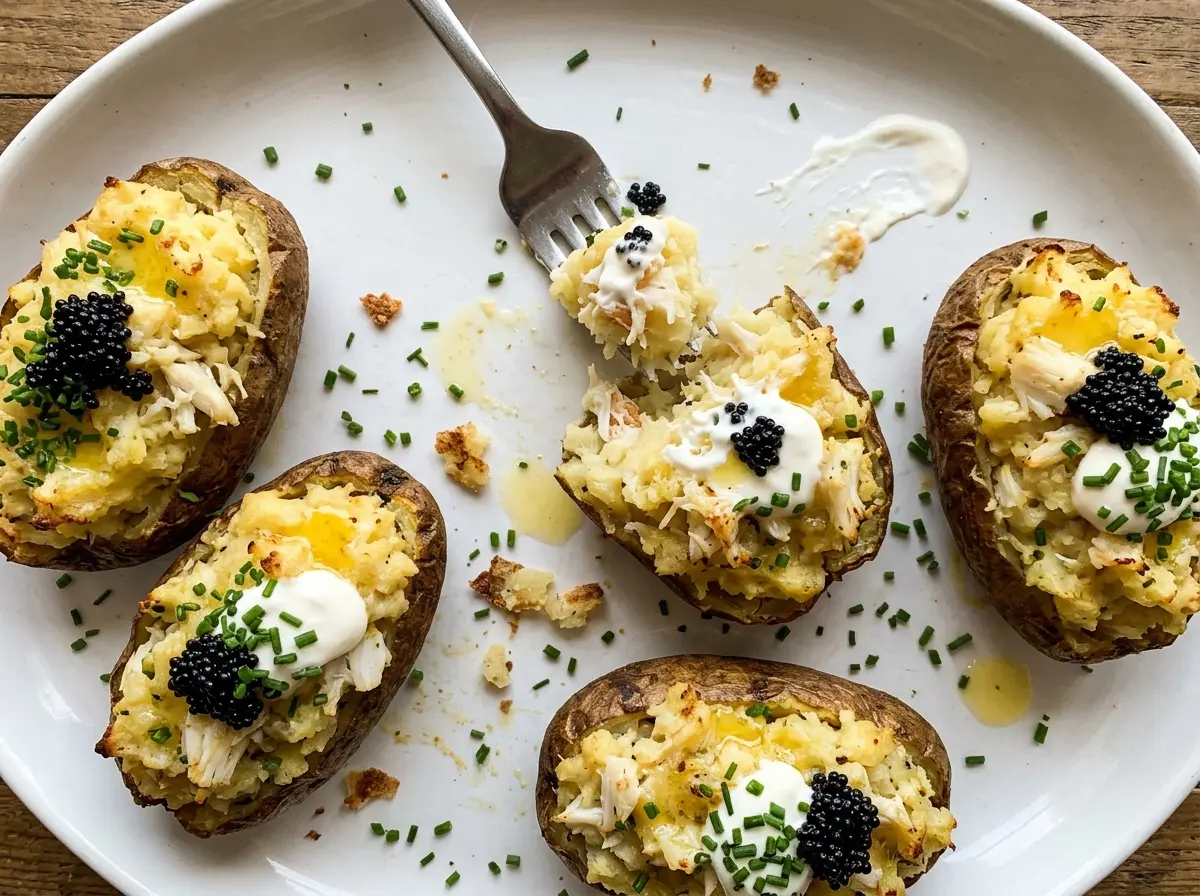
When a knife slides easily into the center of a russet, the skin feels firm enough to hold what comes next. That’s the moment these crab and caviar twice baked potatoes start to come together: the baked potato becomes both a creamy filling and its own little serving dish. I like that the crab goes into the potato instead of sitting in a separate sauce, so every scoop gets a bit of both.
The large russets bake whole first, then their flesh gets mashed with butter, sour cream, milk, and Old Bay before the cooked crab is folded in. Leave a sturdy layer of potato inside each shell when you scoop; it gives the filling a comfortable bed for its second trip into the oven. The caviar and crème fraîche go on at the end, when the tops are hot and lightly golden. You get warm, fluffy potato with sweet crab, cool crème fraîche, and chilled caviar in every bite.
Kitchen Note
Fold the crab in gently after the potato mixture is smooth. You want to see distinct pieces in the filling, not crab worked down into the mash.
Save these crab and caviar twice baked potatoes for a special dinner with fluffy potato, sweet crab, and a cool caviar finish.
Why the Potato Shell Needs More Than a Paper-Thin Layer
A russet has two jobs in this dish: its fluffy interior becomes the filling, and its skin holds that filling through the second bake. Scoop too close to the skin and the shell is more likely to tear as you fill it or move it. Leave about a quarter inch of potato attached, and the shell keeps its shape while still making room for a generous mound.
The size of the potato matters for the same reason. Large russets, about 10 ounces each, give you enough flesh to mash and a broad shell to fill. A smaller potato means less room for crab and less of that contrast between the soft center and the sturdy skin. That’s why I stick with russets here rather than a waxier potato: the russet’s dry, fluffy interior mashes into a light filling instead of a dense one.
These aren’t just mashed potatoes served beside crab. The potato shell keeps each portion together, and the filling stays nestled inside as it heats. It’s a small structural detail, but it’s what makes the twice-baked format work.
What the Crab, Dairy, and Caviar Each Bring

- Russet potatoes — Their starchy, fluffy flesh is what makes the filling light enough to spoon back into the shells. Choose large russets of similar size so each one gives you a substantial shell and a generous scoop of potato. A waxier potato won’t mash to quite the same texture.
- Cooked lump crabmeat — The larger pieces give the filling its sweet, tender bites. Pick through the crab carefully for shells before folding it in. Fresh or refrigerated cooked lump crab is worth choosing when you want the pieces to stay distinct; the recipe already gets plenty of seasoning from the Old Bay and chives.
- Butter, sour cream, and whole milk — Together, these make the potato flesh rich and soft enough to fill the shells without turning it into a heavy paste. Unsalted butter is useful because the salt level stays in your hands. Sour cream can stand in for the crème fraîche on top, though it tastes tangier and is less rich.
- Old Bay and fresh chives — Old Bay gives the potato a familiar savory seafood seasoning, while chives add a fresh onion note. Fresh chives are best for the finishing sprinkle, where their color and flavor stay bright; dried chives won’t give the same fresh finish.
- Crème fraîche and chilled caviar — The cool topping gives contrast to the hot, baked filling. Keep the caviar chilled until you’re ready to serve, and add it only after the potatoes come out of the oven. There’s no need for a special butter or a complicated topping; these two ingredients do the finishing work.
From Whole Russets to Hot, Filled Shells
Bake the russets until the centers are tender
Heat the oven to 400°F. Rub the scrubbed, dried potatoes with olive oil and half of the kosher salt, then set them on a rimmed baking sheet. Bake for 55 to 70 minutes, until a knife slides easily into the centers. If the knife meets a firm spot, give the potatoes more time rather than trying to scoop them while the middle is still hard.
Scoop sturdy shells
Let the potatoes cool until they’re easy to handle, about 10 minutes. Cut each one in half lengthwise and scoop the flesh into a bowl, keeping about a quarter inch of potato inside each skin. Work around the edge rather than digging straight down into the base. That gives you a shell with enough structure to hold the filling.
Mash first, then fold in the crab
Mash the potato flesh with the butter, sour cream, whole milk, Old Bay, black pepper, the remaining salt, and half of the chives. Work the mixture until the dairy and seasonings are evenly mixed through the potato. Then gently fold in the cooked lump crabmeat. Stop once the crab is distributed so its pieces stay visible in the filling.
Fill, bake, and finish at the table
Spoon the filling back into the potato shells and set them on the baking sheet. Bake at 400°F for 15 to 20 minutes, until hot throughout and lightly golden on top. Add crème fraîche, chilled caviar, and the remaining chives after baking. Serve immediately so the potato is hot and the caviar stays cool.
Simple Changes for a Different Finish
Leave off the caviar
For a simpler crab-and-potato finish, omit the caviar and top the hot potatoes with crème fraîche and the remaining chives. The topping will be less briny and luxurious, but the crab and Old Bay still carry the savory seafood flavor.
Use sour cream in place of crème fraîche
Sour cream works as the cool topping if crème fraîche isn’t on hand. It brings a sharper tang and a slightly less rich finish, which plays nicely with the crab; add it after baking just as you would the crème fraîche.
Storage and Reheating
- Refrigerator: Refrigerate leftovers within 2 hours and keep them in an airtight container for 3 to 4 days. The caviar and crème fraîche topping will lose some of its fresh texture.
- Freezer: Freezing isn’t recommended. The dairy-based filling can turn grainy after thawing, and the potato shells won’t keep their original texture.
- Reheating: Warm the potatoes in a 350°F oven until the centers reach 165°F. The microwave is quicker, but it softens the shells; add fresh caviar after reheating if you have it reserved.
Questions That Come Up With Crab and Caviar Twice Baked Potatoes
Crab and Caviar Twice Baked Potatoes
Ingredients
Equipment
Method
- Preheat the oven to 400°F.
- Rub the potatoes with the olive oil and half of the salt.
- Set the potatoes on a rimmed baking sheet.
- Bake for 55 to 70 minutes, until a knife slides easily into the centers.
- Let the potatoes cool until easy to handle, about 10 minutes.
- Cut the potatoes in half lengthwise.
- Scoop the flesh into a bowl, leaving about 1/4-inch-thick shells.
- Mash the potato flesh with the butter, sour cream, milk, Old Bay, pepper, remaining salt, and half of the chives.
- Gently fold in the crabmeat.
- Spoon the filling into the potato shells.
- Bake the potatoes on the baking sheet for 15 to 20 minutes, until hot throughout and lightly golden on top.
- Top each potato half with crème fraîche, caviar, and the remaining chives.
- Serve immediately.