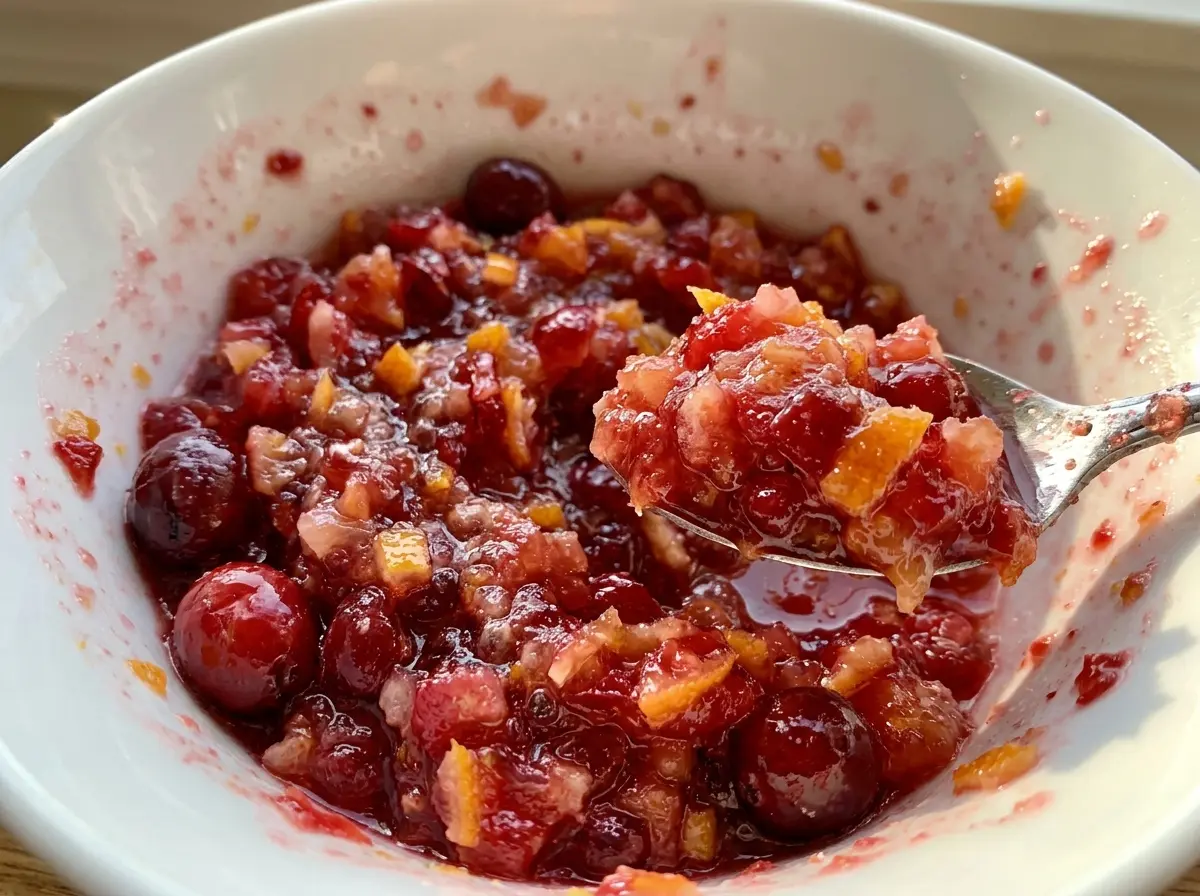
The processor gives a quick, uneven rattle as the cranberries break apart, and the whole orange goes in with them—peel, juicy flesh, and all. I stop as soon as the fruit is finely chopped, before it turns into a smooth, wet purée. That little bit of texture is what makes this Cranberry Orange Relish easy to scoop and lets the tart berries stay front and center.
Using the whole navel orange gives the relish more than orange juice could: the peel brings its fragrant oils, while the fruit adds moisture and a gentle citrus sweetness. I trim the ends and remove the seeds first, then let the food processor do the chopping. Granulated sugar rounds out the sharpness of the fresh cranberries without cooking them.
A covered rest in the refrigerator gives the flavors time to settle together. The finished relish is bright, tart-sweet, and full of little cranberry and orange flecks.
Kitchen Note
I don’t rush the refrigerator rest. Give the relish at least two hours covered in the fridge, so the sugar has time to mingle with the fruit and the sharp edges of the flavors soften.
Save this Cranberry Orange Relish for its tart berries, fragrant orange peel, and fresh chopped texture—then let it chill ahead before serving.
Why This Relish Should Stay Chopped, Not Smooth
Cranberries have plenty of natural tartness, and a little texture makes each bite feel lively instead of jammy. In the food processor, aim for tiny, distinct pieces of fruit rather than a uniform red paste. The orange should be chopped along with the berries, but you should still be able to see flecks of peel and bits of cranberry when you look closely.
Once the fruit is puréed, it becomes looser and less spoonable; the blade also breaks down the orange peel much more thoroughly. A finely chopped relish keeps the fresh fruit character intact and gives the sugar room to coat the pieces. This is a quick pulse-and-check job, not a long blend. If you can’t distinguish any pieces, you’ve gone past the texture this relish is meant to have.
That texture matters when you serve it by the spoonful: the fruit holds together without behaving like a drinkable sauce. Keep an eye on the processor as it works, especially once the cranberries start to release their color. A few short pulses at a time make it easier to stop at the right point.
Why the Whole Navel Orange Matters More Than Extra Juice

- Navel orange — The whole orange gives this relish its citrus aroma and chopped texture. Choose a fresh medium navel orange, scrub it well, trim the ends, and remove the seeds before quartering it. Orange juice alone won’t provide the peel’s fragrant oils or the same body, so it isn’t a like-for-like swap.
- Fresh cranberries — Their natural tartness is the backbone of the relish, and fresh berries hold their shape well as they’re chopped. Pick through them for soft or damaged berries and rinse them before they go into the processor. Firm berries are a better choice than wrinkled ones for a clean, fresh-tasting result.
- Granulated sugar — Regular granulated sugar sweetens the sharp fruit and distributes easily in the short second pulse. It also dissolves as the relish rests, so the texture becomes less gritty before serving. Liquid sweeteners change the consistency, and powdered sugar won’t give the same clean finish, so granulated is the best fit here.
From Whole Fruit to Relish Without Losing the Texture
Prep the Orange and Cranberries
Scrub the navel orange, trim both ends, quarter it, and remove any seeds. Pick over and rinse the fresh cranberries so soft berries or stray stems don’t end up in the bowl. Keep the orange in quarters; the processor will chop it together with the cranberries. Have the 7-cup food processor ready before adding the fruit.
Pulse Until the Fruit Is Finely Chopped
Put the orange and cranberries in the food processor and pulse until they’re finely chopped but not puréed. Stop to check the texture rather than running the machine continuously. You want a mass of small fruit pieces with visible flecks, not a smooth, liquid mixture. If larger pieces remain, pulse briefly again and check before continuing.
Mix in the Sugar and Chill
Add the granulated sugar after the fruit has been chopped, then pulse briefly until it’s evenly mixed. Keep this second pass short; the goal is to distribute the sugar, not to process the fruit further. Transfer the relish to a covered container and refrigerate it for at least two hours before serving. The rest gives the flavors time to come together while the chopped texture stays intact.
Two Texture Changes That Give the Relish a Different Feel
Leave the fruit a little chunkier
For a more rustic relish, use fewer pulses and stop while the cranberry and orange pieces are larger than the finely chopped version. The result has a firmer bite and more noticeable bits of peel. Keep the pieces small enough to scoop comfortably.
Go slightly finer, but keep the flecks
For a more cohesive spoonful, pulse a little longer than you would for a coarse chop, checking often and stopping before the fruit turns to purée. The pieces will be smaller and the relish will feel more blended, though still freshly chopped. This change is about texture, not adding extra ingredients.
Storage and Reheating
- Refrigerator: Keep it covered and refrigerated for up to 3 to 4 days. The fruit may release a little juice as it sits; stir before serving.
- Freezer: Freeze in an airtight container for up to 2 months. Thaw it in the refrigerator; the texture may be softer and a little more liquid after thawing.
- Reheating: No reheating is needed; serve it chilled. Don’t microwave it, since heat softens the fresh fruit and changes the relish into a looser, cooked-tasting mixture.
Questions That Come Up With Whole-Orange Cranberry Relish
Cranberry Orange Relish
Ingredients
Equipment
Method
- Put the orange and cranberries in a 7-cup food processor and pulse until finely chopped but not puréed.
- Add the sugar and pulse briefly until evenly mixed.
- Transfer the relish to a covered container.
- Refrigerate for at least 2 hours before serving.