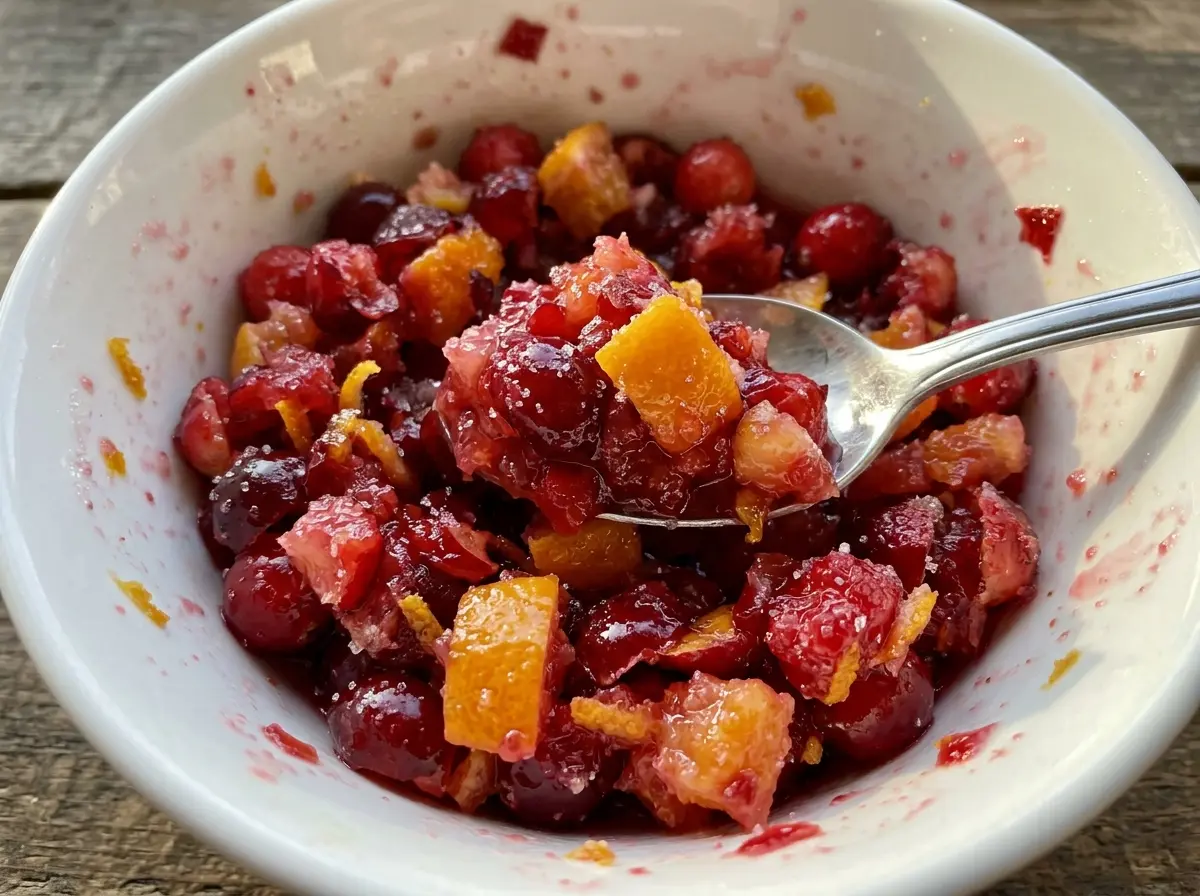
The first few pulses are loud, then the cranberries break down into bright red pieces that smell sharply of citrus. That’s the moment this cranberry relish starts to look different from cranberry sauce: it stays fresh and finely chopped instead of bubbling into a soft, jammy mixture.
I use the whole orange here, not just its juice. The finely grated zest brings a fragrant citrus note, while the peeled, seeded orange adds juicy pieces that mingle with the berries. A food processor makes quick work of the chopping, and a short chill gives the sugar time to blend with the fruit. The finished relish is tart, sweet, and pleasantly textured, with little flecks of orange throughout.
Kitchen Note
Scrape the processor bowl whenever fruit clings to the sides. Those untouched pieces stay large while the fruit underneath keeps breaking down, so one quick scrape gives you a more even chop without running the machine longer.
Save this cranberry relish for a bright, citrusy side that keeps its fresh chopped texture.
Why Cranberry Relish Should Stay Chopped, Not Cooked
It’s easy to expect cranberries to go straight into a saucepan, since cooked berries are the familiar route to a soft holiday-style sauce. This relish takes the opposite approach. The food processor cuts the raw berries into fine pieces, but it doesn’t cook them down, so the result keeps a crisp, lively bite instead of turning smooth and spoonable like jam.
That texture is part of the point, not a sign that the berries need more time in the machine. Short pulses give you control: the fruit gets small enough to eat easily, while the mixture still has distinct bits of cranberry and orange. Run the processor continuously and the berries can become pasty before the pieces are evenly chopped. I stop when the mixture looks fine and colorful, not wet and uniform.
The orange also helps this uncooked style feel balanced. Its aromatic zest and juicy chopped fruit soften the cranberries’ sharp edge without hiding it. The sugar rounds out that tartness, and the cold rest lets the flavors settle together. You end up with a relish that tastes fresh and bright rather than cooked and mellow.
What Fresh Cranberries, Whole Orange, and Sugar Each Bring

- Fresh cranberries — Their tartness and firm, juicy flesh give the relish its characteristic bite. Pick through them and discard any soft or shriveled berries; the firm ones chop cleanly and hold their texture. Dried cranberries aren’t a direct substitute because they’re chewy and sweet rather than juicy and sharp. Frozen cranberries can work after thawing and draining, though the finished relish will be softer.
- Orange — Using both zest and fruit gives you fragrant citrus oils along with juicy pieces, something bottled juice can’t reproduce. Choose an orange with an aromatic peel, wash it well, and finely grate only the colored outer zest before peeling the fruit. A sweet tangerine can replace the orange, using its zest and peeled, seeded flesh, for a slightly sweeter, less classic citrus note.
- Granulated sugar — Regular granulated sugar is the right, inexpensive choice here; there’s no need for a specialty brand. It tempers the cranberries’ sharpness without adding another flavor. Superfine sugar can replace it in the same volume if that’s what you have, and it blends into the chopped fruit more quickly.
Pulse the Cranberries Until the Texture Stays Bright
Prep the berries and orange
Rinse the cranberries and pick through them, removing any soft fruit or bits of stem. Finely grate the orange zest before peeling the orange, then remove the seeds and chop the flesh. Zesting first is easier while the orange is whole, and removing the seeds keeps hard, bitter pieces out of the relish.
Chop in short pulses
Add the cranberries, orange zest, and chopped orange to the food processor. Pulse until the fruit is finely chopped, pausing to scrape down the bowl as needed. Look for small, distinct pieces rather than a smooth puree; the berries should still have some texture. If a few larger pieces remain, pulse again briefly instead of letting the processor run continuously.
Blend in the sugar and chill
Add the granulated sugar and pulse just until it’s combined with the chopped fruit. Stop there; the mixture doesn’t need to become smooth or completely uniform. Transfer the relish to a covered container and refrigerate it for at least 2 hours before serving. That rest gives the sharp fruit and sugar time to come together while the relish stays cold and fresh.
Small Changes That Shift Cranberry Relish’s Flavor
Use a tangerine for a sweeter citrus note
Replace the orange with a sweet tangerine, still using its finely grated zest and peeled, seeded fruit. The relish takes on a softer citrus aroma and tastes a little less sharp, while keeping the same fresh cranberry character.
Trade granulated sugar for light brown sugar
Use light brown sugar in place of the granulated sugar, keeping the same measure. Its mild molasses note makes the relish taste warmer and less cleanly sweet, and it gives the chopped fruit a slightly darker color.
Make-Ahead and Keeping It Cold
- Refrigerator: Keep the relish covered and refrigerated, and use it within 3 days for the freshest texture. A little juice may collect as it rests; stir before serving.
- Freezer: Freeze it in an airtight container for up to 1 month. Thaw it in the refrigerator; the fruit will be softer after thawing, but stirring brings the mixture back together.
- Serving: Serve it cold. Don’t heat it, since warming softens the fresh chopped texture that makes this relish distinct.
Questions That Come Up When Making Cranberry Relish
Cranberry Relish
Ingredients
Equipment
Method
- Add the cranberries, orange zest and chopped orange to a food processor and pulse until finely chopped, scraping down the bowl as needed.
- Add the sugar and pulse just until combined.
- Transfer the relish to a covered container and refrigerate for at least 2 hours before serving.