Creamy butternut squash gnocchi with sausage and sage lands in the bowl with the kind of comfort that makes people go quiet for the first few bites. The gnocchi stay pillowy, the sauce turns silky and golden-orange, and the crispy sage gives each forkful a sharp little crunch that keeps the dish from feeling heavy. It eats like something you’d order at a cozy restaurant, but it comes together fast enough for a regular weeknight.
The key is building the sauce in the same skillet you used for the sausage and sage. That gives you browned bits, rendered flavor, and a buttery base that carries the squash puree without tasting flat. The cream smooths everything out, while parmesan adds body as it melts into the sauce. A little nutmeg matters here, too — it rounds out the squash and makes the whole dish taste finished.
Below you’ll find the timing that keeps the gnocchi tender instead of gummy, plus the small move that keeps the sauce glossy instead of thick and pasty. The recipe also works well with a couple of smart swaps if you need to adjust it for what you have on hand.
The sauce coated the gnocchi perfectly and the crispy sage on top made it taste like a restaurant meal. I added the gnocchi straight to the pan like you said and they held up great instead of getting mushy.
Save this creamy butternut squash gnocchi with sausage and sage for the nights when you want a silky, one-pan dinner with crispy sage on top.
The Reason This Sauce Stays Creamy Instead of Going Heavy
Butternut squash puree can go from silky to gluey fast if you crowd it with too much starch or cook it hard after the cream goes in. The fix is simple: build the sauce gently, let the puree loosen with cream, then add parmesan off the hottest part of the burner so it melts into the sauce instead of clumping or turning grainy. That low, steady heat gives you a glossy finish instead of a thick paste.
The sausage matters here because it brings salt, fat, and enough savory depth to keep the squash from tasting sweet in a one-note way. Frying the sage in the butter first does the same job for the herbs — it flavors the fat, crisps the leaves, and gives you a garnish that tastes as good as it looks. If your sauce ever feels flat, it usually needs salt, more parmesan, or a little more of the browned sausage fat left in the pan.
What Each Ingredient Is Actually Doing in This Dish
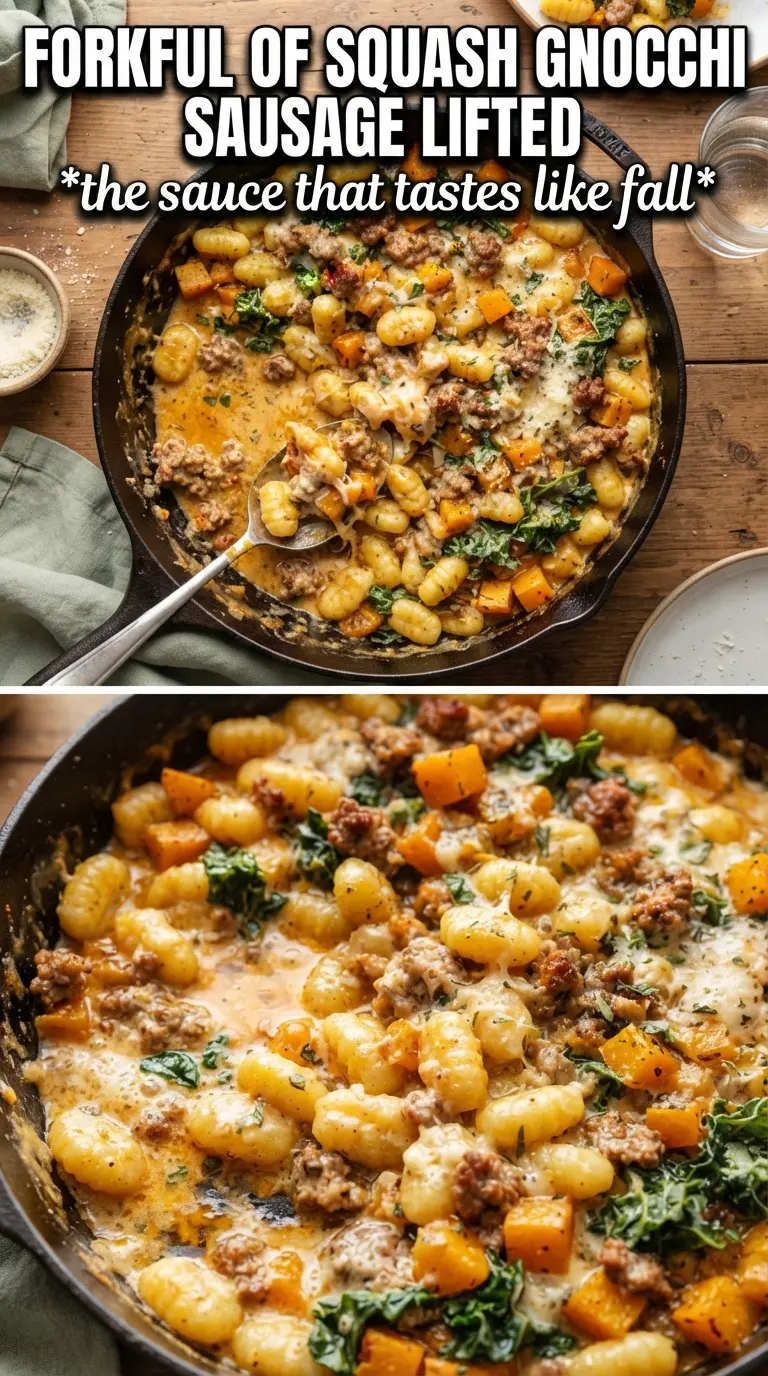
- Potato gnocchi — Store-bought gnocchi works beautifully here because it cooks in minutes and gives you that soft, tender bite that belongs in this kind of creamy sauce. If you use shelf-stable gnocchi, cook it just until it floats; overcooked gnocchi gets mushy once it sits in the pan.
- Butternut squash puree — This is the base of the sauce, so use a puree that tastes sweet and clean, not watery. Roasted squash gives you a deeper, caramelized flavor than canned pumpkin, but canned butternut squash puree can work if it’s thick and unsweetened.
- Italian sausage — Mild or hot both work. The sausage adds seasoning, richness, and enough browned bits to make the sauce taste layered instead of one-dimensional. If you want a lighter dish, turkey Italian sausage is the best swap, though it won’t give quite as much fat to carry the sauce.
- Heavy cream — This is what turns the puree into a sauce instead of a mash. Half-and-half can work in a pinch, but the sauce will be thinner and a little less lush.
- Parmesan — Grate it finely so it melts cleanly. Pre-shredded parmesan often has anti-caking agents that can make the sauce a little gritty.
- Sage and butter — Frying the sage leaves in butter is not just garnish work; it perfumes the fat and gives the dish its signature finish. If you skip this step, the dish still works, but it loses the crisp, herbal contrast that makes it stand out.
How to Build the Pan So the Sauce and Gnocchi Finish Together
Brown the sausage first
Cook the sausage in a large skillet until it loses its pink color and picks up browned edges. Those browned bits are flavor, so don’t rush this stage or overcrowd the pan. Once it’s cooked through, drain off the excess fat if the skillet looks greasy, then set the sausage aside. If you leave too much fat behind, the finished sauce can taste slick instead of rich.
Fry the sage in the butter
Add the butter to the same skillet and fry the sage leaves until they darken slightly and crisp at the edges, usually just a minute or two. Pull them out as soon as they’re crisp because they keep cooking on the hot pan. If they turn black, the butter was too hot and the sage will taste bitter.
Build the squash sauce gently
In the flavored butter, cook the garlic for about a minute until fragrant, not browned. Stir in the butternut squash puree and cream, then add the parmesan, nutmeg, and red pepper flakes. Keep the heat low enough that the sauce barely simmers; a hard boil can make the dairy separate and the cheese turn grainy.
Finish the gnocchi in the sauce
Cook the gnocchi according to the package directions, then add it straight to the skillet with the sauce and return the sausage. Toss everything together until the gnocchi is coated and the sausage is warmed through. If the sauce tightens up too much, loosen it with a splash of the gnocchi cooking water or a little extra cream. Top with the crispy sage and extra parmesan while it’s still hot.
What to Change When You Need a Different Version
Make it lighter with turkey sausage
Turkey Italian sausage cuts the richness a bit and keeps the dish from feeling too heavy, but you lose some of the rendered fat that helps the sauce taste deep and savory. If you use it, leave a little butter in the pan and don’t skip the parmesan, because that’s what gives the sauce back some body.
Go vegetarian without losing the cozy texture
Use a plant-based sausage or skip the sausage and add sautéed mushrooms for more savoriness. Mushrooms won’t taste like sausage, but they do give you browned flavor and a meaty bite that fits the sauce well. Add an extra pinch of salt and a touch more red pepper flakes to keep the dish from tasting flat.
Make it gluten-free with the right gnocchi
Use gluten-free gnocchi and check the sausage label, since some brands use fillers that contain wheat. The sauce itself stays naturally gluten-free, and the finished dish still gets the same creamy, spoon-coating texture as long as you don’t overcook the gnocchi.
Swap the squash puree if that’s what you have
Roasted sweet potato puree works in place of butternut squash and gives a similar sweetness with a slightly earthier finish. Pumpkin puree can work too, but it tastes a little more forward and less naturally sweet, so the nutmeg and parmesan matter even more.
Storage and Reheating
- Refrigerator: Store leftovers in an airtight container for up to 3 days. The sauce thickens as it chills, and the gnocchi softens a little.
- Freezer: I don’t recommend freezing this dish. Cream sauces can separate and the gnocchi turns soft after thawing.
- Reheating: Warm it slowly in a skillet over low heat with a splash of cream or milk to loosen the sauce. The common mistake is blasting it in the microwave or over high heat, which dries out the sausage and makes the sauce split.
Answers to the Questions Worth Asking

Creamy Butternut Squash Gnocchi With Sausage And Sage
Ingredients
Equipment
Method
- Heat a large skillet over medium-high heat and add the Italian sausage. Cook until browned, then drain excess fat and set the sausage aside.
- In the same skillet over medium heat, melt the unsalted butter and add fresh sage leaves. Fry until the leaves turn crisp and slightly dark at the edges, then remove and set aside.
- Add the minced garlic to the skillet and sauté for 1 minute, stirring to prevent burning. Stir in the butternut squash puree and heavy cream, then bring to a gentle simmer.
- Add the grated parmesan, nutmeg, and red pepper flakes, stirring until smooth. Simmer for 5 minutes, stirring often, until the sauce thickens and looks glossy.
- Cook the potato gnocchi according to package instructions, then add the cooked gnocchi directly into the sauce. Toss gently to coat the gnocchi in the creamy squash mixture.
- Return the browned sausage to the skillet and toss everything together until evenly distributed. Season with salt and pepper to taste.
- Top with crispy fried sage leaves and extra parmesan for serving. Serve immediately while the sauce clings to the gnocchi.