Creamy butternut squash pasta gets its comfort from the sauce, but the sausage and spinach are what keep every bite from feeling heavy. The squash turns silky and lightly sweet, the sausage brings salt and depth, and the spinach melts into the pan just enough to add color and balance without stealing the show. It eats like a bowl of fall comfort, but it’s built the way a good weeknight pasta should be: fast, sturdy, and deeply satisfying.
The trick is using the pasta water on purpose, not as an afterthought. Starchy water loosens the sauce just enough to coat the rigatoni while the parmesan thickens it back up, so you get a glossy finish instead of a gluey one. Browning the sausage first and cooking the onion in the same skillet gives the sauce a savory base before the squash ever goes in.
Below, I’ll walk through the one step that keeps the sauce smooth, plus a few smart swaps if you want to change the pasta shape, lighten it up, or make it work with what’s already in your kitchen.
The sauce was silky and coated the rigatoni perfectly, and the sausage kept it from tasting too sweet. I added the spinach at the end like you said and it wilted in just a minute without getting mushy.
Save this creamy butternut squash pasta with sausage and spinach for a cozy dinner that comes together in one skillet after the pasta boils.
The Sauce Breaks When You Rush the Cream
Butternut squash puree can go from smooth to grainy if you hit it with high heat too fast, especially once dairy and parmesan enter the pan. The safer move is to let the squash warm through in the onion-garlic base first, then add the cream and keep the simmer gentle. You’re not trying to boil the sauce into thickness; you’re giving the starch in the squash and pasta water time to bind with the fat.
The parmesan goes in after the sauce has a little body. If you dump it into a rolling boil, it can seize and turn sandy. Pull the pan back to a low simmer, stir until the cheese melts cleanly, then loosen with pasta water only as needed.
- Butternut squash puree — Use a smooth puree, not a watery soup-style mash. Canned puree works fine if that’s what you have, but if you roast and puree your own squash, you’ll get a slightly deeper, sweeter finish.
- Italian sausage — This is the savory anchor. Mild sausage keeps the sauce balanced; hot sausage adds more heat than the red pepper flakes alone. Turkey sausage works too, but it will be a little leaner and less rich.
- Heavy cream — This gives the sauce its rounded, clingy texture. Half-and-half can work in a pinch, but the sauce will be thinner and need a little more pasta water management.
- Parmesan — Grate it fresh if you can. Pre-grated cheese often has anti-caking agents that make the sauce less smooth, especially in a creamy squash base.
What Each Ingredient Is Doing in the Pan
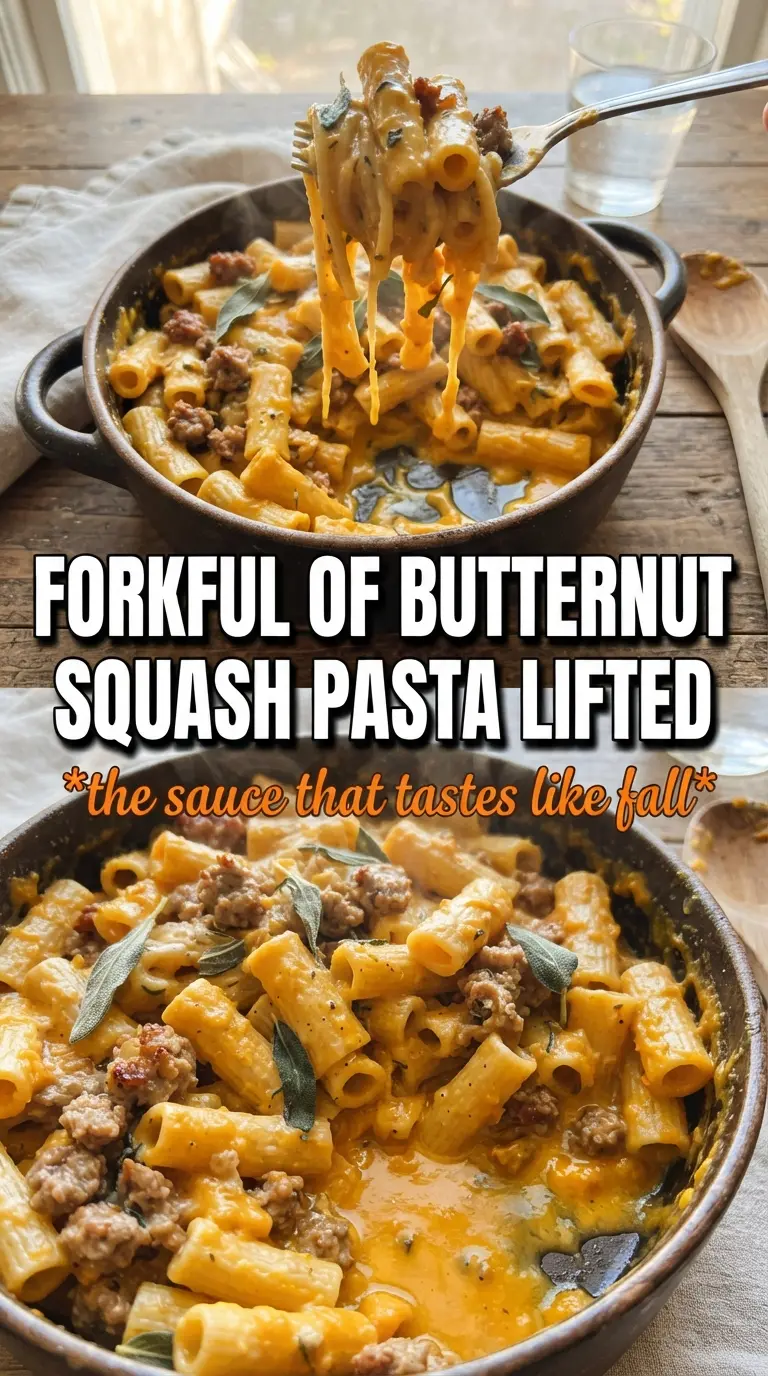
- Rigatoni or penne — You want a pasta shape with ridges or tubes so the sauce has somewhere to cling. Long noodles work, but they don’t hold the sausage and spinach as well.
- Onion and garlic — These build the savory backbone after the sausage has browned. Cooking them in the same skillet pulls up the flavor left behind in the pan.
- Italian seasoning and nutmeg — The seasoning gives the sauce herbal depth, while nutmeg quietly amplifies the squash without making it taste like dessert. Nutmeg is subtle here, but it matters.
- Red pepper flakes — They don’t make the dish hot so much as bright. If you want a gentler version, cut them in half rather than omitting them completely.
- Spinach — Add it at the end so it wilts into ribbons instead of turning dark and swampy. Baby spinach is the easiest choice because it collapses fast and evenly.
Building the Pasta in the Right Order
Boil the Pasta Before Anything Else
Start the pasta in well-salted water and stop before it goes fully soft. It needs a little bite left because it finishes in the sauce, where it keeps absorbing liquid. Reserve at least half a cup of pasta water before draining; that cloudy water is what helps the sauce emulsify instead of sitting on top of the noodles.
Brown the Sausage and Keep the Fond
Cook the sausage until you get browned bits on the bottom of the pan. If there’s a lot of fat, drain off the excess, but don’t scrub the skillet clean. Those browned drippings are the flavor base for the onion and squash, and they keep the sauce tasting savory instead of flat.
Let the Squash and Cream Simmer Gently
After the onion and garlic soften, stir in the squash puree, cream, nutmeg, and red pepper flakes. Keep the heat at a steady low simmer so the sauce thickens without breaking. When the parmesan goes in, stir until the sauce turns glossy and smooth; if it looks too thick, loosen it with a splash of pasta water before adding the pasta.
Finish With Spinach and Sausage
Toss the pasta into the sauce first so every piece gets coated before the greens go in. Add the spinach and keep tossing until it just wilts, then return the sausage to warm through. Season at the very end, because the sausage, parmesan, and pasta water all bring salt of their own.
How to Adapt This for a Lighter Bowl or a Different Pantry
Make It Dairy-Free Without Losing the Creamy Texture
Use full-fat canned coconut milk in place of the heavy cream and swap the parmesan for a dairy-free parmesan-style alternative. The sauce will be a little less sharp and a little more mellow, but the squash still gives it enough body to feel rich.
Use Turkey Sausage for a Leaner Version
Turkey sausage works well if you want something lighter, but it gives up some of the fat that helps carry flavor. If you go that route, leave a tablespoon or two of drippings in the pan or add a small drizzle of olive oil before the onion goes in.
Make It Gluten-Free With the Right Pasta Shape
Choose a sturdy gluten-free penne or rigatoni, not a delicate rice pasta that can collapse in the sauce. Cook it just until al dente and add it to the sauce promptly, since gluten-free pasta softens faster once it sits.
Swap the Spinach for Kale if That’s What You Have
Chopped kale holds its shape more than spinach, so it needs an extra minute or two in the sauce. Strip out the tough stems first, and add a small splash of pasta water so the leaves soften without turning leathery.
Storage and Reheating
- Refrigerator: Store leftovers in an airtight container for up to 4 days. The sauce thickens as it sits, so it will look a little tighter after chilling.
- Freezer: It freezes, but the cream sauce can separate slightly when thawed. If you do freeze it, let it cool completely first and thaw it slowly in the fridge.
- Reheating: Reheat gently on the stove over low heat with a splash of water or milk to bring the sauce back to life. High heat is the fastest way to make the dairy look broken and the pasta dry out.
Answers to the Questions Worth Asking

Creamy Butternut Squash Pasta With Sausage And Spinach
Ingredients
Equipment
Method
- Bring a large pot of salted water to a boil and cook the rigatoni or penne until al dente, then reserve 1/2 cup pasta cooking water before draining. Drain the pasta and set aside.
- Brown the Italian sausage in a large skillet over medium-high heat until cooked through, then drain the fat and set the sausage aside. Keep the skillet for the next step.
- Sauté the diced onion in the same skillet over medium heat for 4 minutes until softened. Add the minced garlic and Italian seasoning, then cook for 2 more minutes, stirring to prevent burning.
- Add butternut squash puree and heavy cream, then stir in nutmeg and red pepper flakes until fully combined. Bring the mixture to a simmer and cook for 5 minutes.
- Lower the heat and add the grated parmesan, stirring until the sauce is smooth and creamy. Reduce as needed so it coats the pasta.
- Add the drained cooked pasta and reserved pasta cooking water to the skillet, then toss to coat and loosen the sauce. Add the baby spinach and toss until wilted.
- Return the browned sausage to the pan and season with salt and pepper to taste. Toss one last time so sausage and spinach are evenly distributed.