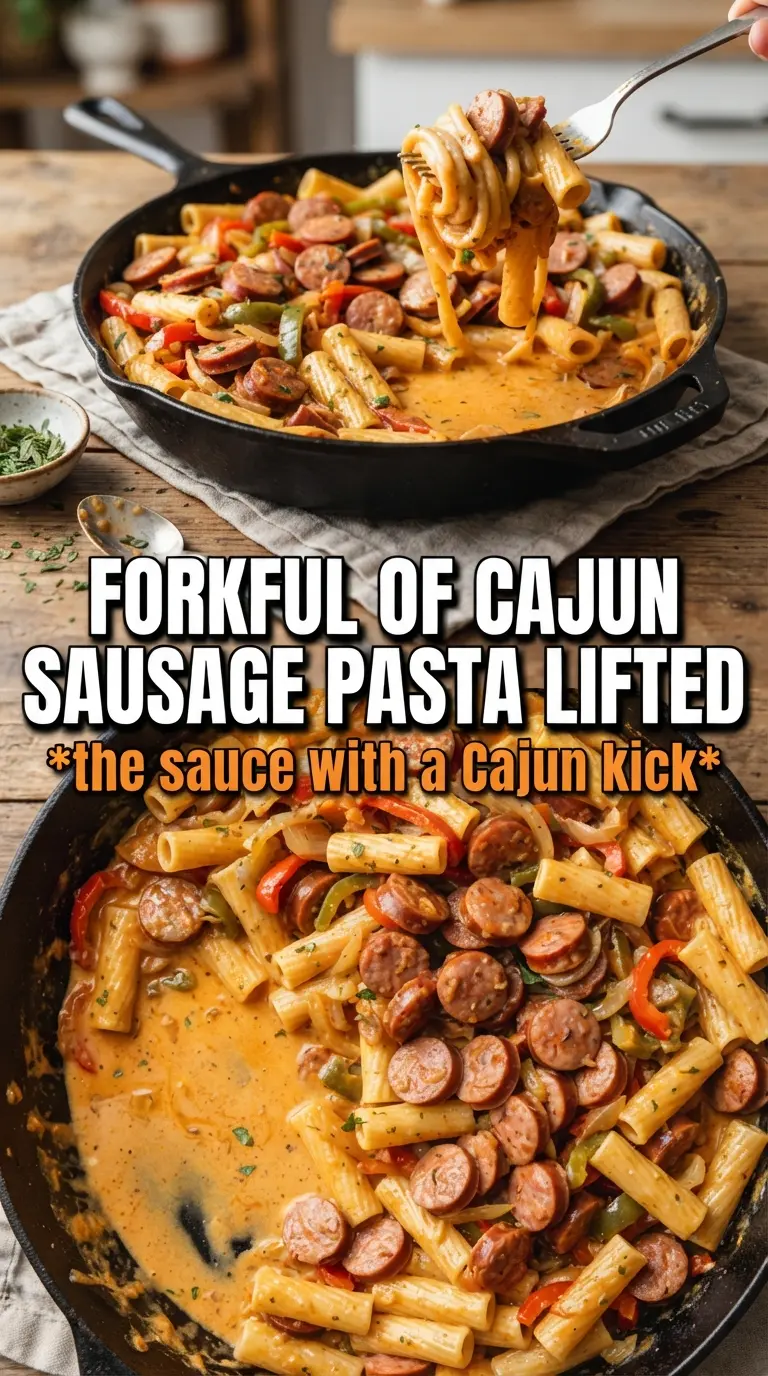
Smoky sausage, tender peppers, and a Cajun cream sauce clinging to every piece of penne make this the kind of pasta that disappears fast. The sauce stays silky instead of heavy, the sausage brings enough salt and spice to carry the whole pan, and the vegetables give it just enough bite to keep each forkful interesting.
What makes this version work is the order. Browning the sausage first leaves behind savory bits that season the sauce, and the pasta water gives the cream and parmesan something to emulsify with so the sauce coats instead of pooling at the bottom of the bowl. A short simmer after the broth and cream go in thickens everything without reducing it so far that the sauce turns sticky.
Below, I’ll walk you through the point where most creamy pasta recipes go wrong, the ingredient swap that keeps the sauce balanced, and a few easy ways to adapt it if you want more heat, a lighter finish, or leftovers that reheat well.
The sauce thickened up perfectly and didn’t break when I added the parmesan. I also loved that the peppers still had a little bite instead of turning mushy.
Pin this creamy Cajun sausage pasta for a fast dinner with smoky sausage, silky parmesan sauce, and peppers that still have a little bite.
The Trick to Keeping Cajun Cream Sauce Silky Instead of Heavy
The biggest mistake in a dish like this is letting the cream sauce get too hot once the parmesan goes in. High heat makes dairy seize, and that’s when the sauce turns grainy or starts to look oily around the edges. Keep the simmer gentle. You want small bubbles, not a hard boil.
The other thing that matters is the pasta water. Cream alone can coat pasta, but a splash of starchy water helps the sauce cling to the penne and smooths out the texture after the parmesan melts. If your sauce looks too thick before the pasta goes in, don’t reach for more cream first. Use a little pasta water, because it loosens the sauce without dulling the seasoning.
- Andouille or smoked sausage — This is where the deep, savory flavor comes from. Andouille brings more Cajun heat, while smoked sausage gives you a milder finish. Either one works, but leaner sausage won’t give you the same richness in the pan.
- Cajun seasoning — This seasons the sauce and the vegetables at the same time. Some blends are saltier than others, so taste before adding extra salt at the end. If yours is very spicy, start with 1 tablespoon and add more after the cream goes in.
- Heavy cream — This gives the sauce its body and keeps it stable under heat. Half-and-half will work in a pinch, but the sauce will be thinner and a little less plush. If you use it, simmer even more gently.
- Parmesan — Freshly grated parmesan melts far better than the shelf-stable kind. Pre-grated cheese often has anti-caking agents that can make the sauce grainy. Grate it fine so it disappears into the cream instead of sitting in little clumps.
What Each Ingredient Is Actually Doing in This Recipe
- Primary ingredient (the star) — Quality matters most. Choose the best you can find.
- Cooking medium (oil, butter, or broth) — This carries flavors and prevents dryness.
- Seasonings (salt, pepper, spices, herbs) — Layer flavors so nothing overpowers. Build depth gradually.
- Aromatics (garlic, onion, herbs) — Cook with fat to bloom flavors. Become the foundation.
- Supporting ingredients — Complement the main ingredient without overpowering it.
- Sauce or liquid (if applicable) — Brings flavors together. Balance richness with acid.
- Acid (lemon, vinegar, wine, or other) — Brightens and prevents flat-tasting results.
- Final finish (garnish, glaze, or sauce) — Prevents one-dimensional taste and adds visual appeal.
Building the Sauce in the Same Pan as the Sausage
Brown the sausage until the edges darken
Cook the sausage in butter over medium heat until the slices pick up deep brown edges. That color is not decoration; it’s flavor. If the heat is too high, the sausage will blister before it renders enough fat, and you’ll lose the savory base that makes the sauce taste full.
Soften the vegetables before the garlic goes in
Add the onion and bell peppers to the pan and cook them until the onion turns translucent and the peppers soften at the edges. They should still hold their shape. Garlic goes in last because it burns fast, and burned garlic will make the whole sauce taste harsh no matter how creamy it is.
Let the cream and broth simmer into one sauce
Pour in the broth and cream and let the mixture come up to a gentle simmer for about 5 minutes. You’re looking for a sauce that lightly coats a spoon, not one that reduces until it’s sticky. If it starts boiling hard, lower the heat right away so the cream stays smooth.
Finish with pasta water and parmesan
Toss the cooked penne into the sauce with a splash of reserved pasta water, then stir in the parmesan off the hottest part of the burner. The pasta water helps the sauce cling, and taking the pan off direct heat before adding the cheese keeps it from clumping. Add the sausage back at the end so it stays juicy instead of overcooking.
How to Adapt This for a Lighter Pan, More Heat, or a Gluten-Free Table
Make it dairy-free with coconut cream
Use full-fat coconut cream in place of heavy cream and skip the parmesan, or use a dairy-free parmesan-style cheese if you like. The sauce will be a little sweeter and less sharp, but the texture still comes together well because the sausage and Cajun seasoning carry the dish.
Make it gluten-free with one pasta swap
Use a sturdy gluten-free penne and cook it just until al dente, because gluten-free pasta softens quickly once it sits in the sauce. Save a little extra pasta water if the brand you use tends to absorb more liquid than regular pasta.
Turn up the heat without changing the texture
Add a pinch of cayenne with the Cajun seasoning or use hot andouille instead of mild smoked sausage. That boosts the spice without changing the way the sauce builds, which is better than adding hot sauce at the end and thinning out the cream.
Stretch it for a bigger crowd
Add an extra bell pepper and another half pound of pasta, then hold back a little broth so you can adjust the consistency at the end. The sauce needs room to move when you scale it up, and extra broth gives you that without making it watery.
Storage and Reheating
- Refrigerator: Store in an airtight container for up to 4 days. The sauce will thicken as it chills.
- Freezer: It freezes, but the cream sauce can separate a little when thawed. For the best texture, freeze only if you don’t mind a slightly less silky finish.
- Reheating: Reheat gently on the stove over low heat with a splash of broth or milk, stirring until the sauce loosens. Microwaving on high is the easiest way to make the sauce greasy or the pasta dry.
Questions I Get Asked About This Recipe
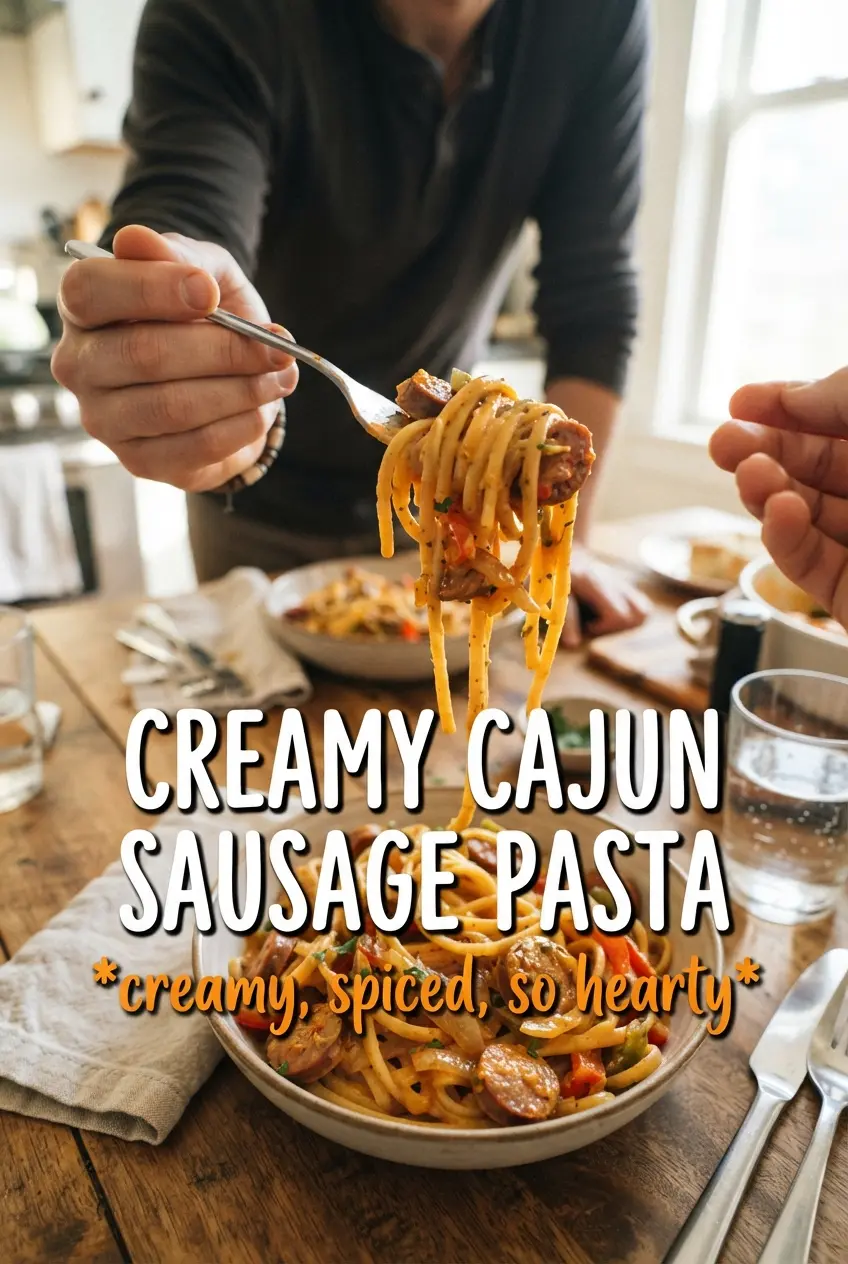
Creamy Cajun Sausage Pasta
Ingredients
Equipment
Method
- Bring salted water to a boil and cook penne pasta according to package directions; reserve 1/2 cup pasta water before draining. Look for tender pasta with a slight bite and keep the reserved water aside.
- In a large skillet, melt butter and brown the andouille or smoked sausage over medium-high heat, then remove and set aside. Watch for browned edges and caramelized spots before lifting it out.
- Sauté onion and red bell pepper and green bell pepper for 4-5 minutes in the same skillet. Cook until softened and glossy, then add garlic and Cajun seasoning and cook 2 minutes, stirring until fragrant.
- Add chicken broth and heavy cream to the skillet and simmer for 5 minutes until slightly thickened. The sauce should coat a spoon lightly and look smoother and more cohesive.
- Toss in the cooked penne pasta and stir with reserved pasta water. Mix until the pasta looks evenly coated and glossy.
- Stir in parmesan until melted and the sauce turns creamy and thick. Look for a silky texture with no dry clumps.
- Return the browned andouille or smoked sausage to the skillet, toss to coat, and season with salt to taste. Watch for even seasoning and hot sausage throughout.
- Top the pasta with green onions and parsley before serving. Finish with a fresh, bright color on top.