When the water reaches a rolling boil, the eggs are already on their way to becoming deviled eggs. Leaving them bubbling away can make the whites tough and the yolks dry, so I use the covered, off-heat rest for these creamy horseradish deviled eggs. The yolks turn into a smooth filling with a clean horseradish bite instead of a heavy, paste-like one.
Prepared horseradish gives the filling its distinctive heat, while mayonnaise keeps it soft enough to spoon or pipe into the whites. I drain the horseradish before it goes into the bowl; extra liquid is an easy way to lose that creamy texture. A little Dijon and white vinegar round out the sharpness, and a light dusting of paprika finishes each egg.
Kitchen Note
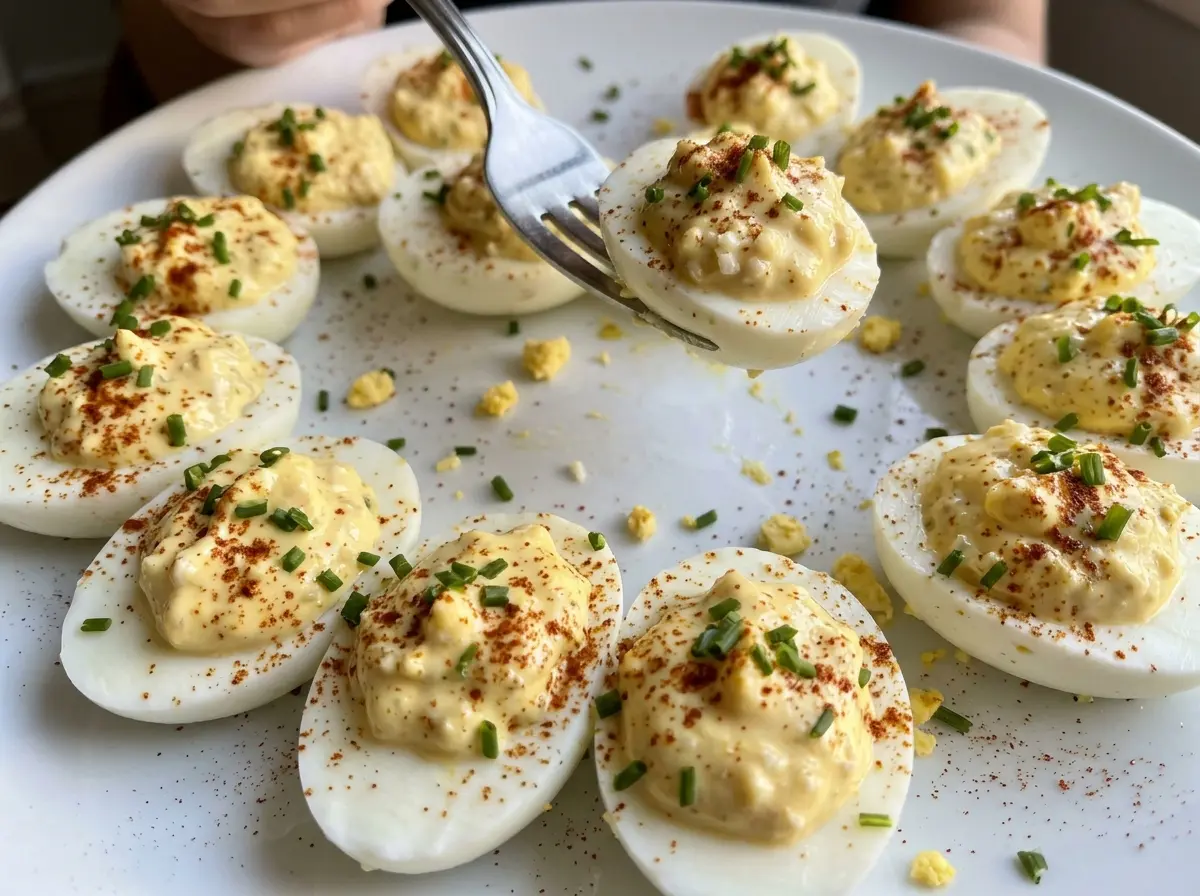
Don’t stop while the yolks still have little dry lumps; they’ll stay noticeable in the finished filling. I mash until the mixture looks uniformly creamy before I fill the whites.
Save these creamy horseradish deviled eggs for a platter with a smooth filling and a little sharp bite in every half.
Why These Eggs Stop Cooking Before the Water Does
Eggs left at a rolling boil keep taking direct heat, and that can push the whites toward a rubbery texture while the yolks turn dry and crumbly. Bringing the water to a boil first, then covering the pan and taking it off the heat, lets the trapped heat finish cooking the eggs more gently. You still get firm whites and yolks that mash easily, without keeping the saucepan at a hard boil.
The first part matters, too: the eggs sit in a single layer and start covered with cold water. That gives the pan a consistent starting point as the water heats. Once the water boils, keep the lid on during the off-heat rest instead of lifting it to check the eggs. A quick transfer to ice water then stops the cooking, so the centers don’t keep firming up while you work on peeling them.
What Gives the Filling Its Creamy Heat

- Large eggs — Their whites make sturdy halves for holding the filling, and the yolks provide its base. Use large eggs for the proportions here; changing egg size shifts the balance between the whites and filling.
- Mayonnaise — This supplies the creamy texture and a mild richness that softens the sharper ingredients. A familiar, budget-friendly mayonnaise works well. Plant-based mayonnaise can stand in at the same amount, though it gives the filling a slightly different savory note.
- Prepared horseradish — This is the source of the bright, lingering heat. Use prepared horseradish rather than horseradish sauce, which is usually creamy and changes the character of the filling. Drain it before measuring so excess liquid doesn’t thin the yolks.
- Dijon mustard — Smooth Dijon adds a gentle mustard tang without introducing a coarse texture. A standard jar is fine; a grainy mustard would make the filling less uniform.
- White vinegar — Its clean acidity lifts the richness of the mayonnaise and yolks. White vinegar keeps that lift simple and direct; a strongly flavored vinegar would leave a different note.
- Paprika — A small sprinkle gives the finished eggs a mild, earthy finish and makes the tops easy to distinguish on a platter. It’s used as a finishing touch, not mixed into the yolks.
From a Covered Simmer to Smooth, Filled Egg Whites
Bring the Water to a Rolling Boil
Set the six large eggs in a single layer in a 2-quart saucepan and cover them with cold water by 1 inch. Bring the water to a rolling boil over high heat. Cover the saucepan, remove it from the heat, and let the eggs stand for 12 minutes. Keep the lid in place during that rest so the heat stays in the pan.
Cool, Peel, and Set Up the Halves
Transfer the eggs to a bowl of ice water and cool them for 5 minutes. Peel them, then halve each egg lengthwise. Transfer the yolks to a medium bowl and arrange the whites cut side up on a serving platter. If a white tears as you peel, handle it gently rather than forcing the shell away in large pieces.
Mash the Filling and Finish the Platter
Mash the yolks with 3 tablespoons mayonnaise, 1 tablespoon drained prepared horseradish, 1 teaspoon Dijon mustard, 1 teaspoon white vinegar, 1/8 teaspoon salt, and 1/8 teaspoon black pepper. Work the mixture until it looks smooth and creamy, with no visible dry yolk pieces. Spoon or pipe the filling into the egg-white halves. Sprinkle the finished eggs with 1/4 teaspoon paprika.
Small Changes That Shift the Heat or Fit a Gluten-Free Table
A gentler horseradish bite
Use less prepared horseradish in the filling if you prefer a softer finish. The eggs will taste more mellow and mayonnaise-forward, with less of the lingering heat that defines the original version.
A more mustard-led filling
Add a little more Dijon and ease back on the horseradish for a sharper mustard note with less sinus-clearing heat. The filling remains creamy, but its tang moves to the foreground.
A gluten-free platter
The eggs and filling can fit a gluten-free table when the packaged mayonnaise, prepared horseradish, and Dijon you use are labeled gluten-free. Serve the eggs in their whites rather than adding a bread or cracker base.
Storage and Reheating
- Refrigerator: Keep the eggs covered and refrigerated; use within 3 to 4 days. The whites may soften slightly as they sit. Refrigerate leftovers within 2 hours of serving.
- Freezer: Freezing isn’t recommended. The whites can turn watery and rubbery, and the mayonnaise-based filling may separate when thawed.
- Reheating: These are best served chilled, so don’t reheat them. Warming can soften the whites and affect the creamy filling.
Questions That Come Up Before Serving These Deviled Eggs
Creamy Horseradish Deviled Eggs
Ingredients
Equipment
Method
- Place the eggs in a single layer in a 2-quart saucepan.
- Cover the eggs with cold water by 1 inch.
- Bring the water to a rolling boil over high heat.
- Cover the saucepan and remove it from the heat.
- Let the eggs stand for 12 minutes.
- Transfer the eggs to a bowl of ice water and cool for 5 minutes.
- Peel the eggs and halve them lengthwise.
- Transfer the yolks to a medium bowl.
- Arrange the whites cut side up on a serving platter.
- Mash the yolks with the mayonnaise, horseradish, Dijon mustard, vinegar, salt, and black pepper until smooth and creamy.
- Spoon or pipe the filling into the egg-white halves.
- Sprinkle with paprika.