The first thing I notice when these potatoes are cooking is how differently the small pieces soften from the large ones. If the chunks aren’t close in size, some start falling apart while others still resist the fork. I cut them evenly, and this Creamy Mashed Potatoes recipe gives me a much better window for getting every piece tender at the same time.
Yukon Golds make a naturally smooth, buttery mash without needing a pile of extra ingredients. I warm the butter and cream separately, then add them gradually so the potatoes can take in the richness without turning soupy. It’s a simple approach, but the temperature and pace make a noticeable difference.
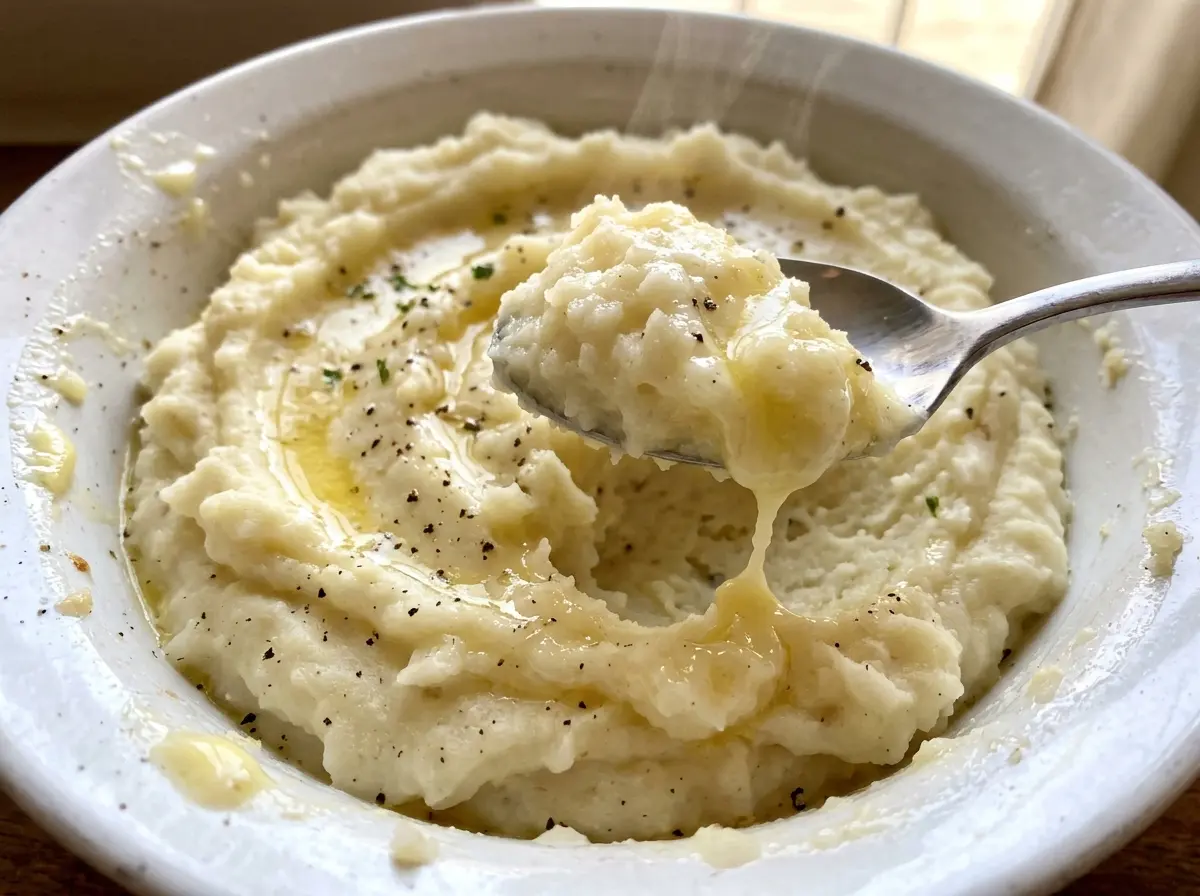
The finished potatoes are creamy and soft, with black pepper cutting through the richness. Serve them hot, while the butter and cream still give every spoonful a silky feel.
Kitchen Note
I keep the potato chunks close to 1 1/2 inches. When some are much smaller, they soften and absorb water before the larger pieces are fork-tender, so matching the cuts gives the whole pot a more even finish.
Save these Creamy Mashed Potatoes for a silky, buttery side that starts with Yukon Golds and finishes with warm cream.
Why Yukon Golds Stay Creamy Without Turning Gluey
These potatoes have enough starch to mash up soft, but they aren’t as dry and fluffy as russets. That’s useful here: Yukon Golds give the bowl a naturally creamy texture, so the butter and cream can enrich the potatoes instead of having to rescue a dry mash. They also have a mild, buttery flavor that works well with the simple seasoning.
Texture depends on how much the potatoes are worked after they’re tender. Mashing breaks down the potato, but aggressive mixing can release too much starch and make the result sticky or gluey. Use a hand masher and stop once the pieces have broken down and the warm dairy is blended in. If you prefer an extra-smooth finish, a potato ricer is a good tool; avoid a blender or food processor, which works the potatoes too hard. The goal isn’t to beat out every bit of texture. It’s to get a creamy mash that still feels soft and light on the spoon.
What the Potatoes, Butter, and Cream Bring to the Bowl

- Yukon Gold potatoes — Their naturally creamy, buttery texture is what makes this mash feel rich without extra seasoning. Choose firm potatoes without soft spots; a less expensive bag is fine as long as the potatoes are in good shape. Russets can stand in at the same weight, but they make a fluffier, drier mash with a less buttery taste.
- Unsalted butter — Butter carries richness through the potatoes, and unsalted butter lets the kosher salt in the cooking water stay in control. There’s no need to buy a premium brand for this; use butter you like the taste of. Salted butter works, too, but it adds salt you can’t measure separately, so the finished seasoning will be less predictable.
- Heavy cream — Its higher fat content gives the mash a fuller, silkier texture than milk. Half-and-half works as a one-for-one substitute, though the potatoes will be a little less rich. Avoid using a very thin liquid if you want the same creamy body.
- Freshly ground black pepper — Freshly grinding it gives the potatoes a brighter, more aromatic bite. Pre-ground pepper is fine when that’s what you have; use the same amount, knowing the pepper flavor will be less vivid.
From an Even Simmer to a Creamy Finish
Start the Potatoes in Cold, Salted Water
Put the peeled potato chunks in a 6-quart pot with the cold water and kosher salt. Check that the water covers the potatoes by about 1 inch before you turn on the heat. Starting cold gives the centers time to cook as the water heats, rather than leaving the outside soft while the middle is still firm. Bring the pot to a boil over high heat, then lower the heat to maintain a simmer.
Cook Until a Fork Slides In Easily
Let the potatoes simmer for 15–20 minutes. Start checking with a fork near the lower end of that range; it should pierce a piece easily without the potato falling apart in the water. If the center still feels firm, give the pot a little longer and check again. Keep the heat at a steady simmer rather than a hard boil, which can break up the outside before the centers are ready.
Drain Well and Return Them to the Pot
Once the potatoes are easily pierced, drain them well and return them to the warm pot. Excess water left clinging to the pieces can thin the mash, so give them a moment to drain rather than tipping them back into the pot while they’re still dripping. The warm pot is ready for mashing without adding another dish to the cleanup.
Warm the Dairy and Add It Gradually
In a small saucepan over low heat, warm the butter and heavy cream for 2–3 minutes, until the butter melts and the mixture is steaming. Don’t let it boil. Mash the potatoes, then mix in the warm butter and cream gradually, pausing as the potatoes absorb it. Finish by mixing in the black pepper and serve hot; adding all the dairy at once makes it harder to judge the texture as you go.
Simple Ways to Change the Texture or Make Them Dairy-Free
Use Russets for a Fluffier Mash
Replace the Yukon Golds with the same weight of russet potatoes and cut them into the same-sized chunks. They make a lighter, fluffier mash, but they’re starchier and less buttery, so mash gently and stop as soon as they’re creamy.
Make a Dairy-Free Version
Use plant-based butter in place of the unsalted butter and unsweetened oat cream instead of heavy cream, keeping the same amounts. Warm them together as you would the dairy, then stir them in gradually. The potatoes will still be creamy, though the flavor will be less buttery and rich.
Leave a Little Texture
For a more rustic bowl, use a hand masher and stop while a few small pieces remain. The flavor stays the same, but the texture feels more substantial than a fully smooth mash. This is a handy adjustment if you like your potatoes with a little more character.
Storage and Reheating
- Refrigerator: Refrigerate leftovers within 2 hours in a covered container and use them within 3–4 days. The mash will firm up as it chills.
- Freezer: These freeze well for up to 1 month. Cool completely, portion into airtight freezer-safe containers, and thaw overnight in the refrigerator; the texture may be a little less smooth after thawing.
- Reheating: Reheat covered in the microwave, stirring between short intervals, or warm gently in a saucepan over low heat, stirring often. Heat leftovers to 165°F; high heat can scorch the bottom before the center is hot.
Questions I Get Asked About Creamy Mashed Potatoes
Creamy Mashed Potatoes
Ingredients
Method
- Place the potatoes in a 6-quart pot with the cold water and kosher salt; the water should cover the potatoes by about 1 inch.
- Bring to a boil over high heat, then reduce the heat to maintain a simmer and cook for 15–20 minutes, until the potatoes are easily pierced with a fork.
- Drain the potatoes well and return them to the warm pot.
- In a small saucepan over low heat, warm the butter and heavy cream for 2–3 minutes, until the butter melts and the mixture is steaming; do not let it boil.
- Mash the potatoes, gradually mixing in the warm butter and cream until creamy, then mix in the black pepper and serve hot.