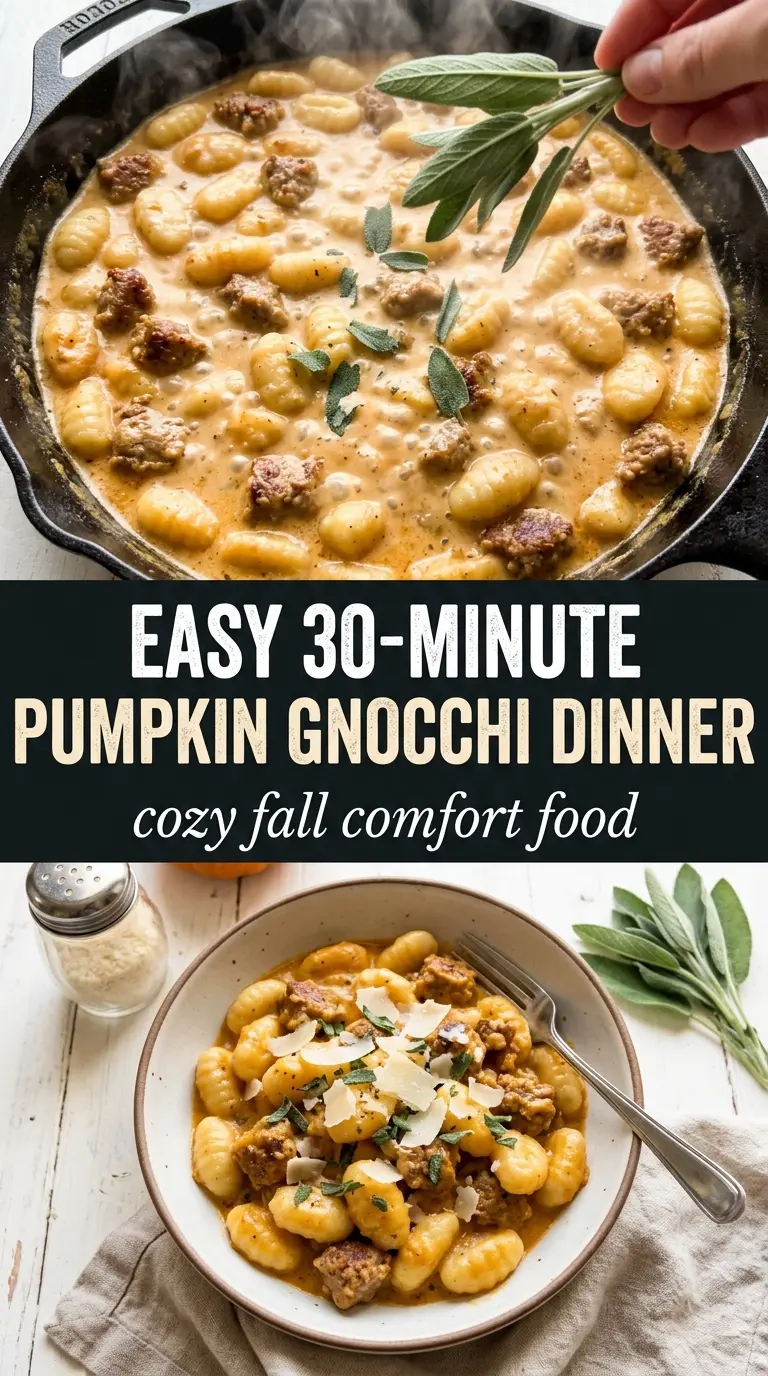
Pillowy gnocchi, browned sausage, and a silky pumpkin cream sauce turn into one of those skillet dinners that disappears fast and somehow still feels calm to make. The gnocchi cooks right in the sauce, so it picks up flavor instead of just getting tossed in at the end, and the pumpkin gives the cream a little body without turning the dish heavy. It lands right in that sweet spot between comforting and practical.
The key is keeping the sauce at a gentle simmer once the cream and broth go in. If it boils hard, the dairy can separate and the gnocchi can go from tender to mushy before the sauce has time to thicken. Browning the sausage first matters too, because those browned bits season the whole pan and keep the pumpkin from tasting flat.
Below, I’ve included the timing cue I watch for when the gnocchi is done, plus a few smart swaps if you want to make this with a different sausage or lighten it up a bit.
The sauce thickened up perfectly and the gnocchi stayed tender instead of falling apart. I used hot Italian sausage and the sage on top made it taste like something from a restaurant.
Creamy Pumpkin Sausage Gnocchi Skillet for a fast one-pan dinner with cozy pumpkin sauce and tender gnocchi
The Gnocchi Trick That Keeps This Skillet from Turning Gummy
The easiest way to ruin this dish is to treat the gnocchi like pasta and boil it separately until it’s completely soft. In this skillet, the gnocchi goes into the sauce and finishes cooking there, which lets it absorb flavor while the starch helps thicken the pan naturally. That’s the difference between a sauce that clings and one that slides off into a puddle.
Keep the simmer gentle once the gnocchi goes in. You want a few lazy bubbles around the edges, not a rolling boil. If the heat is too high, the cream can tighten unevenly and the gnocchi can split before the center is tender.
What Each Ingredient Is Actually Doing in This Dish
- Italian sausage — This is the main seasoning in the pan, so use one you actually like eating. Hot sausage gives the dish more backbone, while mild sausage keeps it softer and a little sweeter. If you use turkey sausage, add a pinch more salt and expect a leaner sauce with less built-in richness.
- Potato gnocchi — Shelf-stable gnocchi works well here because it cooks right in the skillet and helps the sauce thicken as it softens. Fresh gnocchi can work too, but it may cook a little faster, so watch for tenderness instead of the clock. Skip pre-boiling; that extra step only makes it easier to overcook.
- Canned pumpkin puree — Use pure pumpkin puree, not pumpkin pie filling. The puree adds body, a subtle sweetness, and that warm color without making the sauce taste like dessert. Homemade pumpkin puree can work, but it’s often thinner, so you may need an extra minute or two on the stove to get the same texture.
- Heavy cream — This is what makes the sauce feel plush instead of thin. Half-and-half will work in a pinch, but the finished sauce will be looser and a little more likely to split if it gets too hot. Keep the heat low once it’s added.
- Parmesan cheese — Freshly grated parmesan melts more smoothly than the shelf-stable powdery kind. It adds salt and a sharp finish that keeps the pumpkin from tasting flat. Add it off direct heat if your burner runs hot, since cheese can turn grainy when it gets scorched.
- Fresh sage — The garnish isn’t just pretty. Sage gives the whole skillet a savory, woodsy edge that works beautifully with pumpkin and sausage. If you don’t have fresh sage, a tiny pinch of dried sage stirred into the sauce works, but use it sparingly because dried sage can take over fast.
Building the Sauce Before the Gnocchi Goes In
Brown the Sausage Until It Leaves Fond Behind
Cook the sausage over medium-high heat until it’s deeply browned in spots and no longer pink. You want some crisp edges and a little fat in the pan; that’s where the flavor lives. If the sausage looks pale and wet, keep cooking. Bland sausage means a flat sauce, and this dish depends on the sausage to carry the whole skillet.
Stir in the Pumpkin Base and Keep It Moving
Once the garlic smells fragrant, add the pumpkin, cream, broth, and Italian seasoning. Stir until the sauce looks smooth and uniform, with no streaks of pumpkin puree hiding along the sides of the pan. Bring it just to a simmer. If you rush this step on high heat, the cream can separate before the gnocchi even has time to cook.
Let the Gnocchi Cook in the Sauce
Add the gnocchi directly to the skillet and stir them through so each piece is coated. As they cook, the sauce will thicken and the gnocchi will turn tender and plump. The best cue is texture: they should be soft all the way through but still hold their shape. If the sauce gets too thick before the gnocchi is done, splash in a little more broth.
Finish with Parmesan Off the Harsh Heat
Stir in the parmesan once the gnocchi is tender and the sauce has thickened enough to coat a spoon. Pull the pan off the burner if it’s bubbling hard, then add the cheese gradually while stirring. That keeps the sauce smooth instead of grainy. Finish with sage right before serving so the herb stays bright and fragrant.
Three Ways to Make This Skillet Fit the Night You’re Having
Make It Dairy-Free
Use full-fat coconut cream or an unsweetened dairy-free cooking cream in place of the heavy cream, then swap the parmesan for a dairy-free parmesan-style alternative. The sauce will still be creamy, but the flavor will be a little less sharp and a little more mellow. Keep the heat low, since dairy-free creams can break if they boil.
Use Turkey or Chicken Sausage
A leaner sausage works if you want something lighter, but you’ll lose some of the richness that helps season the sauce. If the pan looks dry after browning, add a drizzle of olive oil before the garlic goes in. A little extra parmesan at the end helps bring back the savory depth.
Make It Gluten-Free
Use certified gluten-free gnocchi and check the sausage label, since some brands use fillers that contain wheat. The method doesn’t need to change. The sauce still thickens the same way, and the finished dish keeps the same cozy texture.
Stretch It for More Servings
Add a handful of baby spinach at the very end or toss in sautéed mushrooms with the sausage to bulk it up without changing the flavor profile. If you want more sauce, increase the broth by a few tablespoons and simmer a minute longer so it comes back together. The dish should stay spoonable, not soupy.
Storage and Reheating
- Refrigerator: Store leftovers in an airtight container for up to 3 days. The gnocchi will keep soaking up sauce, so expect a thicker, less silky texture the next day.
- Freezer: I don’t recommend freezing this one. Cream sauces can separate and the gnocchi gets soft and mealy after thawing.
- Reheating: Warm it slowly on the stove over low heat with a splash of broth or cream to loosen the sauce. The main mistake is blasting it in the microwave or over high heat, which makes the sauce break and turns the gnocchi gummy.
Answers to the Questions Worth Asking

Creamy Pumpkin Sausage Gnocchi Skillet
Ingredients
Equipment
Method
- Brown the Italian sausage in a large skillet over medium-high heat, breaking it apart as it cooks for 5-6 minutes, until no longer pink. Keep it sizzling so the meat develops small browned bits.
- Add the garlic and cook for 30 seconds until fragrant. Stir continuously so it doesn’t brown.
- Stir in the canned pumpkin puree, heavy cream, chicken broth, and Italian seasoning, bringing the mixture to a gentle simmer. Look for small bubbles around the edges, not a rolling boil.
- Add the potato gnocchi directly to the skillet and cook for 5-7 minutes until tender and the sauce has thickened. The gnocchi should look puffy and the sauce should coat a spoon.
- Stir in the grated parmesan cheese until melted and smooth. Watch for the sauce to turn glossy and evenly creamy.
- Garnish with fresh sage and serve warm. Add it right before serving for the best aroma.