Deep, spoon-coating beef stew is one of those slow cooker meals that earns its place in the rotation because it tastes like it simmered all day without asking you to stand over the stove. The beef turns tender enough to pull apart with a fork, the potatoes hold their shape, and the broth picks up enough depth from the tomatoes, wine, and Worcestershire to taste rich instead of flat. It’s the kind of bowl that feels complete on its own.
This version works because the vegetables go in first and the beef sits on top, where it braises gently instead of stewing aggressively at the bottom of the cooker. The tomato paste, wine, and Worcestershire build a darker, more savory broth, and the cornstarch goes in at the end so the stew thickens cleanly without the potatoes breaking down too early. If you’ve had slow cooker stew come out thin or bland before, this structure fixes both problems.
Below, you’ll find the timing that gives the beef that fall-apart texture, plus the small finishing step that turns the broth from soupy to properly stewy.
The broth thickened up perfectly at the end and the beef was tender without falling completely apart. I also liked that the potatoes stayed intact instead of turning mushy.
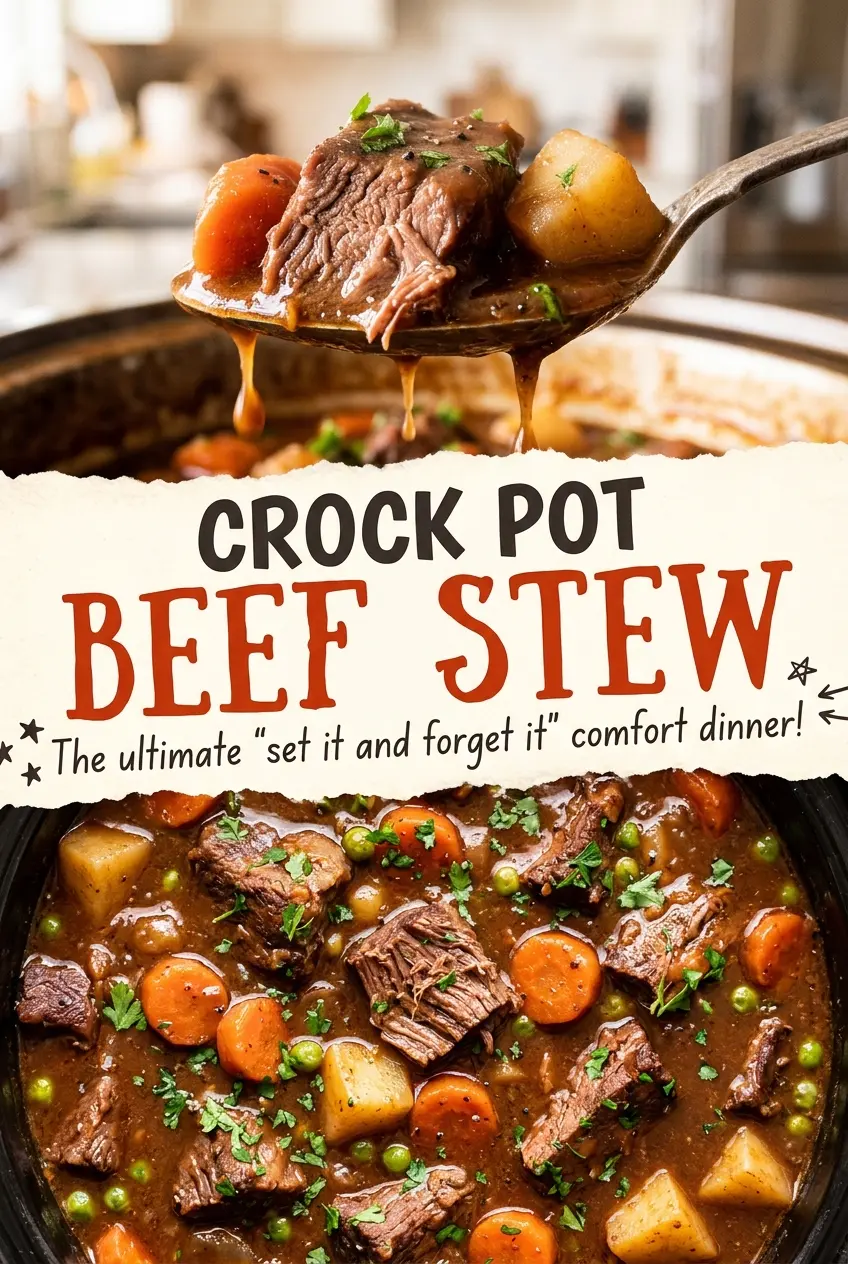
Pin this Crock Pot Beef Stew for a deep, savory dinner with fall-apart beef and a thick broth that never turns watery.
The Slow Cooker Stew Mistake That Leaves You With Mushy Vegetables
Slow cooker beef stew gets ruined most often when everything goes in at once and cooks for too long in the same liquid. The potatoes and carrots can survive a long braise, but only if they’re protected a little by sitting underneath the beef instead of floating around in the hottest part of the pot. That layout matters more than people think. It keeps the vegetables from collapsing before the meat has finished turning tender.
The other place stew goes wrong is at the end. If you add cornstarch too early, the broth can turn gluey and the vegetables take on a starchy, heavy texture. Waiting until the beef is already tender lets the sauce thicken around the meat instead of tightening the whole pot into paste.
What Each Ingredient Is Actually Doing in This Stew

- Beef chuck — This is the cut that gives you that tender, shreddable texture after a long cook. Leaner cuts dry out before they get soft, so chuck is the right choice here.
- Baby potatoes — They hold their shape better than russets and bring body to the stew without turning chalky. Halving them helps them cook through at the same pace as the carrots.
- Red wine or extra broth — Wine deepens the broth and adds a little sharpness that keeps the stew from tasting one-note. If you skip it, use more broth so the pot still has enough liquid to braise the meat properly.
- Tomato paste and diced tomatoes — These don’t make the stew taste like tomato soup. They add a darker base and enough acidity to wake up the beef flavor.
- Worcestershire sauce — This is one of the fastest ways to make the broth taste cooked, not flat. There isn’t a direct substitute that brings the same savory depth, though a splash of soy sauce can stand in if that’s what you have.
Building the Stew So the Beef Turns Tender, Not Dry
Laying Down the Vegetable Base
Start with the potatoes, carrots, celery, and onion in the bottom of the slow cooker. That layer creates a little cushion between the beef and the hottest surface of the pot. If the vegetables sit on top, they can soften unevenly and break apart before the stew is finished.
Seasoning and Nestling the Beef
Season the beef well before it goes in, then place it over the vegetables instead of stirring it through. You want the meat surrounded by liquid and aromatics, not buried at the bottom where it can overcook against the heat source. Add the garlic, broth, wine, tomatoes, tomato paste, Worcestershire, thyme, rosemary, and bay leaves after that.
Cooking Until the Meat Gives
Cook on Low for 8 to 10 hours, or High for 4 to 5 hours if you’re short on time. The real cue is the beef itself: it should pull apart easily with a fork and no longer look tight or chewy in the center. If it still feels firm, give it more time rather than cranking the heat, which can dry out the edges before the middle catches up.
Thickening at the End
Remove the bay leaves before adding the cornstarch slurry. Stir it in gently, then cook on High for 20 to 30 minutes until the broth turns glossy and coats a spoon. If the stew looks thin at first, don’t add more slurry right away — the starch needs a few minutes to activate fully.
Three Practical Ways to Change This Stew Without Losing What Makes It Work
Dairy-Free and Naturally Thick
This recipe is already dairy-free as written. If you want a richer finish without cream, keep the wine and tomato paste in the base and let the slow cooker do the work; the broth will thicken into a hearty stew with the cornstarch at the end.
Skip the Wine and Use More Broth
If you don’t cook with wine, replace it with an equal amount of beef broth. You’ll lose a little acidity and depth, so the stew benefits from a slightly heavier hand with the Worcestershire and a good final seasoning check.
Make It Glutten-Free Without Changing the Texture
Use a certified gluten-free Worcestershire sauce, since some brands contain gluten. Cornstarch is already the thickener here, so the final texture stays the same without needing flour.
Add Mushrooms for a Deeper, Earthier Stew
Stir in sliced mushrooms with the vegetables at the start. They’ll soften and melt into the broth, adding extra savoriness without changing the structure of the stew.
Storage and Reheating
- Refrigerator: Store for up to 4 days. The broth thickens as it chills, and the potatoes soften a little more overnight.
- Freezer: Freezes well for up to 3 months. Cool completely first and leave a little space at the top of the container so the liquid can expand.
- Reheating: Warm gently on the stove over low heat or in the microwave in short bursts. Don’t boil it hard, or the beef can tighten up and the potatoes can break down.
Answers to the Questions Worth Asking
Crock Pot Beef Stew
Ingredients
Equipment
Method
- Season the beef generously with salt and pepper, coating all sides so it won’t taste flat after cooking. Visual cue: the cubes should look speckled and evenly dusted.
- Place the potatoes, carrots, celery, and onion in the bottom of the slow cooker. Visual cue: vegetables should form an even layer for consistent tenderness.
- Nestle the beef on top, keeping it mostly covered by the vegetables beneath. Visual cue: beef cubes should sit as a layer rather than spread out.
- Add the garlic, beef broth, red wine, diced tomatoes, tomato paste, Worcestershire sauce, dried thyme, dried rosemary, and bay leaves. Visual cue: liquid should come up around the sides of the beef and vegetables.
- Cook on Low for 8-10 hours, or on High for 4-5 hours, until the beef is fall-apart tender. Visual cue: beef should shred easily when pressed with a spoon.
- Remove the bay leaves, then stir the cornstarch slurry into the stew until no lumps remain. Visual cue: the surface should start to look slightly thicker as you stir.
- Cook on High for 20-30 minutes until the broth thickens. Visual cue: draw a line through the stew with a spoon and it should slowly refill.
- Season with salt and pepper to taste, then serve hot. Visual cue: final seasoning should balance the richness of the broth.