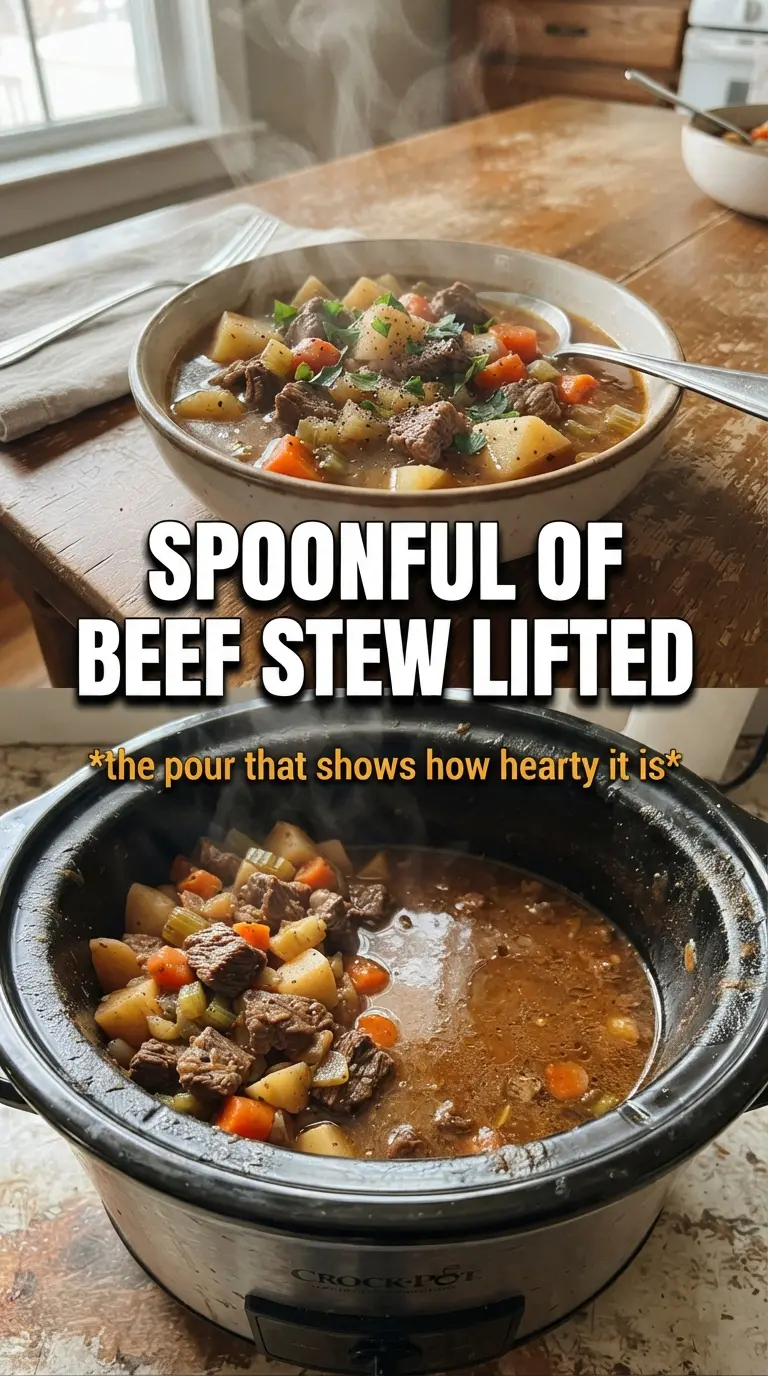
Deep mahogany broth, fork-tender beef, and vegetables that hold their shape instead of melting into mush—that’s what makes this Crock Pot beef stew worth keeping in rotation. The slow cooker does the kind of work that turns a tough cut into something spoon-soft, and the long, gentle simmer gives the broth time to taste rich and layered instead of flat.
This version leans on tomato paste, Worcestershire, and a little red wine to build depth before the lid even goes on. The vegetables go under the beef so they braise in the broth instead of drying out on top, and the cornstarch slurry gets added at the end so the stew thickens cleanly without turning pasty.
Below you’ll find the timing that keeps the beef tender, the ingredient choices that matter most, and a few smart swaps if you need to work with what you have. The goal is a stew that tastes slow-cooked in the best way: rich, cozy, and satisfying all the way through.
The beef got that fall-apart texture I was hoping for, and the broth thickened up beautifully after the slurry went in. I used the red wine and it gave the stew a deeper, richer taste without being too strong.
Like this stew? Save it to Pinterest for the nights when you want beef that’s fall-apart tender and a broth that tastes like it simmered all day.
The Secret to Stew Meat That Turns Tender, Not Chewy
The difference between stew that tastes lush and stew that tastes tough usually comes down to two things: the cut and the time. Beef chuck has enough connective tissue to soften into rich, silky bites during a long cook, but it needs patience. Rush it and the fibers stay tight; let it go until it’s truly tender and the whole pot changes character.
The other mistake is boiling the stew hard in a hurry. Slow cooker beef stew works because the heat stays gentle and steady. That gives the beef time to relax into the broth instead of seizing up. It also keeps the potatoes and carrots intact instead of breaking down into a cloudy mash.
- Beef chuck — This is the cut that earns its keep here. It has enough marbling and connective tissue to become spoon-tender after hours of low heat. Stew meat from the grocery store is fine if it comes from chuck, but if the package is vague, chuck roast cut into cubes gives you more control.
- Red wine or extra broth — Wine adds depth and a little acidity that keeps the broth from tasting one-note. If you don’t cook with wine, use more broth and add a teaspoon of red wine vinegar at the end for brightness.
- Tomato paste and diced tomatoes — Tomato paste brings concentrated body, while diced tomatoes add a little sweetness and shape to the broth. Don’t skip the paste; it’s doing more work than the canned tomatoes in terms of building a dark, stew-like base.
- Worcestershire sauce — This adds salty, savory depth that rounds out the beef broth. There’s no perfect substitute, but soy sauce in a smaller amount can stand in if that’s what you have, though the flavor will be a little different.
- Baby potatoes — Their waxier texture helps them hold together through a long cook. Russets break down more easily and can cloud the broth, which is fine if you want a thicker stew, but not ideal if you want distinct chunks.
What Each Ingredient Is Actually Doing in This Recipe
- Primary ingredient (the star) — Quality matters most. Choose the best you can find.
- Cooking medium (oil, butter, or broth) — This carries flavors and prevents dryness.
- Seasonings (salt, pepper, spices, herbs) — Layer flavors so nothing overpowers. Build depth gradually.
- Aromatics (garlic, onion, herbs) — Cook with fat to bloom flavors. Become the foundation.
- Supporting ingredients — Complement the main ingredient without overpowering it.
- Sauce or liquid (if applicable) — Brings flavors together. Balance richness with acid.
- Acid (lemon, vinegar, wine, or other) — Brightens and prevents flat-tasting results.
- Final finish (garnish, glaze, or sauce) — Prevents one-dimensional taste and adds visual appeal.
Building the Broth So It Stays Rich and Not Watery
Layer the vegetables first
Put the potatoes, carrots, celery, and onion in the bottom of the slow cooker before the beef goes on top. That keeps the meat elevated just enough to braise gently while the vegetables soak up flavor from the drippings and broth. If you scatter everything in at once, the beef can sit too deeply in the liquid and the texture gets a little muddled.
Season and load the pot in the right order
Season the beef generously with salt and pepper before it goes in. Add the garlic, broth, wine, tomatoes, tomato paste, Worcestershire, thyme, rosemary, and bay leaves over the top. The tomato paste may look stubborn at first, but it will dissolve as the stew cooks; if you leave it in clumps, stir it briefly before covering so the base starts evenly.
Finish with the slurry, not before
Wait until the beef is fall-apart tender before you thicken the broth. Cornstarch needs a hot liquid and a short finish, not eight hours of cooking, or it loses its clean thickening power. Once you stir in the slurry, cook on High just until the broth turns glossy and lightly coats the back of a spoon.
What to Change When You Want a Different Kind of Stew
Dairy-Free and Naturally Gluten-Free
This stew already fits both of those needs as written, which is part of why it works so well for a crowd. Just check that your Worcestershire sauce is gluten-free if that’s a concern, since some brands include malt vinegar. Cornstarch is the thickener here, so you get a glossy finish without flour.
No Wine, Same Deep Flavor
Use an extra cup of beef broth and add a teaspoon of red wine vinegar or balsamic at the end. You won’t get the same layered flavor that wine brings during the cook, but you still get enough acidity to keep the broth from tasting heavy.
Make It Heartier with Mushrooms or Parsnips
Sliced mushrooms or chunks of parsnip can go in with the vegetables at the start. Mushrooms add an extra savory note and parsnips bring a gentle sweetness that plays well with the thyme and rosemary. Just keep the pieces substantial so they don’t disappear over the long cook.
Storage and Reheating
- Refrigerator: Keeps well for 4 days. The broth thickens a little more as it chills, and the potatoes soften slightly but still hold together.
- Freezer: Freezes well for up to 3 months. Cool it completely first, then freeze in portions. The potatoes can change texture a bit after thawing, but the flavor stays solid.
- Reheating: Reheat gently on the stove over medium-low heat or in the microwave in short bursts. If it looks too thick, add a splash of broth before reheating; boiling it hard can make the beef dry out and the vegetables break apart.
Questions I Get Asked About This Recipe
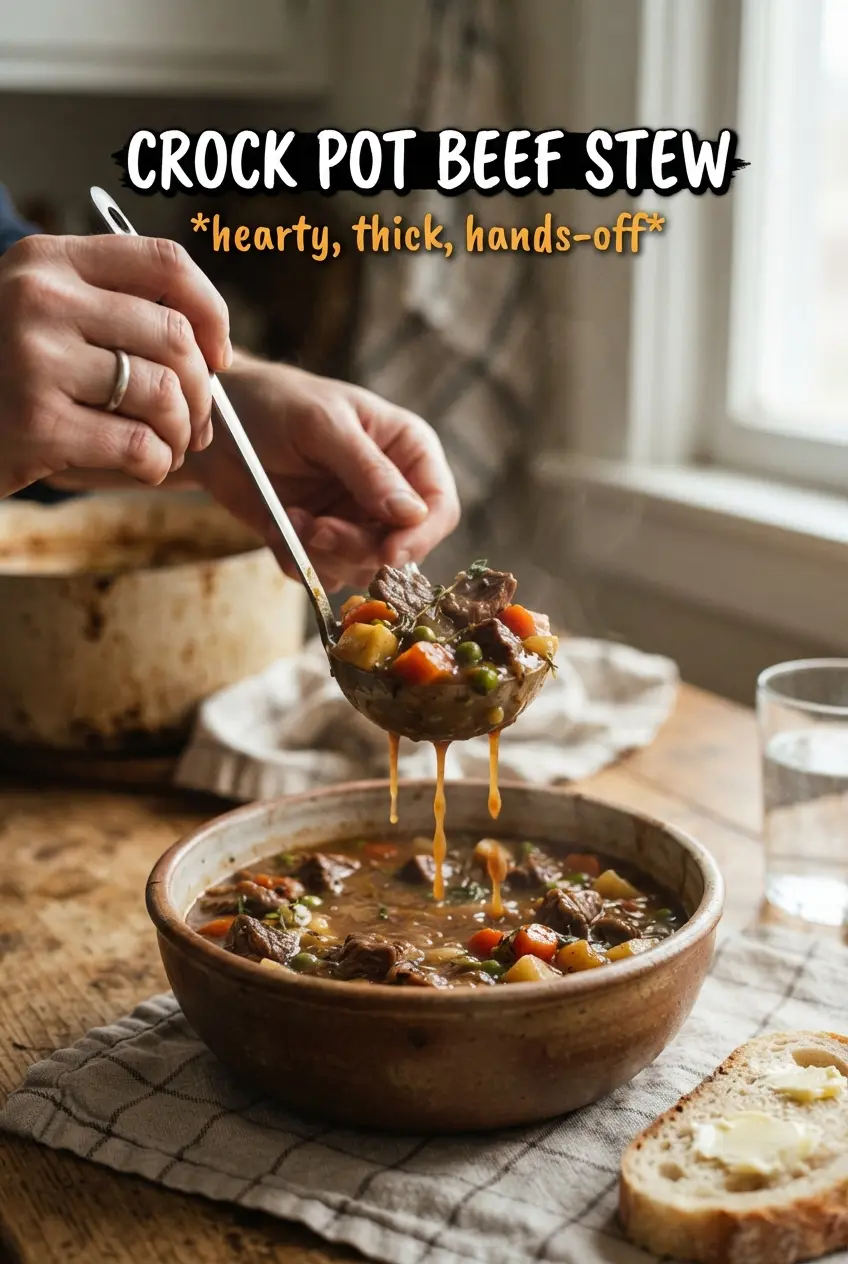
Crock Pot Beef Stew
Ingredients
Equipment
Method
- Season the beef chuck generously with salt and pepper.
- Place the baby potatoes, carrots, celery, and onion in the bottom of the Crockpot, then nestle the beef on top.
- Add the garlic, beef broth, red wine (or extra broth), diced tomatoes, tomato paste, Worcestershire sauce, dried thyme, dried rosemary, and bay leaves.
- Cook on Low for 8-10 hours, until the beef is fall-apart tender, with gentle bubbling visible around the edges.
- Remove the bay leaves and stir in the cornstarch slurry until the broth looks evenly cloudy and beginning to thicken.
- Cook on High for 20-30 minutes until the broth thickens to a spoon-coating consistency.
- Season with salt and pepper to taste, then serve while hot and glossy with a thickened gravy texture.