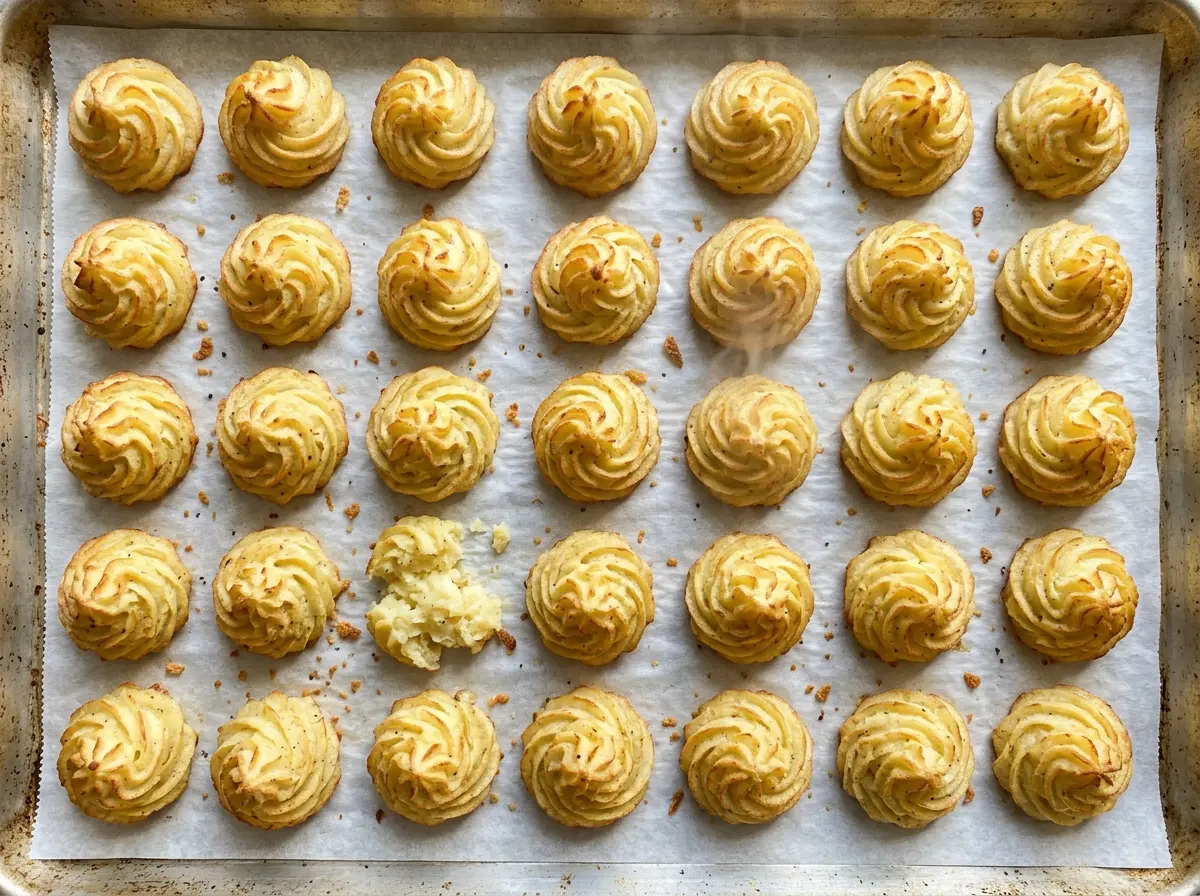
The first thing you notice when these come out of the oven is the ridges: the raised edges turn golden while the centers stay soft. Duchess Potatoes look like a special-occasion side, but the shape comes from a simple potato mixture and a large star tip. I like that the rosettes can be portioned before they bake, so they arrive at the table looking tidy without needing a last-minute scoop from a serving bowl.
Russet potatoes make a fluffy base, and ricing them while they’re hot keeps the texture smooth without beating the starch into glue. After the butter and cream go in, the mixture gets a short cool-down before the egg yolks. That pause helps the yolks blend in cleanly, and the finished potatoes pipe into distinct rosettes with crisp, browned ridges and tender middles.
Kitchen Note
Give the potato mixture the full five minutes to cool before adding the yolks. If it’s piping hot, the yolks can start to set in little bits instead of blending smoothly through the mash.
Save these Duchess Potatoes for a dinner where crisp golden ridges and soft, buttery centers belong on the same plate.
Dry Potatoes Make the Difference Between a Rosette and a Puddle
Potatoes that still hold water after boiling are the easiest way to end up with a soft, slumping shape. Draining alone doesn’t remove the moisture clinging to the outside of each piece. Returning them to the pot over medium-low heat for a minute or two lets that surface moisture evaporate before the potatoes are riced.
Look for a dry, steamy potato surface rather than a wet sheen, and stir gently so the pieces don’t break down against the pot. Once riced, the potatoes should feel light and separate, not sticky or elastic. That texture gives the butter and cream room to blend in without turning the mixture loose. It also gives the egg yolks a better base to bind, so the piped ridges keep their shape as they bake. Don’t rush the drying stage; it’s a small part of the process, but it has a bigger effect on the finished rosettes than extra piping practice.
Russets, Yolks, and Cream Each Have a Job in the Pipeable Mash

- Russet potatoes — Their high-starch, fluffy texture gives these potatoes a light interior and helps the mixture hold ridges. Choose firm potatoes without soft spots; the inexpensive bag is fine because this recipe turns them into a smooth mash. Yukon Golds can work in their place, though the rosettes will be creamier and less airy.
- Unsalted butter — Butter brings richness and helps the potato mixture taste rounded rather than plain. Since the salt is added separately, unsalted butter gives you better control; salted butter works, but the finished potatoes will taste saltier unless you reduce the added salt. Use butter you like the taste of, but there’s no need for a specialty brand.
- Heavy cream — Cream loosens the riced potatoes while adding enough richness for a smooth, pipeable texture. Half-and-half can stand in, but the mash will be less rich and may feel a little softer. Avoid substituting thin milk, which adds liquid without the same body.
- Egg yolks — The yolks enrich the potatoes and help them set into defined shapes in the oven. They’re doing more than adding color, so there isn’t a simple direct swap that gives the same structure; egg whites won’t provide the same richness or binding. Use fresh large eggs and separate the yolks carefully.
- Black pepper and nutmeg — Black pepper gives the buttery potato a little warmth, while nutmeg adds a quiet savory note. Freshly ground pepper tastes a bit sharper, but pre-ground pepper is perfectly practical here. Nutmeg can be left out for a simpler, more purely buttery flavor.
From Fork-Tender Potatoes to Golden Ridged Tops
Simmer Until the Centers Give Easily
Heat the oven to 425°F and line a rimmed baking sheet with parchment. Add the peeled, 1 1/2-inch potato chunks to a 4-quart pot with the water and 2 teaspoons of the kosher salt, then bring the pot to a boil. Lower the heat to a simmer and cook for 15 to 20 minutes. A fork should slip through the largest chunks easily; if the centers still feel firm, give them more time rather than trying to rice them undercooked.
Evaporate the Surface Water Before Ricing
Drain the potatoes well, then return them to the pot over medium-low heat. Stir gently for 1 to 2 minutes, until the damp sheen on the surface is gone. Keep the movement light so the potato pieces don’t turn pasty against the bottom of the pot. Rice them into a large bowl while they’re still hot; the ricer breaks them into fine, fluffy strands that are easier to mix without overworking.
Enrich the Potatoes and Pipe the Rosettes
Stir the butter pieces and heavy cream into the riced potatoes until the mixture looks smooth. Let it cool for 5 minutes, then stir in the egg yolks, remaining kosher salt, black pepper, and nutmeg until everything is evenly combined. Transfer the mixture to a pastry bag fitted with a large star tip and pipe 12 rosettes onto the prepared sheet. Keep the tip close to the parchment as you pipe, and finish each rosette with a small lift so the ridges stay distinct.
Bake Until the Ridges Turn Golden
Bake for 18 to 22 minutes, watching for golden-brown edges on the raised ridges. The tops should look set, while the centers remain soft rather than dry. If the ridges are still pale, give the potatoes the time they need within that baking window instead of pulling them early for the sake of a pale, smooth surface. Let them rest on the baking sheet for 5 minutes before serving; the short rest helps the rosettes settle without losing their shape.
Three Useful Ways to Change These Duchess Potatoes
Make Them Dairy-Free, Not Egg-Free
Replace the butter with dairy-free butter and the heavy cream with a thick, unsweetened dairy-free cooking cream in the same amounts. Keep the egg yolks, since they help the rosettes set; the result is dairy-free but not vegan. Choose a cooking cream with a thick consistency so the mixture doesn’t become too loose to pipe.
Use Yukon Golds for a Creamier Center
Swap the russets for the same weight of Yukon Gold potatoes. Their texture is naturally creamier and a little less fluffy, so the rosettes won’t have quite the same airy finish, but they still make a smooth, buttery side with browned ridges.
Leave Out the Nutmeg for a Cleaner Butter Flavor
Omit the nutmeg and keep the black pepper for a more straightforward savory taste. The finished rosettes will still be rich and well-seasoned, with the potato and butter taking the lead instead of the warm spice note.
Storage and Reheating
- Refrigerator: Refrigerate leftovers within 2 hours in an airtight container and use them within 3 to 4 days. The ridges soften in storage, though the centers stay tender.
- Freezer: Freeze fully cooled rosettes in a single layer, then transfer them to a sealed freezer container for up to 1 month. The potato texture may be a little less fluffy after thawing.
- Reheating: Warm them in the oven until heated through. Avoid the microwave if you want to keep the outside from turning soft.
Questions That Come Up When Piping Duchess Potatoes
Duchess Potatoes
Ingredients
Equipment
Method
- Heat the oven to 425°F.
- Line a rimmed baking sheet with parchment paper.
- Put the potatoes, water, and 2 teaspoons of the salt in a 4-quart pot.
- Bring the mixture to a boil, then simmer for 15 to 20 minutes, until the potatoes are easily pierced with a fork.
- Drain the potatoes.
- Return the potatoes to the pot over medium-low heat for 1 to 2 minutes, stirring gently, until the surface moisture has evaporated.
- Rice the potatoes into a large bowl.
- Stir in the butter and heavy cream until smooth.
- Let the mixture cool for 5 minutes.
- Stir in the egg yolks, remaining 1 teaspoon salt, black pepper, and nutmeg until fully combined.
- Transfer the potato mixture to a pastry bag fitted with a large star tip.
- Pipe 12 rosettes onto the prepared baking sheet.
- Bake for 18 to 22 minutes, until the ridges are golden brown.
- Let the potatoes rest on the baking sheet for 5 minutes before serving.