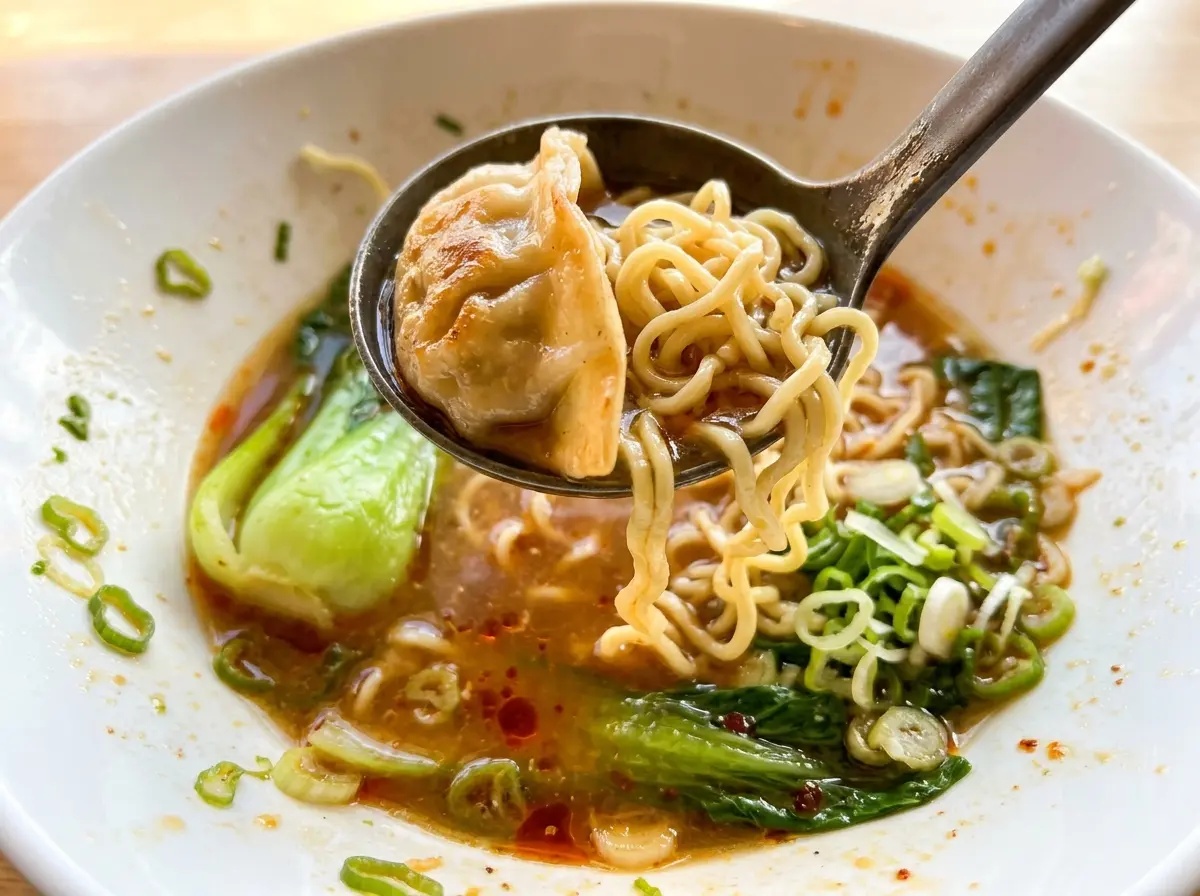
Garlic and ginger hit the sesame oil first, and the kitchen smells like the start of something warming before the broth even goes in. I like this Dumpling Ramen Bowl for the way it turns frozen pork dumplings and a couple of ramen cakes into a full pot of soup without a separate pan for each part.
The order matters because the dumplings need a longer simmer than the noodles. They go into the broth first, while the ramen and bok choy wait until the end. That keeps the noodles tender instead of swollen and gives the bok choy just enough time to soften while its leaves stay fresh.
By the time the green onions go on, you have savory broth, tender dumplings, and ramen ready to eat straight from the bowl.
Kitchen Note
Check a dumpling in the center with an instant-read thermometer; it should reach 160°F. The outside can look ready before the pork filling is cooked through, so check one rather than judging by the wrapper alone.
Save this Dumpling Ramen Bowl for a cozy dinner with savory broth, tender pork dumplings, and ramen that goes in at just the right time.
Why the Dumplings Go In Before the Ramen
This bowl has two different cooking clocks. Frozen uncooked dumplings need time in the simmering broth, while dried ramen noodles take only a few minutes to turn tender. Put them in together and the noodles sit in hot liquid long after they reach the texture you want.
Adding the dumplings first also lets their wrappers and filling warm through while the broth keeps moving around them. The mushrooms have already spent a few minutes in the pot, so the broth has a savory base before the dumplings arrive. Once the noodles and bok choy join in, stay close: the last few minutes are enough to finish both without leaving the ramen to soak. This sequence gives you a bowl where the noodles still have some spring and the dumplings remain the main event, rather than a pot of broth thickened by overcooked noodles.
What Gives This Bowl Its Savory Broth and Fresh Finish

- Toasted sesame oil — It brings a roasted aroma that plain cooking oil won’t match. Use fresh oil if you can; if you only have neutral oil, it will cook the aromatics, but the broth will lose that sesame note.
- Garlic and fresh ginger — Minced garlic and freshly grated ginger give the broth its sharp, fragrant start. Grate the ginger finely so it disperses instead of leaving chewy pieces. Ground ginger is not a close match for the bright taste of fresh ginger here.
- Cremini mushrooms — Thin slices give the broth an earthy, savory layer. Store-brand mushrooms are fine; choose firm caps without wet or dark spots. White button mushrooms are the easiest swap, sliced the same way and used in the same amount.
- Chicken broth and soy sauce — Together, they make the cooking liquid flavorful without asking for a long simmer. A broth you already enjoy drinking is a good choice. Tamari can replace the soy sauce for a gluten-free version, though the dumplings and noodles also need gluten-free replacements.
- Frozen uncooked pork dumplings — These provide the filling and make the bowl substantial. Keep them frozen until they go into the pot; the cooking window here is built around frozen, uncooked dumplings, not cooked ones or a different filling.
- Ramen, bok choy, and green onions — Dried ramen cakes cook quickly, while thinly sliced bok choy adds crisp-tender texture and green onions bring a fresh finish. Store-brand ramen works well; the shape and thickness of the noodle cakes matter more than the label.
The Timing That Keeps the Dumplings Tender and the Noodles Springy
Wake Up the Garlic and Ginger
Heat the toasted sesame oil in a 6-quart pot over medium heat. Add the minced garlic and grated fresh ginger and cook for 30 seconds. Stir as they warm so the garlic doesn’t sit against the bottom of the pot and darken. The aromatics should smell fragrant, not browned.
Soften the Mushrooms and Bring Up the Broth
Add the thinly sliced cremini mushrooms and cook for 3 minutes, stirring occasionally. They begin to soften and release some of their moisture, making contact with the oil and aromatics. Pour in the chicken broth and soy sauce, then bring the pot to a boil. Keep an eye on the pot as it heats so it doesn’t boil over.
Simmer the Frozen Dumplings
Add the frozen uncooked pork dumplings to the boiling broth, then reduce the heat to maintain a gentle simmer. Cook for 8–10 minutes, keeping the liquid bubbling lightly rather than rolling hard. A vigorous boil can jostle the wrappers around; a steady, gentle simmer is easier on them. Check the center of a dumpling before moving on.
Add Ramen and Bok Choy at the End
Stir in the dried ramen noodles and thinly sliced bok choy. Simmer for 3–4 minutes, watching the noodles as they soften. The ramen should be tender, and the bok choy should still have a little bite rather than slumping into the broth. If the noodles are ready, don’t leave the pot sitting on the heat.
Divide and Finish the Bowls
Divide the dumplings, noodles, bok choy, and broth among four bowls. Distribute the ingredients as you serve so each bowl gets dumplings and vegetables along with the noodles. Finish with the thinly sliced green onions. Serve while the ramen is still springy.
Two Smart Swaps for a Different Dumpling Ramen Bowl
A Gluten-Free Bowl with Tamari
Use gluten-free uncooked pork dumplings, gluten-free ramen cakes, and tamari in place of the soy sauce. Keep the dumplings close in size to the original so they cook on a similar schedule, and choose noodles that become tender in the short simmer. Gluten-free wrappers and noodles can have a different, sometimes softer, bite.
A Deeper, Woodsy Mushroom Version
Replace the cremini mushrooms with the same amount of thinly sliced shiitake mushrooms. Their flavor is more pronounced and savory, so the broth tastes a little earthier. Keep the slices thin so they soften during the mushroom-cooking stage.
Storage and Reheating
- Refrigerator: Store leftovers in an airtight container for 3 to 4 days. The ramen will continue absorbing broth and soften as it sits.
- Freezer: The soup can be frozen in an airtight container, but the cooked ramen and bok choy will soften after thawing. For the best texture, eat it fresh or refrigerated rather than freezing leftovers.
- Reheating: Warm gently in a saucepan until hot throughout, stirring carefully around the dumplings. Avoid a hard boil, which can break the wrappers, and don’t keep reheated noodles simmering longer than needed.
Questions That Come Up When Making Dumpling Ramen
Dumpling Ramen Bowl
Ingredients
Method
- Heat the sesame oil in a 6-quart pot over medium heat.
- Add the garlic and ginger and cook for 30 seconds.
- Add the mushrooms and cook, stirring occasionally, for 3 minutes.
- Pour in the chicken broth and soy sauce and bring to a boil.
- Add the frozen dumplings, reduce the heat to maintain a gentle simmer, and cook for 8–10 minutes, or until a dumpling’s center reaches 160°F when checked with an instant-read thermometer.
- Add the ramen noodles and bok choy and simmer for 3–4 minutes, until the noodles are tender and the bok choy is crisp-tender.
- Divide the dumplings, noodles, bok choy, and broth among four bowls.
- Top with the green onions.