The sugar coating can look ready before it actually is. I learned to wait for the pecans to feel dry and crisp, not just for the cinnamon-sugar to look settled on the outside. A low oven gives the coating time to dry without rushing the nuts, which is what makes these Easy Candied Pecans easy to snack on instead of sticky.
The egg white does the binding here. Whisk it with water and vanilla until frothy, then toss the pecans in it before adding the sugar mixture. That thin coating helps the cinnamon and sugar cling to the pecans instead of gathering in a sandy layer at the bottom of the bowl.
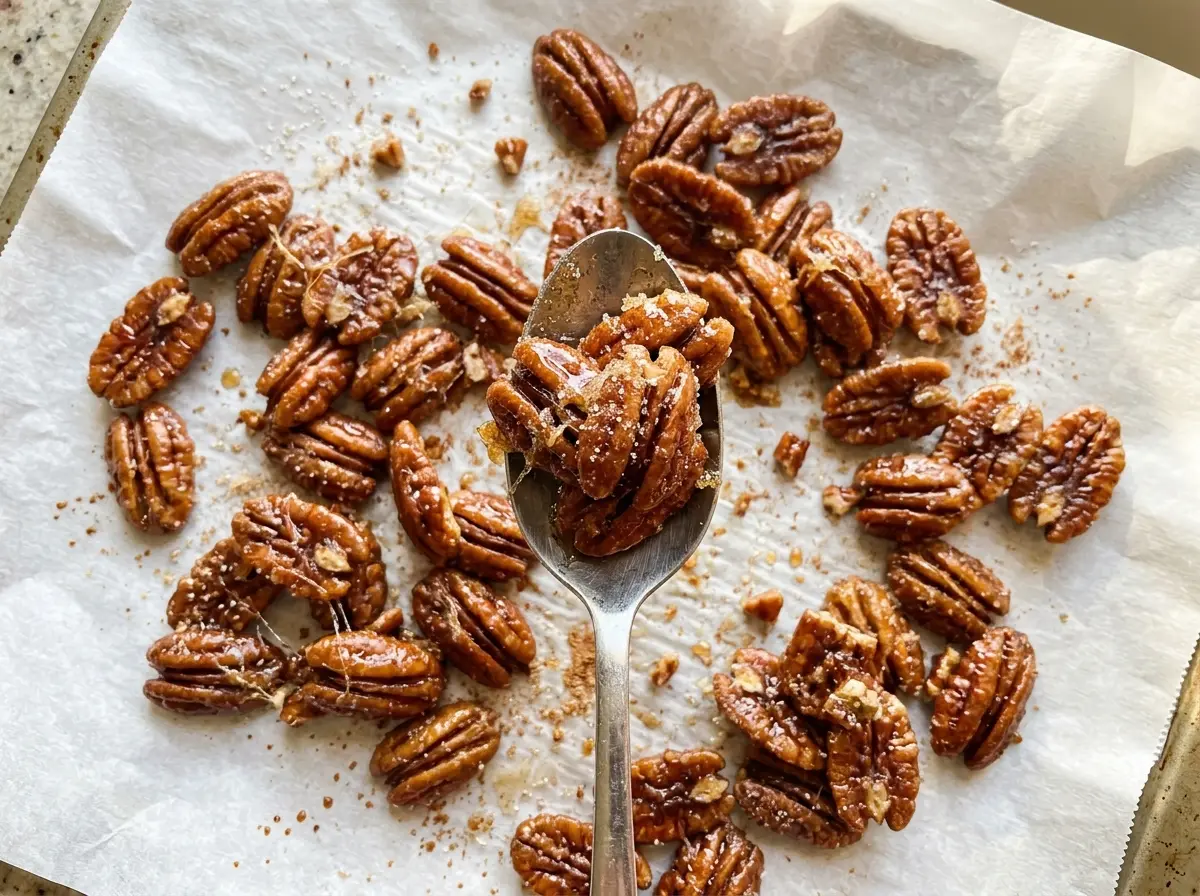
I stir the pan every 15 minutes so the pecans dry evenly, then leave them right on the baking sheet until completely cool. The finished pecans are crisp, lightly sweet, and fragrant with cinnamon.
Kitchen Note
Don’t move the pecans off the baking sheet while they’re warm. They finish crisping as they cool, and packing them before they’re completely cool traps steam that can soften the coating.
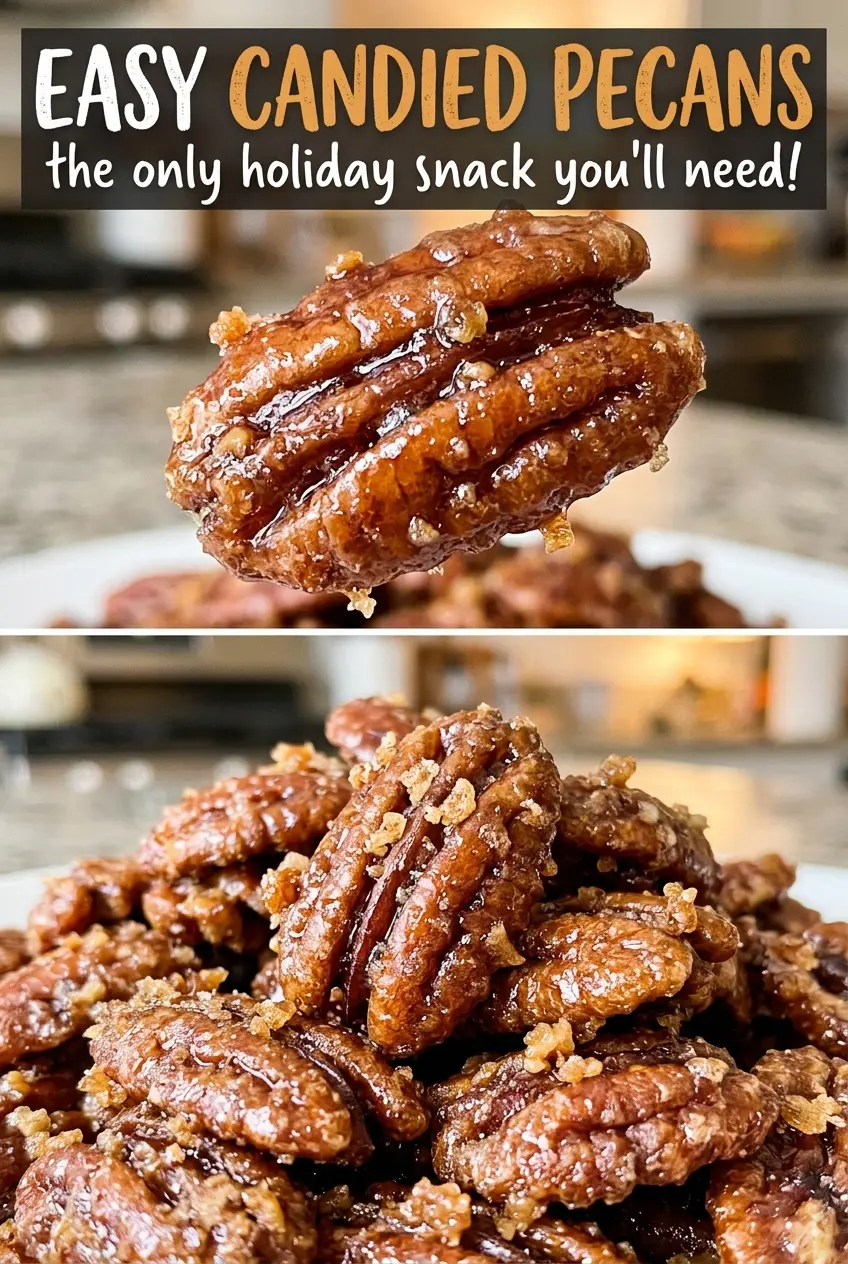
Save these Easy Candied Pecans for a snackable batch with a crisp cinnamon-sugar coating and a simple oven method.
Why These Pecans Need a Low Oven Instead of a Hot Sugar Glaze
These are coated pecans, not stovetop pralines. There’s no pan of melted sugar to monitor or caramel stage to judge. The egg white helps the cinnamon-sugar cling to each pecan, and the oven slowly dries that coating until it turns crisp. A hotter oven might brown the nuts before the coating has had time to dry through, leaving you with uneven texture: dark edges and a tacky center.
The hour in the oven is doing a different job than a quick toast. The pecans need time to lose the moisture from the egg-white mixture while the sugar coating sets around them. Stirring the pan at regular intervals redistributes the nuts, so the ones near the edges don’t take all the heat. When the batch is done, the coating should feel dry rather than sticky. Let the pecans cool before judging the final crunch; warm sugar coatings don’t have their finished texture yet.
What Makes the Egg-White Coating Hold on to Every Pecan
- Pecan halves — Whole halves give you a substantial bite and a broad surface for the coating. Choose pecans that smell fresh and nutty; stale pecans can taste flat beneath the cinnamon-sugar. Since the coating is simple, freshness matters more here than buying the most expensive bag.
- Egg white — This is the binder that lets the sugar mixture cling. Whisk it until frothy rather than trying to whip it into stiff peaks; it needs to coat the nuts in a thin layer, not form a meringue. A large egg white gives the coating the right amount of moisture for this batch.
- Granulated sugar — Its dry, fine crystals make an even coating that can crisp in the oven. Brown sugar brings extra moisture and a molasses note, so it won’t give you the same clean, dry cinnamon-sugar shell. Regular granulated sugar is the right choice here; an expensive specialty sugar won’t improve the coating.
- Ground cinnamon — Cinnamon gives the sugar its warm, familiar flavor without making the coating wet. Use a fresh jar if yours has been sitting open for years; old cinnamon loses its aroma. The recipe relies on ground cinnamon, so cinnamon sticks won’t distribute evenly in the coating.
- Vanilla extract — Vanilla rounds out the sweetness and makes the pecans smell especially fragrant as they bake. A standard bottle works well; you don’t need a specialty extract for this recipe. I add it to the egg white mixture so it disperses before the pecans go in.
Coating the Pecans So the Cinnamon-Sugar Stays Put
Prepare the pan for an even, dry finish
Heat the oven to 250°F and line a large rimmed baking sheet with parchment paper. The low temperature is intentional, so let the oven come fully to temperature before the pan goes in. Parchment keeps the sugary coating from sticking to the baking sheet and makes cleanup simpler. Use a rimmed pan so you can stir the pecans without nudging them over the edge.
Make a frothy binder and a separate sugar mixture
In a large bowl, whisk the egg white with the water and vanilla until frothy. It should look lightly foamy across the surface, not stiff or meringue-like. In a separate bowl, stir together the sugar, cinnamon, and kosher salt so the seasoning is evenly distributed. Keeping the mixtures separate gives the sugar a chance to coat the pecans evenly after the binder has reached every surface.
Toss in two stages for an even coating
Add the pecans to the egg-white mixture and toss until each one looks lightly coated. If you add the sugar mixture before the binder has spread across the nuts, some pecans can end up bare while clumps of sugar collect together. Add the sugar mixture and toss again until the pecans are evenly covered. Scrape the sides and bottom of the bowl as you toss, where loose cinnamon-sugar tends to settle.
Bake until dry, then let the coating set
Spread the pecans in a single layer on the prepared baking sheet. Bake for 1 hour, stirring every 15 minutes so the pecans shift around the pan and dry evenly. The coating should look matte and feel dry rather than wet or tacky when the pecans are ready. Let them cool completely on the baking sheet before serving or storing; the final crisp texture develops as they cool.
Two Easy Ways to Change the Batch Without Losing the Crisp Coating
Make a half batch for a smaller snack bowl
Use half of each ingredient and keep the same coating order. Spread the pecans in a single layer on the parchment-lined baking sheet, then stir every 15 minutes as they bake at 250°F. A smaller batch is handy when you want a modest amount without changing the cinnamon-sugar balance.
Skip the cinnamon for a vanilla-sugar version
Leave out the ground cinnamon and prepare the remaining ingredients the same way. The coating will taste sweeter and more clearly of vanilla, without the warm spice note. This is a simple change for anyone who wants the pecan flavor to stand out more.
Storage and Reheating
- Room temperature: Store completely cooled pecans in an airtight container for up to 2 weeks. Humidity can soften the sugar coating over time.
- Freezer: Freeze them in an airtight freezer-safe container for up to 2 months. Thaw in the closed container so condensation forms on the container rather than on the pecans.
- Reheating: They don’t need reheating. If they lose some crunch, spread them on parchment and warm them in a 250°F oven until dry and crisp again, then cool completely before storing.
The Questions That Come Up Before the Pecans Go in the Oven
Easy Candied Pecans
Ingredients
Equipment
Method
- Heat the oven to 250°F.
- Line a large rimmed baking sheet with parchment paper.
- In a large bowl, whisk the egg white, water, and vanilla until frothy.
- In a separate bowl, stir together the sugar, cinnamon, and salt.
- Add the pecans to the egg white mixture and toss until evenly coated.
- Add the sugar mixture and toss until the pecans are evenly covered.
- Spread the pecans in a single layer on the prepared baking sheet.
- Bake for 1 hour, stirring every 15 minutes, until dry and crisp.
- Let the pecans cool completely on the baking sheet before serving or storing.