The dough starts out looking like a thick, sticky paste, then turns smooth and glossy as each egg disappears into it. That change is the cue I watch for when I make these French cheese puffs: the dough needs to be cohesive before the Gruyère goes in, or the cheese won’t distribute as evenly.
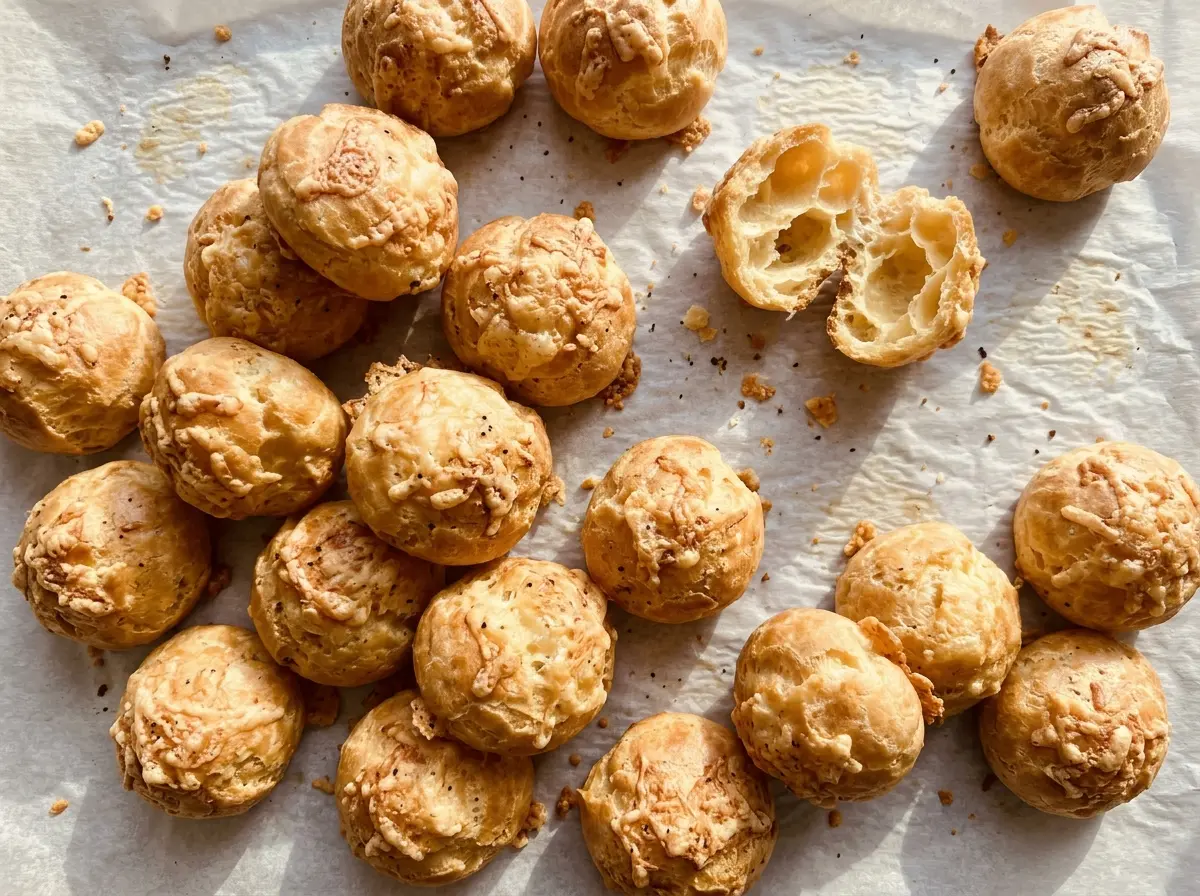
They bake up with a crisp, deeply golden outside and a tender center, with Gruyère bringing a savory, nutty edge. The oven starts hot, then the temperature drops without the door opening. That gives the puffs time to rise before they finish baking through, and a short rest in the cooling oven dries out the centers. Serve them warm, when the cheese is fragrant and the shells still have a little crispness.
Kitchen Note
After baking, pierce the side of every puff before leaving them in the turned-off oven. That small opening lets steam escape, so the centers dry instead of turning damp as they cool.
Save these French cheese puffs for a savory bake-ahead bite with a crisp shell and nutty Gruyère in every mouthful.
Why These Puffs Need a Hot Start and a Gentler Finish
Choux pastry rises because its wet dough creates steam in the oven. The first stretch at 425°F gets that expansion going quickly; lowering the oven to 375°F gives the puffs more time to firm up without pushing the outside too far ahead of the center. The order matters: opening the oven during the temperature change lets heat escape just when the puffs are building their shape.
Look for a deep golden color and a shell that feels firm, not pale or soft. A lightly colored puff may look ready from the outside while its center still holds too much moisture. Keep the oven door closed through both baking stages, and let the full bake do its work before checking. These cues matter more than trying to judge doneness by the clock alone, since ovens can vary. The goal is a puff that holds its shape once it comes out, with enough structure to stay pleasantly crisp rather than slump.
What the Gruyère, Eggs, and Flour Each Bring

- Gruyère — Its nutty, savory flavor is the defining taste here, and finely grated cheese melts into the dough without leaving large pockets. Grate it finely at home if you can; that texture blends more evenly than coarse shreds. A finely grated aged cheddar is a workable swap, though it makes the puffs sharper and less distinctly Swiss.
- Eggs — The eggs give the dough its lift and help create the hollow, tender interior. Room-temperature eggs blend into the warm dough more smoothly, so take the chill off before mixing rather than adding cold eggs straight from the refrigerator.
- All-purpose flour — Flour gives the cooked dough enough structure to trap steam as the puffs rise. Use regular all-purpose flour for the intended texture; swapping in a lighter cake flour won’t give the dough the same body.
- Unsalted butter — Butter adds richness and helps carry the cheese’s flavor through the dough. Unsalted butter keeps the seasoning predictable alongside the kosher salt; if you only have salted butter, leave out the added kosher salt.
- Black pepper and nutmeg — They round out the cheese with a gentle warmth rather than making the puffs taste strongly spiced. Freshly ground black pepper gives a clearer bite, but ordinary ground pepper works; nutmeg can be omitted if you prefer a simpler cheese flavor.
From Panade to Golden, Dry Centers
Cook the Flour Until the Dough Pulls Together
Bring the water, butter, and kosher salt to a boil over medium-high heat in a medium saucepan. Add all the flour at once, then stir vigorously over medium heat for 1 to 2 minutes. The dough should gather into a ball, and a thin film should form on the bottom of the pan. If it still looks loose and pasty, keep stirring until those cues appear.
Cool Briefly, Then Add the Eggs One at a Time
Transfer the hot dough to a large bowl and let it cool for 5 minutes. Beat in one room-temperature egg at a time, waiting until each is fully incorporated before adding the next. At first the dough may look slippery or separated; keep mixing and it should come together again. The finished dough looks smooth and glossy, not curdled or streaky.
Fold in the Cheese and Portion the Dough
Stir in the finely grated Gruyère, black pepper, and nutmeg until the cheese and seasoning are evenly distributed. Drop the dough onto the parchment-lined large rimmed baking sheet in 24 portions, about 1 tablespoon each. Leave about 2 inches between portions so the puffs have room to expand. Keep the portions reasonably even in size for a tray that bakes consistently.
Bake Through Both Temperatures, Then Let the Steam Out
Bake for 10 minutes at 425°F, then reduce the oven temperature to 375°F without opening the door. Continue baking for 20 to 25 minutes, until the puffs are deeply golden and firm. Turn off the oven, pierce the side of each puff with a small knife, and leave the tray inside with the door ajar for 5 minutes. Serve the puffs warm.
Three Useful Changes for a Different Batch
Swap in finely grated sharp cheddar
Use the same volume of finely grated sharp cheddar in place of the Gruyère. The puffs keep their savory character, but the cheese taste becomes more direct and tangy, with less of Gruyère’s mellow nuttiness.
Make a gluten-free batch
Replace the all-purpose flour with the same amount of a cup-for-cup gluten-free flour blend intended for baking. Choose a blend that includes xanthan gum or another binder; the crumb may be a little less elastic, but the cooked dough can still puff into savory bites.
Leave out the nutmeg for a cleaner cheese flavor
Omit the ground nutmeg and keep the black pepper. The puffs will taste more simply of butter and Gruyère, with no change to the dough’s structure or baking method.
Storage and Reheating
- Refrigerator: Refrigerate leftovers in an airtight container within 2 hours and use within 3 days. The shells soften as they sit.
- Freezer: Freeze fully cooled puffs in an airtight container for up to 1 month. Thaw them in the refrigerator before reheating.
- Reheating: Warm them in a 350°F oven until heated through and crisp again, usually about 5 to 8 minutes. Avoid the microwave, which warms them quickly but leaves the shells soft.
Questions That Come Up Before the First Tray
French Cheese Puffs
Ingredients
Equipment
Method
- Heat the oven to 425°F.
- Line a large rimmed baking sheet with parchment paper.
- Combine the water, butter, and salt in a medium saucepan and bring to a boil over medium-high heat.
- Add the flour all at once and stir vigorously over medium heat for 1 to 2 minutes, until the dough forms a ball and a thin film forms on the bottom of the pan.
- Transfer the dough to a large bowl and let it cool for 5 minutes.
- Beat in the eggs one at a time, fully incorporating each before adding the next, until the dough is smooth and glossy.
- Stir in the Gruyère, black pepper, and nutmeg until evenly distributed.
- Drop the dough in 24 portions, about 1 tablespoon each, onto the prepared baking sheet, spacing them about 2 inches apart.
- Bake for 10 minutes at 425°F.
- Reduce the oven temperature to 375°F without opening the door and bake for 20 to 25 minutes, until the puffs are deeply golden and firm.
- Turn off the oven and pierce the side of each puff with a small knife.
- Leave the puffs in the oven with the door ajar for 5 minutes to dry.
- Serve warm.