French onion chicken orzo casserole brings all the deep, savory comfort of French onion soup into one creamy baked dinner. The onions cook down until dark and sweet, the orzo soaks up every bit of broth and wine, and the Gruyere turns the top into a golden crust that cracks lightly when you spoon through it.
What makes this version work is the way the layers build in the same pan. You caramelize the onions long enough for their sharp edges to disappear, then use wine and broth to pull every browned bit off the bottom before the orzo goes in. The cream cheese melts into the cooking liquid and gives the casserole body without turning it heavy or gluey.
Below, I walk through the small details that keep the onions from rushing and the sauce from drying out in the oven. If you’ve ever had baked pasta turn thick before the chicken finishes cooking, the timing here matters.
The onions caramelized into this deep, jammy layer and the orzo came out tender without getting mushy. My husband went back for seconds and said it tasted like French onion soup turned into dinner.
Save this French Onion Chicken Orzo Casserole for a cozy one-pan dinner with caramelized onions, creamy orzo, and a golden Gruyere crust.
The Trick to Keeping the Orzo Creamy After It Bakes
Orzo can go from tender to pasty fast, especially in a casserole where it keeps absorbing liquid as it sits. The fix is to give it enough broth up front that it can finish cooking in the oven without stealing every drop from the pan. That’s why this dish stays saucy instead of turning into a brick once it cools for a few minutes.
The other thing people miss is the onion stage. If the onions are only softened, the whole dish tastes flat and a little sharp. Once they reach a deep amber color, they bring the same sweet-savory backbone you expect from French onion soup, and that’s what makes the casserole taste layered instead of just creamy.
- Onions — These carry the whole dish. Thin slices cook down faster and caramelize more evenly, but they still need time. If you rush them, you get sweetness without depth.
- Beef broth — This gives the casserole its French onion character. Chicken broth works in a pinch, but it tastes lighter and less savory. Use a good boxed broth if that’s what you have.
- Dry white wine — It deglazes the pan and sharpens the sauce. If you skip it, add an extra splash of broth plus a tiny squeeze of lemon at the end to replace some of that lift.
- Cream cheese — This is what makes the sauce cling to the orzo. Cut it into cubes so it melts fast and evenly. Cold blocks dropped in all at once take longer to disappear and can leave little soft pockets.
- Gruyere — This is the crust you want. It melts into a nutty, elastic top that browns beautifully. Swiss cheese can stand in, but the flavor is gentler.
- Chicken breast — Dice it small so it cooks through at the same pace as the orzo. Bigger pieces can go dry before the pasta finishes.
What Each Ingredient Is Actually Doing in This Recipe

- Primary ingredient (the star) — Quality matters most. Choose the best you can find.
- Cooking medium (oil, butter, or broth) — This carries flavors and prevents dryness.
- Seasonings (salt, pepper, spices, herbs) — Layer flavors so nothing overpowers. Build depth gradually.
- Aromatics (garlic, onion, herbs) — Cook with fat to bloom flavors. Become the foundation.
- Supporting ingredients — Complement the main ingredient without overpowering it.
- Sauce or liquid (if applicable) — Brings flavors together. Balance richness with acid.
- Acid (lemon, vinegar, wine, or other) — Brightens and prevents flat-tasting results.
- Final finish (garnish, glaze, or sauce) — Prevents one-dimensional taste and adds visual appeal.
Building the Base Before Anything Goes in the Oven
Caramelizing the onions properly
Melt the butter in a large oven-safe skillet and add the onions with a pinch of salt. Cook them over medium heat, stirring often and scraping up any browned spots, until they collapse, turn deep golden, and smell sweet and nutty. This takes 30 to 35 minutes, not 10, and the color matters more than the clock. If they start to scorch, lower the heat and keep moving them around the pan.
Deglazing and tightening the sauce
Stir in the garlic and thyme for just a minute or two, then pour in the wine. The pan should sizzle hard and release the stuck-on bits from the bottom. Let the wine cook down until it no longer smells raw, then add the broth, Worcestershire, orzo, and chicken. At this point the mixture should look loose and soupy, not thick, because the pasta is still going to drink.
Baking until the top turns golden
Stir in the cream cheese until the liquid looks smooth and lightly creamy, then season and cover the top with Gruyere. Slide the skillet into the oven and bake until the orzo is tender, the chicken is cooked through, and the cheese has melted into a deep golden crust. If the top browns before the center is done, lay a loose piece of foil over it for the last few minutes. The casserole should come out creamy enough to spoon, not dry enough to slice.
How to Adapt This for a Different Pantry or a Different Diet
Make it gluten-free
Use a gluten-free orzo or another small gluten-free pasta with a similar cook time. Watch the liquid closely, because some gluten-free pastas soften faster and can turn fragile if they sit too long after baking. The flavor stays the same, but the texture is a little more delicate.
Swap the chicken for mushrooms
For a vegetarian version, replace the chicken with 12 to 16 ounces of sliced mushrooms and use vegetable broth instead of beef broth. Brown the mushrooms first so they lose their raw moisture and pick up color, or the casserole can taste watered down. The result is earthier and still has that French onion feel.
Use what you have instead of Gruyere
Swiss cheese, fontina, or even a mix of mozzarella and Parmesan will melt well on top. Gruyere gives the most classic nutty finish, but any cheese with good melt and decent salt can carry the crust. Avoid pre-shredded cheese if you can; the anti-caking coating can keep the top from browning as cleanly.
Storage and Reheating
- Refrigerator: Store leftovers in an airtight container for up to 4 days. The orzo thickens as it sits, so the sauce will look tighter the next day.
- Freezer: It freezes, but the texture softens a little after thawing. Freeze in portions for up to 2 months and thaw overnight in the fridge before reheating.
- Reheating: Reheat covered in a 325F oven with a splash of broth to loosen the sauce. Microwaving works for a quick lunch, but add a spoonful of liquid first or the edges can dry out while the center stays cold.
Questions I Get Asked About This Dish
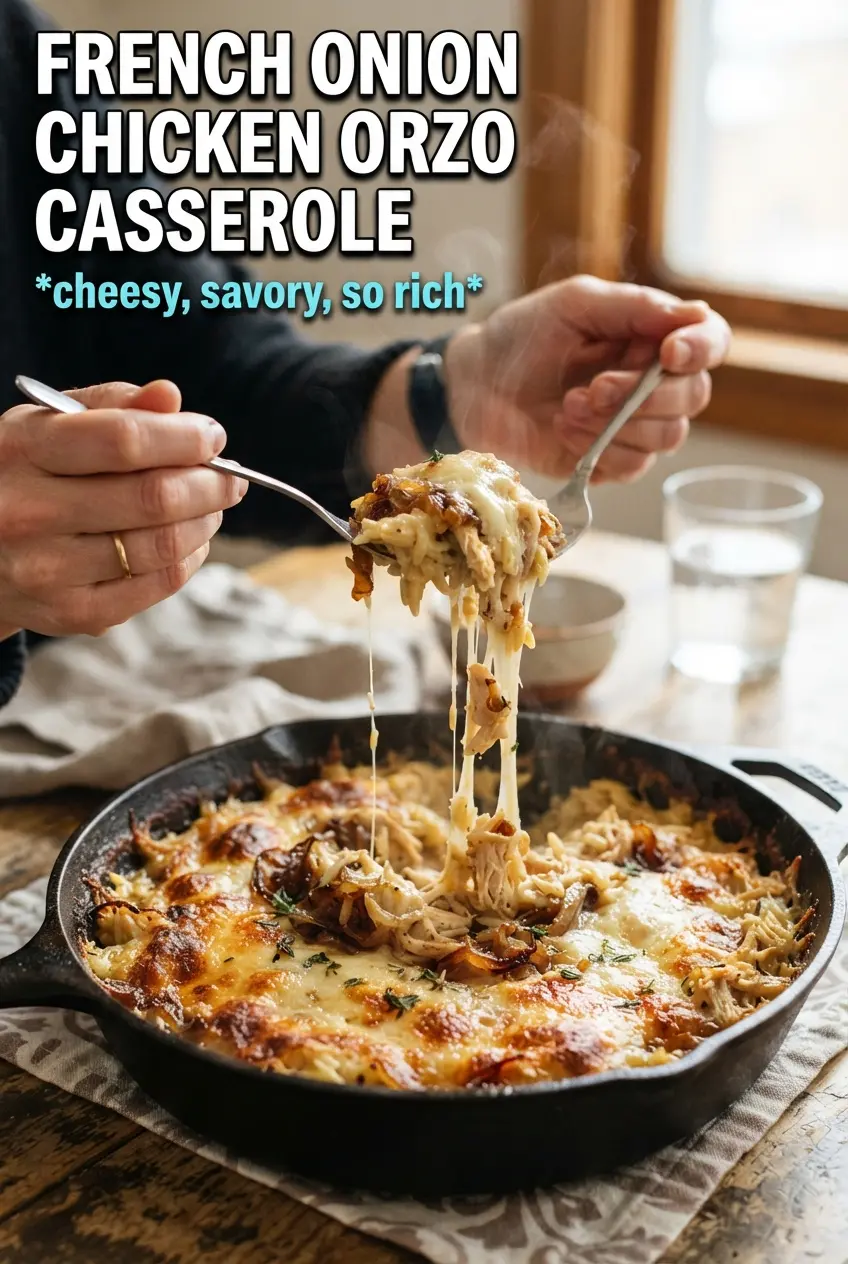
French Onion Chicken Orzo Casserole
Ingredients
Equipment
Method
- Preheat oven to 375F so it’s hot and ready for baking. (See visual cue: oven racks positioned to fit an oven-safe skillet or casserole dish.)
- Melt the butter in a large oven-safe skillet over medium heat, then add the thinly sliced onions. Cook for 30-35 minutes, stirring occasionally, until deeply caramelized with dark-golden edges.
- Add the minced garlic and dried thyme, then cook for 2 minutes until fragrant and lightly toasted. (Visual cue: garlic softens without browning too fast.)
- Pour in the dry white wine and cook for 2 more minutes to reduce slightly, scraping up browned bits from the pan. (Visual cue: wine looks more syrupy.)
- Stir in the beef broth, Worcestershire sauce, and uncooked orzo, then mix thoroughly. Add the diced chicken and stir to combine evenly.
- Bring the mixture to a simmer, then stir in the cubed cream cheese until fully melted and creamy. (Visual cue: sauce becomes smooth and coats the orzo.)
- Season with salt and pepper to taste, then scatter the shredded Gruyere over the top evenly. (Visual cue: cheese forms a golden layer once it melts.)
- Bake at 375F for 25-30 minutes until the orzo is cooked, the chicken is done, and the cheese is golden. (Visual cue: bubbling around the edges and browned, set top.)
- Let the casserole rest for 5 minutes before serving, then garnish with fresh thyme. (Visual cue: filling thickens slightly for clean scoops.)