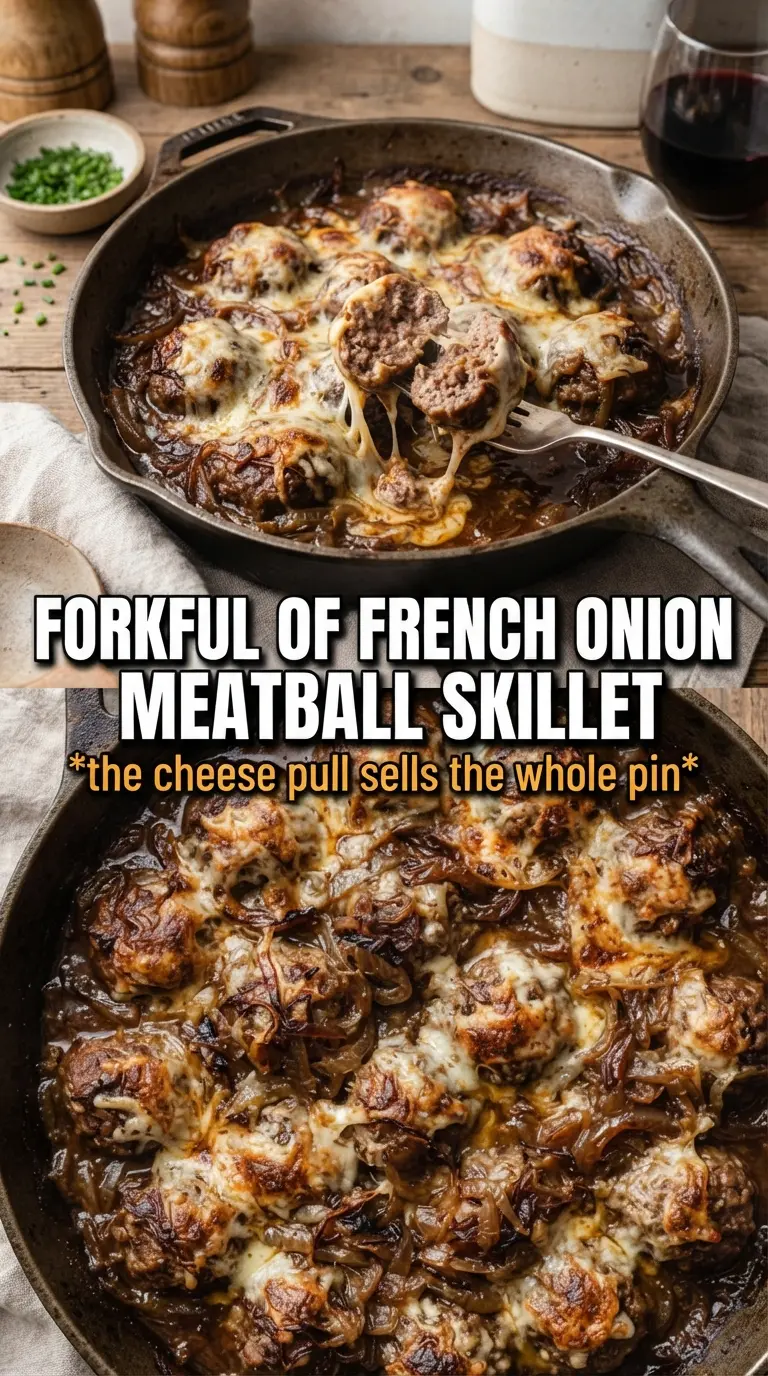
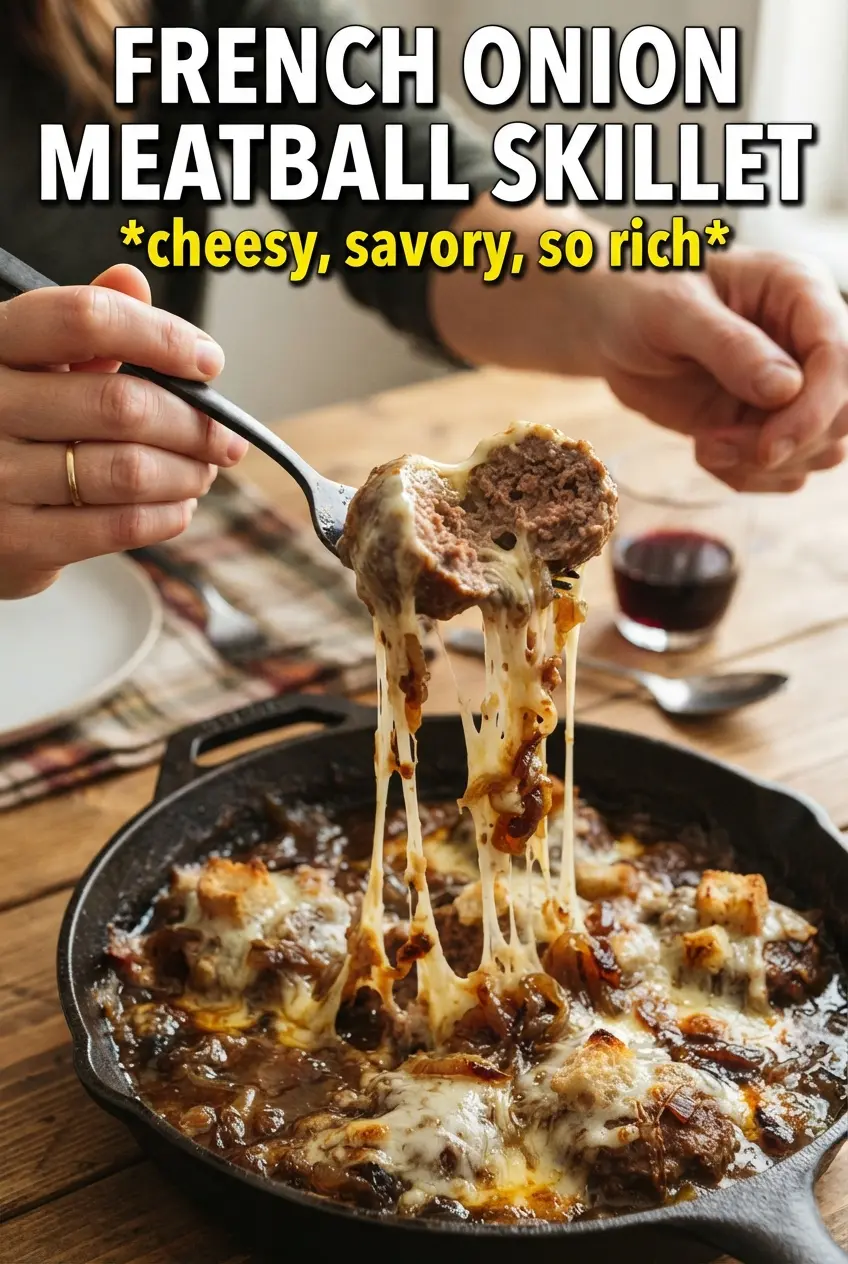
Deeply caramelized onions and browned meatballs turn into a skillet dinner that tastes like French onion soup met a cozy Sunday supper. The onions melt down into a glossy, savory broth, the meatballs stay juicy, and the Gruyere on top bakes into a bronzed, bubbling lid that cracks when you spoon through it. It’s the kind of dish that feels a little special without asking you to do anything fussy.
What makes this version work is patience in the pan. The onions need time to go past soft and sweet into dark, jammy caramelization, because that’s where the flavor comes from. Browning the meatballs first builds fond in the skillet, and that brown layer gives the broth more depth once the wine and beef stock go in. If you rush either of those steps, the finished dish tastes flatter and more one-note.
Below, I’ve broken down the one part that matters most, what each ingredient is doing, and the easiest way to keep the sauce rich instead of thin. If you’ve ever wanted French onion soup to eat like a full meal, this is the version to keep.
The onions cooked down into this rich, sweet-savory sauce and the Gruyere browned beautifully under the broiler. I was worried the meatballs would dry out, but they stayed tender right in the skillet and the whole thing tasted even better the next day.
Love the caramelized onion sauce and melty Gruyere on these French Onion Meatballs? Save this skillet dinner to Pinterest for the nights when you want something rich, cozy, and hands-off once the onions are done.
The Slow Onion Cook Is the Whole Recipe
French onion flavor doesn’t come from a quick sauté. It comes from onions that have time to lose their moisture, soften completely, and then keep going until the edges turn amber and the bottom of the pan fills with those sticky browned bits. That’s the difference between a broth that tastes sweet and layered and one that just tastes like onion.
The other place people miss the mark is heat. If the pan is too hot, the onions scorch before they turn jammy, and if you crowd them too much, they steam. Use medium-low, stir often enough to keep the color even, and give them the full 30 to 35 minutes. They should look collapsed, glossy, and deeply golden brown, not pale and floppy.
- Onions — Three large onions sound like a lot, but they shrink dramatically. Yellow onions are the best choice here because they caramelize well and give you that classic French onion sweetness.
- Butter — This is the fat that carries the onion flavor and helps the fond develop. If you swap in oil, the skillet will still work, but you’ll lose some of that round, savory richness.
- Dry white wine — The wine loosens the browned bits on the pan and adds acidity so the sauce doesn’t taste heavy. Use something dry and drinkable; sweet wine will throw the balance off.
- Gruyere — This is the cheese you want for the top because it melts smoothly and browns without turning greasy. Swiss or Emmental can stand in, but the flavor gets milder.
- Beef broth — A good broth matters here because it becomes the body of the sauce. If yours tastes weak, the whole skillet will taste weak too.
What Each Ingredient Is Actually Doing in This Recipe
- Primary ingredient (the star) — Quality matters most. Choose the best you can find.
- Cooking medium (oil, butter, or broth) — This carries flavors and prevents dryness.
- Seasonings (salt, pepper, spices, herbs) — Layer flavors so nothing overpowers. Build depth gradually.
- Aromatics (garlic, onion, herbs) — Cook with fat to bloom flavors. Become the foundation.
- Supporting ingredients — Complement the main ingredient without overpowering it.
- Sauce or liquid (if applicable) — Brings flavors together. Balance richness with acid.
- Acid (lemon, vinegar, wine, or other) — Brightens and prevents flat-tasting results.
- Final finish (garnish, glaze, or sauce) — Prevents one-dimensional taste and adds visual appeal.
Building the Skillet Without Breaking the Sauce
Brown the Meatballs First
Mix the beef gently with the breadcrumbs, egg, Worcestershire, garlic powder, salt, and pepper just until combined. Overworking the meat makes the meatballs dense, and you want them tender enough to soak up the onion broth later. Brown them in butter in an oven-safe skillet until they have a deep golden crust on the outside, then pull them out while they finish carrying over with the sauce later.
Caramelize the Onions Slowly
Use the same skillet so the onions pick up the browned meatball drippings. Add the sliced onions and cook them over medium-low heat, stirring often and scraping the bottom as they soften and darken. If the pan starts looking dry or the onions threaten to scorch, lower the heat; the goal is a steady, even color, not fast browning at the edges.
Deglaze and Build the Broth
When the onions are deeply caramelized, stir in the garlic and thyme for a minute, just until fragrant. Pour in the white wine and let it bubble while you scrape up the browned bits stuck to the pan. Add the beef broth and Worcestershire next, and let the liquid simmer until it tastes full and oniony instead of sharp and thin.
Finish Under the Broiler
Set the browned meatballs back into the onion broth and let them simmer for about 10 minutes so they finish cooking through and pick up flavor. Then scatter the Gruyere over the top and broil just until the cheese is melted, bubbling, and spotted with gold. Watch it closely at the end; broilers turn a perfect top into a burned one in a minute.
What to Change When You Want a Different Kind of Dinner
Gluten-Free Version With the Same Texture
Swap the breadcrumbs for gluten-free breadcrumbs or finely crushed gluten-free crackers. The meatballs will still hold together and stay tender, but use a light hand when mixing so they don’t turn pasty.
Dairy-Free Skillet With a Slightly Less Luxurious Finish
Use olive oil instead of butter for the onions and skip the Gruyere, or top with a dairy-free melting cheese if you have one you trust. You’ll lose some of the classic French onion richness, but the caramelized onions and broth still carry the dish.
Make It More Like a Supper Bowl
Serve the skillet over mashed potatoes, buttered noodles, or toasted bread to catch the onion broth. That turns it from a straight skillet dinner into something closer to French onion meatballs and gravy, which works especially well if you want to stretch it farther.
Storage and Reheating
- Refrigerator: Store leftovers in an airtight container for up to 4 days. The onions get even deeper in flavor, though the cheese top softens once chilled.
- Freezer: The meatballs and onion sauce freeze well for up to 2 months, but freeze before adding the Gruyere for the best texture. Thaw overnight in the fridge.
- Reheating: Reheat gently on the stovetop over low heat with a splash of broth to loosen the sauce. If you blast it on high, the meatballs can tighten up and the onions can catch on the bottom.
Answers to the Questions Worth Asking
French Onion Meatball Skillet
Ingredients
Equipment
Method
- Preheat the oven to 400°F. Mix ground beef, breadcrumbs, egg, Worcestershire, garlic powder, and salt and pepper until evenly combined, then roll into meatballs.
- Heat 1 tablespoon of butter in an oven-safe skillet over medium-high heat. Brown the meatballs in batches until golden, then remove to a plate.
- Reduce heat to medium-low and add the remaining butter. Cook onions, stirring often, for 30-35 minutes until deeply caramelized.
- Add minced garlic and fresh thyme to the onions and cook for 1 minute, stirring until fragrant. Keep heat at medium-low to avoid scorching.
- Pour in the dry white wine and deglaze the pan, scraping up browned bits. Simmer for 2 minutes until slightly reduced.
- Add beef broth and Worcestershire to the skillet. Bring to a gentle simmer and cook for 3 minutes so the flavors meld.
- Nestle the browned meatballs into the caramelized onion sauce so they’re partially submerged. Simmer for 10 minutes, turning once halfway if needed.
- Scatter Gruyère over everything in an even layer. Broil at 500°F for 3-5 minutes until golden and bubbly.