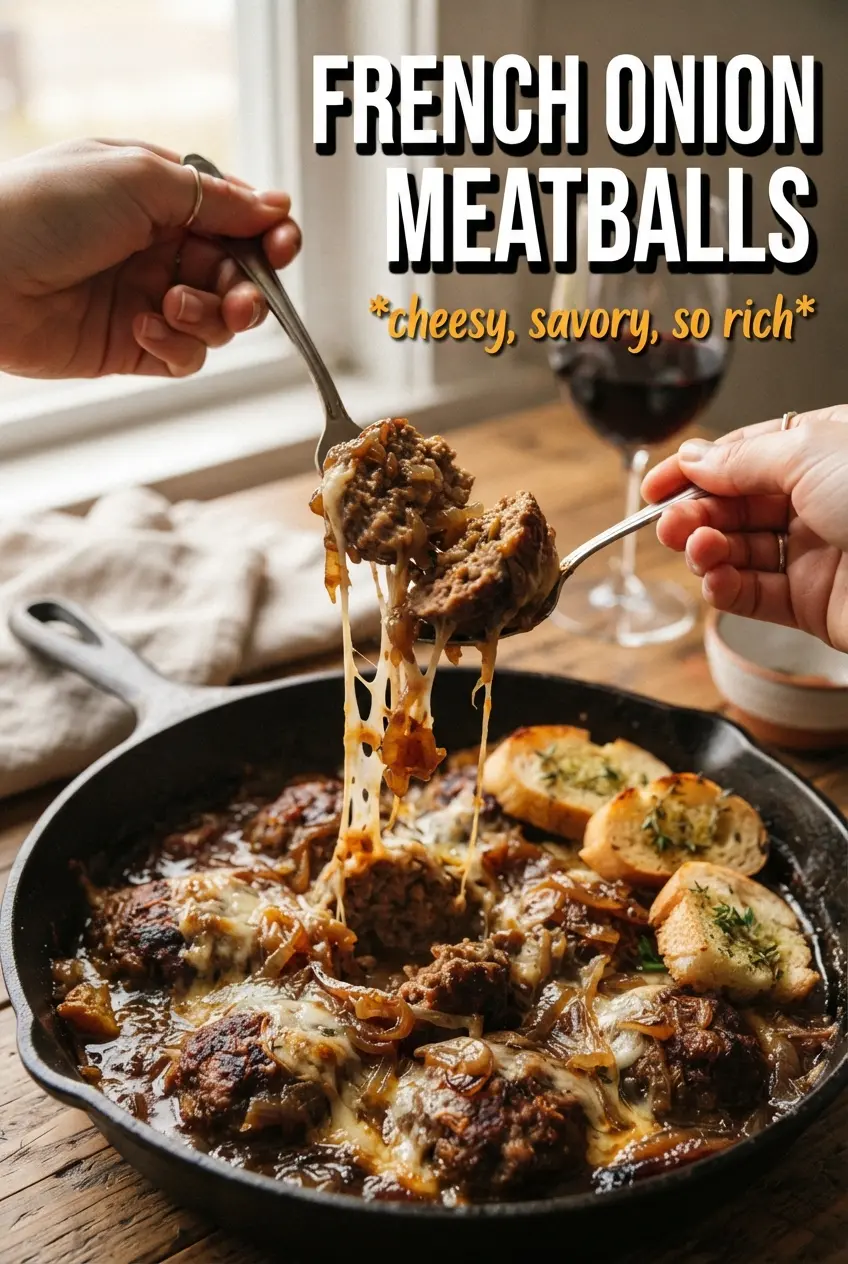
French onion meatballs hit that sweet spot between cozy and a little dramatic: deeply browned meatballs tucked into a slow-cooked onion gravy, then finished under a blanket of bubbling Gruyere. The onions do the heavy lifting here. When they’re cooked down properly, they turn sweet, silky, and almost jammy, which gives the sauce the same richness people love in classic French onion soup without needing a full bowl-and-toast situation.
The key is patience in two places. First, the meatballs need a good browning so they don’t turn pale and steamed in the sauce. Second, the onions need time over medium-low heat so they soften and caramelize instead of burning at the edges. Once the wine or broth goes in, all those browned bits on the pan become part of the sauce, which is where the deep savory flavor comes from. This is the kind of dinner that tastes like you worked on it longer than you did.
Below, I’ll walk through the parts that matter most: how to get the onions properly caramelized, how to keep the sauce from getting thin, and what to do if your baking dish isn’t broiler-safe. The cheese finish is worth paying attention to, too, because that’s what gives each serving the crusty, molten top that makes this dish so good.
The onions turned silky and sweet, and the sauce clung to the meatballs instead of pooling at the bottom. I used provolone on top and it browned beautifully under the broiler.
Love the cheesy, caramelized finish on these French onion meatballs? Save it to Pinterest for the nights when you want a rich dinner with a bubbling Gruyere crust.
The Trick to Keeping the Onions Sweet Instead of Bitter
The onions are the heart of this dish, and they need heat low enough to work with you instead of against you. If the pan is too hot, they’ll brown on the edges before the centers soften, and you’ll end up with sharp, bitter onion bits instead of a deep, sweet base. Medium-low heat gives the moisture time to cook off gradually, which is how the onions turn soft, golden, and jammy.
Don’t rush the deglazing step either. Once the wine or broth hits the pan, scrape up every browned bit from the bottom. That’s where the savory backbone comes from, and it keeps the sauce tasting layered instead of flat. If your onions look like they’re sticking early on, add a small splash of water and keep going; that’s a normal part of the caramelization process, not a sign to turn up the heat.
What Each Ingredient Is Actually Doing in This Dish

- Ground beef — Use an 80/20 mix if you can. The little bit of fat helps the meatballs stay juicy after browning and simmering. Leaner beef will work, but the texture is firmer and the meatballs can dry out faster.
- Breadcrumbs and egg — These bind the meatballs so they hold their shape in the sauce. If you need a gluten-free version, use gluten-free breadcrumbs or crushed gluten-free crackers. Don’t skip the egg unless you like crumbly meatballs.
- Worcestershire — It shows up in both the meatballs and the sauce because it adds savory depth without making the dish taste like a bottle of sauce. There isn’t a perfect substitute, but a mix of soy sauce and a splash of vinegar gets you partway there.
- Dry white wine or beef broth — Wine gives the onions a brighter, more classic French onion flavor, while broth keeps the dish family-friendly and still rich. If you use broth instead, add a tiny extra splash of vinegar or lemon juice to replace the lift wine would have brought.
- Gruyere or provolone — Gruyere melts with that nutty, stretchy finish that feels right for French onion flavor. Provolone is a little milder and melts beautifully, so it’s the easier everyday choice if Gruyere is pricey or hard to find.
Building the Sauce Around the Meatballs
Brown the Meatballs First
Roll the meatballs to about 1.5 inches so they cook evenly and hold up under the sauce. Brown them in butter until you get a good crust on the outside, then pull them out before they’re fully cooked through. If you try to cook them all the way at this stage, they’ll overcook later when they simmer in the onion broth.
Caramelize the Onions Slowly
Use the same skillet so the meat drippings stay in the pan. Add the sliced onions and let them cook down over medium-low heat until they’re deeply soft and golden, about 30 to 35 minutes. If they start getting dark too fast, lower the heat; burned onion tastes harsh and there’s no fixing it once it happens.
Finish in the Sauce and Under the Broiler
After you deglaze the pan with wine or broth, add the beef broth, Worcestershire, and thyme, then return the meatballs to simmer for about 15 minutes. That simmer time lets the meatballs finish cooking and lets the sauce pick up more flavor. Transfer everything to a baking dish if needed, cover with cheese, and broil just until the top is melted, bubbling, and spotted with brown. Step away from the oven for those last minutes; cheese can go from perfect to scorched fast.
How to Adapt This for Different Kitchens and Different Needs
Make It Gluten-Free
Swap in gluten-free breadcrumbs for the meatballs and use a gluten-free broth. The texture stays close to the original, and the sauce still reduces the same way. Just check your Worcestershire too, since some brands contain gluten.
Use Provolone for a Milder, Stretchier Top
Gruyere gives you the classic nutty finish, but provolone melts into a softer, milder blanket that browns beautifully. This is the version to choose if you want the cheese layer to stay familiar and kid-friendly without losing the French onion feel.
Make It Ahead for a Busy Night
You can brown the meatballs and caramelize the onions earlier in the day, then combine everything and reheat gently before adding the cheese. The flavor actually improves after a short rest because the sauce has time to settle. Broil the cheese right before serving so the top stays crisp and bubbling.
Storage and Reheating
- Refrigerator: Store in an airtight container for up to 4 days. The sauce will thicken a little as it chills.
- Freezer: Freezes well without the cheese topping. Freeze the meatballs and sauce for up to 2 months, then add fresh cheese after reheating.
- Reheating: Warm covered in a skillet or baking dish at 325°F until hot, then add cheese and broil if you want the browned top again. Microwave reheating works in a pinch, but the sauce heats unevenly and the cheese won’t melt as cleanly.
Answers to the Questions Worth Asking
French Onion Meatballs
Ingredients
Equipment
Method
- In a bowl, mix ground beef, breadcrumbs, egg, Worcestershire, garlic powder, onion powder, salt, and pepper until evenly combined, then roll into 1.5-inch balls.
- Heat butter in a skillet over medium heat and brown the meatballs in batches, cooking until well browned on the outside, then set them aside.
- In the same skillet, add thinly sliced onions and cook over medium-low heat for 30-35 minutes, stirring occasionally, until deeply caramelized.
- Pour in the wine to deglaze, scraping up browned bits, then add beef broth, Worcestershire, and fresh thyme.
- Return the browned meatballs to the onion sauce and simmer until cooked through, 15 minutes.
- Transfer to a baking dish if the skillet isn’t oven-safe, then scatter the shredded Gruyere or provolone evenly over the top.
- Broil 3-4 minutes until the cheese is golden and bubbly, then rest briefly before serving.