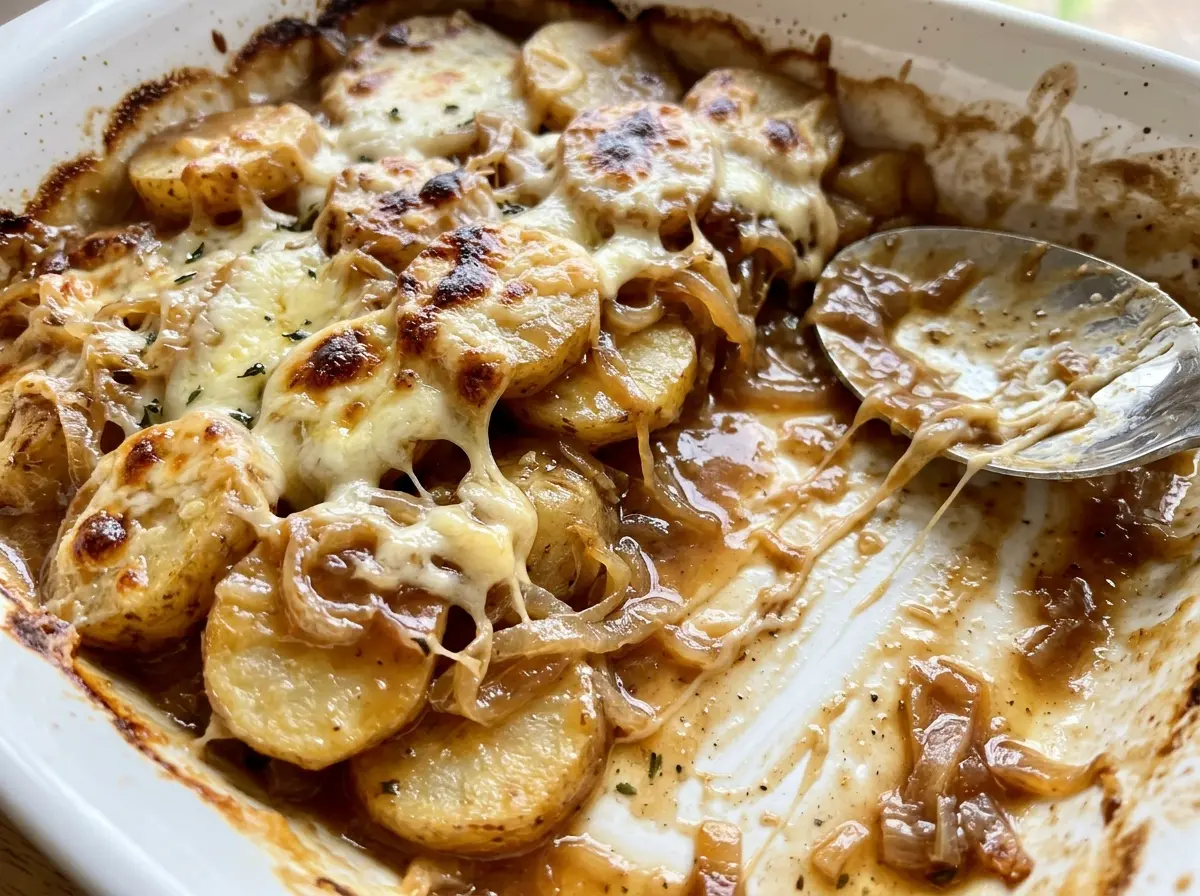
When the foil comes off, the potatoes are tender beneath a creamy surface, and the Gruyère turns golden as it melts over the top. French Onion Potatoes tuck sweet, deeply cooked onions between thin slices of Yukon Gold, so each serving has soft potato, savory broth and cream, and a browned cheese layer. The contrast between those tender layers and the rich topping is what makes this casserole worth taking the time to build.
I pour the broth and cream over the assembled layers before covering the dish, so the potatoes soften as they bake instead of drying out at the edges. They stay covered until a knife slides easily through them; only then does the cheese go on for its own stretch in the oven. After a short rest, the casserole scoops up in creamy layers, with Gruyère on top and sweet onions tucked throughout.
Kitchen Note
Cover the baking dish tightly with foil. A loose cover lets steam escape during the covered bake, and the potatoes can take longer to turn tender.
Save these French Onion Potatoes for a cozy dinner—tender potato layers, sweet onions, and a golden Gruyère top.
Why These Potatoes Need to Be Sliced Thinner Than a Typical Gratin
The slices should be 1/8 inch thick, not chunky rounds. Potatoes that are cut unevenly cook at different rates: thin pieces soften early while thicker ones can still feel firm when the covered bake is finished. Uniform slices give the broth and cream a consistent path through the dish, and each layer cooks at about the same pace.
That evenness matters here because the potatoes are stacked with onions rather than stirred into the liquid. If slices are thick or irregular, the layers press together and the center can lag behind the edges. A mandoline makes uniform cuts quickly, but a sharp knife works well if you keep the slices close in thickness. Yukon Golds also help: their creamy texture holds up in layers without turning as fluffy as a more starchy potato.
Keep the slices in orderly layers rather than mixing everything together. That gives you the distinct potato-and-onion structure this casserole is meant to have, while the broth and cream settle through the stack as it bakes.
What the Yukon Golds, Broth, and Gruyère Contribute to Every Layer

- Yukon Gold potatoes — Their creamy, moderately firm texture suits a layered bake: they become tender but still hold their shape for serving. Choose firm potatoes without soft spots, and scrub them well before slicing.
- Yellow onions — They soften into the sweet, savory backbone of the dish. Firm onions are all you need; the long, gentle cook does the work of building their flavor.
- Low-sodium beef broth and heavy cream — The broth brings savory depth, while cream rounds it out and gives the baking liquid a richer feel. Low-sodium broth helps keep the finished casserole from becoming too salty once the cheese is added.
- Gruyère — Its nutty flavor complements the onions, and it melts into a browned, cohesive topping. A good block of Gruyère is worth choosing for its flavor, especially since it’s the top layer you taste in each serving.
- Dried thyme — It spreads an earthy, savory note through the potato layers without adding extra moisture. Keep the seasoning distributed between the layers rather than leaving it all on top.
- Butter and olive oil — Together they coat the skillet for cooking the onions; the oil helps keep the butter from browning too quickly over medium-low heat.
Building Tender Layers Before the Gruyère Goes On
Let the Onions Turn Deeply Golden
Heat the oven to 375°F and grease a 9×13-inch baking dish. Melt 3 tablespoons of unsalted butter with 1 tablespoon of olive oil in a 12-inch skillet over medium-low heat, then add 2 thinly sliced yellow onions. Cook for 30 to 35 minutes, stirring often, until they’re deeply golden and very soft. If the onions still look pale and firm, give them more time within that range rather than raising the heat and letting the edges scorch.
Build Two Even Potato-and-Onion Layers
Arrange half of the 1/8-inch potato slices in the prepared dish, then spread half of the cooked onions over them. Sprinkle with half of the kosher salt, black pepper, and dried thyme. Repeat with the remaining potatoes, onions, and seasonings, keeping the layers as even as you can. This gives each scoop a share of onion instead of leaving the flavor concentrated on top.
Pour the Creamy Broth Over the Layers
Stir the low-sodium beef broth and heavy cream together until combined. Pour the mixture evenly over the potatoes so it reaches across the dish rather than pooling in one corner. Cover the dish tightly with foil. The covered bake gives the potato slices time to soften in the liquid before the cheese is exposed to the oven.
Bake Until Tender, Then Brown the Cheese
Bake covered for 55 to 65 minutes, until a knife slides easily through the potatoes. If the knife meets firm resistance, the center needs more time before the topping goes on. Remove the foil, sprinkle the shredded Gruyère evenly over the surface, and bake uncovered for 15 to 20 minutes, until the cheese is melted and golden. Rest the dish for 10 minutes before serving so the layers settle.
Swaps That Change the Flavor Without Losing the French Onion Feel
Make It Vegetarian with a Broth and Cheese Swap
Replace the beef broth with the same amount of low-sodium vegetable broth, and choose vegetarian Gruyère made with vegetarian rennet. The casserole keeps its creamy, onion-rich character, though the broth gives it a less meaty savory base.
Use Swiss Cheese for a Milder Top
Swap the Gruyère for the same amount of shredded Swiss cheese. It melts well and gives the potatoes a gentler, less nutty finish, while keeping the browned cheese layer that makes the top so satisfying.
Try Russets for a Softer, More Starchy Texture
Use the same amount of russet potatoes in place of the Yukon Golds and slice them just as thinly. They’ll give the casserole a fluffier, softer texture and may break apart more readily when served, rather than holding the layers as neatly.
Storage and Reheating
- Refrigerator: Refrigerate leftovers within 2 hours and keep them covered for 3 to 4 days. The potatoes will soften a little more as they sit.
- Freezer: Freeze cooled portions in airtight containers for up to 2 to 3 months. The cream sauce may separate slightly and the potatoes can soften after thawing; thaw overnight in the refrigerator.
- Reheating: Reheat covered in a 350°F oven until the center reaches 165°F. Keep the dish covered while it warms so the potatoes don’t dry out.
Questions That Come Up Before the Dish Goes in the Oven
French Onion Potatoes
Ingredients
Equipment
Method
- Heat the oven to 375°F.
- Grease a 9x13-inch baking dish.
- Melt the butter with the olive oil in a 12-inch skillet over medium-low heat.
- Add the onions and cook for 30 to 35 minutes, stirring often, until deeply golden and very soft.
- Layer half the potatoes in the baking dish.
- Spread half the onions over the potatoes, then sprinkle with half the kosher salt, black pepper, and dried thyme.
- Layer the remaining potatoes in the dish.
- Spread the remaining onions over the potatoes and sprinkle with the remaining kosher salt, black pepper, and dried thyme.
- Stir together the beef broth and heavy cream.
- Pour the broth mixture evenly over the potatoes and cover the dish tightly with foil.
- Bake for 55 to 65 minutes, until a knife slides easily through the potatoes.
- Remove the foil and sprinkle evenly with the Gruyère.
- Bake uncovered for 15 to 20 minutes, until the cheese is melted and golden.
- Rest for 10 minutes before serving.