The Dutch oven looks impossibly full when the sliced onions first go in, but they soften and shrink as they cook. French onion soup rewards that slow start: the onions turn deep golden brown, and the broth picks up their sweetness without tasting scorched. I keep the heat moderate and stir often rather than trying to rush the color.
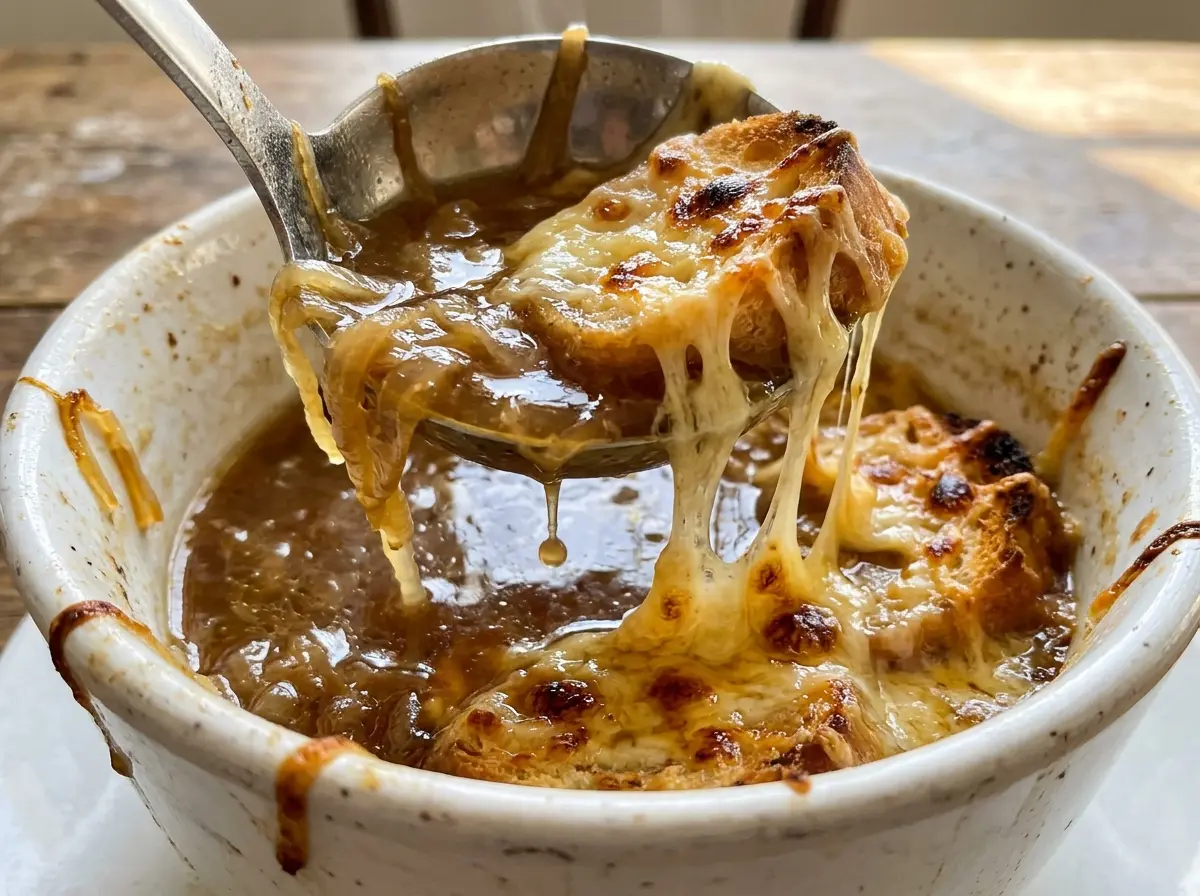
Once the onions are browned, a little flour gives the broth body, and dry white wine loosens all those browned bits from the bottom of the pot. The baguette gets toasted separately before it goes on the soup, so it can hold its shape under the melted Gruyère. Each bowl comes out with savory broth beneath a crisp-edged, bubbling cheese topping.
Kitchen Note
I set the broiler-safe bowls on the baking sheet before ladling in the soup. Once they’re topped with bread and cheese, they’re awkward to move, and the tray makes it easier to slide all six bowls under the broiler together.
Save this French onion soup for its slow-browned onions and bubbling Gruyère topping.
Why French Onion Soup’s Onions Need Time, Not a Hotter Burner
Three pounds of onions hold a lot of water. At first, they soften and release it; only after that moisture cooks away can their natural sugars brown. Turning the heat up to speed things along often gives you dark, bitter patches on the bottom while the onions are still firm and pale in the middle. A steady medium-low heat lets the whole pot change gradually.
Stirring often matters because the onions at the bottom of a Dutch oven have the most contact with the hot surface. If they sit too long, they can catch before the rest have softened. You’re aiming for onions that are very soft and evenly deep golden brown, not blackened at the edges. That slow, even color becomes the backbone of the soup; broth added too early would dilute the pot before the onions have developed it.
Don’t judge the batch by how much it shrinks. The onions losing volume is expected, and their concentrated flavor is what makes a bowl taste full even though the broth itself stays simple.
What the Onions, Wine, and Gruyère Each Bring to the Pot

- Yellow onions — Their balance of sweetness and savory bite is a good fit for a long cook. Choose firm onions without soft spots; very large onions are fine as long as you slice them thinly and evenly. Sweet onions work in a pinch, but they make the finished soup noticeably sweeter.
- Butter and olive oil — Butter brings a rounded, savory richness, while the olive oil helps keep the butter from taking over the pan as the onions cook. The butter’s flavor is hard to duplicate; using olive oil alone works, but the soup will taste less rich.
- Dry white wine — Wine brings a little acidity and loosens the browned bits after the flour has cooked. A modest, dry bottle is all you need; skip sweet wine, which can pull the broth in the wrong direction. If you’re avoiding wine, use some of the beef broth to deglaze instead, as described in the variations.
- Low-sodium beef broth — Beef broth supplies the savory base, and low-sodium broth gives you more control over the seasoning. A good-quality broth is useful here because its flavor remains prominent; a lower-cost carton still works well.
- All-purpose flour — Flour lightly thickens the broth so it clings to the onions instead of drinking like plain stock. Stir it through the softened onions before adding liquid so it doesn’t leave a raw, pasty taste. A gluten-free all-purpose blend can stand in for it.
- Baguette and Gruyère — A baguette’s firm crust and close crumb make sturdy toast, while Gruyère melts into a smooth, nutty cap. Buy the cheese in a block and shred it yourself for the most reliable melt. Swiss cheese is a useful substitute, though it has a milder flavor.
- Dried thyme and bay leaves — These herbs give the beef broth a restrained savory aroma without competing with the browned onions. Bay leaves are there to steep, not to serve, so remove them before filling the bowls.
Building the Soup in the Dutch Oven, Then Under the Broiler
Soften and brown the onions slowly
Heat the olive oil and butter in a 6-quart Dutch oven over medium heat until the butter melts, then add the thinly sliced onions, kosher salt, and black pepper. Lower the heat to medium-low and cook for 45 to 60 minutes, stirring often. The onions should become very soft and deep golden brown, with no blackened patches. If the pot starts catching, lower the heat and stir the onions across the bottom rather than letting one area sit.
Cook the flour and loosen the browned bits
Stir the all-purpose flour through the onions and cook for 1 minute. Pour in the dry white wine and scrape the bottom of the Dutch oven to release the browned bits; they should lift into the liquid instead of staying stuck to the pot. Give the mixture a thorough stir before adding the broth. If the wine goes in before you scrape, you’ll miss some of that concentrated onion flavor.
Simmer the broth with the herbs
Add the low-sodium beef broth, dried thyme, and bay leaves, then bring the soup to a boil. Reduce the heat and simmer uncovered for 30 minutes, letting the broth take on the color and flavor of the onions. Keep the simmer gentle rather than letting it boil hard. Fish out and discard the bay leaves before serving.
Toast, top, and broil the bowls
Heat the oven to 425°F and arrange the baguette slices in a single layer on a baking sheet. Toast for 8 to 10 minutes, turning once, until the slices are crisp and lightly golden. Ladle the soup into six broiler-safe bowls, top each with two slices of toast, and divide the shredded Gruyère evenly over them. Broil for 2 to 4 minutes, watching closely; the cheese should be melted and bubbly, with browned spots on top.
Simple Swaps for French Onion Soup, Without Losing Its Character
Make it gluten-free
Use a gluten-free all-purpose flour blend in place of the regular flour, and choose gluten-free beef broth and baguette. The soup will still have body, though the toast may be a little different in texture from a wheat baguette.
Deglaze without wine
Leave out the white wine and use 1/2 cup of the beef broth to scrape up the browned bits after the flour cooks. Add the rest of the broth afterward. The soup will be less bright, but it keeps its deep beef-and-onion flavor.
Use Swiss cheese in place of Gruyère
Shred the same amount of Swiss cheese and divide it over the bowls as you would the Gruyère. It melts well under the broiler, but the topping will taste milder and less nutty.
Storage and Reheating
- Refrigerator: Keep the soup in an airtight container for 3 to 4 days. Store it without the baguette and cheese; bread left in the broth turns soft.
- Freezer: Freeze the soup by itself in a freezer-safe container for up to 2 to 3 months. Add freshly toasted bread and cheese after thawing.
- Reheating: Warm the soup on the stovetop, stirring occasionally, until it reaches 165°F. Assemble the bowls with fresh toast and cheese afterward; reheating already-topped bowls can leave the bread soggy.
Questions That Come Up When Making French Onion Soup
French Onion Soup
Ingredients
Equipment
Method
- Heat the olive oil and butter in a 6-quart Dutch oven over medium heat until the butter melts.
- Add the onions, salt, and pepper.
- Cook the onions, stirring often, for 45 to 60 minutes over medium-low heat, until they are very soft and deep golden brown.
- Stir in the flour and cook for 1 minute.
- Pour in the wine and scrape up the browned bits from the bottom of the pot.
- Add the beef broth, thyme, and bay leaves, and bring to a boil.
- Reduce the heat and simmer uncovered for 30 minutes.
- Remove and discard the bay leaves.
- Heat the oven to 425°F.
- Arrange the baguette slices in a single layer on a baking sheet.
- Toast the bread for 8 to 10 minutes, turning once, until crisp and lightly golden.
- Set six broiler-safe bowls on a baking sheet and ladle the soup into them.
- Top each bowl with two baguette slices and an even portion of Gruyère.
- Broil for 2 to 4 minutes, watching closely, until the cheese is melted, bubbly, and browned in spots.