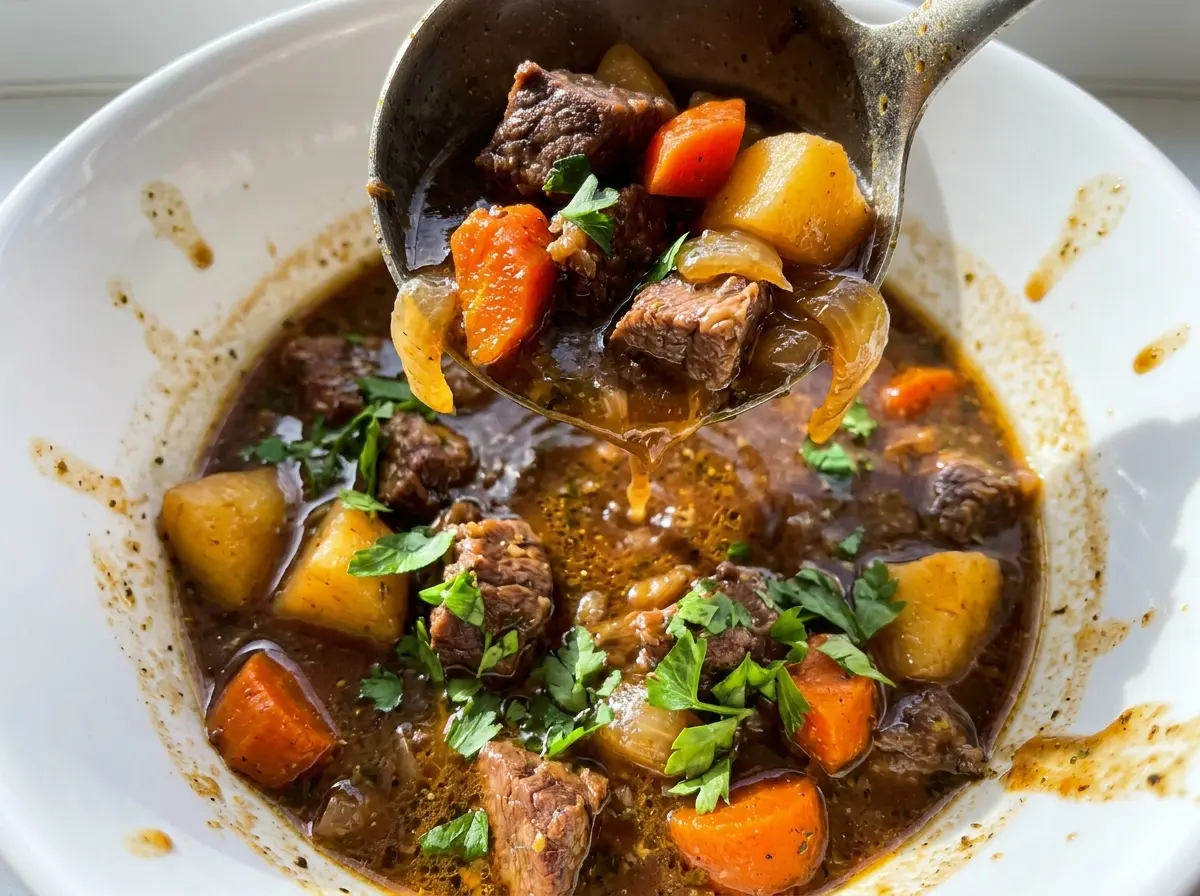
The first thing you notice is the smell when the wine hits the hot Dutch oven: it loosens the browned bits from the beef and onions, and the whole pot turns savory and warm. I brown the chuck in batches, then let it simmer until it’s close to tender before the carrots and potatoes go in. That timing gives the beef the long braise it needs without leaving the vegetables in the pot for hours.
Caraway and sweet paprika give this German Beef Stew with Carrots and Potatoes its character, while tomato paste and a little flour help the broth become a hearty gravy. Keep the heat low enough for a gentle simmer; a hard boil can make the beef tough before its connective tissue has time to soften. By the time the potatoes yield to a fork, the broth is rich and the beef is tender enough to break apart with a spoon.
Kitchen Note
I add the carrots and potatoes only after the beef is nearly fork-tender. They need just enough time to soften, not the full braise, so they keep their shape in the finished stew.
Save this German beef stew for a cozy supper: tender chuck, soft potatoes, and a paprika-caraway broth that’s worth letting simmer.
Caraway Is What Keeps This Beef Stew from Tasting Generic
Beef, potatoes, and carrots make a comforting stew, but they don’t tell you much about where its flavor is headed. Here, whole caraway seeds bring an earthy, slightly sweet aroma, and sweet paprika rounds it out without making the broth hot or smoky. Together they give the pot a distinctive German-inspired character rather than the familiar taste of a basic beef-and-vegetable braise.
The seasoning gets a chance to mingle with the onions and tomato paste before the liquid goes in. That short moment in the pot wakes up the spices and lets the tomato paste deepen, so the broth tastes integrated instead of like beef stock with seasoning floating on top. Dry red wine adds a little depth and brightness, while the browned beef contributes savory richness. Use a gentle simmer afterward; the stew’s flavor builds during the long cook, not by boiling it hard.
Why Chuck, Caraway, and Yukon Golds Belong in This Pot

- Beef chuck — Its marbling and connective tissue turn tender during a slow braise and give the broth body. A whole chuck roast cut into even cubes gives you control over size; lean steak cuts are more likely to dry out during the long simmer.
- Caraway and sweet paprika — Caraway brings the distinctive earthy note, and sweet paprika adds warmth without smoke or heat. Keep the caraway seeds whole for a gentle infusion; smoked or hot paprika will push the stew in a different direction.
- Dry red wine — Choose a dry red you’d be happy to drink, but there’s no need for an expensive bottle. A fruity or sweet wine can make the broth taste noticeably sweeter; the wine-free option below uses broth instead.
- Yukon Gold potatoes — Their creamy centers soften while their shape holds up well in a covered simmer. Choose potatoes that feel firm and aren’t sprouting; cutting them into similarly sized chunks helps them cook evenly.
- All-purpose flour — It thickens the broth as the stew cooks and gives it a cohesive, gravy-like texture. If gluten is a concern, use the cornstarch method in the variations rather than swapping in another flour without changing the technique.
How to Brown the Beef and Build a Steady Braise
Brown the Chuck in Uncrowded Batches
Pat the beef dry, season it with salt and pepper, then heat the vegetable oil in a 6-quart Dutch oven over medium-high heat. Brown the cubes in three batches, leaving space between them so they sear instead of steam. Give each side about 2 to 3 minutes, turning to brown two sides, and add a little more oil as needed. Transfer the browned beef to a plate while you work through the remaining batches.
Soften the Onions and Toast the Seasonings
Lower the heat to medium and add the chopped onions to the pot. Cook for 6 to 8 minutes, stirring occasionally, until softened; if browned bits are starting to darken too quickly, lower the heat. Stir in the garlic, tomato paste, sweet paprika, and caraway seeds and cook for 1 minute. Add the flour and stir for 1 minute more, coating the onion mixture evenly.
Deglaze and Let the Beef Braise
Pour in the red wine and scrape the bottom of the pot to lift the browned bits into the liquid. Let it simmer for 3 to 4 minutes, then stir in the beef broth and bay leaves. Return the beef and any juices on the plate, and bring the pot to a simmer. Cover and cook over low heat for 1 1/2 to 2 hours, keeping the bubbles gentle, until the beef is nearly fork-tender.
Finish with the Vegetables and Rest
Stir in the carrots and potatoes, cover the pot, and simmer for 25 to 35 minutes. The vegetables should be tender and the beef should yield easily when you pierce it with a fork. If the potatoes are still firm, give them a little more time at the same gentle simmer rather than raising the heat. Remove the bay leaves and let the stew rest off the heat for 10 minutes before serving.
Three Practical Ways to Adapt This Beef Stew
Make It Gluten-Free with a Cornstarch Slurry
Leave out the all-purpose flour. Once the beef and vegetables are tender, whisk 2 tablespoons cornstarch with 2 tablespoons cold water until smooth, stir it into the simmering stew, and cook briefly until the broth thickens. The gravy will be glossy and a little less rounded than the flour-thickened version; use broth labeled gluten-free as well.
Skip the Wine without Losing the Braise
Replace the red wine with the same amount of low-sodium beef broth. You’ll still scrape up the browned bits, but the finished stew will have less fruity acidity and taste more directly savory. Keep the rest of the ingredients and cooking method the same.
Trade Some Carrots for Parsnips
Replace two of the carrots with peeled parsnips cut into 1-inch pieces, adding them with the remaining carrots and potatoes. Parsnips bring a sweeter, earthier flavor and soften into the same kind of hearty bite. Keep the pieces similar in size so they finish at about the same time.
Storage and Reheating
- Refrigerator: Store in a covered container for 3 to 4 days. The potatoes will soften a little more as they sit.
- Freezer: Freeze in airtight containers for up to 3 months. The stew freezes well, though thawed potatoes may be softer or slightly grainy.
- Reheating: Warm it gently in a covered saucepan over low heat, stirring now and then, until hot throughout. Avoid a hard boil, which can break up the potatoes and toughen the beef.
Questions That Come Up When the Stew Is on the Stove
German Beef Stew with Carrots and Potatoes
Ingredients
Equipment
Method
- Pat the beef dry and season it with the kosher salt and black pepper.
- Heat the vegetable oil in a 6-quart Dutch oven over medium-high heat.
- Working in 3 batches, brown the beef on two sides, about 2 to 3 minutes per side, adding a little more oil as needed.
- Transfer the browned beef to a plate.
- Add the onions to the pot and cook over medium heat for 6 to 8 minutes, stirring occasionally, until softened.
- Stir in the garlic, tomato paste, sweet paprika, and caraway seeds and cook for 1 minute.
- Stir in the all-purpose flour and cook for 1 minute more.
- Pour in the dry red wine, scrape up the browned bits from the bottom of the pot, and simmer for 3 to 4 minutes.
- Stir in the beef broth and bay leaves, return the beef and any accumulated juices to the pot, and bring to a simmer.
- Cover and cook over low heat for 1 1/2 to 2 hours, maintaining a gentle simmer, until the beef is nearly fork-tender.
- Stir in the carrots and potatoes, cover, and simmer for 25 to 35 minutes, until the vegetables are tender and the beef is fork-tender.
- Remove the bay leaves.
- Let the stew rest off the heat for 10 minutes before serving.