The batter goes into the donut pans thick enough to pipe, and the first warm batch smells like ginger and molasses before it’s even out of the oven. I used to expect baked donuts to have the same crust as fried ones; these don’t, and that’s part of their charm. They’re tender, warmly spiced, and finished with a tangy cream cheese glaze that makes these gingerbread cheesecake donuts feel a little special without turning the kitchen upside down.
The separate bowls matter here. Whisking the dry ingredients together first spreads the baking soda and spices through the flour, while the wet ingredients bring the molasses and melted butter together before they meet the flour. Then stir only until the dry patches disappear. Pipe the batter into the pans rather than trying to spoon it neatly around each cavity, and you’ll get evenly filled rings with less mess. Once the glaze sets, the tops have a soft cheesecake tang against the deep gingerbread flavor.
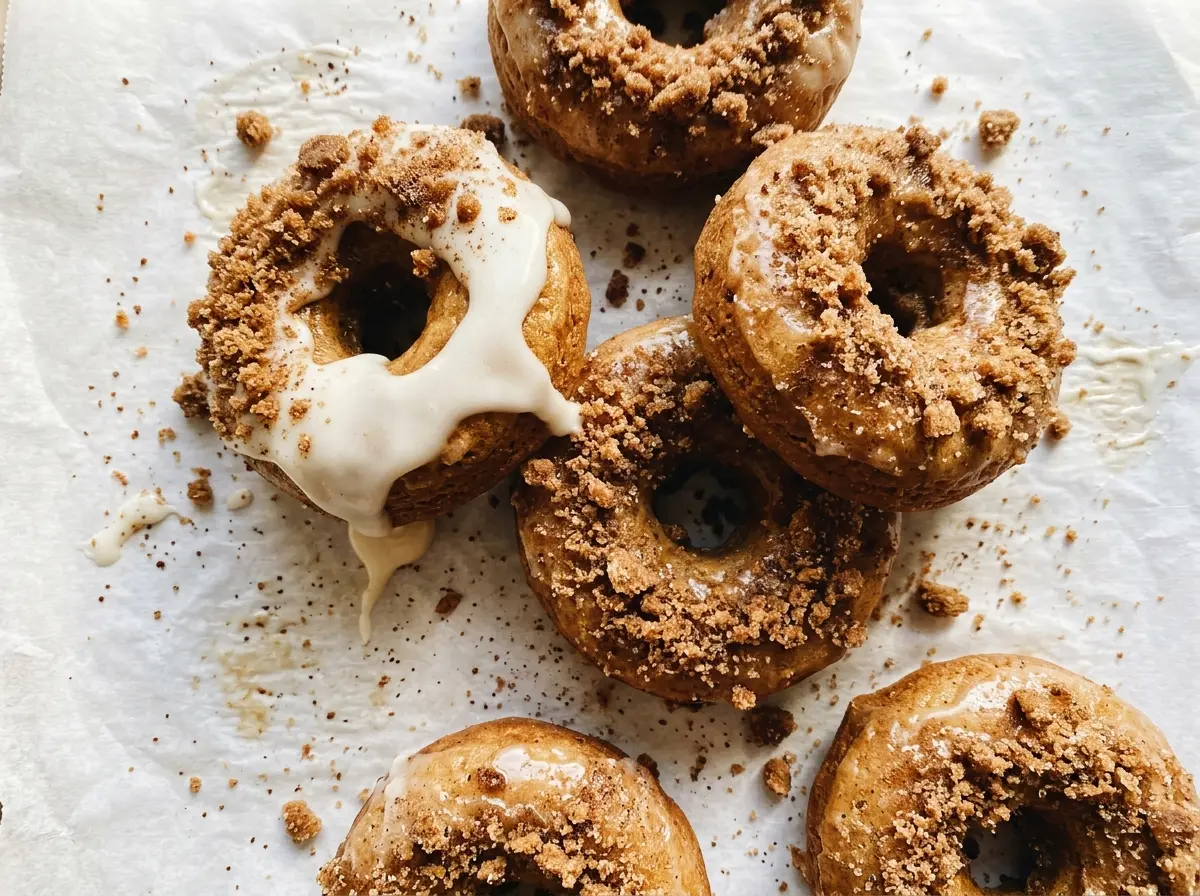
Kitchen Note
Start with softened cream cheese, not cold cream cheese. If it’s still firm, you’ll have to work harder to beat it smooth before the powdered sugar goes in, and small lumps are stubborn once they’re mixed through the glaze.
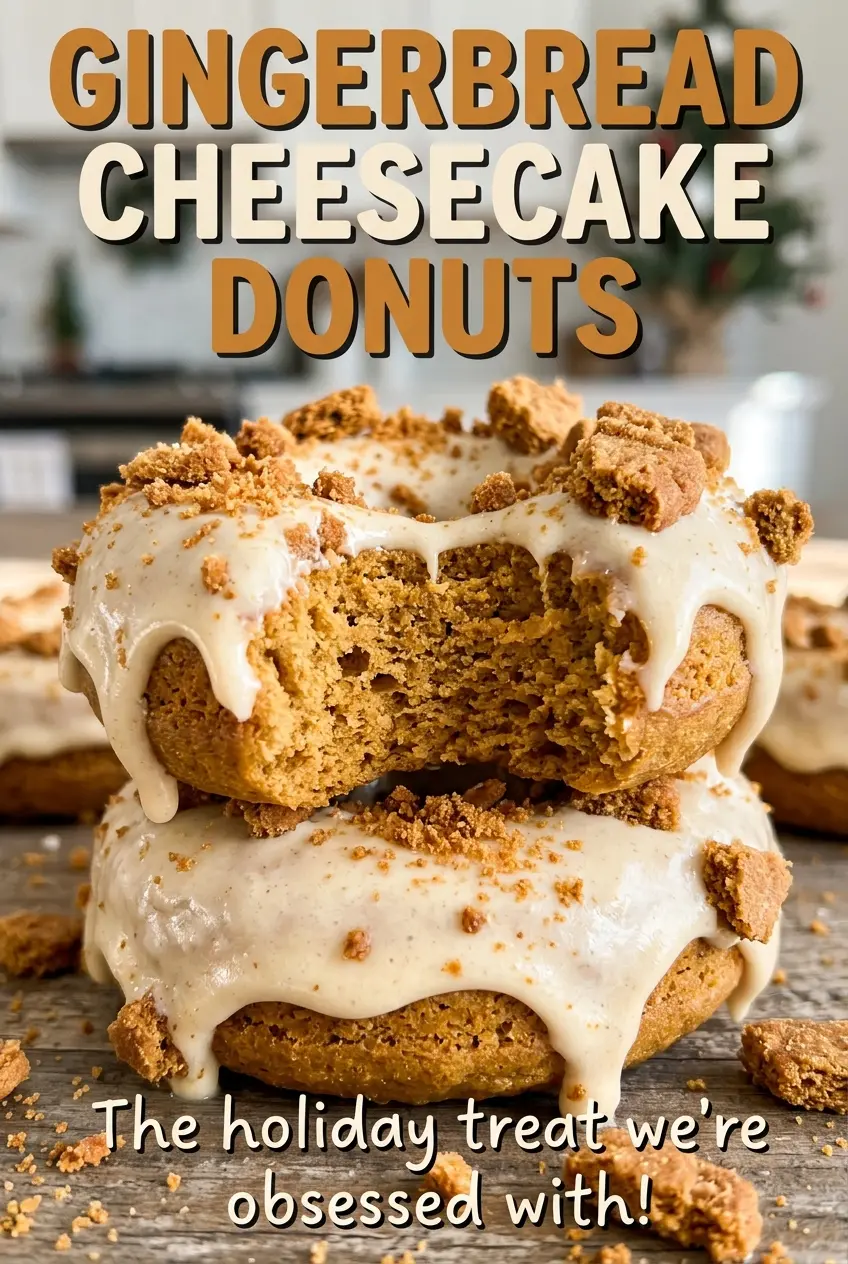
Save these gingerbread cheesecake donuts for a tender, warmly spiced bake topped with tangy cream cheese glaze.
Why a Smooth Donut Batter Is the Wrong Goal
When you’re used to cake batter, it’s easy to keep stirring until every little lump is gone. Resist that urge here. The flour needs to be incorporated, but a perfectly smooth mixture isn’t the goal; extra stirring can develop the flour’s gluten and leave the donuts firm instead of tender. Stop as soon as you can’t see dry flour.
The spice and molasses make the batter darker and thicker than a plain vanilla donut batter, so don’t judge it by how easily it pours. That thickness is useful: it holds its shape as you pipe it into the rings instead of running across the pan. A large zip-top bag gives you control over the flow, and an even fill helps the donuts bake at the same pace. The balance of ginger, cinnamon, nutmeg, and cloves gives the molasses a rounded warmth without one spice taking over. Keep the mixing brief and the piping steady, and the crumb stays soft without losing the donut shape.
What Molasses, Buttermilk, and Cream Cheese Each Bring
- Unsulphured molasses — This is the deep, bittersweet backbone of the gingerbread flavor, and it also adds moisture. Choose unsulphured molasses for its balanced taste; a standard grocery-store bottle works well. I wouldn’t swap in a different style of molasses here, because a stronger, more bitter taste can overpower the spices.
- Buttermilk — Its tang balances the brown sugar and molasses, while its acidity works with the baking soda. Use fresh buttermilk and measure it accurately; there isn’t a simple one-for-one swap I’d recommend without changing the batter’s acidity and texture.
- Ground spices — Ginger leads, cinnamon rounds it out, and the small amounts of nutmeg and cloves give the donuts that familiar gingerbread finish. Fresh, fragrant spices make the biggest difference; if yours have been open for years and smell faint, the finished donuts will taste flatter.
- Packed light brown sugar — It adds sweetness and a little moisture alongside the molasses. Pack it into the measuring cup so the amount is consistent, and use the light variety for the gentler molasses note intended here.
- Unsalted butter — Melted butter gives the crumb richness without needing to cream anything. Let it cool slightly before mixing it with the egg so it doesn’t heat the egg on contact; the grocery-store option is fine.
- Cream cheese — This gives the glaze its tang and creamy body, which powdered sugar alone can’t provide. A standard block-style cream cheese is a reliable choice; bring it to a soft consistency before beating so the glaze turns smooth.
From Piped Batter to a Smooth Cheesecake Glaze
Mix the dry and wet bowls separately
Heat the oven to 350°F and coat two 6-cavity standard donut pans with nonstick cooking spray. Whisk the flour, brown sugar, baking powder, baking soda, spices, and salt in a large bowl so the leaveners don’t sit in one spot. In a medium bowl, whisk the egg, buttermilk, molasses, melted butter, and vanilla until combined. Pour the wet mixture into the dry and stir just until no dry flour remains.
Pipe an even ring into each cavity
Spoon the batter into a large zip-top bag and snip off a 1/2-inch corner. Pipe the batter evenly into all 12 cavities, moving around each ring rather than dropping one large mound in the center. Keep the opening above the pan so the batter lands where you want it. If one cavity gets more batter than the others, the donuts won’t finish together.
Bake for springy centers, then cool
Bake for 10 to 12 minutes. The donuts are ready when they spring back under a light press and a toothpick inserted in one comes out with a few moist crumbs; a completely clean toothpick can mean you’ve gone a little too far. Let them cool in the pans for 5 minutes, then move them to a wire rack. They need to cool completely before the glaze goes on.
Beat and dip the cheesecake glaze
Beat the softened cream cheese in a medium bowl until smooth. Beat in the powdered sugar, vanilla, and milk until the glaze is smooth and cohesive, with no pockets of dry sugar around the sides. Dip the tops of the cooled donuts into the glaze, then let the coating set before serving. If you move them while the glaze is still wet, you’ll leave some of that creamy finish behind.
Two Easy Ways to Change the Glaze-to-Gingerbread Balance
Leave some donuts plain
Dip only the portion you want to serve with cheesecake glaze and leave the rest unglazed. The plain donuts put the ginger and molasses first, while the dipped ones have a sweeter, tangier finish. You don’t need to change the batter or make a second topping.
Make a few extra-glazed
Use the same batch of glaze on fewer donuts for a thicker cheesecake layer, and leave the others lightly coated or plain. That makes the cream cheese more prominent in each bite and keeps the spice-forward donuts available for anyone who prefers less sweetness.
Storage and Reheating
- Refrigerator: Keep glazed donuts in an airtight container for up to 3 days. The chilled crumb will feel a little firmer than it does fresh.
- Freezer: Freeze the unglazed donuts in an airtight container for up to 2 months, then thaw before glazing for the best finish.
- Reheating: These are best served cool or just slightly less chilled; let a donut sit out briefly rather than microwaving it, which softens the cream cheese glaze. Don’t leave glazed donuts at room temperature for more than 2 hours.
Questions That Come Up With Baked Gingerbread Donuts
Gingerbread Cheesecake Donuts
Ingredients
Equipment
Method
- Heat the oven to 350°F.
- Coat two 6-cavity standard donut pans with nonstick cooking spray.
- Whisk the flour, brown sugar, baking powder, baking soda, ground ginger, ground cinnamon, ground nutmeg, ground cloves, and salt in a large bowl.
- In a medium bowl, whisk the egg, buttermilk, molasses, melted butter, and vanilla until combined.
- Pour the wet ingredients into the dry ingredients and stir just until no dry flour remains.
- Spoon the batter into a large zip-top bag.
- Snip off a 1/2-inch corner of the bag.
- Pipe the batter evenly into the 12 donut cavities.
- Bake for 10 to 12 minutes, until the donuts spring back when lightly pressed and a toothpick inserted in one comes out with a few moist crumbs.
- Cool the donuts in the pans for 5 minutes.
- Transfer the donuts to a wire rack to cool completely.
- Beat the cream cheese in a medium bowl until smooth.
- Beat in the powdered sugar, vanilla, and milk until the glaze is smooth.
- Dip the tops of the cooled donuts into the glaze.
- Let the glaze set before serving.