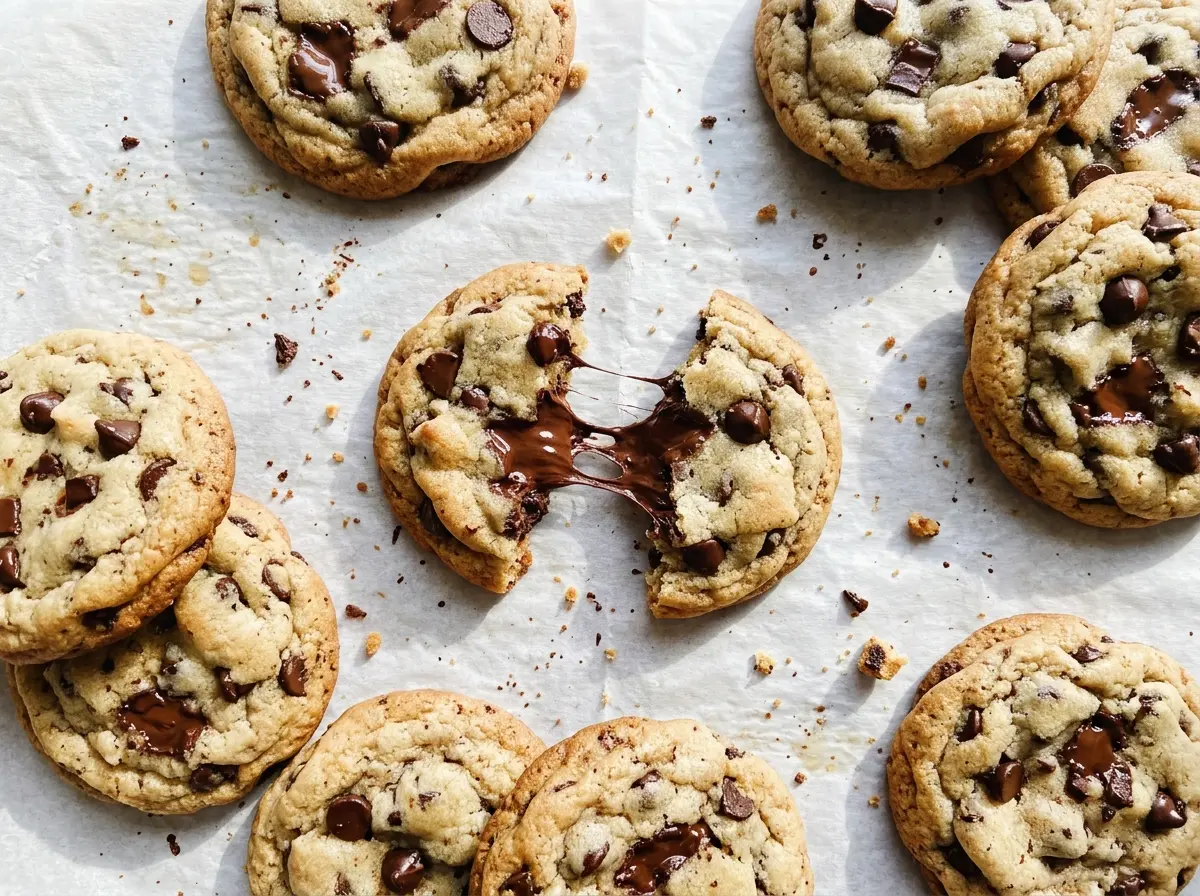
The edges turn golden first, while the centers still look puffed and a little too soft to call finished. That’s the moment I look for with these Gooey Chocolate Chip Cookies, because a few minutes of cooling on the baking sheet lets the middle set without losing its tender bite. Pulling them when the centers look fully baked is the quickest way to miss that soft, gooey texture.
I cream softened butter with both sugars until the mixture looks fluffy, then mix the flour in only until it disappears. That keeps the dough tender instead of developing a tough, dense crumb. A short chill firms the dough before it goes into the oven, and the extra egg yolk gives the centers a richer texture. Each cookie gets plenty of semisweet chocolate, with enough room on the pan for the edges to bake evenly.
Kitchen Note
Let the baking sheet cool completely before scooping the second batch. A warm sheet starts softening the dough before it reaches the oven, so those cookies won’t bake quite like the first round.
Save these Gooey Chocolate Chip Cookies for their golden edges and soft, chocolate-filled centers.
Why a Short Chill Gives These Cookies Their Shape
Butter that’s soft enough to cream starts out warmer than dough straight from the refrigerator. After mixing, that warmth makes the dough pliable, which is useful for scooping but can also mean the cookies spread quickly in the oven. Chilling the covered bowl for 30 to 45 minutes gives the butter time to firm up again.
That brief rest helps the portions hold their shape long enough for the edges to set, rather than racing outward before the centers have a chance to bake. It also makes the dough easier to handle without packing it down as you scoop. The aim isn’t a hard, stiff dough; it should be cool and noticeably firmer, but still easy to portion with a spoon. Keep the chill in perspective: this is a short pause that helps control the bake, not an overnight rest the dough needs to work.
What the Butter, Sugars, and Extra Yolk Bring to the Dough

- Butter — Softened unsalted butter creams smoothly with the sugars and gives the cookies their rich base. Use butter that yields when pressed but isn’t shiny or melted; melted butter won’t cream the same way.
- Light brown and granulated sugars — Brown sugar brings moisture and a deeper caramel note, while granulated sugar contributes sweetness and helps the edges turn golden. Packed light brown sugar is the straightforward choice here; dark brown sugar can stand in, with a slightly stronger molasses flavor.
- Egg and egg yolk — The whole egg helps bind the dough, and the added yolk contributes richness without adding another egg white. Bring the large egg to room temperature so it blends more evenly into the creamed butter and sugar.
- Vanilla extract — Vanilla rounds out the buttery dough and chocolate. Pure vanilla gives a fuller aroma, while imitation vanilla works perfectly well in a baked cookie.
- All-purpose flour — Flour gives the dough enough structure to hold the chips and form a soft center. All-purpose flour is the right choice for this texture; bread flour would make the cookies chewier and more substantial.
- Baking soda — This leavener helps the cookies spread and brown. Check that yours is fresh; old baking soda may not give the dough the lift and color you expect.
- Semisweet chocolate chips — Their sweetness balances the brown-sugar dough, and chips keep their shape as the cookies bake. A bag of standard semisweet chips works well; save pricier chocolate for a recipe where its finer texture can stand out.
- Fine salt — Fine salt disperses evenly through the dough, so the chocolate and butter don’t taste flat. Coarse crystals can leave salty pockets, so stick with fine salt for this mixture.
From Fluffy Butter to Gooey Centers: The Cookie-Baking Stages
Cream the Butter and Sugars Until Fluffy
Beat the softened butter with the packed brown sugar and granulated sugar for 2 to 3 minutes in a large bowl. The mixture should look creamy and fluffy rather than greasy or separated. Scrape the bowl if you see butter clinging to the sides, then beat in the egg, egg yolk, and vanilla until combined. If the egg looks streaky at first, keep mixing just until the mixture comes together.
Mix the Flour in Gently
Whisk the flour, baking soda, and fine salt together in a separate bowl before adding them to the butter mixture. Mix on low, stopping as soon as no dry flour remains; a few seconds longer than needed can make the cookies tougher. Fold in the semisweet chips so they’re spread through the dough without being crushed. Cover the bowl and chill the dough for 30 to 45 minutes.
Scoop Even Portions With Room to Spread
Heat the oven to 350°F and line an 18×13-inch rimmed baking sheet with parchment paper. Scoop 12 rounded portions, each about 2 tablespoons, onto the sheet, leaving about 2 inches between them. Keep the portions rounded rather than flattening them, so they have some height as they bake. If the dough sticks to the scoop, use a spoon to release each portion without compressing it.
Pull the Cookies Before the Centers Look Fully Baked
Bake for 10 to 12 minutes, watching for golden edges and centers that look puffed and slightly underdone. Don’t wait for the centers to turn golden; they’ll continue setting on the hot sheet after they leave the oven. Let the cookies cool on the sheet for 5 minutes, then move them to a wire rack. Once the sheet is completely cool, scoop and bake the remaining dough.
Three Small Changes for a Different Cookie
Go darker on the chocolate
Replace the semisweet chips with the same amount of dark or bittersweet chocolate chips. The cookies will taste less sweet and the chocolate will stand out more against the brown-sugar dough.
Use milk chocolate chips
Swap in the same amount of milk chocolate chips for a sweeter, creamier chocolate bite. Since milk chocolate is sweeter than semisweet, the finished cookies will have a softer contrast between the dough and chips.
Make them gluten-free
Replace the all-purpose flour with an equal amount of a measure-for-measure gluten-free flour blend that includes xanthan gum. The cookies keep their familiar shape, though the crumb may be a little more delicate than the all-purpose version.
Storage and Reheating
- Refrigerator: Store in an airtight container for up to 1 week. Chilling firms the centers, so let a cookie sit at room temperature briefly before eating if you prefer it softer.
- Freezer: Baked cookies freeze well for up to 2 months. Cool completely, freeze in a sealed container with parchment between layers, and thaw at room temperature.
- Reheating: Warm one cookie in the microwave for about 8 to 10 seconds to soften the chocolate and center. Longer heating can make the cookie tough once it cools.
Questions That Come Up While Baking These Cookies
Gooey Chocolate Chip Cookies
Ingredients
Equipment
Method
- Preheat the oven to 350°F.
- Line an 18x13-inch rimmed baking sheet with parchment paper.
- Beat the butter, brown sugar, and granulated sugar in a large bowl for 2-3 minutes, until creamy and fluffy.
- Beat in the egg, egg yolk, and vanilla until combined.
- Whisk the flour, baking soda, and fine salt in a separate bowl.
- Add the flour mixture to the butter mixture and mix on low just until no dry flour remains.
- Fold in the chocolate chips.
- Cover the bowl and chill the dough for 30-45 minutes.
- Scoop 12 rounded 2-tablespoon portions onto the prepared baking sheet, spacing them about 2 inches apart.
- Bake for 10-12 minutes, until the edges are golden and the centers look puffed and slightly underdone.
- Cool the cookies on the sheet for 5 minutes, then transfer them to a wire rack.
- Let the baking sheet cool completely before scooping and baking the remaining dough.