The first thing you notice is how the beef changes the pot: it starts out in separate browned pieces, then turns tender as the stout and broth simmer around it. The kitchen smells deeply savory long before the vegetables go in. That slow build is what makes Guinness Beef Stew feel hearty without needing a complicated list of ingredients.
I like that the beef gets a head start before the potatoes and carrots join in. Chuck needs time to soften, while vegetables added too early can lose their shape during a long simmer. Giving them their own stretch of cooking near the end leaves the potatoes tender and the carrots intact.
The finished stew has a dark, savory broth, fork-tender beef, and vegetables that still look like themselves. A short rest off the heat lets the bubbling settle, so each bowl is warm, rich, and easy to serve.
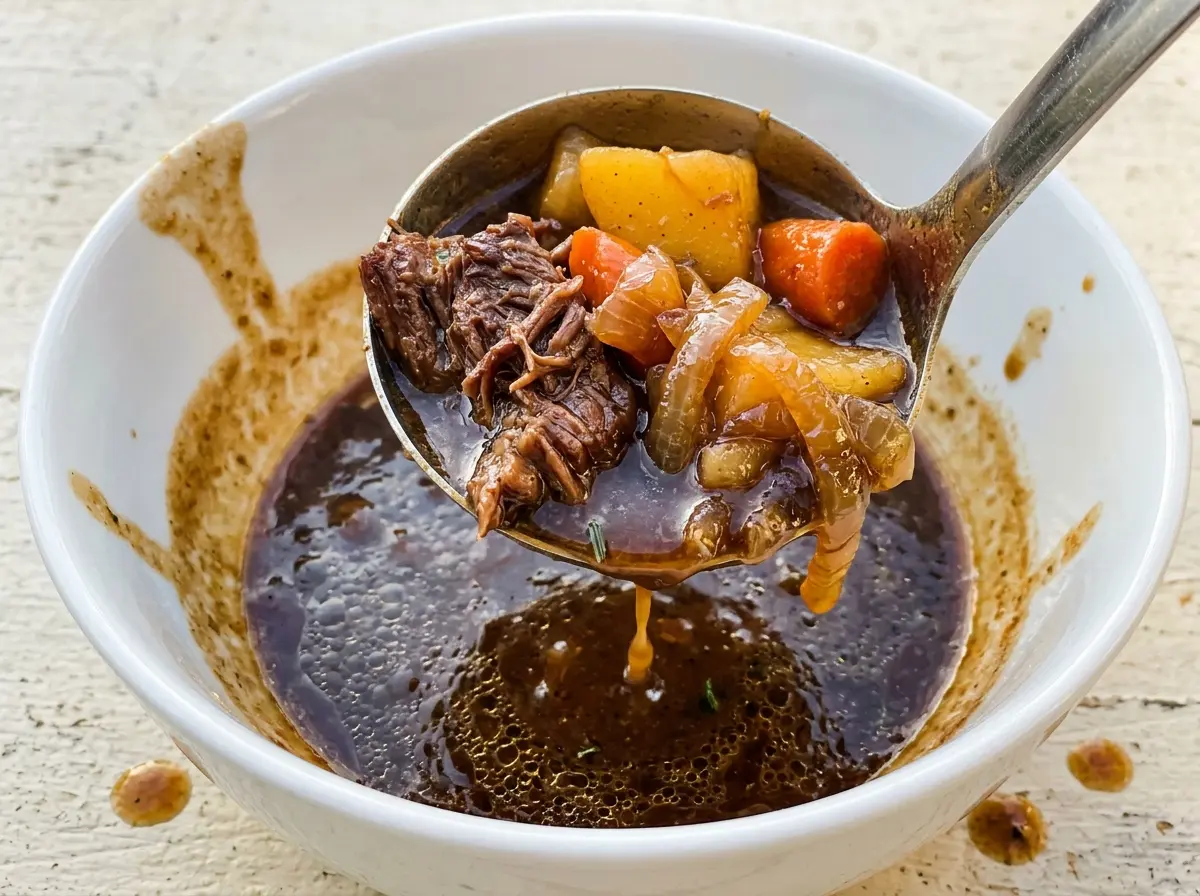
Kitchen Note
Keep the beef pieces close to 1 1/2 inches so they soften at a similar pace. Much smaller cubes can turn fragile during the long simmer, before the vegetables have finished cooking.
Save this Guinness Beef Stew for a slow-simmer day, when you want tender chuck and a deep, stout-rich broth.
Why the Browned Beef Matters More Than the Guinness
Stout brings a roasted, malty note, but it can’t supply the savory depth you get from browning the beef first. As the pieces sear, browned bits stick to the bottom of the Dutch oven. Those bits are concentrated flavor, not burnt scraps to scrub away. Pouring in the Guinness after the onions and tomato paste gives you the chance to loosen them into the broth.
The flour coating helps the beef brown and gives the liquid some body as the stew simmers. The trick is to brown in batches rather than crowding the pot. When too much beef goes in at once, the pieces release moisture and steam instead of forming a dark crust. Take the extra few minutes; each batch leaves behind more of the browned base that makes the finished stew taste full and rounded. The Guinness then lifts that flavor into the rest of the pot instead of masking it.
Don’t expect the broth to taste like a glass of beer. It becomes part of a savory stew alongside beef broth, vegetables, and tomato paste. A good brown on the meat is what keeps the stout from having to do all the work.
The Stout, Chuck, and Potatoes Each Have a Different Job
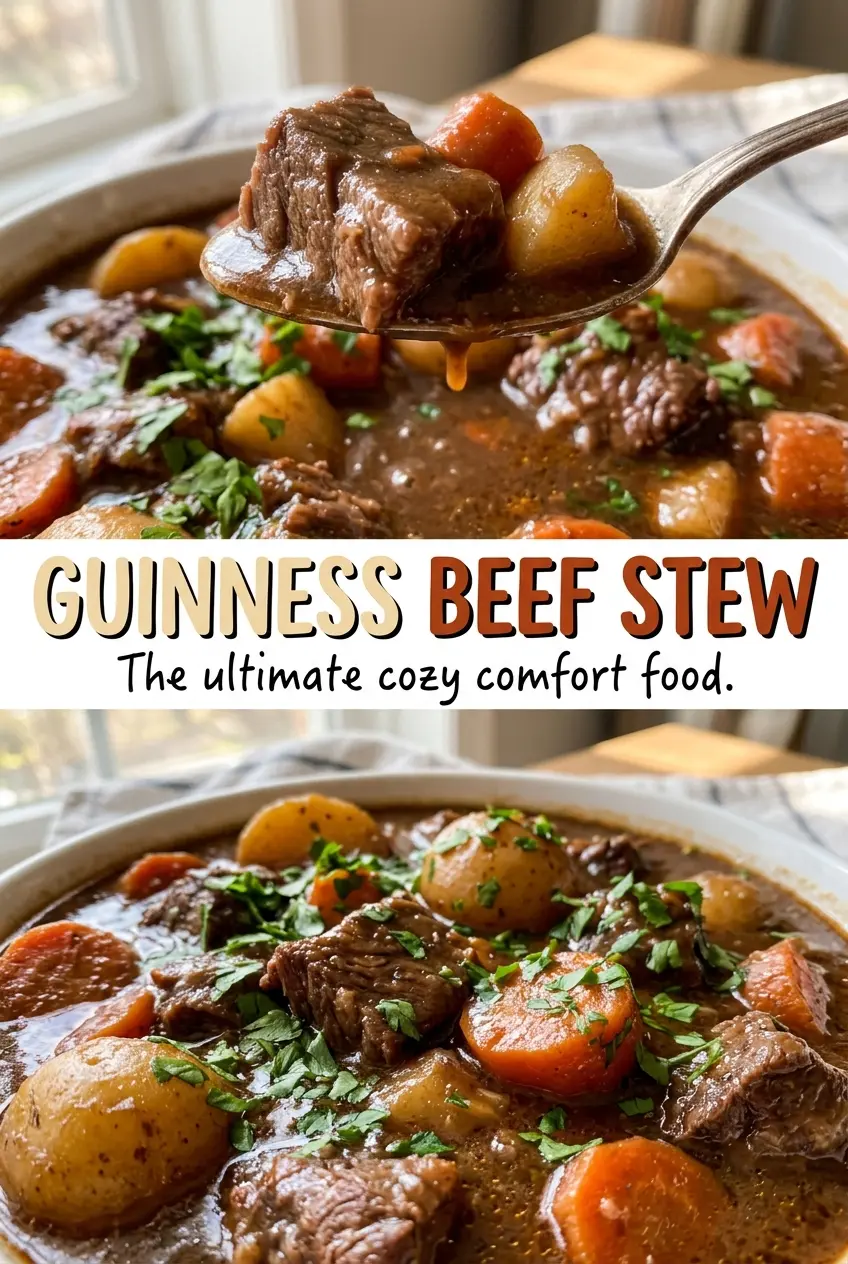
- Beef chuck — This cut has enough connective tissue to turn tender during a slow simmer. If you buy packaged stew meat instead, choose pieces that look like chuck and trim any large, tough pieces of connective tissue; pre-cut pieces can vary in size.
- Guinness Draught — It contributes roasted malt flavor and helps lift browned bits from the pot. Use a can that’s fresh and in good condition; there’s no need to spend extra on a specialty beer for a stew.
- All-purpose flour — The coating helps the beef brown and gives the broth a little more body. A basic pantry flour works well here; whisk it through the beef so you don’t end up with thick patches on a few pieces.
- Low-sodium beef broth — It brings beef flavor without making it harder to control the stew’s seasoning. A standard, affordable broth is fine; a highly seasoned broth can make the finished pot taste saltier than intended.
- Yukon Gold potatoes — They stay tender while holding their shape through the final simmer, which makes them a good fit for a stew you want to serve in generous chunks. Cut the carrots and potatoes into even pieces so they cook at a similar pace.
- Onions, celery, garlic, and tomato paste — These form the savory base, with tomato paste adding depth rather than making the broth taste like tomato sauce. Fresh garlic matters most for its aroma; ordinary yellow onions and celery are perfectly suited to a long cook.
- Dried thyme and bay leaves — They give the broth a quiet herbal note while it simmers. Keep the bay leaves whole so they’re easy to find and remove before serving.
Build the Pot in Layers Before the Long Simmer
Brown the beef in uncrowded batches
Season the beef with the salt and pepper, then toss it with the flour until each piece is coated. Heat the vegetable oil in a 6-quart Dutch oven over medium-high heat. Brown the beef in batches, turning it to color several sides; plan on about 8 minutes per batch, then move each batch to a plate. If the pieces look pale and wet, give the pot more room rather than piling in another handful.
Soften the vegetables and cook the tomato paste
Add the chopped onions and celery to the same pot and cook, stirring occasionally, until softened, 6 to 8 minutes. They should lose their raw crunch but don’t need to brown deeply. Stir in the minced garlic and tomato paste and cook for 1 minute. Keep the garlic moving so it smells fragrant without scorching.
Deglaze with stout and start the beef simmer
Pour in the Guinness and scrape the bottom of the pot until the browned bits loosen. Stir in the beef broth, dried thyme, bay leaves, and browned beef, then bring the liquid to a simmer. Cover the Dutch oven and cook over low heat for about 1 1/2 hours, until the beef is beginning to soften. If the liquid boils hard, lower the heat; a gentle simmer keeps the beef cooking steadily.
Add the potatoes and carrots for the final stretch
Stir in the Yukon Gold potatoes and carrots, cover the pot again, and simmer for 45 to 60 minutes. The vegetables should be tender when pierced, and the beef should yield easily to a fork. Check the pot near the shorter end of that range, since the size of the pieces and the steadiness of your simmer affect how quickly they cook. If the beef still feels firm, give it more time at a low simmer.
Remove the bay leaves and let the stew settle
Take the Dutch oven off the heat and remove both bay leaves before serving. Let the stew rest for 10 minutes. The bubbles will calm, making it easier to ladle the beef and vegetables evenly without splashing the hot broth.
Two Swaps That Keep the Stew’s Structure Intact
Make it gluten-free with a cup-for-cup flour blend
Replace the all-purpose flour with the same amount of a gluten-free, cup-for-cup flour blend intended to replace wheat flour. Use it to coat the beef as you would the regular flour. The stew keeps its familiar shape and flavor, though the broth may be a little less glossy depending on the blend.
Use another smooth stout in place of Guinness Draught
Swap in the same volume of a smooth stout if Guinness Draught isn’t available. The stew will still have the roasted malt character that suits the beef, but the exact bitterness and sweetness vary by beer. Skip strongly hopped beers, which can leave a sharper taste after simmering.
Storage and Reheating
- Refrigerator: Refrigerate leftovers within 2 hours and keep them for 3 to 4 days. The potatoes may soften a little as they sit in the broth.
- Freezer: Freeze cooled portions in airtight containers for up to 3 months. The potatoes can turn softer after thawing, but the beef and broth freeze well.
- Reheating: Warm gently in a covered pot over low heat, stirring now and then, until the stew reaches 165°F throughout. Avoid a hard boil, which can break up the vegetables and make the beef seem dry.
Questions That Come Up Once the Pot Starts Simmering
Guinness Beef Stew
Ingredients
Equipment
Method
- In a large bowl, season the beef with the salt and pepper.
- Toss the beef with the flour until evenly coated.
- Heat the oil in a 6-quart Dutch oven over medium-high heat.
- Brown the beef in batches, turning to brown several sides, about 8 minutes per batch; transfer the browned beef to a plate.
- Add the onions and celery to the pot and cook, stirring occasionally, until softened, 6 to 8 minutes.
- Stir in the garlic and tomato paste and cook for 1 minute.
- Pour in the Guinness and scrape up the browned bits from the bottom of the pot.
- Stir in the broth, thyme, bay leaves, and beef.
- Bring to a simmer, cover, and cook over low heat until the beef is beginning to soften, about 1 1/2 hours.
- Stir in the potatoes and carrots.
- Cover and simmer until the beef is fork-tender and the vegetables are tender, 45 to 60 minutes.
- Remove the bay leaves and let the stew rest off the heat for 10 minutes before serving.