Roasted sweet potatoes, crisp chickpeas, and a glossy fig balsamic drizzle make these harvest bowls feel layered and complete, not like a pile of random healthy ingredients. You get soft, crunchy, sweet, tangy, and creamy in one bowl, and that balance is what keeps this from tasting like a side salad pretending to be dinner.
The trick is treating each part like it matters. The sweet potatoes need enough space on the pan to caramelize instead of steam, and the chickpeas need their own roast time so they turn crisp before they get tossed with the greens. The vinaigrette leans on fig jam for body and sweetness, while Dijon and balsamic keep it sharp enough to cut through the goat cheese and pecans.
Below you’ll find the timing that keeps everything moving, plus a few smart swaps if you want to work with what’s already in your pantry. The bowl comes together fast once the components are ready, which makes it just as useful for a weeknight as it is for a laid-back lunch.
The chickpeas got crisp in the oven and the fig vinaigrette pulled everything together without making the Brussels sprouts soggy. I made it for lunch and ended up eating the leftovers cold straight from the fridge.
Save these harvest bowls with fig balsamic vinaigrette for a colorful dinner that balances roasted vegetables, crisp chickpeas, and a sweet-tangy dressing.
The Quiet Trick Behind a Bowl That Eats Like a Meal
The difference between a grain bowl that feels complete and one that tastes flat usually comes down to contrast. Here, the roasted sweet potatoes bring softness and caramelized edges, the chickpeas add crunch, and the raw shaved Brussels sprouts keep the bowl from collapsing into all-soft textures. That mix matters more than the exact grain you choose.
The vinaigrette is doing a second job too. Fig jam gives it thickness and a round sweetness, but balsamic and Dijon keep it from reading cloying. If the dressing tastes thin, it usually needs a little more mustard or another spoonful of jam, not more oil.
- Roasting the sweet potatoes separately keeps them tender and browned instead of crowded and pale. Give them room on the pan and they’ll caramelize instead of steaming.
- Roasting the chickpeas on their own is what gives you crunch that lasts. If you put them beside the sweet potatoes, they pick up too much moisture and lose that crisp shell.
- Shaving the Brussels sprouts thin turns them into a fresh, slaw-like layer that softens just enough under the dressing. Thick pieces stay tough and distract from the rest of the bowl.
What the Fig Balsamic Is Actually Doing Here
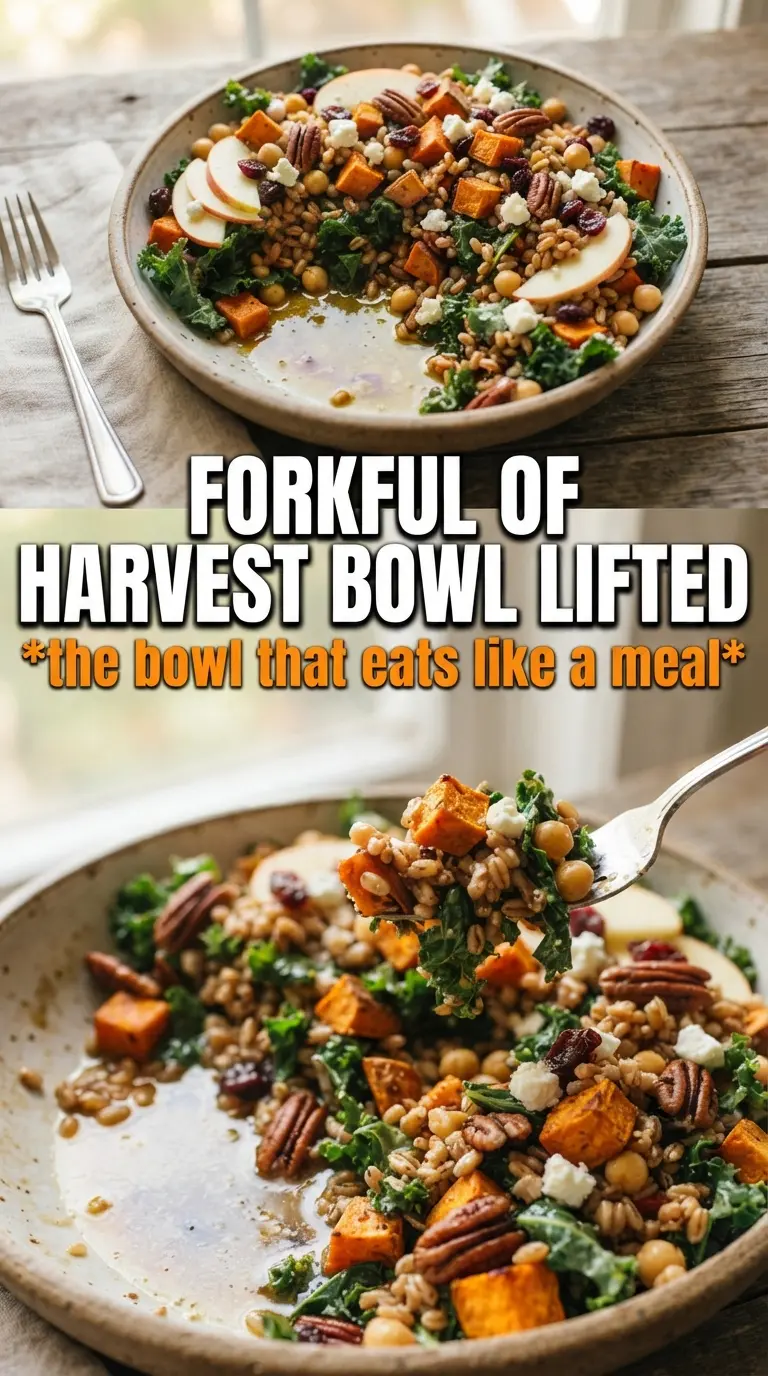
- Farro or quinoa gives the bowl a sturdy base. Farro brings chew and a nutty taste; quinoa makes the bowl gluten-free and a little lighter. Either one works, but both should be cooked and cooled enough that they don’t clump.
- Fig jam is the ingredient that makes the dressing taste rounded instead of just tart. You can swap in apricot preserves in a pinch, but the flavor will be brighter and less deep.
- Dijon mustard helps the vinaigrette emulsify so it coats the bowl instead of sliding off. A grainy mustard won’t break the recipe, but smooth Dijon gives the best texture.
- Goat cheese adds the creamy, tangy finish that ties the sweet and savory pieces together. If you need a dairy-free bowl, leave it off and add avocado or extra pecans for richness.
How to Keep Each Part Distinct Instead of Ending Up With One Soft Bowl
Roasting the Sweet Potatoes for Edges, Not Steam
Toss the sweet potato cubes with a little oil and spread them in a single layer on a hot sheet pan. They should come out tender inside with browned corners you can actually taste. If the pan is crowded, they’ll soften before they caramelize, and the whole bowl loses its depth.
Turning Chickpeas Crisp Without Burning Them
Pat the chickpeas dry before they hit the oven. That small step matters because surface moisture is what keeps them from crisping. Roast them until they’re golden and firm, then let them cool for a few minutes before assembling; they crisp up more as they sit.
Whisking the Dressing Until It Turns Glossy
Combine the fig jam, balsamic, olive oil, Dijon, and garlic until the dressing looks smooth and slightly thickened. If it separates after sitting, whisk again before serving. The dressing should cling to the ingredients, not puddle at the bottom of the bowl.
Assembling Without Crushing the Texture
Start with the grain, then layer on the warm roasted vegetables, followed by the raw Brussels sprouts, pomegranate, pecans, and goat cheese. Drizzle the vinaigrette at the end so the greens stay crisp and the cheese stays in distinct crumbles. If you dress everything too early, the sprouts wilt and the nuts lose their snap.
Three Ways to Adjust These Harvest Bowls Without Losing the Point
Make it gluten-free with quinoa
Quinoa gives you a light, fluffy base that keeps the bowl naturally gluten-free. It won’t have the same chew as farro, but it does a good job holding the vinaigrette and staying separate under the toppings.
Go dairy-free without making the bowl feel empty
Skip the goat cheese and add sliced avocado or an extra handful of candied pecans. You lose the tangy creaminess, so the bowl benefits from a little extra salt and a slightly heavier drizzle of dressing.
Swap the greens based on what you have
Thinly sliced kale or arugula both work if you don’t have Brussels sprouts. Kale needs a small pinch of salt and a brief massage with dressing to soften, while arugula gives you a peppery bite but won’t hold up as long for leftovers.
Storage and Reheating
- Refrigerator: Store the components separately for up to 4 days. The grains and roasted vegetables hold well, while the Brussels sprouts stay crispest if kept un-dressed until serving.
- Freezer: The cooked grain, sweet potatoes, and chickpeas freeze fine, but the fresh sprouts, pomegranate, pecans, and goat cheese don’t. Freeze only the warm components in airtight containers for up to 2 months.
- Reheating: Warm the grain, sweet potatoes, and chickpeas in a skillet or microwave until just heated through. Reheat the chickpeas briefly so they don’t turn leathery, then assemble the bowl cold with the fresh toppings and dressing.
Answers to the Questions Worth Asking
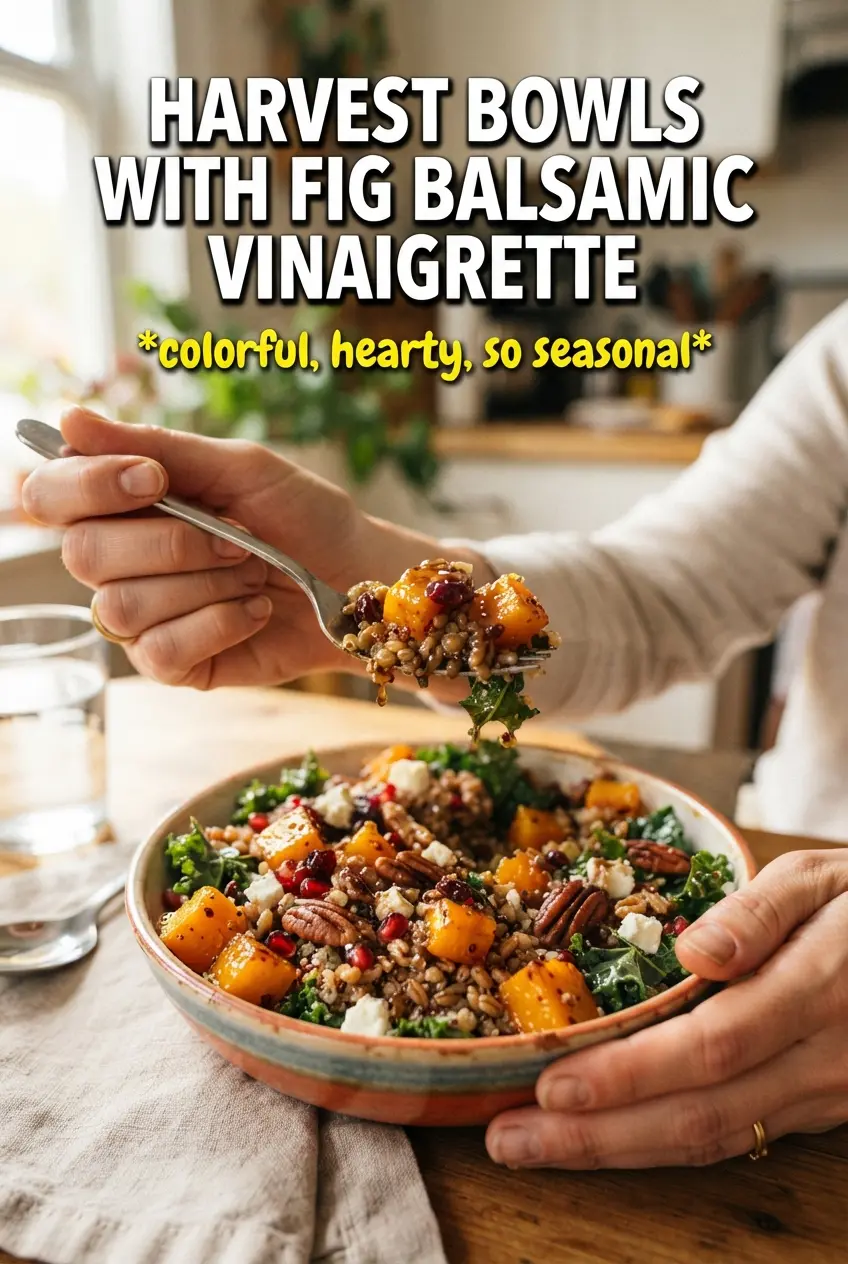
Harvest Bowls With Fig Balsamic Vinaigrette
Ingredients
Equipment
Method
- Preheat the oven to 425F and spread the sweet potato cubes on a sheet pan in an even layer. Roast for 25 minutes, until tender and starting to brown at the edges (visual cue: caramelized corners).
- On a second sheet pan (or a cleared area), drain the chickpeas and spread them out in an even layer. Roast for 20-25 minutes until crispy and browned (visual cue: dry, crackly skins).
- In a bowl, whisk together fig jam, balsamic vinegar, olive oil, Dijon mustard, and minced garlic until smooth. Season with salt and pepper to taste (visual cue: glossy, evenly blended dressing).
- Divide the cooked farro or quinoa into 4 bowls to form the base. Keep it fluffy and warm so toppings stay crisp (visual cue: distinct grain texture).
- Top each bowl with roasted sweet potatoes and crispy chickpeas. Distribute them so every serving has both textures (visual cue: mix of browned cubes and crunchy chickpeas).
- Add shaved Brussels sprouts over the grain and roasted toppings. Arrange in a loose layer so they look fresh and green (visual cue: bright, thin ribbons).
- Sprinkle pomegranate seeds and candied pecans over the bowls. Add evenly for pops of color and crunch (visual cue: red seeds and toasted pecan bits).
- Crumble goat cheese over each bowl and drizzle generously with fig balsamic vinaigrette. Serve immediately so the vinaigrette coats without soaking the crispy chickpeas (visual cue: cheese specks and glossy dark drizzle).