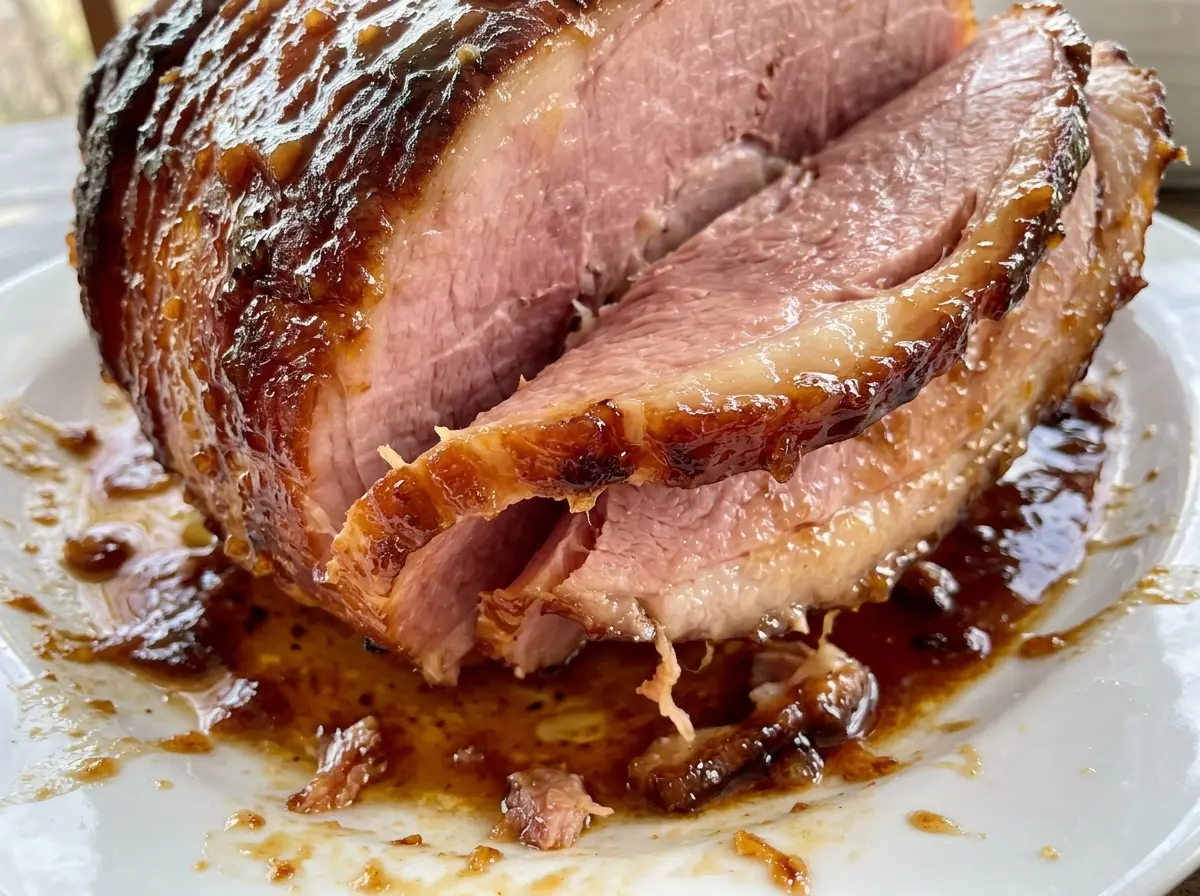
When the foil comes off, those spiral-cut edges are the first thing I check: they should look moist, not dried and curled. A fully cooked ham only needs warming, but all those cut surfaces can toughen before the center is ready if the oven is too hot. For this Honey Baked Ham, I keep the oven low and the ham covered over a little water, then wait until it’s warmed through before adding the glaze. That order lets the meat stay tender while the sugar gets its own quick turn under the broiler.
The sweet glaze goes on near the end, not at the start, so the honey and sugars don’t spend the whole bake in the oven. I brush it over the outside and tuck some between the slices, where it clings to all those edges. After a short broil, the ham comes out glossy with a deep-golden coating and warm cinnamon-clove notes.
Kitchen Note
Keep the thermometer tip in the thickest part of the meat without touching the bone. The bone can give you a misleading reading, so a small change in probe placement matters here.
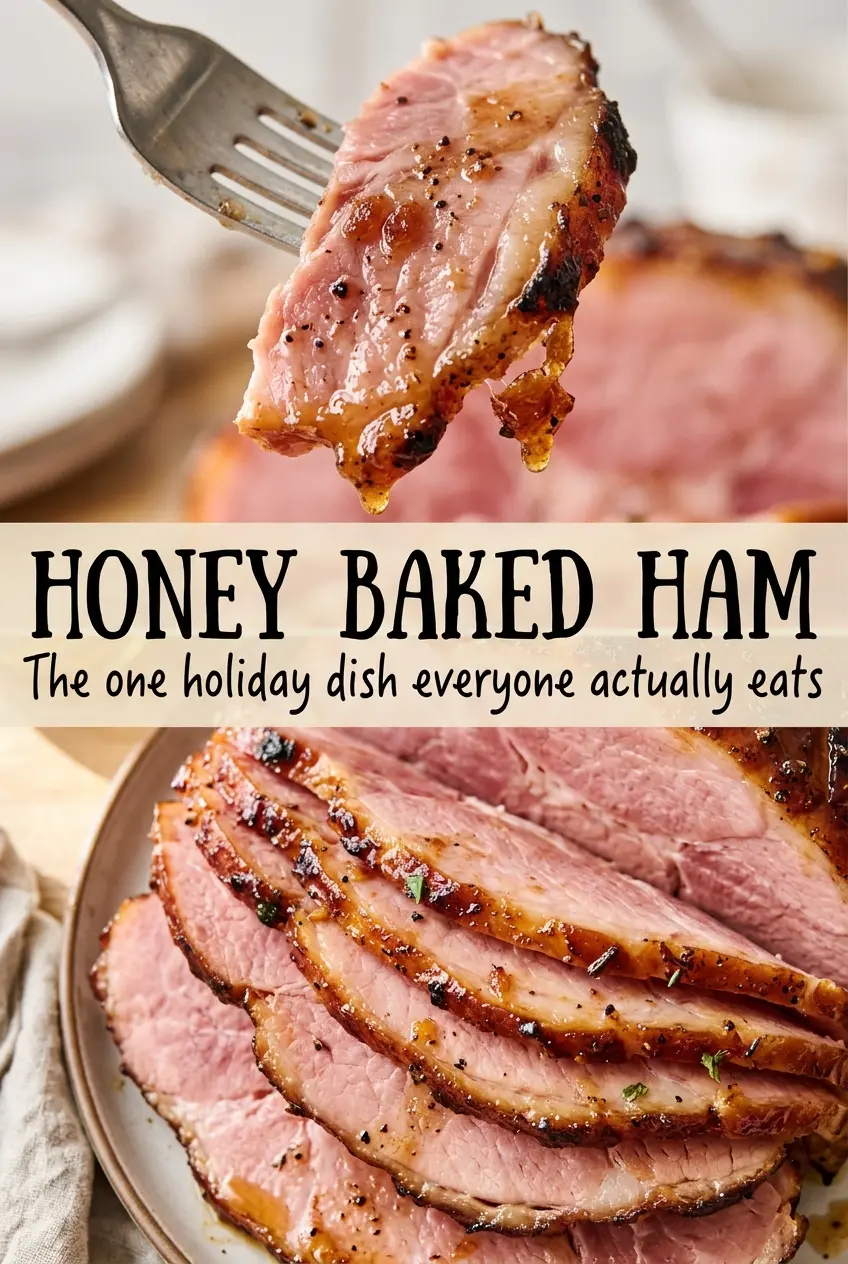
Save this Honey Baked Ham for its tender spiral slices and glossy honey-spice glaze.
Why a Spiral-Cut Ham Dries Out Before the Center Feels Warm
A spiral cut is convenient at serving time, but it leaves more exposed meat than an intact ham. Those thin edges heat faster than the middle, which is why a high oven can leave you with dry slices even when the center has only just warmed through. The covered roasting pan slows that uneven heating and keeps moisture close to the ham.
Setting the ham cut side down gives the exposed slices support against the pan instead of leaving them open to the oven. The water in the pan adds moisture beneath the tight foil cover while the ham warms gently. Then the glaze goes on after the main heating, when it can form a glossy finish without sitting in the oven long enough to dry the meat. It’s a small change in timing, but it’s what lets the slices stay soft while the outside gets its golden coating.
That order also makes the broiler easier to manage. The ham is already warmed before the sugars go under the element, so the final step is about coloring the glaze rather than cooking the center. Keep those two jobs separate and the texture is much more dependable.
What the Honey and Two Sugars Are Doing in This Glaze
- Fully cooked bone-in spiral-cut ham — The cut makes serving simple and gives the glaze plenty of edges to cling to. Choose the 8-pound size for the timing and roasting-pan setup here; a good-quality grocery-store ham works well, so there’s no need to seek out a specialty brand.
- Honey — Honey brings its own floral sweetness and helps the glaze coat the ham. A standard honey is fine; there’s no need for an expensive variety, but replacing it with a dry sweetener would change both the aroma and the consistency.
- Light brown sugar and granulated sugar — Brown sugar gives the coating a rounded molasses note, while granulated sugar helps it cook into a smooth, glossy glaze. Pack the brown sugar so the measurement is consistent. Both types dissolve best when stirred over medium-low heat rather than rushed over a hotter burner.
- Unsalted butter — Butter gives the glaze a smooth, supple feel and helps it brush over the slices. Unsalted keeps the sweetness and warm spices in focus; a salted version is a workable swap but will leave a saltier finish.
- Ground cinnamon and ground cloves — These spices make the glaze taste warm and gently spiced rather than plain-sweet. Ground spices disperse evenly through the syrup, so use them as ground rather than substituting whole spices, which won’t blend into the glaze.
Warm the Ham First, Then Give the Glaze Its Brief Broil
Set Up a Covered, Gentle Warm-Up
Heat the oven to 275°F. Set the 8-pound ham cut side down in a 9×13-inch roasting pan, pour the water into the pan, and cover it tightly with foil. Bake for 10 to 12 minutes per pound, about 1 hour 20 minutes to 1 hour 36 minutes. Check the thickest part with an instant-read thermometer; it should reach 140°F before you move on.
Stir the Sugars Until the Glaze Is Smooth
While the ham bakes, combine the honey, packed light brown sugar, granulated sugar, unsalted butter, cinnamon, and cloves in a small saucepan. Set it over medium-low heat and stir for 2 to 3 minutes, until the sugars dissolve and the glaze looks smooth. If sugar still feels grainy on the spoon, keep stirring over the same gentle heat rather than turning up the burner. A smooth glaze brushes on evenly and doesn’t leave gritty patches on the ham.
Brush Between the Slices Before Broiling
Remove the foil and brush the glaze over the ham, spooning some between the slices so the cut surfaces get coated too. Switch the oven to high broil and place the pan about 6 inches below the element. Broil for 1 to 3 minutes, watching closely, until the glaze bubbles and turns deep golden. The short broil brings color to the sugars; leaving the pan unattended risks taking the glaze past golden.
Let the Slices Rest Before Serving
Take the pan out and let the ham rest for 15 minutes before serving. That pause gives the hot slices a chance to settle after broiling, so they’re easier to lift without pulling apart. The glaze will stay glossy as it rests, with some settling into the spiral cuts. Serve from the pan so any glaze gathered underneath stays with the slices.
Small Glaze Changes for a Milder or More Cinnamon-Forward Ham
Leave Out the Cloves for a Milder Glaze
Omit the ground cloves and keep the cinnamon. The glaze stays warmly spiced, but loses the sharper, more assertive note that cloves bring; this is a good adjustment when you want the honey to come through more clearly.
Skip the Cinnamon and Keep the Cloves
Leave out the ground cinnamon for a sharper, clove-led glaze. The honey and sugars still make a smooth coating, while the spice reads less like a classic cinnamon-sweet finish.
Storage and Reheating
- Refrigerator: Refrigerate leftovers within 2 hours and keep them covered for 3 to 4 days. The cut surfaces may dry slightly as the ham sits.
- Freezer: Freeze sliced portions in an airtight container for 1 to 2 months for best quality. The glaze may soften after thawing, but the ham is still useful for reheating.
- Reheating: Put portions in a baking dish with a little water, cover with foil, and warm in a 275°F oven until the center reaches 165°F. Keep the foil on while reheating; uncovered slices can dry before they’re hot through.
Questions That Come Up Before Serving Honey Baked Ham
Honey Baked Ham
Ingredients
Equipment
Method
- Heat the oven to 275°F.
- Set the ham cut side down in a 9x13-inch roasting pan, pour the water into the pan, and cover tightly with foil.
- Bake for 10 to 12 minutes per pound, about 1 hour 20 minutes to 1 hour 36 minutes, until the thickest part reaches 140°F on an instant-read thermometer, avoiding the bone.
- While the ham bakes, combine the honey, brown sugar, granulated sugar, butter, cinnamon, and cloves in a small saucepan over medium-low heat; stir for 2 to 3 minutes, until the sugars dissolve and the glaze is smooth.
- Remove the foil and brush the glaze over the ham, spooning some between the slices.
- Switch the oven to high broil and place the pan about 6 inches below the element.
- Broil for 1 to 3 minutes, watching closely, until the glaze bubbles and turns deep golden.
- Rest the ham for 15 minutes before serving.