Tender chicken, glossy honey barbecue sauce, and fluffy rice hit the pan together in a way that feels bigger than the short ingredient list suggests. The chicken stays juicy, the sauce clings instead of pooling, and the rice soaks up just enough of that sweet-smoky coating to taste built in, not stirred in at the last minute.
What makes this version work is the balance in the sauce and the order of the cook. Honey adds shine and a little stickiness, barbecue sauce brings body, and soy sauce sharpens the sweetness so the dish doesn’t taste flat. Cooking the chicken first and letting the sauce reduce before the rice goes in keeps everything from turning mushy or watery.
Below you’ll find the exact timing that keeps the chicken golden, the easiest way to avoid clumpy rice, and a few swaps for the nights when you need to use what you already have.
The sauce thickened up perfectly and coated every bite of rice. My husband went back for seconds before I even sat down, and the leftovers were just as good the next day.
Save this Honey BBQ Chicken Rice for nights when you want a sticky, smoky one-pan dinner without a sink full of dishes.
The Reason the Sauce Stays Glossy Instead of Turning Watery
The biggest mistake with honey barbecue chicken and rice is adding everything to the pan at once and hoping the sauce fixes itself. It won’t. Rice releases steam, chicken releases juices, and barbecue sauce needs a short simmer to tighten up before it can coat anything properly. If you rush that part, you end up with a sweet puddle at the bottom of the skillet instead of a sauce that clings to each bite.
The other detail that matters is the chicken size. Bite-sized pieces cook fast and give you more browned surface area, which means better flavor and a sauce that has something to grab onto. If the chicken is crowded in the pan, it steams instead of sears, and that lighter color carries all the way into the finished dish.
What Each Ingredient Is Actually Doing in This Dish
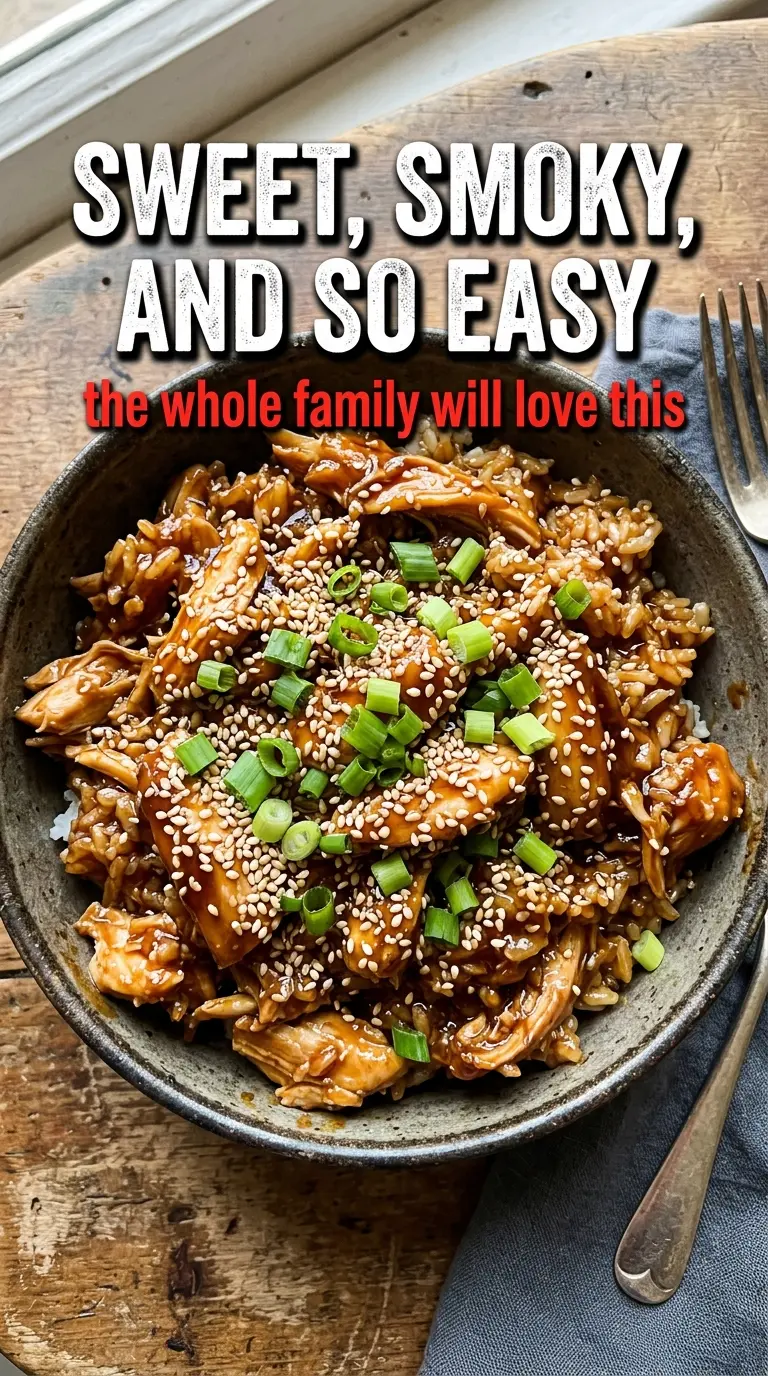
- Boneless, skinless chicken thighs — Thighs stay juicier than breasts and tolerate the higher heat needed to brown them quickly. If you swap in chicken breast, cut it a little larger and pull it as soon as it hits 165°F so it doesn’t dry out.
- Barbecue sauce — This is the backbone of the dish, so use one you already like on its own. A thin, sugary sauce can taste flat here; a thicker sauce gives you better cling and better color in the pan.
- Honey — Honey deepens the sweetness and helps the sauce gloss over the chicken and rice. Maple syrup will work in a pinch, but it shifts the flavor and won’t taste quite as sticky.
- Soy sauce — Just a little soy sauce keeps the sauce from tasting one-note and adds salt without making it harsh. If you need a gluten-free version, tamari works the same way.
- Cooked white rice — Day-old rice is ideal because it separates easily and absorbs the sauce without turning soft. Fresh rice works too, but let it cool for a few minutes first so the grains don’t clump into one heavy mass.
The 20 Minutes That Actually Matter
Getting the Chicken Browned
Heat the olive oil until it shimmers, then add the seasoned chicken in a single layer. You want active sizzling right away. If the skillet is overcrowded, the chicken will pale out and release liquid before it browns, so use a large pan and give the pieces some space. Let them sit long enough to pick up color before stirring; that browned surface is where the best flavor starts.
Letting the Sauce Tighten
Whisk the barbecue sauce, honey, and soy sauce together before it goes into the pan, then let it simmer with the chicken for a few minutes. The sauce should look glossy and slightly thicker, not sticky like candy. If it still looks loose, give it another minute over medium heat. If you cook it hard, the honey can scorch and the sauce will turn bitter at the edges.
Coating the Rice Without Crushing It
Add the cooked rice and fold it through the sauce instead of stirring aggressively. The goal is to coat the grains, not mash them. Use a spatula to lift from the bottom and turn the rice over a few times until every bit looks stained with sauce. When it is heated through and the pan looks saucy but not wet, it’s done.
Make It Spicier Without Losing the Sweet-Smoky Balance
Stir a teaspoon or two of hot sauce or a pinch of cayenne into the barbecue mixture. The heat sits behind the sweetness instead of fighting it, and the soy sauce keeps the spice from tasting sharp. Start small, because honey can soften heat at first and make it harder to judge.
How to Make It Gluten-Free
Use a gluten-free barbecue sauce and swap the soy sauce for tamari. That keeps the same savory backbone without changing the texture of the finished dish. Check the label on the barbecue sauce, because some brands hide wheat in the sweeteners or spice blend.
Using Brown Rice or Cauliflower Rice
Brown rice gives you a nuttier bite, but it needs to be fully cooked and a little drier than white rice so it doesn’t turn heavy in the skillet. Cauliflower rice works for a lower-carb version, but add it at the very end and cook just until hot or it will go soft and watery.
Storage and Reheating
- Refrigerator: Store in an airtight container for up to 4 days. The rice will absorb more sauce as it sits, so it gets a little less glossy but the flavor holds well.
- Freezer: It freezes well for up to 2 months. Cool it completely first, then pack it in portions so the rice reheats more evenly.
- Reheating: Reheat in a skillet over medium-low with a splash of water to loosen the sauce, or microwave in short bursts, stirring once or twice. The common mistake is blasting it on high heat, which dries the chicken and makes the rice gummy around the edges.
Answers to the Questions Worth Asking
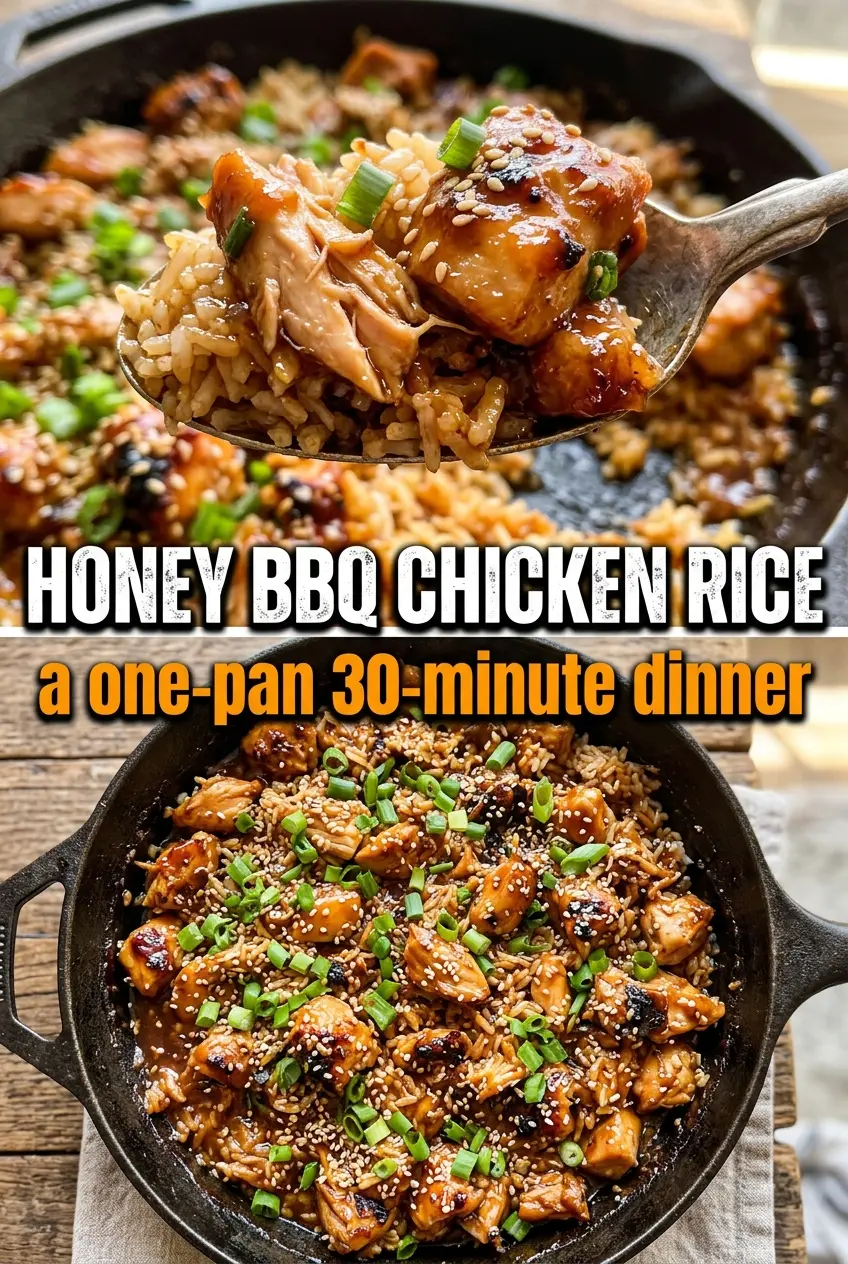
Honey BBQ Chicken Rice
Ingredients
Equipment
Method
- Season the chicken thighs with kosher salt and black pepper. Heat the olive oil in a large cast iron skillet over medium-high heat and cook the chicken for 6–7 minutes, until golden and cooked through.
- Whisk together the barbecue sauce, honey, and soy sauce in a small bowl until smooth. Pour the sauce over the chicken and simmer for 3–4 minutes, until glossy and slightly thickened.
- Add the cooked white rice to the skillet and toss until the grains are evenly coated in the sauce. Cook for 1–2 more minutes, until everything is warmed through.
- Top the skillet with green onions and sesame seeds. Serve right away while the sauce clings to the rice.