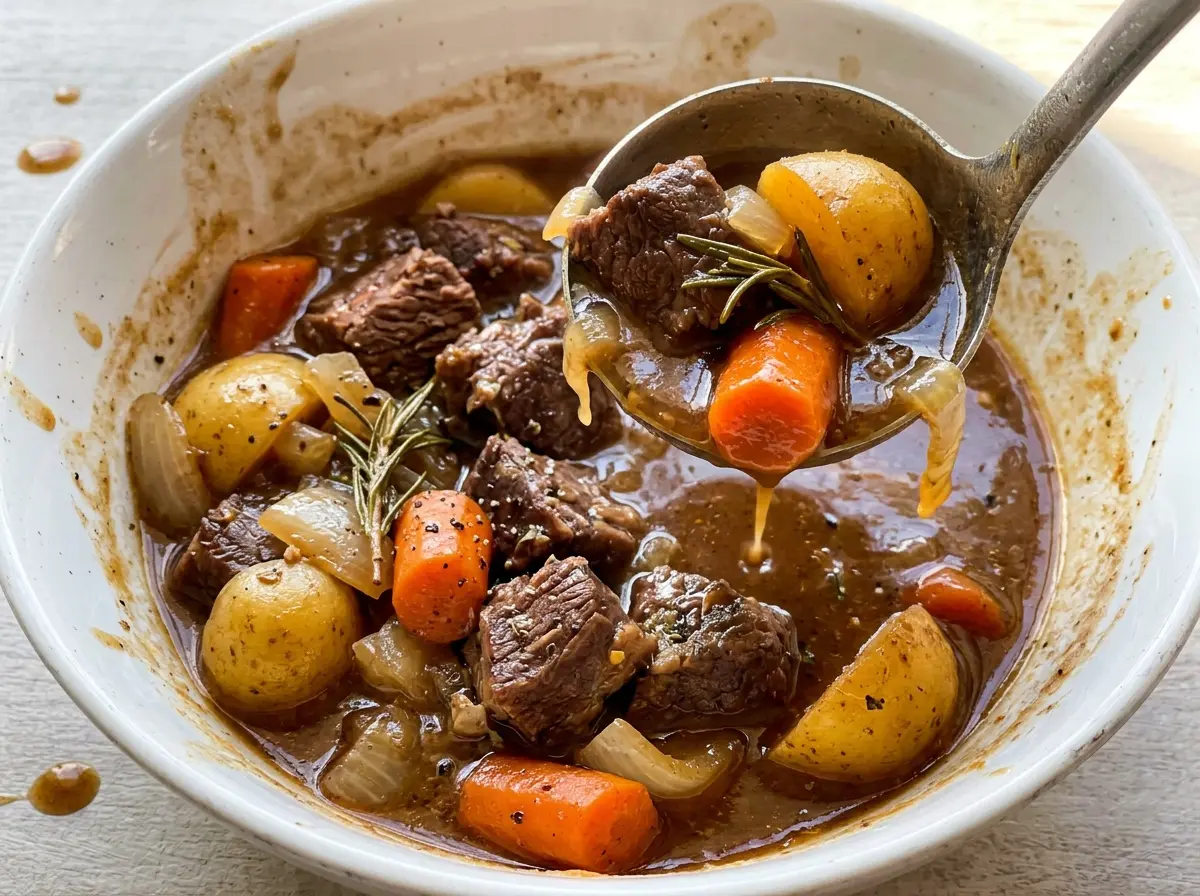
When the first cubes hit the Dutch oven, they should sizzle rather than sit in a puddle; that browned surface helps keep a long-braised stew from tasting flat. I make this Ina Garten beef stew when I want a substantial pot of fork-tender chuck, vegetables that hold their shape, and a broth with real depth. The beef marinates first, so this isn’t a last-minute dinner, but most of the hands-on work happens before the pot goes into the oven.
The Dutch oven moves from the stovetop to a 300°F oven, where the covered stew cooks gently without constant attention. The beef becomes tender as the carrots and potatoes soften, and the peas go in near the end so they keep their bright color. It’s a deep, savory stew with a rich wine broth and enough vegetables to make each bowl feel complete.
Kitchen Note
I keep the carrot and potato pieces close to the listed 1 1/2-inch size. Smaller pieces have more time to soften during the long covered bake and can lose their edges before the beef is ready.
Save this Ina Garten beef stew for its fork-tender chuck and rich red-wine broth, ready to warm up on a cold evening.
Why the Garlic Is Split Between the Marinade and the Pot
Using garlic in two forms gives the stew a more rounded aroma than adding all of it at once. The smashed cloves sit with the beef in the wine, lending a gentle garlic note to the marinade. They’re discarded after the beef drains, so they don’t hang around as soft, oversized pieces in the finished stew.
The minced cloves go in later with the potatoes and mushrooms, where a short cook in the hot pot wakes up their fragrance before the wine and broth are added. That gives you a fresher garlic layer alongside the mellow one from the marinade. Keep the timing brief here: garlic can turn bitter if it gets too dark, so stir it with the vegetables and move on to the liquids after those two minutes.
This small split also keeps the finished broth from tasting one-dimensional. You get garlic in the background and a little more aroma from the pot just before the long braise, without needing extra seasoning beyond the measured salt, pepper, rosemary, and Worcestershire.
The Ingredients That Give This Beef Stew Its Deep, Savory Broth
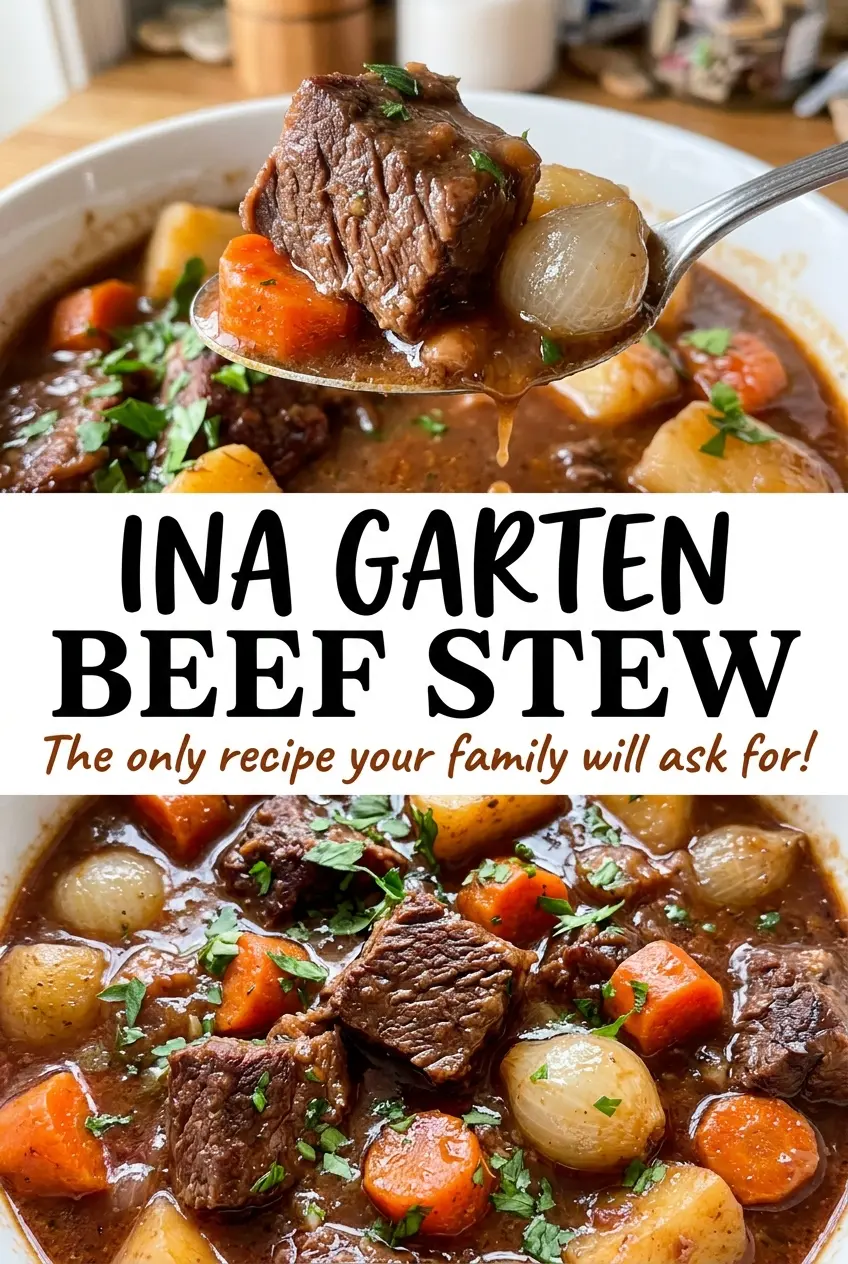
- Beef chuck — Chuck has enough connective tissue and marbling to become tender during a long, gentle braise. Choose evenly cut pieces so they cook at a similar pace; lean steak won’t give the same soft texture.
- Dry red wine — The wine becomes part of the braising liquid, so use a dry bottle rather than a sweet red. An inexpensive wine is fine, but choose one you’d be comfortable drinking; a strongly sweet or harsh wine will stay noticeable in the broth.
- Yukon Gold potatoes — Their creamy texture works well in a long-cooked stew while the pieces stay more intact than russets tend to. Keep the skin off and cut them to the same size as the other large vegetables.
- Oil-packed sun-dried tomatoes — Draining and chopping them spreads their concentrated savory flavor through the broth. The oil-packed kind is easy to chop and stir in; don’t pour their packing oil into the stew.
- Frozen peas — There’s no need to thaw them first. Their mild sweetness and fresh green color balance the darker, slow-cooked flavors, and frozen peas are dependable even when fresh peas aren’t in season.
- All-purpose flour — The light coating on the beef helps give the broth some body as it cooks. If you need a gluten-free stew, skip the flour dredge and use gluten-free Worcestershire sauce; the broth will be less thick, but the stew still works.
From Wine-Marinated Beef to a Slow Oven Braise
Marinate, Drain, and Dry the Beef
Combine the beef with the red wine, smashed garlic, and bay leaves in a large bowl, cover it, and refrigerate for 8 to 24 hours. When you’re ready to cook, heat the oven to 300°F. Drain the beef over a bowl so you can reserve the wine, then discard the garlic and bay leaves. Pat the beef dry before it goes into the flour mixture.
Coat and Brown the Beef
Stir the flour, kosher salt, and black pepper together in a shallow dish. Dredge the beef, shaking off the excess, and discard the remaining flour so it doesn’t end up in clumps in the pot. Heat 2 tablespoons of olive oil in a 6-quart Dutch oven over medium-high heat, then brown the beef in batches, turning the pieces to color all sides. Transfer each browned batch to a plate.
Build the Vegetable Base and Add the Braising Liquid
Add the remaining olive oil to the pot, then cook the onions and carrots for 5 minutes, stirring occasionally. Add the potatoes, mushrooms, and minced garlic and cook for 2 minutes; the garlic should smell fragrant, not toasted. Return the beef and any juices from the plate, then add the reserved wine, beef broth, rosemary, sun-dried tomatoes, and Worcestershire sauce. Stir and bring the stew to a boil before covering the pot.
Let the Oven Finish the Stew
Move the covered Dutch oven to the 300°F oven and bake for 2 1/2 to 3 hours, until a fork slides easily into the beef. Check tenderness rather than relying only on the clock, since the goal is beef that yields without resistance. Stir in the frozen peas, cover again, and bake for 10 to 15 minutes, until they’re heated through. Remove the rosemary sprig and let the stew rest for 10 minutes before serving.
Simple Changes That Still Work in This Beef Stew
Make It Gluten-Free
Leave out the flour dredge and use gluten-free Worcestershire sauce. The beef won’t have a flour coating, so expect a thinner broth, but the long braise still makes the chuck tender and the stew stays satisfying.
Leave Out the Mushrooms
Omit the cremini mushrooms if they aren’t for you and keep the rest of the ingredients the same. You’ll lose some earthy depth, but the beef, wine, and sun-dried tomatoes still make a savory broth.
Skip the Sun-Dried Tomatoes
You can leave out the tomatoes for a more straightforward beef-and-wine stew. The broth will have less concentrated savory sweetness, but no other change to the cooking method is needed.
Storage and Reheating
- Refrigerator: Store in an airtight container for 3 to 4 days. The potatoes soften a little as they sit.
- Freezer: Freeze in airtight, freezer-safe containers for up to 3 months. The stew freezes well, though the potatoes may be softer after thawing.
- Reheating: Warm gently in a covered saucepan over medium-low heat, stirring now and then, until the stew reaches 165°F. Avoid a hard boil, which can break up the vegetables.
Questions That Come Up When Making This Beef Stew
Ina Garten Beef Stew
Ingredients
Equipment
Method
- In a large bowl, combine the beef, red wine, 3 smashed garlic cloves, and bay leaves.
- Cover and refrigerate for 8 to 24 hours.
- Heat the oven to 300°F.
- Drain the beef, reserving the wine and discarding the garlic and bay leaves.
- Pat the beef dry.
- In a shallow dish, combine the flour, salt, and pepper.
- Dredge the beef in the flour mixture, shaking off excess, and discard any leftover flour.
- Heat 2 tablespoons of the oil in a 6-quart Dutch oven over medium-high heat.
- Brown the beef in batches, turning to brown all sides, then transfer it to a plate.
- Add the remaining 1 tablespoon oil to the pot.
- Cook the onions and carrots for 5 minutes, stirring occasionally.
- Add the potatoes, mushrooms, and minced garlic and cook for 2 minutes.
- Return the beef and any accumulated juices to the pot.
- Add the reserved wine, beef broth, rosemary, sun-dried tomatoes, and Worcestershire sauce.
- Bring the stew to a boil, stirring.
- Cover and bake for 2 1/2 to 3 hours, until the beef is fork-tender.
- Stir in the peas.
- Cover and bake for 10 to 15 minutes, until the peas are heated through.
- Remove the rosemary sprig.
- Let the stew rest for 10 minutes before serving.