Italian Zuppa Toscana casserole takes everything people love about the soup and turns it into a bubbling, knife-and-fork dinner with a golden cheese crust. You still get the creamy potatoes, savory sausage, and a little heat from red pepper flakes, but the baked version gives the top a deeper, richer finish that a stovetop pot can’t match. It lands in that sweet spot between cozy and substantial, which is why it disappears fast once it hits the table.
The part that makes this work is treating the potatoes like the backbone, not an afterthought. They simmer just until tender before the casserole goes into the oven, so they finish cooking in the cream without turning to mush. Browning the sausage first and cooking the bacon separately gives you two different kinds of savory flavor: one that seasons the whole dish and one that stays crisp on top. That contrast matters.
Below, I’ve included the small timing details that keep the cream smooth, the potatoes tender, and the topping nicely browned. There’s also a useful note on swapping the greens and how to reheat leftovers without breaking the sauce.
The potatoes stayed tender without falling apart, and the cream sauce held together beautifully after baking. I added a little extra kale at the end and my husband went back for seconds before the casserole even cooled.
Pin this creamy Zuppa Toscana casserole for a hearty baked dinner with sausage, potatoes, kale, and a cheesy golden top.
The Trick Is Cooking the Potatoes Before the Bake
The biggest mistake with a casserole like this is assuming the oven alone should do all the work. Thin potato slices need a head start in the broth, cream, and milk so they soften before the top sets. If you skip that simmer, the cheese will brown before the potatoes are fully tender, and you’ll end up with a casserole that eats like layered raw potatoes under a crust.
The other thing that matters is keeping the cream mixture at a gentle simmer instead of a hard boil. Once dairy gets too hot, it can separate or turn grainy in the oven. A low simmer lets the potatoes release a little starch into the sauce, which gives you body without needing flour. That’s what makes the finished casserole spoonable instead of greasy.
What Each Ingredient Is Doing in This Dish
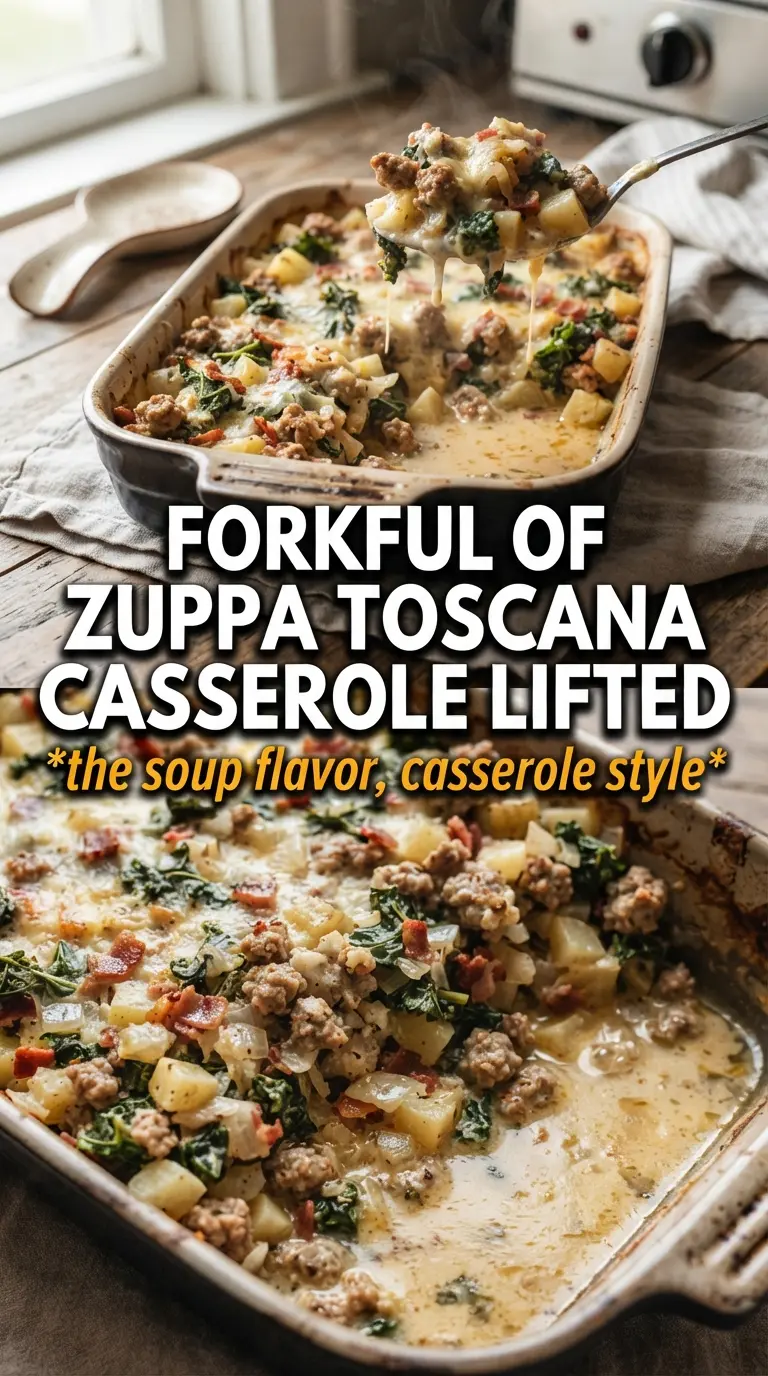
- Italian sausage — This gives the casserole its backbone. Mild or hot both work, but use a sausage with enough fat to brown well, because those browned bits season the whole dish.
- Bacon or pancetta — Cook it separately so it stays crisp. If you add it straight into the casserole too early, it softens in the sauce and loses the salty crunch that makes the topping worth waiting for.
- Yukon gold potatoes — These hold their shape better than russets and turn creamy instead of mealy. Slice them thin and evenly so they cook at the same rate; uneven slices are the fastest way to end up with some pieces soft and others still firm.
- Kale — Kale brings the signature Zuppa Toscana bite and keeps its texture better than spinach. Chop it well and fold it in near the end so it softens without turning olive-drab and overcooked.
- Heavy cream and whole milk — The cream gives body, while the milk keeps the casserole from feeling too heavy. You can swap the whole milk for half-and-half if that’s what you have, but don’t cut the cream too far or the sauce loses its richness.
- Mozzarella and parmesan — Mozzarella melts into that stretchy top layer, while parmesan adds salt and sharpness. Use freshly grated parmesan if you can; the pre-grated kind often melts less smoothly.
Building the Casserole Without Breaking the Sauce
Brown the Sausage and Crisp the Bacon First
Cook the sausage until it’s deeply browned, not just no longer pink. That caramelization gives the dish a savory base that carries through the cream. Drain off excess fat if the pan looks greasy, but leave a little behind for the onions and garlic, because that’s where the flavor starts.
Cook the bacon or pancetta until crisp, then pull it out and keep it separate. If it sits in the sauce too early, it softens and disappears into the background. You want it added at the end so each bite has a little crunch against the creamy potatoes.
Simmer the Potatoes Until They’re Barely Tender
Once the broth, cream, milk, and red pepper flakes go in, bring everything to a gentle simmer before adding the potatoes. The liquid should move in small bubbles, not roll hard across the pan. Add the slices and cook until a fork slides in with a little resistance, about 12 to 15 minutes. If the potatoes are cooked all the way through at this stage, they’ll fall apart after baking.
Fold in the Kale and Finish With Cheese
The kale goes in after the potatoes are nearly tender so it keeps some structure. Stir in the sausage, then taste the sauce and season with salt and pepper before it goes into the baking dish. The cheese should sit on top in an even layer, not get mixed all the way through, because you want that browned, bubbling cap after baking.
Bake Until the Top Is Golden and the Edges Bubble
Bake until the cheese is melted, browned in spots, and the sauce is bubbling around the edges. If the top is getting dark too fast, lay a loose piece of foil over it for the last few minutes. Let the casserole rest before serving so the sauce thickens slightly and doesn’t flood the plate the moment you cut in.
How to Adapt This for a Bigger Crowd or a Lighter Plate
Dairy-Free Version With Less Richness, Same Comfort
Use unsweetened oat milk or plain cashew milk in place of the whole milk, and swap the heavy cream for a full-fat dairy-free cooking cream. The casserole won’t be quite as lush, but it will still be creamy and spoonable if you keep the simmer gentle. Skip the parmesan or use a dairy-free hard-style alternative at the end.
Gluten-Free Without Changing the Method
This dish is naturally gluten-free as long as your sausage and broth are certified gluten-free. The texture doesn’t rely on flour or a roux, so you don’t need to replace anything in the technique. That makes it a good option when you want something creamy without extra steps.
Swap the Kale for Spinach When That’s What You Have
Spinach works, but it softens much faster and disappears into the sauce. Add it right at the end and use a little more than you think you need, since it shrinks aggressively. The casserole will taste a touch milder and less sturdy, but it still works well.
Make It Ahead and Bake Later
You can assemble the casserole up to a day ahead, but stop before the final cheese topping if you want the best texture. Refrigerate it covered, then add the cheese and bake until hot in the center and bubbling at the edges. Cold casserole straight from the fridge needs extra time in the oven, so don’t judge it by the first 20 minutes.
Storage and Reheating
- Refrigerator: Store covered for up to 4 days. The sauce thickens as it sits, and the potatoes soften a little more, but the flavor stays strong.
- Freezer: It freezes, though the cream sauce may separate slightly when thawed. Freeze in portions for best results, and thaw overnight in the fridge before reheating.
- Reheating: Reheat covered in a 325F oven until hot, adding a splash of milk if the sauce looks too thick. The common mistake is blasting it in the microwave, which can make the dairy split and the potatoes mealy.
Answers to the Questions Worth Asking
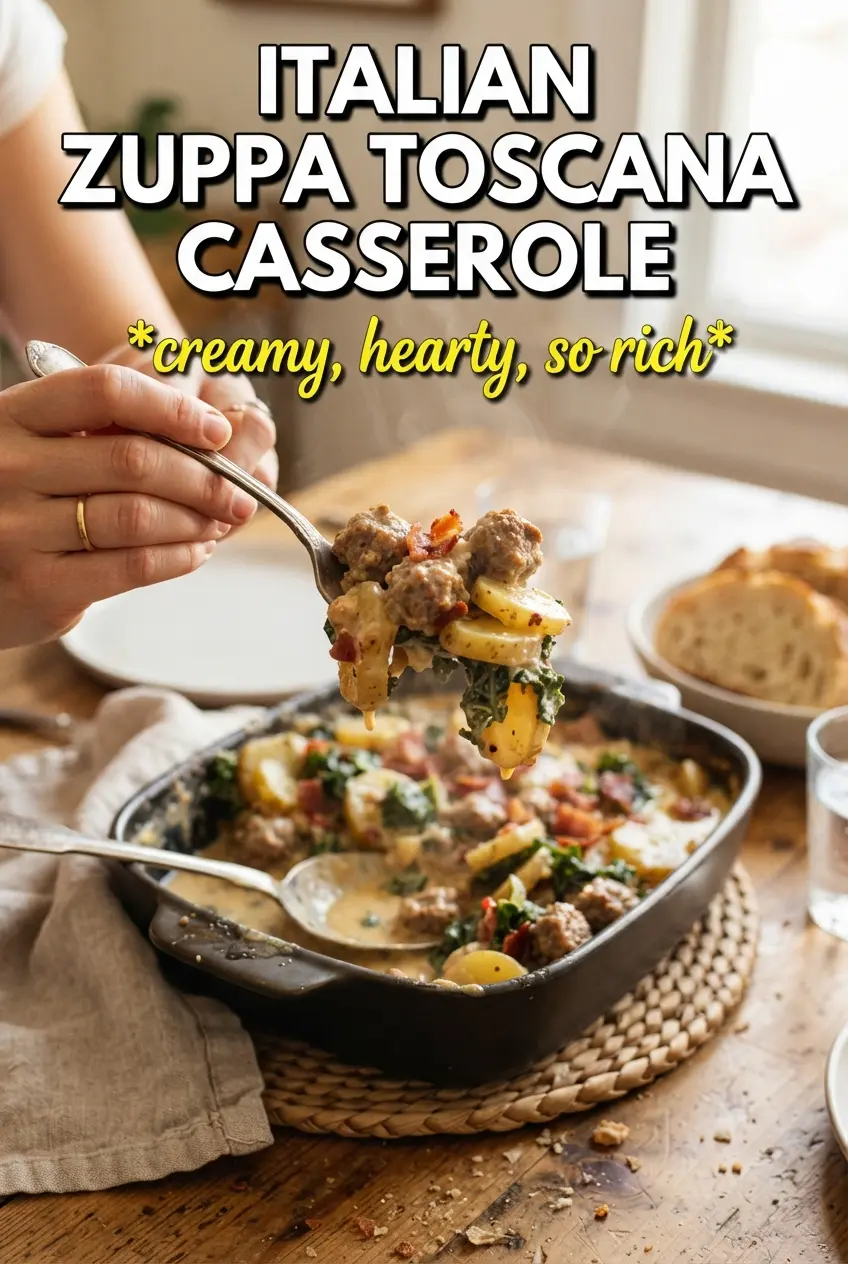
Italian Zuppa Toscana Casserole
Ingredients
Equipment
Method
- Preheat your oven to 375°F. This ensures the casserole bakes to a golden, bubbling cheese crust right on schedule.
- Brown the Italian sausage in a large oven-safe skillet. Drain off excess fat and set the sausage aside while keeping the remaining fat in the pan.
- Cook the bacon or pancetta until crispy. Remove and set aside, reserving the skillet fat for sautéing.
- Sauté the onion and garlic in the reserved fat for 4 minutes. Cook until fragrant and softened, then stir to prevent sticking.
- Add the chicken broth, heavy cream, whole milk, and red pepper flakes to the skillet. Bring the mixture to a gentle simmer.
- Add the sliced Yukon gold potatoes and simmer for 12–15 minutes until just tender. Stir occasionally so the potatoes cook evenly and don’t scorch.
- Fold in the kale and Italian sausage, then season with salt and pepper. Cook just until the kale wilts slightly from the heat of the mixture.
- Transfer the mixture to a 9x13 baking dish if needed. Spread into an even layer so the cheese melts uniformly.
- Scatter the shredded mozzarella and parmesan over the top. Make sure the cheese covers the surface for a browned, bubbly finish.
- Bake at 375°F for 20–25 minutes until golden and bubbling. Top with the crispy bacon or pancetta right before serving.