The berries pop against the sides of the saucepan as they cook, and the mixture changes from thin syrup to something that clings to the spoon. That thickening is easy to miss if you’re watching the clock instead of the fruit. I make this jellied cranberry sauce when I want the smooth, sliceable kind that holds its shape on a serving plate, not a chunky relish.
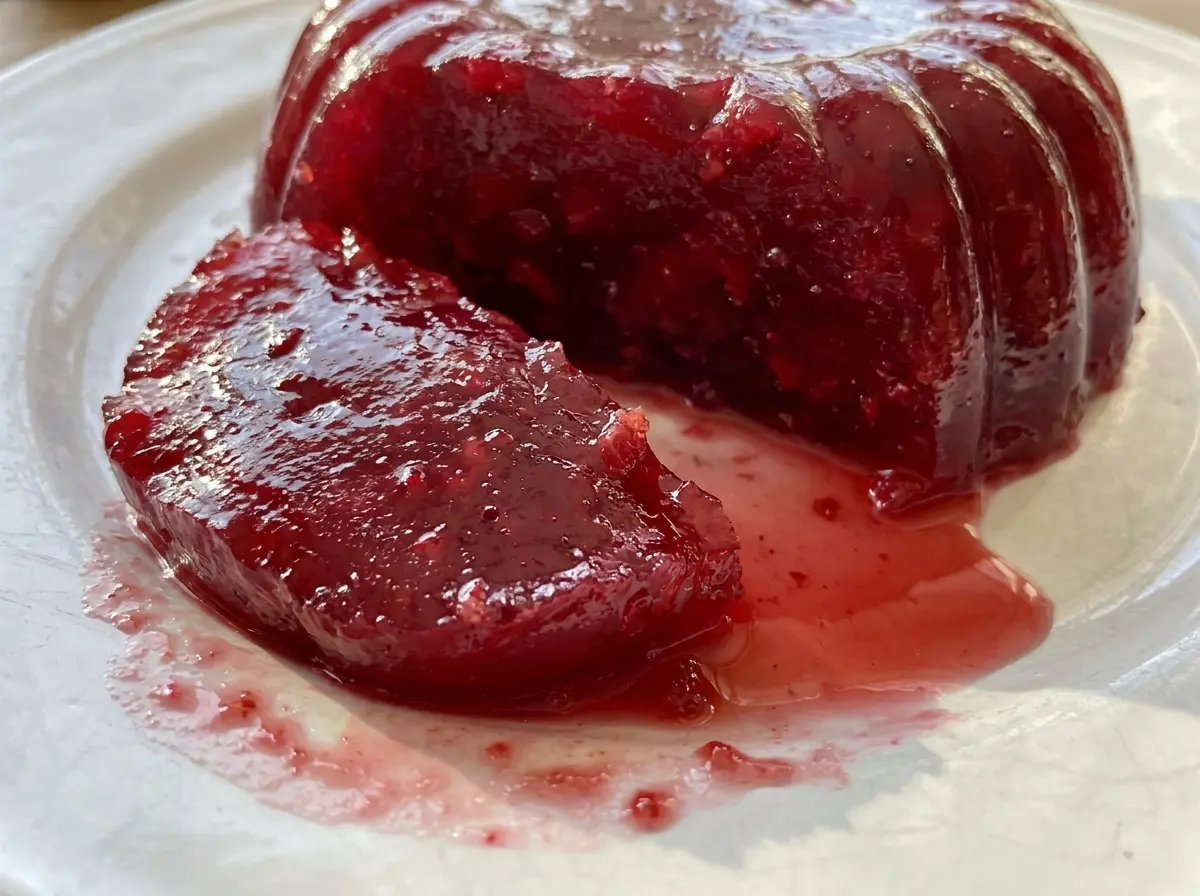
The difference comes down to two simple choices: strain the hot cranberries through a fine-mesh sieve, then give the sauce enough time in the refrigerator to set. The sieve catches the skins and seeds, leaving a smooth cranberry base; the chill gives its natural pectin time to firm up. Once unmolded, the sauce has a clean edge and a bright, tart-sweet taste.
Kitchen Note
Rinse the 2-cup mold with cold water before you pour in the strained sauce. That small bit of prep helps the chilled jelly release cleanly when it’s time to turn it out.
Save this jellied cranberry sauce for a holiday table or any meal that calls for smooth, sliceable cranberry flavor.
Why This Cranberry Jelly Sets Without Gelatin
Cranberries bring their own natural pectin, the substance that helps fruit mixtures thicken and set. As the berries simmer and burst, pectin moves into the liquid. Sugar contributes body, while cooking reduces some of the water; together, those changes give the strained sauce a chance to firm up as it chills. There’s no need to add gelatin or another setting agent.
That’s also why this sauce needs a different finish from a spoonable cranberry relish. The sieve removes the skins and seeds, so the texture is smooth rather than chunky. Press the hot fruit through the mesh to get the sauce into the bowl, but don’t expect the mixture to look like a firm jelly while it’s still warm. The refrigerator does the final setting, and the finished texture becomes clear only after a full chill.
If your cranberries haven’t burst and the mixture still looks watery at the end of the simmer, give the fruit the full cooking time and look for the visual change: most berries should have opened, and the liquid should look thicker than it did at the start. The right texture before straining is a thickened sauce, not a solid gel.
What Water, Sugar, and Cranberries Each Do

- Cranberries — Fresh or frozen both work here, and their natural tartness keeps the finished sauce from tasting flat. Choose berries that look and smell fresh; frozen cranberries are a useful option when fresh ones aren’t available. This is the ingredient you shouldn’t replace with dried cranberries, which don’t provide the same moisture or behave the same way in the simmer.
- Granulated sugar — It dissolves into the water to make the syrup that cooks the cranberries, and it balances their sharpness. I’d keep the stated amount rather than cutting it back: changing the balance can affect both the taste and how the sauce sets. There isn’t a simple swap that preserves the same result.
- Water — Water gives the sugar a liquid base and lets the berries cook evenly before the sauce thickens. It doesn’t need to be anything special. Replacing it with another liquid would change the flavor, so plain water is the dependable choice for this clean cranberry taste.
From Simmered Berries to a Clean, Firm Mold
Dissolve the Sugar Before the Fruit Goes In
Combine the water and granulated sugar in a medium saucepan, then bring the mixture to a boil over medium-high heat. Stir until the sugar dissolves, which takes about 3 minutes. Look for a clear syrup with no sandy sugar sitting on the bottom of the pan. If crystals remain, keep stirring before adding the cranberries so they don’t cling to the pan as the mixture heats.
Cook Until the Berries Burst and the Sauce Thickens
Add the cranberries and bring the mixture back to a boil. Lower the heat to medium and simmer for 10–12 minutes, stirring occasionally. You’ll hear the berries pop as their skins split, and the pan will shift from loose syrup toward a thicker, more cohesive sauce. If several berries are still intact and the liquid looks thin, use the visual cues as well as the timer: the berries should have burst and the mixture should look thickened.
Strain While the Mixture Is Hot
Set a fine-mesh sieve over a bowl and press the hot cranberry mixture through it. Work the berries against the mesh so the sauce passes through while the skins and seeds stay behind. The strained sauce should look smooth, with no visible skins or seeds in the bowl. Pour it into a 2-cup mold that has been rinsed with cold water.
Chill Until the Jelly Holds Its Shape
Let the sauce cool to room temperature, then cover the mold and refrigerate it for at least 4 hours. The center should feel firmly set rather than loose when you gently check it. To unmold, dip the outside of the mold in warm water for 5–10 seconds, then run a thin knife around the edge. Invert it onto a serving plate; if it resists, dip the outside briefly again instead of forcing the jelly loose.
Two Simple Ways to Adapt the Mold and Berry Choice
The ingredient list contains no dairy or wheat-based ingredient, so the sauce needs no ingredient replacement to fit many dairy-free or gluten-free menus. These adjustments keep the basic cranberry mixture intact while changing the berry option or the finished presentation.
Choose Fresh or Frozen Cranberries
Fresh and frozen cranberries are both suitable for this sauce. Add frozen berries to the boiling syrup without thawing; the mixture may take a little longer to return to a boil. The result is still smooth after straining, with the same tart cranberry character.
Change the Shape, Not the Capacity
A different-shaped mold changes the look of the finished sauce without changing its ingredients. Keep the mold at a 2-cup capacity so the strained mixture fits as intended; a fluted shape gives the unmolded jelly a more defined edge, while a plain shape keeps the presentation simple.
Storage and Reheating
- Refrigerator: Keep the covered sauce refrigerated at 40°F or below and use it within 3–4 days. The set may soften slightly over time, especially after it’s been unmolded.
- Freezer: Freezing is possible in an airtight, freezer-safe container, but thawed sauce may release liquid and lose its neat slice. For best quality, use it within 2 months and thaw it in the refrigerator.
- Reheating: Serve this sauce chilled; reheating isn’t needed and can soften the set. Don’t warm the whole mold to make serving easier, since heat can loosen the jelly.
Questions That Come Up With Jellied Cranberry Sauce
Jellied Cranberry Sauce
Ingredients
Equipment
Method
- Combine the water and sugar in a medium saucepan and bring to a boil over medium-high heat, stirring until the sugar dissolves, about 3 minutes.
- Add the cranberries and return to a boil.
- Simmer over medium heat for 10–12 minutes, stirring occasionally, until the berries have burst and the mixture looks thickened.
- Press the hot mixture through a fine-mesh sieve into a bowl, discarding the skins and seeds.
- Pour the strained sauce into a 2-cup mold rinsed with cold water.
- Let the sauce cool to room temperature, cover the mold, and refrigerate for at least 4 hours, until firmly set.
- Dip the outside of the mold in warm water for 5–10 seconds.
- Run a thin knife around the edge, and invert onto a serving plate.