Lasagna soup with bow tie pasta gives you all the comfort of a baked pasta dinner without waiting on a casserole dish. The broth turns rich and tomato-forward, the sausage adds depth, and the farfalle catches little pockets of cheese and herbs in every bite. It lands in that sweet spot between hearty and spoonable, which is exactly why it disappears fast at the table.
The trick is building the base in layers instead of dumping everything together at once. Browning the sausage first gives the broth its backbone, and cooking the tomato paste for a minute or two before adding liquid keeps the soup from tasting flat. Farfalle works well here because it holds its shape, but it also soaks up broth as it sits, so a little extra liquid at the end keeps the texture where it should be.
Below, I’ve included the small things that matter most: how to keep the pasta from going soft, how to keep the soup brothy instead of thick and stew-like, and how to adapt the bowl if you want it a little lighter or a little richer.
The soup had that deep lasagna taste without needing a lot of fuss, and the bow tie pasta held up better than I expected. I added a splash more broth before serving and the cheese dollop melted into the bowl perfectly.
Save this lasagna soup with bow tie pasta for a fast, cozy bowl with sausage, tomatoes, and that creamy ricotta topping.
The Secret to Keeping Farfalle from Turning the Soup Thick and Gummy
Farfalle is a smart swap for lasagna noodles, but it behaves differently. It doesn’t just sit in the broth; it drinks it up as it rests. That means the soup can go from brothy to heavy in a short window if you cook it too long or let it sit on low heat after the pasta goes in.
The fix is simple: cook the pasta until just al dente and serve the soup soon after. If you’re making it ahead, pull the pot off the heat a little early and add extra broth when you rewarm it. The pasta will finish softening in the hot soup, so the texture stays pleasant instead of bloated.
Another thing that matters here is the sausage fat. A little of it stays in the pot and adds body, but too much makes the soup greasy. Drain the excess after browning, then let the tomatoes and broth take over from there.
What Each Ingredient Is Actually Doing in This Bowl
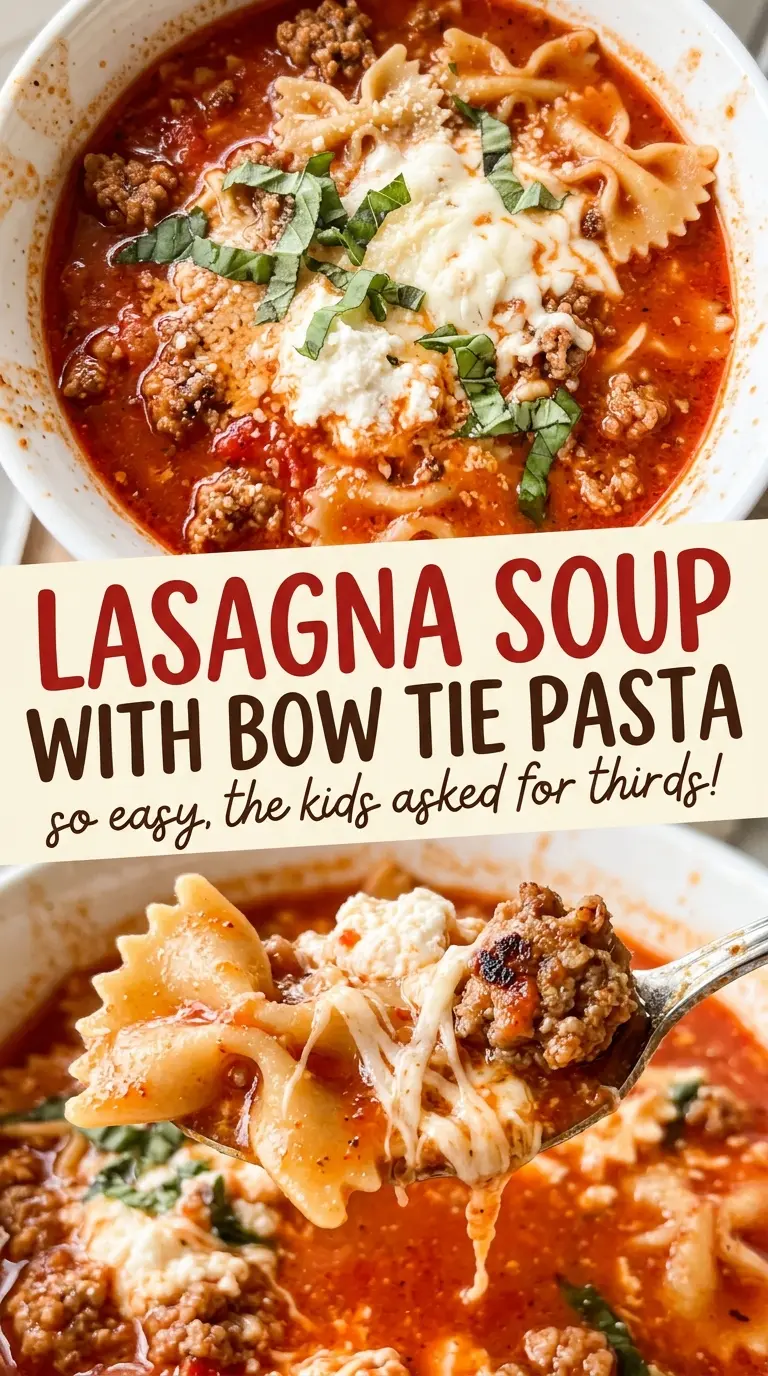
- Italian sausage — This is the main source of richness and seasoning. Pork sausage gives the broth a depth you won’t get from ground turkey unless you add extra oil and stronger seasoning. Mild or hot both work, depending on how much heat you want in the finished bowl.
- Tomato paste — This is what makes the broth taste cooked and rounded instead of thin and sharp. Let it sizzle with the onion and garlic for a minute before adding liquid so it loses the raw edge.
- Crushed tomatoes and diced tomatoes — The crushed tomatoes create the body of the soup, while the diced tomatoes leave little bursts of texture. Using both gives you a better bowl than using just one texture alone.
- Farfalle — Bow ties hold their shape and give you a sturdier bite than broken lasagna noodles in soup. They do absorb liquid, though, so plan on a splash more broth if the pot sits for a few minutes before serving.
- Ricotta, mozzarella, and parmesan — This is the stand-in for the creamy, cheesy layer you’d get in baked lasagna. Ricotta brings softness, mozzarella melts into the spoonful, and parmesan sharpens the whole thing.
Building the Soup in the Right Order
Browning the Sausage First
Start with the sausage in a large pot and cook it until there are deep brown bits on the bottom. That fond is where the flavor lives, so don’t rush this part by keeping the heat too low. If the pan looks dry before the sausage browns, the sausage will usually render enough fat on its own. Drain off the excess fat after browning, but leave the browned bits in the pot.
Softening the Onion and Toasting the Tomato Paste
Add the diced onion and cook it until it’s softened and translucent, not browned. Then stir in the garlic and tomato paste and let them cook for about two minutes. The garlic should smell fragrant, not sharp, and the paste should darken a shade and cling to the bottom of the pot. If you add the broth too quickly, the tomato paste stays raw and the soup tastes flatter.
Simmering the Broth Before the Pasta Goes In
Once the tomatoes, broth, herbs, and pepper flakes go in, bring the pot to a real boil, then drop it to a steady simmer. That gives the tomatoes time to mellow and the seasonings time to move through the liquid. Taste the broth before adding pasta if you want to adjust salt now, because once the noodles go in, the soup changes quickly. A strong, well-seasoned broth at this stage means the final bowl won’t need rescue later.
Cooking the Farfalle and Finishing the Bowls
Add the farfalle and cook until it is just al dente, usually 8 to 10 minutes depending on the brand. The pasta should still have a little bite in the center because it will keep softening in the hot soup. Stir in the salt and pepper at the end, then ladle into bowls and top each one with a generous spoonful of the cheese mixture. If the soup thickens too much, loosen it with extra broth before serving.
Three Useful Ways to Adapt This Soup
Make It Lighter with Turkey Sausage
Turkey sausage works if you want a leaner bowl, but it doesn’t render as much fat or bring the same depth as pork. Add a small drizzle of olive oil before cooking it, and lean a little harder on the tomato paste and parmesan so the broth still tastes full.
Make It Gluten-Free
Use your favorite gluten-free farfalle, but watch the cooking time closely because some brands soften fast and break apart if they sit too long. Pull the soup off the heat as soon as the pasta is al dente, since gluten-free noodles keep absorbing liquid after the burner is off.
Make It Richer and More Cheesy
Stir a small handful of mozzarella directly into each bowl after ladling in the soup if you want a stretchier finish. The cheese dollop will still sit on top, but the extra melt gives the broth a thicker, more lasagna-like feel.
Storage and Reheating
- Refrigerator: Store for up to 4 days. The pasta will keep soaking up broth, so expect a thicker soup the next day.
- Freezer: It freezes best without the pasta. Freeze the soup base, then cook fresh farfalle when you reheat it, because frozen pasta tends to turn soft and grainy.
- Reheating: Warm it gently on the stove over medium-low heat with a splash of broth until it loosens back up. The common mistake is boiling it hard, which makes the pasta mushy and dulls the tomato flavor.
Answers to the Questions Worth Asking
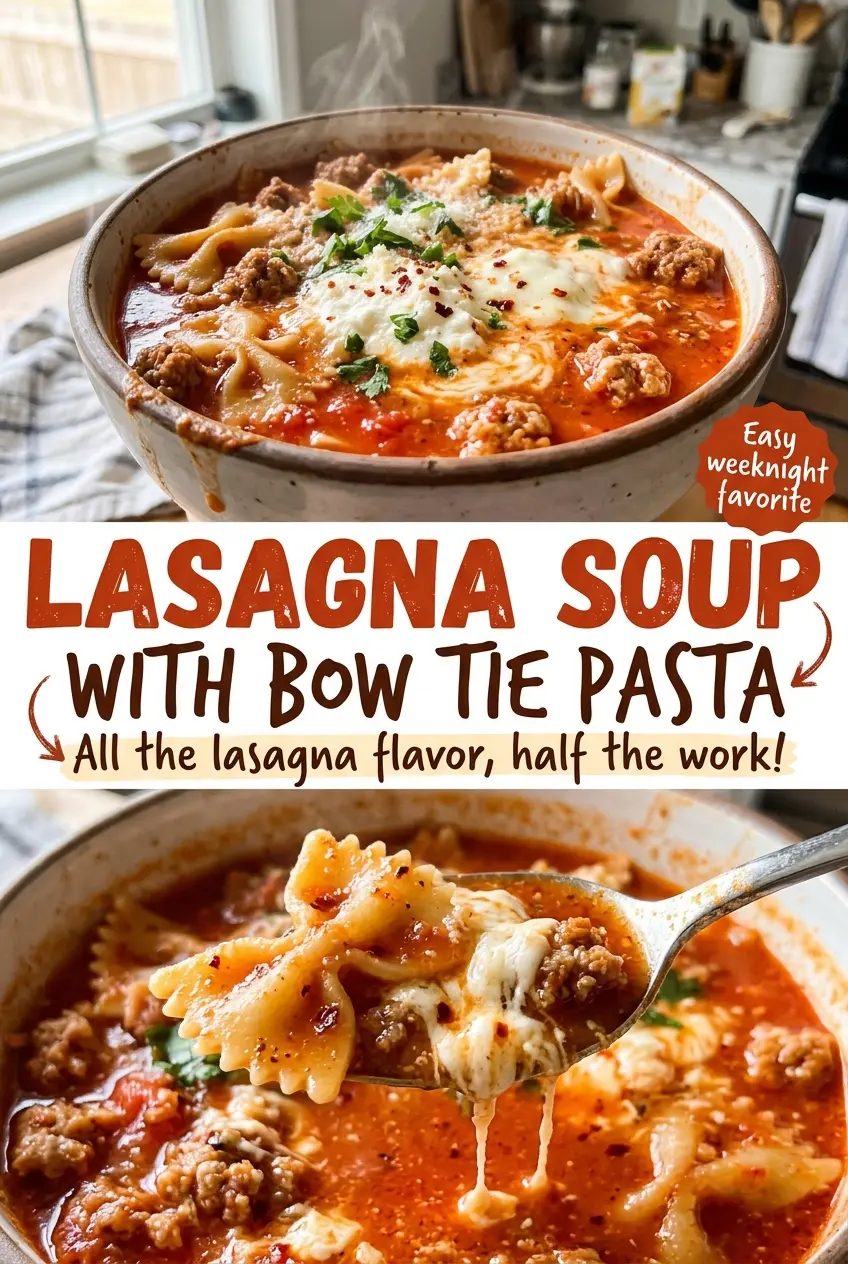
Lasagna Soup With Bow Tie Pasta
Ingredients
Equipment
Method
- Brown the Italian sausage in a large pot over medium-high heat, then drain the fat.
- Keep the sausage in the pot for the next step and leave any browned bits for flavor.
- Sauté the onion for 3 minutes until softened, using the residual heat in the pot.
- Add the garlic and tomato paste, then cook for 2 minutes while stirring.
- Add the crushed tomatoes, diced tomatoes, chicken broth, Italian seasoning, dried basil, and red pepper flakes; bring the mixture to a boil.
- Reduce to a steady boil as needed and continue boiling long enough to keep the soup lively and hot.
- Add the farfalle (bow tie) pasta and cook 8-10 minutes until al dente.
- Season with salt and pepper to taste.
- Mix the ricotta, shredded mozzarella, parmesan, and fresh basil until combined.
- Serve the soup in bowls and top each with a generous spoonful of the cheese dollop.
- If the soup thickens too much (bow tie pasta absorbs more liquid than lasagna noodles), stir in extra chicken broth to loosen before serving.