Lasagna soup gives you all the comfort of the baked dish without waiting around for layers to set. The broth turns rich and tomato-forward, the sausage brings enough savoriness to carry the whole pot, and the noodles soften into something that feels familiar but less fussy than a casserole. The best part is the cheese topping. A big spoonful of ricotta, mozzarella, parmesan, and basil melts into the hot bowl and turns every bite creamy, stretchy, and a little luxurious.
This version works because the tomato paste cooks with the onion and garlic before the broth goes in, which deepens the base instead of leaving it flat. Broken lasagna noodles also behave better than you might expect here. They catch the broth in those uneven edges and give you the same layered feel you get from traditional lasagna, just in spoonable form. A little nutmeg in the cheese mixture is the quiet detail that makes the topping taste rounder and less one-note.
Below, you’ll find the small timing choices that keep the noodles from turning mushy, plus a few easy ways to adapt the soup if you want it a little lighter, a little spicier, or made ahead for later.
The broth was rich without being heavy, and the ricotta-mozzarella topping melted into the soup exactly like I wanted. I let it sit one minute before serving and the noodles stayed tender instead of getting gummy.
Save this lasagna soup with ricotta and mozzarella for the night you want classic lasagna flavor without the layering and waiting.
The Mistake That Makes Lasagna Soup Taste Thin
The fastest way to flatten lasagna soup is to dump everything in at once and call it done. That leaves the onion undercooked, the tomato paste raw-tasting, and the broth tasting like seasoned water instead of a real soup base. The flavor has to be built in stages so the sausage fat, aromatics, and tomato paste all get a chance to concentrate before the liquid goes in.
The other trap is overcooking the noodles. Broken lasagna sheets thicken the broth as they simmer, which is part of the charm, but they keep absorbing liquid even after the heat is off. If you want the bowl to stay brothy instead of turning into a pasta pot, stop the simmer when the noodles are just tender and serve it right away.
What Each Ingredient Is Actually Doing in This Dish
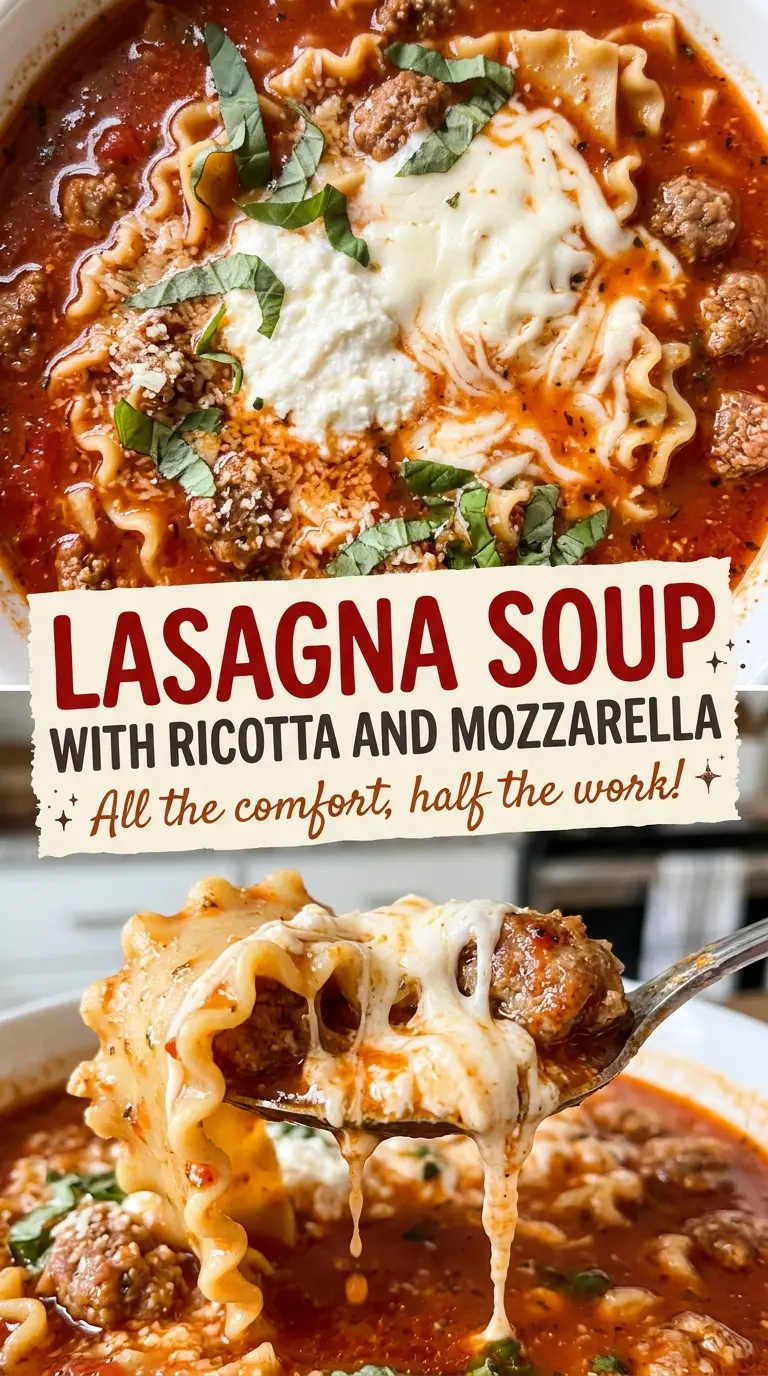
- Italian sausage — This gives the soup its backbone. Mild sausage keeps the broth balanced, while hot sausage adds more heat than the red pepper flakes alone. If you use ground beef instead, add a pinch more fennel or extra Italian seasoning so the soup doesn’t taste like plain beef stew.
- Tomato paste — This is where the depth comes from. Cooking it with the onion and garlic for a minute or two turns it from sharp and metallic into something sweet and concentrated. Skip that step and the soup tastes flatter than it should.
- Crushed tomatoes plus diced fire-roasted tomatoes — The crushed tomatoes make the broth silky enough to coat the noodles, and the fire-roasted tomatoes add a subtle smoky edge that keeps the soup from tasting one-note. If you only have regular diced tomatoes, use them, but expect a cleaner, less layered flavor.
- Ricotta, mozzarella, and parmesan — Ricotta gives you the soft, creamy dollop, mozzarella brings the melt, and parmesan adds the salty finish. Whole milk versions matter here because low-fat cheese tends to get grainy instead of luscious when it hits the hot soup.
- Fresh basil and nutmeg — Basil brightens the cheese mixture, and nutmeg gives it that quiet lasagna-like warmth people can’t always name but always notice. The nutmeg should stay in the background. Too much turns the topping odd fast.
Building the Soup Base and Adding the Pasta at the Right Moment
Brown the Sausage First
Cook the sausage over medium-high heat until it’s deeply browned and no pink remains, breaking it into crumbles as it cooks. You want some browned bits stuck to the pot; that’s where the flavor starts. If the sausage throws off a lot of fat, drain the excess, but leave enough behind to coat the onion. Dry, gray sausage gives you a thin base, so let it color before you move on.
Cook Down the Onion and Tomato Paste
Stir the onion into the same pot and cook until it softens and turns translucent, then add the garlic and tomato paste. Let the paste cook until it darkens slightly and stops smelling raw. That short step makes the broth taste like it simmered longer than it actually did. If the garlic goes in too early, it can scorch before the paste has a chance to deepen, so keep the heat moderate and stir often.
Simmer the Broth and Tomatoes
Pour in the crushed tomatoes, diced tomatoes, broth, and seasonings, then bring the pot to a boil before lowering it to a steady simmer. The broth should look red and loose, not thick like marinara. If it boils hard the whole time, the tomatoes can taste harsh and the sausage can go stringy. A gentle simmer keeps the base cohesive and lets the herbs actually bloom.
Cook the Noodles Until Just Tender
Add the broken lasagna noodles and cook until they’re tender with a little bite left in the center, about 10 to 12 minutes. Stir often so they don’t clump together or sink into a stuck layer at the bottom. The soup should still look brothy when you turn off the heat. If the noodles are fully soft in the pot, they’ll be overcooked by the time you ladle the last bowls.
Three Ways to Make This Soup Fit Your Table
Make it lighter with turkey instead of sausage
Ground turkey works well if you want a leaner soup, but it needs help with seasoning. Add an extra pinch of fennel or a bit more Italian seasoning so the pot still tastes like lasagna and not plain tomato soup with meat. You’ll lose some richness, so keep the ricotta topping generous.
Make it gluten-free with pasta that holds up
Use a sturdy gluten-free lasagna noodle or a short gluten-free pasta with enough structure to survive simmering. Some gluten-free pastas soften faster than wheat pasta, so start checking a few minutes early. If the noodles fall apart, the soup still tastes good, but you’ll lose that lasagna-like chew.
Make it dairy-free by changing the topping, not the soup
The soup base itself is already dairy-free, so the change is all in the finish. Swap the ricotta mixture for a dairy-free ricotta alternative or a spoonful of herbed cashew cream. You won’t get the same stretch from mozzarella, but you’ll still get a creamy contrast that plays well with the tomato broth.
Storage and Reheating
- Refrigerator: Store for up to 4 days. The noodles will keep absorbing broth, so expect a thicker soup the next day.
- Freezer: Freeze the soup base without the noodles if you can. Pasta turns soft after freezing, so add fresh noodles when you reheat for the best texture.
- Reheating: Warm gently on the stove over medium-low heat with a splash of broth or water. The common mistake is boiling it hard, which can break down the noodles and make the sausage tough.
Answers to the Questions Worth Asking
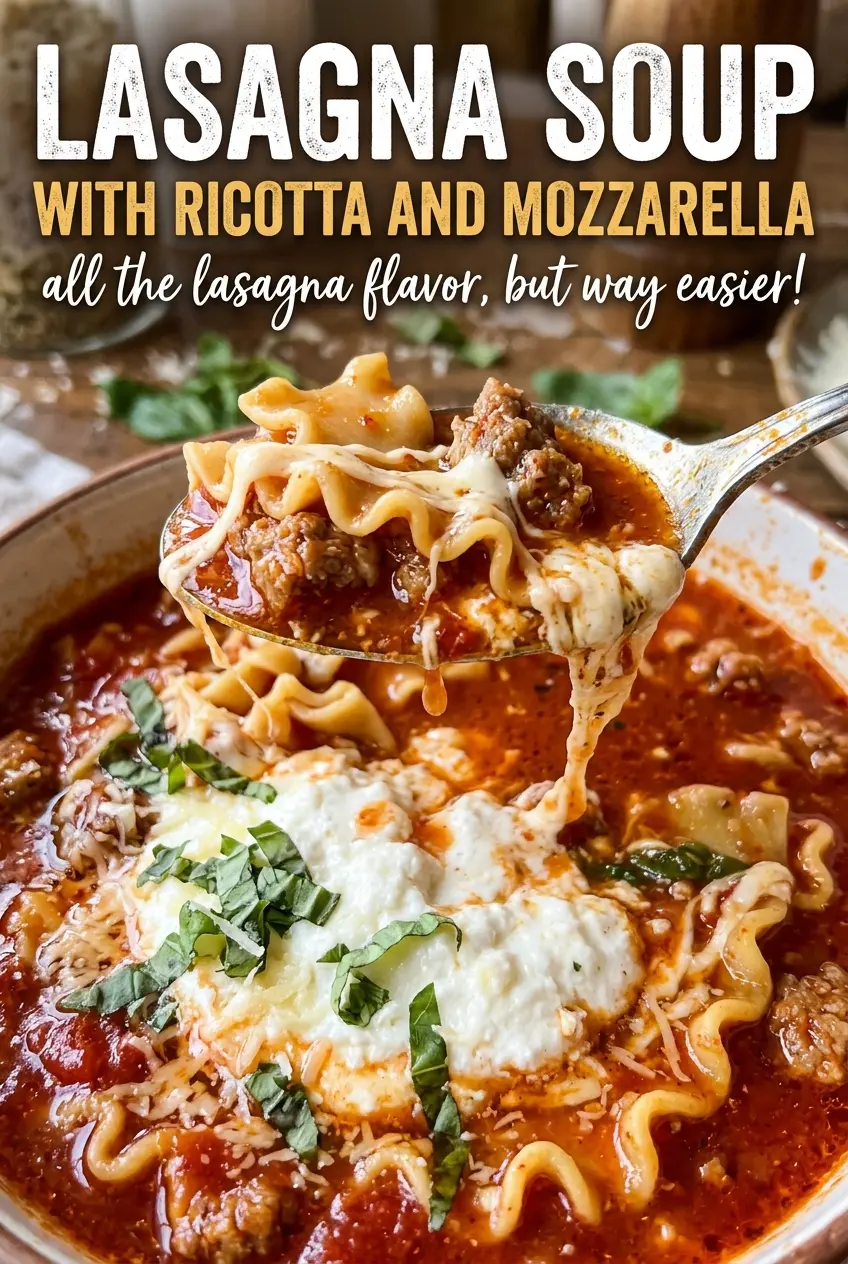
Lasagna Soup With Ricotta And Mozzarella
Ingredients
Equipment
Method
- Heat a Dutch oven over medium-high heat and brown the Italian sausage, breaking it into crumbles until cooked through. Drain the fat.
- Add the diced onion to the same pot and sauté for 4 minutes. Stir in the minced garlic and tomato paste and cook for 2 minutes.
- Add the crushed tomatoes, diced fire-roasted tomatoes, beef broth, Italian seasoning, dried basil, dried oregano, and red pepper flakes. Bring the mixture to a boil.
- Add the broken lasagna noodles and simmer for 10-12 minutes until noodles are cooked through. Season generously with salt and pepper.
- In a bowl, mix whole milk ricotta, shredded whole milk mozzarella, freshly grated parmesan, fresh basil, nutmeg, salt, and pepper until well combined.
- Ladle the soup into bowls. Drop a very large dollop of the cheese mixture into each bowl so it melts into the hot soup.