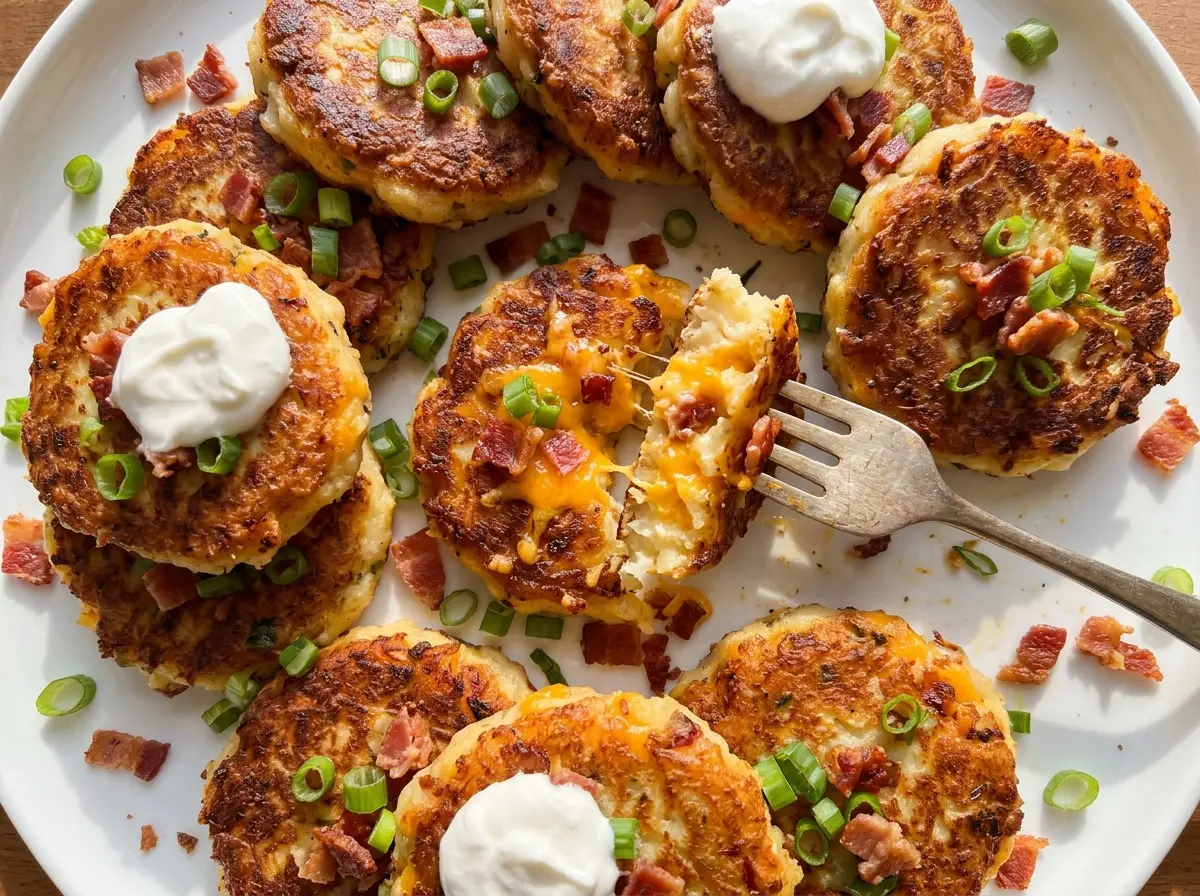
The first flip tells you whether a potato cake is ready: the bottom should release with a crisp, golden crust instead of tearing under the spatula. These Loaded Mashed Potato Cakes have plenty mixed in, so I let the patties firm up before they ever touch the skillet. That gives the cheese, bacon, and green onions room to stay in place while the outside browns.
I start with russet potatoes and mash them with butter and milk, then let them cool before stirring in the egg and flour. The finished cakes have crisp edges, a tender middle, and little salty bites of bacon throughout. They’re a good way to turn a bowl of mashed potatoes into something with a real crunch.
Kitchen Note
Keep the finished cakes in a single layer on the paper towel-lined plate. Stacking traps steam against the crust, and those crisp browned faces soften while the next batch cooks.
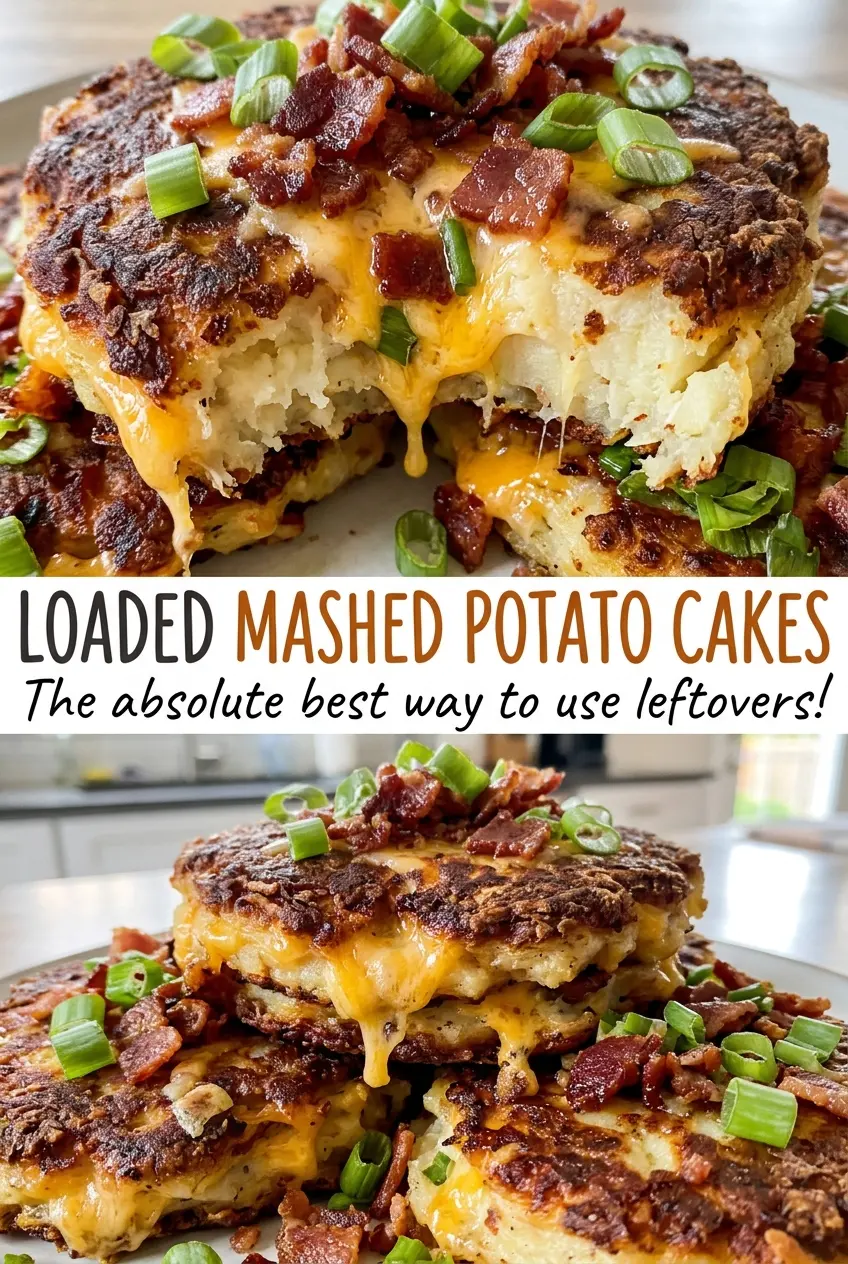
Save these Loaded Mashed Potato Cakes for a crisp, cheesy side with tender centers and salty bacon in every bite.
Why Loaded Potato Cakes Need More Than a Good Mash
Plain mashed potatoes are easy to shape because they’re mostly one soft, starchy mass. These cakes have bacon, cheese, and green onions folded through them, and all those pieces interrupt the potato’s natural stickiness. If the mixture is loose, the patties can split where a piece of cheese or bacon meets the skillet. The egg and flour give the mix extra structure without turning it into a doughy, heavy cake.
Temperature matters just as much as the binders. Warm mash is soft, and it can make the egg harder to incorporate evenly; a brief rest in the refrigerator firms everything so the patties hold their shape as you turn them. You want a mixture that feels cohesive when pressed together, not wet or sloshy. Once the cakes are shaped, handle them gently and let the skillet do the work of setting that first crust.
The goal isn’t a perfectly smooth interior. A few small bits of potato and cheese are part of the appeal, while the flour and egg keep the mix-ins from tumbling out as the outside turns crisp.
What the Potatoes, Cheese, and Binders Each Bring
- Russet potatoes — Their high starch content makes a fluffy mash that shapes into sturdy cakes. Yukon Gold potatoes can stand in at the same weight, but they make a creamier, denser mash. Russets are the better pick when you want a light center; ordinary store-brand potatoes work just fine.
- Bacon — Crisp bacon brings smoky salt and a chewy crunch that softer mix-ins can’t quite replace. Regular bacon is a good choice; the important thing is cooking it until crisp so the crumbles don’t add extra moisture. Turkey bacon can work, though it has less fat and a different, leaner bite.
- Sharp cheddar — The sharper flavor keeps the cheese noticeable next to the potato and bacon. Freshly shredded cheddar melts more smoothly, but pre-shredded cheese is convenient and works in these patties. Mild cheddar melts well but gives the finished cakes a gentler cheese flavor.
- Green onions — Thin slices add a fresh, mild onion note without the sharpness of a raw yellow onion. Chives are a useful substitute and taste more delicate; slice either one finely so the pieces don’t make the patties harder to shape.
- Whole milk and butter — Together they make the potato base creamy and give it a fuller taste than water or a low-fat milk would. Store-brand butter and milk are fine here. For a dairy-free version, use the replacements in the variation below; the mash will be less rich.
- Egg and flour — These are the structural team: the egg helps the mixture hold together, and flour absorbs some of its moisture. Don’t leave them out if you want patties that turn neatly in the skillet. A cup-for-cup gluten-free flour blend works as a substitute, though the cakes may be a little more delicate.
From Fork-Tender Potatoes to a Crust That Holds
Cook the potatoes until a fork slides in easily
Put the peeled, 1-inch potato pieces in a 5-quart pot and cover them with cold water by 1 inch. Add the first portion of kosher salt, bring the water to a boil, then simmer for 15–20 minutes. A fork should pass through the largest piece without resistance. If the centers are still firm, give them more time before draining; firm pieces leave lumps in the mash.
Fry the bacon until crisp
While the potatoes cook, fry the bacon in a 12-inch skillet over medium heat for 8–10 minutes, turning as needed. Look for evenly browned strips that feel crisp rather than bendy. Transfer them to a paper towel-lined plate, then let them cool enough to crumble. Save the skillet for frying the potato cakes.
Mash and cool the potato base
Drain the potatoes and return them to the pot. Let them steam-dry for 1 minute, then mash with the butter, milk, remaining salt, and black pepper. The mash should be tender and cohesive, without visible pools of milk. Let it cool completely, about 30 minutes, before adding the other ingredients.
Mix, chill, and shape the patties
Crumble the bacon and stir it into the cooled potatoes with the cheddar, green onions, egg, and flour. Mix until the ingredients are evenly distributed, but don’t keep stirring once they’re combined. Cover and refrigerate the mixture for 20–30 minutes so it firms up. Shape it into 12 patties about 1/2 inch thick, pressing any loose edges back into place.
Fry until both sides are golden
Heat 2 tablespoons of the vegetable oil in the skillet over medium heat. Fry the patties in 3 batches, adding 2 tablespoons of oil for each batch, for 3–4 minutes per side. The surface should be golden and crisp before you turn each cake; if it’s pale and clinging to the skillet, give it another moment. Cook until the centers reach 160°F, then transfer the cakes to a paper towel-lined plate.
Swaps That Keep These Potato Cakes in Balance
Make the cakes gluten-free
Replace the all-purpose flour with the same amount of a cup-for-cup gluten-free flour blend. The cakes will still bind, though the texture may be a touch more tender, so use a thin spatula when turning them.
Add a little pepper-jack heat
Swap the sharp cheddar for an equal amount of shredded pepper jack. It melts into the potatoes like cheddar but adds a mild peppery kick, with less of the sharp, tangy flavor.
Make a dairy-free batch
Use plant-based butter, unsweetened plain oat milk, and dairy-free shredded cheddar in place of the butter, whole milk, and cheddar. The potato mixture will be less rich, and dairy-free cheese may not melt as smoothly, so shape the patties gently.
Storage and Reheating
- Refrigerator: Refrigerate within 2 hours and keep for 3–4 days. The crust softens in the refrigerator, but reheating in a skillet helps it crisp again.
- Freezer: Let cooked cakes cool, freeze them in a single layer, then move them to an airtight container with parchment between layers. They keep well for up to 2 months.
- Reheating: Warm in a skillet over medium-low heat with a little oil until the center reaches 165°F. High heat can brown the outside before the middle is hot.
Questions That Come Up at the Skillet
Loaded Mashed Potato Cakes
Ingredients
Equipment
Method
- Place the potatoes in a 5-quart pot and cover with cold water by 1 inch; add 1 tablespoon of the salt.
- Bring to a boil, then simmer for 15–20 minutes, until the potatoes are fork-tender.
- While the potatoes cook, fry the bacon in a 12-inch skillet over medium heat for 8–10 minutes, turning as needed, until crisp.
- Transfer the bacon to a paper towel-lined plate.
- Drain the potatoes and return them to the pot.
- Let the potatoes steam-dry for 1 minute.
- Mash the potatoes with the butter, milk, remaining 1/2 teaspoon salt, and pepper.
- Cool completely, about 30 minutes.
- Crumble the bacon and stir it into the cooled potatoes with the cheddar, green onions, egg, and flour until evenly combined.
- Cover and refrigerate the mixture for 20–30 minutes to firm it up.
- Shape the mixture into 12 patties, about 1/2 inch thick.
- Heat 2 tablespoons of the oil in the skillet over medium heat.
- Fry the patties in 3 batches, using 2 tablespoons oil for each batch, for 3–4 minutes per side, until golden and crisp and the centers reach 160°F.
- Transfer the patties to a paper towel-lined plate.