The parsnips soften alongside the potatoes, and the first hint of their sweet, earthy aroma comes up with the steam when you lift the lid. I like that this mashed parsnips and potatoes recipe keeps the familiar comfort of potato mash, but gives it a little more character without asking you to learn a fussy technique.
Cutting both vegetables into 1-inch pieces lets them cook together in the same pot, so there’s no juggling separate pans or trying to time two batches. I keep the prep even, then check for tenderness with a fork rather than relying on the clock alone; a firm piece in the middle is the one thing that can leave the finished mash lumpy.
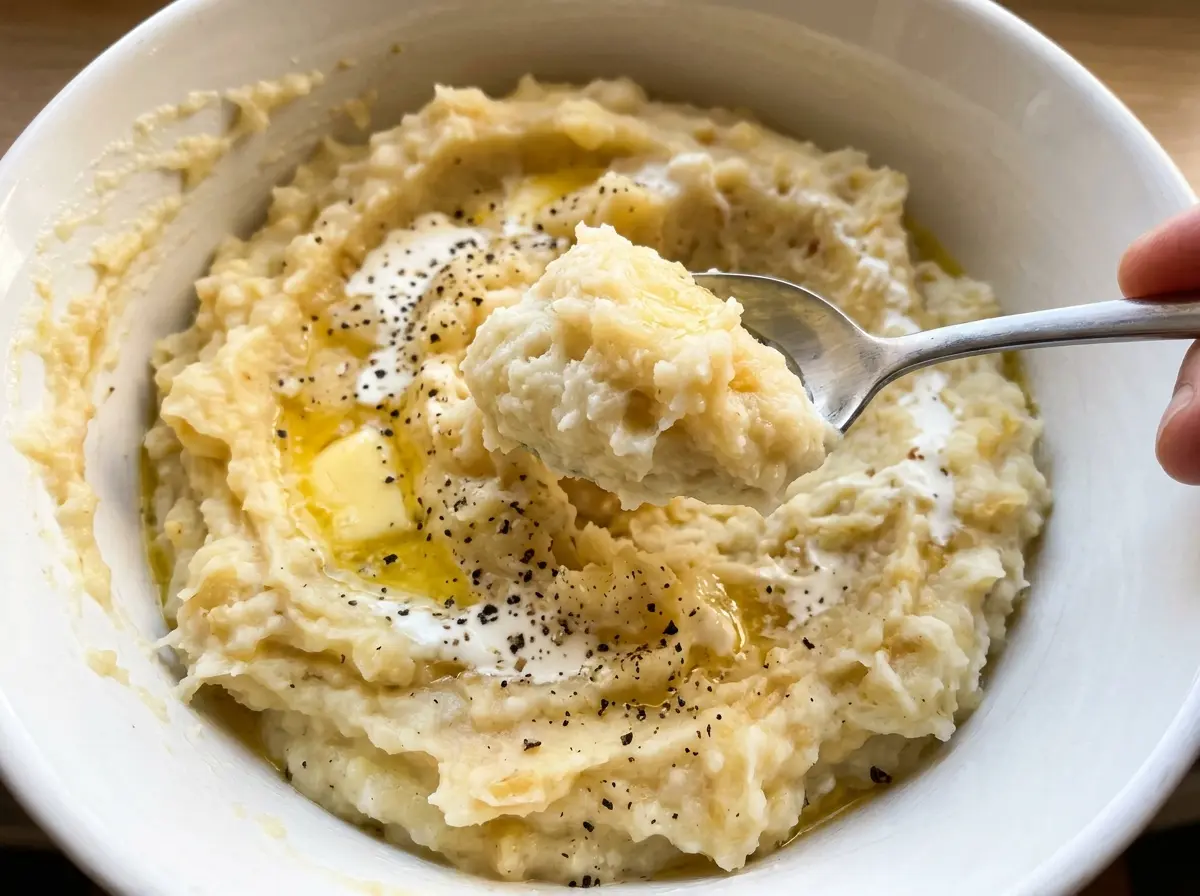
Warm cream folds into the mash without cooling it down, and butter gives the vegetables a smooth, rich finish. It’s a simple pot of mash with a soft texture and a gentle parsnip sweetness in every spoonful.
Kitchen Note
Warm the cream until it’s just warm to the touch, not hot. Cold cream can cool the mash as you stir it in, while gently warmed cream blends in smoothly.
Save this mashed parsnips and potatoes recipe for a creamy, gently sweet side dish that starts with one pot and simple ingredients.
Why the Parsnips Add Sweetness Without Taking Over the Mash
This isn’t an even split between the two vegetables. The recipe uses twice as much Yukon Gold potato as parsnip, which gives the mash a potato-forward body while letting the parsnips bring a mild sweetness and earthy note. If parsnips are new to your table, that balance keeps their flavor present without making the dish taste like a bowl of mashed roots.
Potatoes and parsnips don’t mash into exactly the same texture. The potatoes bring a creamy, familiar base; parsnips have a more fibrous feel and a stronger flavor. Together, they make a mash that’s soft and cohesive but a little more interesting than potatoes alone. Keeping the original balance matters: a much larger share of parsnips would make the sweetness more prominent and the texture less classically potato-like.
That combination also means there’s no need to cook the vegetables separately. They’re cut to the same size and simmered together until tender, then mashed in one pot. The finished bowl stays recognizable as potato mash, with the parsnip lending its own quiet note rather than competing with it.
What Yukon Golds, Parsnips, and Warm Dairy Each Bring

- Yukon Gold potatoes — Their naturally creamy texture makes them a good fit for a smooth mash. Choose firm potatoes without soft spots; standard grocery-store Yukon Golds work well, so there’s no need to hunt for a specialty variety. Russets are a possible swap, but they give a different, more floury result.
- Parsnips — These bring the sweet, earthy character that distinguishes this mash from a plain potato version. Choose firm parsnips, and peel them before cutting; their flavor is the point here, so another root vegetable won’t be a direct match.
- Heavy cream — Cream gives the mash a rich, soft finish and blends in more smoothly when warm. A standard carton is fine. For a dairy-free version, use unsweetened oat cream in its place; it keeps the mash creamy, though the flavor is a little less rich.
- Unsalted butter — Butter adds a rounded, buttery quality, while unsalted butter leaves the final seasoning easier to control. A regular grocery-store butter works well. For a dairy-free adaptation, olive oil can replace it, with a lighter, less buttery result.
- Black pepper — Freshly ground pepper gives a sharper aroma, but pre-ground pepper works just fine here. Add it at the end so you can taste how its warmth sits alongside the parsnips’ sweetness.
How to Cook and Mash the Vegetables Without Waterlogging Them
Simmer the Pieces Until a Fork Slides In Easily
Put the peeled, 1-inch pieces of Yukon Gold potatoes and parsnips in a 6-quart pot with 8 cups cold water and 1 1/2 teaspoons of the kosher salt. Bring the pot to a boil over medium-high heat, then lower the heat and simmer for 15–20 minutes. Start checking near the shorter end of that range, since the size of the pieces affects how quickly they soften. They’re ready when a fork passes through a piece without a firm center.
Warm the Cream While the Vegetables Finish
Pour the heavy cream into a microwave-safe measuring cup and warm it for 30–45 seconds, until warm. It should feel warm rather than bubbling hot. This small bit of timing makes it easier to blend the cream into the mash without cooling the vegetables. Keep the cup nearby so you can add the cream once the butter has been mashed in.
Drain Well, Then Let Steam Escape
Drain the tender vegetables thoroughly, then return them to the pot. Set the pot over low heat for 1 minute, stirring gently so excess moisture can evaporate. Don’t rush past this minute: water clinging to the vegetables can thin the mash and leave it less cohesive. Stir gently rather than beating the pieces around.
Mash in the Butter, Then Finish With Cream and Seasoning
Add the unsalted butter and mash the vegetables until mostly smooth. Stir in the warm cream, then season with the remaining 1/2 teaspoon kosher salt and the black pepper. Taste before serving so you can judge the balance in your own pot. Serve the mash hot.
How to Make This Mash Dairy-Free or More Rustic
A Dairy-Free, Plant-Based Mash
Use 1/2 cup unsweetened oat cream instead of the heavy cream, and replace the 4 tablespoons of butter with 4 tablespoons of olive oil. The result stays creamy, but it has a lighter finish and less of the rounded dairy flavor. Check that the oat cream is unsweetened so it doesn’t bring an unexpected sweet note.
Leave a Little More Texture
For a rustic bowl, stop mashing while a few small, soft pieces remain instead of working toward a mostly smooth texture. The potato and parsnip flavors stay the same, but each bite has a little more texture. Keep the vegetables fully tender before you stop mashing so the remaining pieces are soft, not firm.
Storage and Reheating
- Refrigerator: Refrigerate leftovers within 2 hours in a covered container and use them within 3–4 days. The mash firms up as it chills.
- Freezer: Freeze in an airtight container for up to 1 month for best quality. Cream-based mash may lose some of its smooth texture after thawing.
- Reheating: Warm gently on the stovetop over low heat, stirring often, or microwave in short intervals and stir between them. Reheat leftovers to 165°F; high heat can make the edges hot before the middle warms through.
Questions That Come Up When Making Parsnip-Potato Mash
Mashed Parsnips and Potatoes
Ingredients
Equipment
Method
- Put the potatoes, parsnips, water, and 1 1/2 teaspoons of the salt in a 6-quart pot.
- Bring to a boil over medium-high heat, then reduce the heat and simmer for 15–20 minutes, until the vegetables are fork-tender.
- Warm the heavy cream in a microwave-safe measuring cup for 30–45 seconds, until warm.
- Drain the vegetables well and return them to the pot.
- Cook over low heat for 1 minute, stirring gently to evaporate excess moisture.
- Add the butter and mash until mostly smooth.
- Stir in the warm cream.
- Season with the remaining 1/2 teaspoon salt and the pepper, taste, and serve hot.