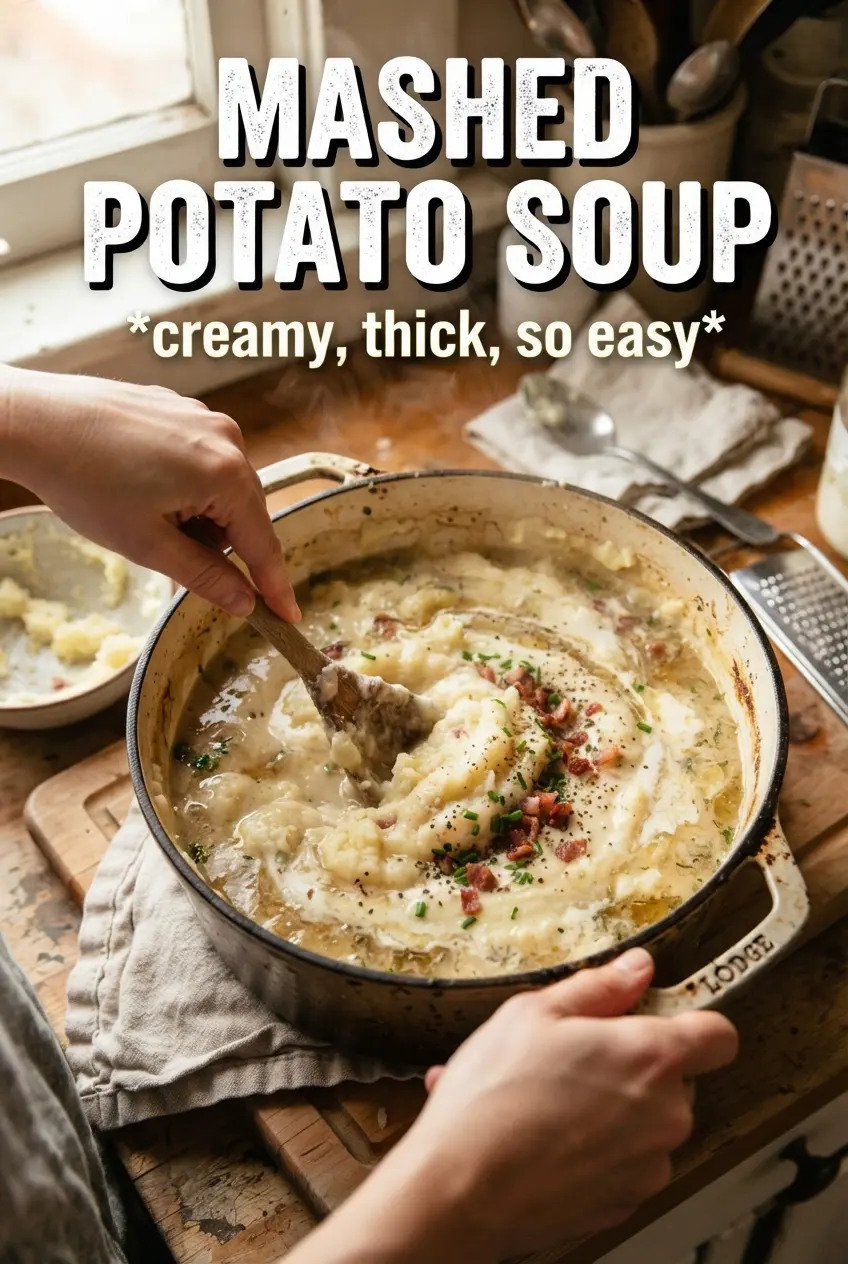
Mashed potato soup turns leftover mashed potatoes into something silky, rich, and bowl-licking good instead of another reheated side dish. The texture lands somewhere between a chowder and a velvet cream soup, but it still tastes unmistakably like potatoes. That swirl of butter on top isn’t just for looks. It melts into the hot soup and gives every spoonful a little more body.
The trick is using the mashed potatoes as the base and whisking them with broth, cream, and milk until the mixture goes from thick and lumpy to smooth and spoonable. If your mashed potatoes were heavily seasoned, the soup picks that up fast, so the salt at the end matters more than the salt at the beginning. Cheddar and sour cream go in after the soup is hot, not boiling, which keeps the dairy smooth instead of grainy.
Below, I’ll walk through the one part that matters most — getting the potatoes fully smooth without a gluey texture — plus a few easy swaps for making it lighter, thicker, or a little more indulgent.
The soup turned out so smooth, and the leftover mashed potatoes blended right in without any lumps. I liked that the cheddar melted cleanly at the end, and the chives and bacon on top made it taste like a loaded baked potato in a bowl.
Save this mashed potato soup for the night those leftover potatoes need to become something creamy, cozy, and spoonable.
The Trick to Turning Leftover Mashed Potatoes Into Soup Without a Gluey Texture
Mashed potatoes can turn a soup heavy fast if you stir them into hot liquid too aggressively. The problem is usually overworking the starch. Whisking them with broth, cream, and milk over gentle heat breaks them down without beating the mixture into paste. If the potatoes are especially stiff, add the broth first and let the mixture loosen before you bring in the dairy.
This soup should look smooth and a little loose in the pot. It thickens as it sits, and that’s exactly what you want. If it seems too thick before you add the cheese, it will probably be too thick at the table. A splash more broth fixes that in seconds.
- Leftover mashed potatoes — These do the work of both potato and thickener. Cold potatoes are fine; they’ll loosen once the broth and cream go in. If they’re heavily seasoned with garlic or butter already, taste before adding the full measure of salt.
- Chicken broth — This gives the soup its savory base and keeps it from tasting like thin mashed potatoes. Use low-sodium broth if your leftovers were well salted. Vegetable broth works too, but the soup will taste a little less rounded.
- Heavy cream and whole milk — This combination gives you body without making the soup feel heavy. If you use all milk, the soup is thinner and less plush. If you use all cream, it can feel too rich and mute the potato flavor.
- Cheddar and sour cream — Add both off the boil so they melt in smoothly. Pre-shredded cheddar will work, but freshly shredded melts cleaner because it doesn’t carry the anti-caking coating. Sour cream adds tang and keeps the flavor from tasting flat.
What Each Ingredient Is Actually Doing in This Recipe

- Primary ingredient (the star) — Quality matters most. Choose the best you can find.
- Cooking medium (oil, butter, or broth) — This carries flavors and prevents dryness.
- Seasonings (salt, pepper, spices, herbs) — Layer flavors so nothing overpowers. Build depth gradually.
- Aromatics (garlic, onion, herbs) — Cook with fat to bloom flavors. Become the foundation.
- Supporting ingredients — Complement the main ingredient without overpowering it.
- Sauce or liquid (if applicable) — Brings flavors together. Balance richness with acid.
- Acid (lemon, vinegar, wine, or other) — Brightens and prevents flat-tasting results.
- Final finish (garnish, glaze, or sauce) — Prevents one-dimensional taste and adds visual appeal.
Building the Soup Base So the Dairy Stays Smooth
Cooking the garlic first
Melt the butter and cook the garlic just until it smells sweet and fragrant, usually 1 to 2 minutes. You’re not trying to brown it. If the garlic starts to color, it will bring a bitter edge into a soup that should taste soft and buttery. Keep the heat at medium and stir it so the butter carries the garlic flavor through the pot.
Whisking in the potatoes
Add the mashed potatoes, broth, cream, and milk together, then whisk until the mixture looks uniform. At first it may seem thin and a little uneven, but that settles as the potatoes hydrate. The important part is to keep the heat at a gentle simmer, not a hard boil. Boiling can make the soup splatter and can give the dairy a cooked, rough texture.
Finishing with cheese and sour cream
Once the soup is hot and smooth, lower the heat before adding the cheddar and sour cream. Stir until the cheese disappears completely and the soup looks glossy. If it turns grainy, the pan was too hot when the dairy went in. Pull it off the burner for a minute and stir again; the residual heat is usually enough to finish the job.
Serving it the loaded-baked-potato way
Serve the soup right away with bacon bits, chives, and a little extra butter on top. The butter should melt into a small pool in the center, which tells you the soup is hot enough and the texture is right. If you want it thicker, let it sit for 3 to 5 minutes before serving. It will settle into a sturdier, creamier bowl.
How to Adapt This for a Lighter Bowl or a More Loaded One
Dairy-Free Version
Swap the butter for olive oil or a plant-based butter, use unsweetened oat milk or cashew milk instead of dairy milk, and replace the cream with a full-fat unsweetened coconut cream alternative if you don’t mind a slight flavor shift. You’ll lose some of the classic tang and richness from sour cream and cheddar, but the soup still comes out creamy if you keep the heat low.
Thicker, More Spoonable Soup
Use 1/2 to 1 cup less broth if you want a soup that sits closer to a chowder. The soup will continue to thicken as it rests, so don’t judge the final texture the second it comes off the stove. This is the best path if your mashed potatoes were already loose and buttery.
Extra Loaded Potato Soup
Stir in cooked crumbled bacon right at the end, then top each bowl with more cheddar, chives, and a small pat of butter. The bacon adds salt and smoke, so taste before you season the soup any further. This version eats like a loaded baked potato in spoon form.
Storage and Reheating
- Refrigerator: Store in an airtight container for up to 4 days. It will thicken as it chills, especially because of the potatoes and cheese.
- Freezer: It freezes, but the texture changes a bit because dairy-based potato soups can separate. Freeze in portions if you want, then whisk well after thawing.
- Reheating: Reheat slowly on the stove over low heat, stirring often and adding a splash of broth or milk to loosen it. Don’t boil it, or the dairy can split and the soup can turn grainy.
Answers to the Questions Worth Asking
Mashed Potato Soup
Ingredients
Equipment
Method
- Melt the unsalted butter in a large pot over medium heat, then sauté the minced garlic for 1-2 minutes until fragrant.
- Whisk the leftover mashed potatoes, chicken broth, heavy cream, and whole milk in the pot until smooth.
- Bring the mixture to a gentle simmer over medium heat, whisking until heated through and smooth (about 5 minutes).
- Stir in the shredded cheddar and sour cream until melted and completely smooth.
- Season with garlic powder, salt, and white pepper, stirring until evenly combined.
- Serve hot with a swirl of extra butter, bacon bits, and chives.